

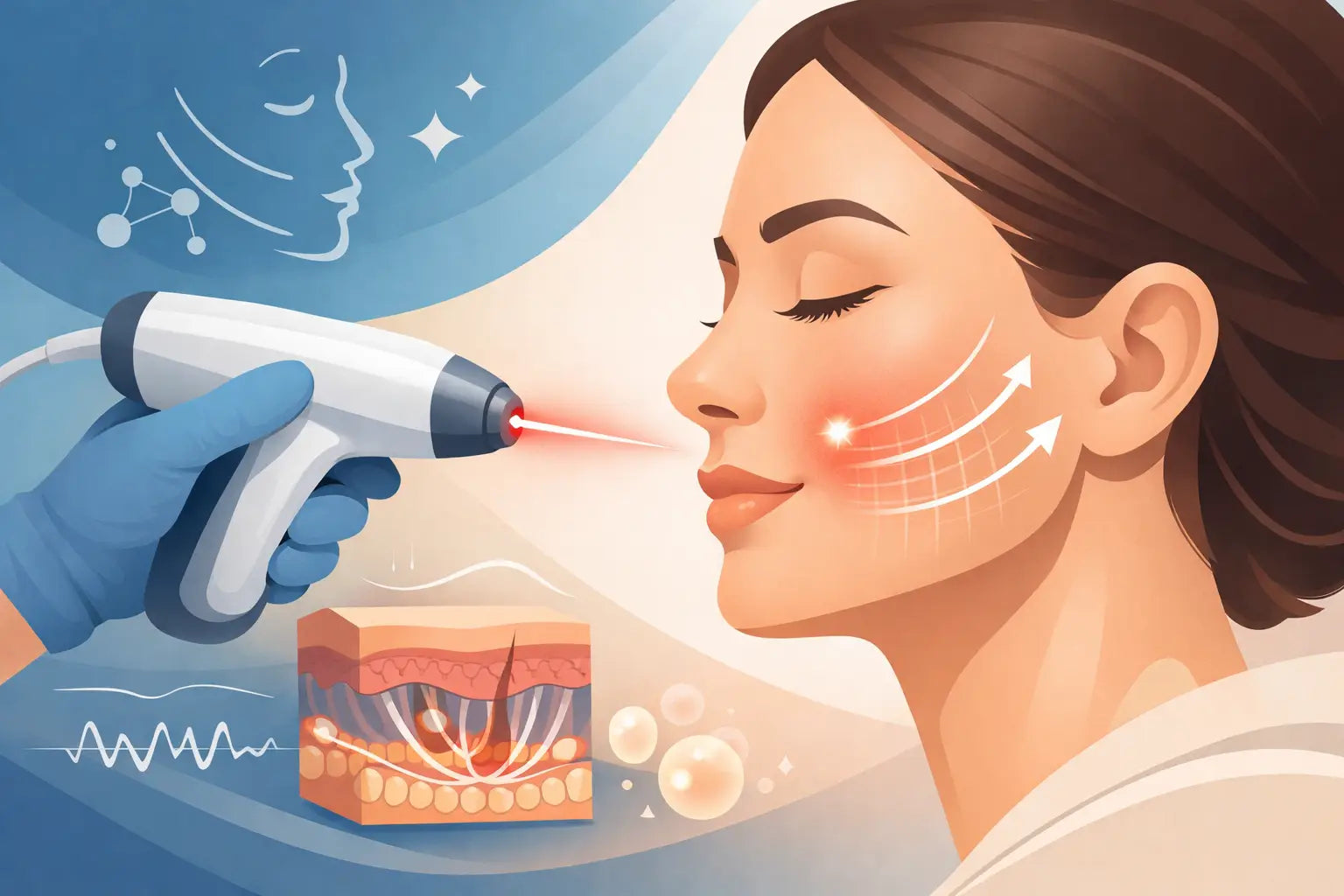
Loose skin rarely shows up all at once. It starts with the small shifts - makeup settling differently around the eyes, smile lines lingering longer, skin looking less springy in morning light. That is usually when interest in a skin tightening facial laser begins. Not because you want to look different, but because you want your skin to look more like itself again.
What makes laser tightening so compelling is that it targets a structural problem, not just a surface one. As collagen declines with age, skin loses firmness, elasticity, and resilience. Creams can support hydration and improve texture, but they cannot deliver light energy into the skin in the same way a laser can. A well-designed laser treatment is built to stimulate your skin’s natural repair response, which is where firmer, smoother-looking skin starts.
What a skin tightening facial laser is actually doing
A skin tightening facial laser uses controlled light energy to heat tissue beneath the skin’s surface. That heat matters because collagen responds to it. When skin is exposed to the right level of thermal energy, it can trigger a renewal process that encourages new collagen production over time.
This is the key distinction from treatments that only exfoliate or temporarily plump. Tightening is about creating conditions for the skin to rebuild support from within. The result is not an instant facelift effect. It is a gradual improvement in firmness, fine lines, and overall skin quality as collagen remodels.
That timeline is one reason expectations matter. Some people notice early changes in texture or glow, but tighter-looking skin typically develops over weeks and months. Collagen is biological tissue, not a filter. The process is real, but it is not overnight.
Why collagen loss changes the look of the face
In younger skin, collagen fibers are dense and organized. Skin snaps back more easily, contours look smoother, and fine lines are less likely to linger. As collagen breaks down with age, the skin becomes thinner and less supported. You may notice softness around the jawline, creasing around the mouth, or a more tired look around the eyes.
Sun exposure accelerates this process. So does the natural decline in collagen production that comes with age. That is why many people start looking for tightening treatments in their late 30s, 40s, and beyond, even if they have been consistent with skincare for years.
Laser treatments are attractive in this phase because they go beyond moisturizing the top layer of skin. They are designed to work where collagen lives, which is why they can be such a meaningful category for people who want visible anti-aging results without jumping straight to more invasive procedures.
Skin tightening facial laser vs other anti-aging options
Not every treatment that improves the look of skin is truly tightening it. This is where confusion often starts.
Topical products can absolutely support better skin. Retinoids, peptides, antioxidants, and hyaluronic acid all have value. They can improve hydration, smoothness, and the appearance of fine lines. But they rely on ingredients interacting with the skin barrier, not delivering focused energy into deeper layers.
LED masks use light, but they work differently from lasers. They are generally broader in their effect and often chosen for skin tone support, calming benefits, or mild rejuvenation. For someone specifically focused on firmness and wrinkle reduction, laser technology tends to be the more targeted option.
In-office procedures can deliver stronger energy and may produce faster or more dramatic change, but they often come with trade-offs. Those can include higher cost, scheduling, discomfort, downtime, and the need for repeat appointments. For many consumers, the appeal of at-home laser technology is that it closes the gap between basic skincare and clinic-based treatment. It offers a more advanced option that fits into real life.
The difference between fractional and non-fractional laser technology
This is one of the most important distinctions in the category.
Fractional lasers treat the skin by creating controlled micro-injuries. That approach can be effective, but it is also the reason many in-office treatments involve redness, peeling, recovery time, and a more intense post-treatment experience.
Non-fractional laser technology works differently. Instead of creating that pattern of injury, it delivers laser energy in a way that heats the dermis while keeping the surface experience gentler. For people who want collagen stimulation without the disruption of traditional resurfacing, that difference matters.
An at-home device built around non-fractional laser technology is especially appealing because it is designed for frequent, convenient use. Consistency becomes part of the treatment model. Rather than a single aggressive session followed by downtime, you get repeatable collagen-supporting treatments that can fit into a daily routine.
That does not mean every device is equal. Energy delivery, safety features, treatment coverage, and clinical validation all matter. A premium device should do more than sound advanced. It should be engineered to produce measurable change while still being practical to use consistently.
What results can you realistically expect?
The best results tend to look believable. Skin appears firmer. Fine lines soften. Crepey areas look smoother. The face looks more rested and more resilient, not frozen or overtreated.
How much change you see depends on several factors, including age, baseline skin laxity, sun damage, and how consistently you use the treatment. Someone with early collagen loss may notice improvement faster than someone with more advanced laxity. The treatment area also matters. Crow’s feet, under-eye crepiness, cheek texture, and lip lines can respond differently.
Consistency is the deciding factor for most at-home users. A high-quality skin tightening facial laser can stimulate collagen, but collagen remodeling needs repeated stimulation over time. Skipping treatments or using a device sporadically usually leads to underwhelming results.
This is why simplicity matters more than people think. If a device feels intimidating, time-consuming, or uncomfortable, it becomes hard to maintain. The strongest routine is the one you will actually keep.
Who is a good candidate for laser tightening at home?
At-home laser tightening makes the most sense for people who want visible anti-aging results but do not want the expense or disruption of office-based procedures. It is especially well suited to adults noticing fine lines, mild to moderate skin laxity, and the first signs of collagen decline.
It also appeals to people who are already investing in skincare but feel they have reached the limit of what topicals can do alone. If your serum is keeping skin hydrated but not making it look firmer, that is often the point when device-based treatment becomes more relevant.
That said, severe sagging or significant volume loss may require a different strategy. Laser tightening can improve firmness, but it does not replace every category of cosmetic treatment. The right expectation is improvement, not surgical-level repositioning.
What to look for in an at-home laser device
Clinical credibility should come first. If a device claims wrinkle reduction and skin tightening, there should be real evidence behind it, not just marketing language. FDA-cleared positioning, treatment-specific studies, and visible before-and-after results all help separate serious technology from beauty gadget noise.
You also want a device that is practical enough to become part of your routine. Treatment time matters. Comfort matters. Precision matters, especially around delicate areas like the eyes and mouth where aging often shows up first.
This is where a clinically aligned system can stand out. NIRA, for example, has built its approach around non-fractional laser technology designed to support collagen production at home without the cost and inconvenience of repeated in-office visits. That model resonates because it matches how people actually want to care for their skin - consistently, efficiently, and with proof that the technology is doing something meaningful.
The role of skincare alongside laser treatment
Laser treatment and topical skincare work best as partners, not competitors. The laser addresses collagen stimulation below the surface. Skincare supports the environment around that process.
Hydration is especially important because well-conditioned skin tends to look smoother and more luminous while treatment results develop. Ingredients like hyaluronic acid can help support that immediate look and feel. Peptides can also complement a collagen-focused routine. And daily sunscreen is non-negotiable if your goal is to protect the progress you are making.
Think of it this way: laser technology helps push the skin toward renewal, while good skincare helps maintain and amplify what that renewal looks like day to day.
Is a skin tightening facial laser worth it?
If your goal is firmer, smoother-looking skin and you want a solution that goes beyond surface-level skincare, a laser can absolutely be worth it. The value becomes even clearer when you compare it to the cycle of expensive appointments or endless product testing with minimal structural change.
The trade-off is patience. Laser tightening rewards consistency more than impulse. People who want one dramatic treatment and instant transformation may be better suited to a different category. But if you want clinically grounded progress that builds over time, at-home laser technology offers a compelling middle ground between creams and procedures.
The smartest approach is not chasing the most extreme option. It is choosing a treatment you trust, using it consistently, and giving your skin the chance to rebuild what time has gradually taken away.


