

Skincare Blog
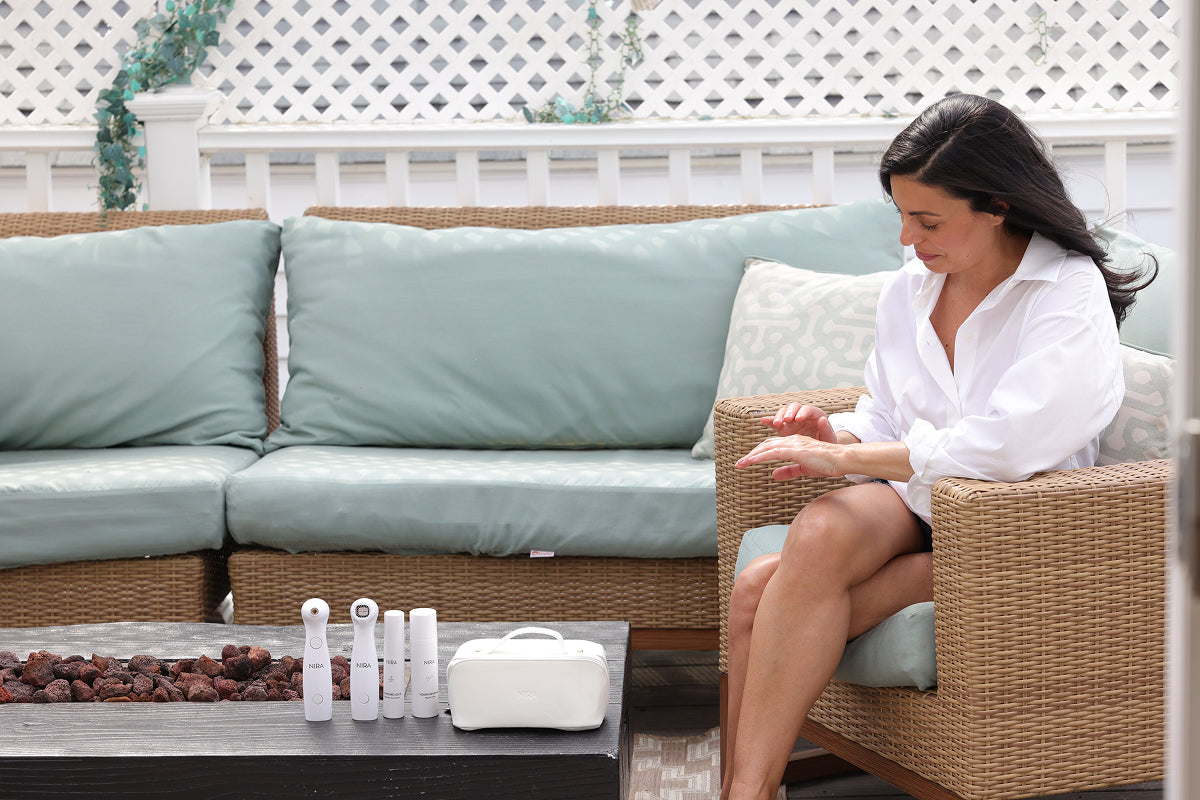

The Ultimate 5-Step Preventative Skincare Routine
Key Takeaways Proactive Investment: Collagen production starts slowing in your mid-20s. A preventative routine in your 30s and 40s is the most effective strategy for long-term skin health. The Power of Layers: Pair topical ingredients like Vitamin C for morning protection and Peptides for night-time repair to maximize surface support. Deep Stimulation is Key: Topical products target the outer layer of the skin.The NIRA at-home laser uses patented non-fractional technology to safely stimulate and renew collagen deep within the dermis. Efficiency Delivers Results:The routine is time-efficient, requiring just minutes a day, and delivering visible results within 8–12 weeks of daily, consistent treatment. If you’re in your 30s or 40s, you know this is the time to shift from reacting to aging signs to focusing on prevention. Here’s the reality: collagen, the crucial protein that keeps our skin firm, starts to decline as early as our mid-20s, with production slowing by about 1% each year after 30. But knowing this is empowering, because it means you can act now to preserve your skin's strength and long-term resilience.The best anti-aging skincare routine shouldn't require ten steps or an endless budget. It requires a smart, consistent strategy anchored in science. Here is the precise 5-step framework that prioritizes efficiency and delivers visible, lasting results. Why Prevention Is the Ultimate Investment To build a routine that actually works, you need to know what you’re focused on: your collagen. This protein is the structural scaffolding of your skin, giving it firmness, resilience, and elasticity. Once collagen production begins to slow, you start seeing the first subtle shifts: fine lines, weakened elasticity, and rougher texture. While this decline is natural, it is accelerated by outside factors like sun exposure, stress, and a non-stop schedule. The core of preventative skincare is providing your skin with the right signals to maintain and rebuild the collagen it already has. This isn’t about chasing youth; it’s about establishing an effective routine that allows you to look and feel your best at every stage. The 5 Pillars of Smart Skin Renewal This anti-aging skincare routine is designed for maximum impact in minimal time, smartly pairing topical support with proven technology. 1. Broad-Spectrum SPF Let's be direct: this is the non-negotiable first step. Applying a broad-spectrum sunscreen every single morning is the single most effective way to prevent premature aging and preserve your existing collagen. UV exposure is one of the biggest accelerators of collagen breakdown. Be sure to use an SPF 30 or higher, even on cloudy days, and apply it to your face,neck, and hands. These areas are highly exposed and often show the first signs of aging. 2. Antioxidant Serum Antioxidants, particularly Vitamin C, are essential allies in the best anti-aging skincare routine because they are necessary for collagen synthesis and neutralize the free radicals caused by environmental stressors. Apply a quality Vitamin C serum to clean, dry skin every morning. This dual-action ingredient works beneath the surface to support the production of new collagen while protecting your cells from damage, helping your skin stay vibrant and strong. 3. The NIRA At-Home Laser Skincare creams and serums work wonders on the surface, but for real and lasting results, you need to reach the dermis: the deeper layer where your collagen actually lives. This is where the NIRA at-home laser device comes in, offering a strategic upgrade to your routine. The Science: NIRA uses patented non-fractional, non-ablative laser technology to gently heat the dermis to an optimal temperature, safely signaling your body to remodel existing collagen and boost the production of new, fresh collagen. This FDA-cleared technology delivers professional-grade wrinkle reduction. The Efficiency: With a quick, non-invasive experience and zero downtime, the NIRA Pro laser treats your entire face in just 2 to 3 minutes a day. It’s a powerful, non-negotiable step that easily fits into your life. 4. The Moisture-Lock Layer Immediately after your laser treatment, it's vital to replenish and strengthen your skin barrier. Hydration is key to ensuring your collagen fibers remain plump and resilient. This is where the Moisture-Lock Hyaluronic Acid Serum comes into play. Apply this specialized serum right after your laser treatment and before your cream. It’s formulated with both low molecular weight HA, which activates fibroblasts for skin repair, and high molecular weight HA, which draws up to 1,000x its weight in moisture to the surface. This powerful combination locks in hydration, visibly smoothing fine lines and encouraging deep collagen repair. 5. Nourish with Peptide Cream The final and crucial step in your evening ritual is maximizing overnight repair. Peptides are smart little messengers that signal your skin cells to produce more of the necessary building blocks, like collagen and elastin. Finish your routine with the Youth Renewal Peptide Cream. This nourishing formula contains a potent multi-peptide complex that is clinically proven to boost collagen production, leading to wrinkle reduction. Applying this as your final layer helps lock in hydration and reinforces the cellular renewal started by your laser, working while you sleep to visibly improve skin tone and texture. Discipline Drives Decade-Long Results The skin's natural collagen cycle takes time. Visible, lasting improvements typically emerge after 60 to 90 days of consistent daily use. This daily, powerful ritual is easy to uphold. It's a small commitment that pays significant dividends, allowing you to focus on your day. Whether it's giving a presentation, enjoying time with family, or simply feeling great without makeup, you can feel confident in knowing that your skin’s long-term health and strength are supported. Frequently Asked Questions How does the NIRA laser reach deeper than my anti-aging creams? Creams and serums are primarily limited to the epidermis, the skin's top layer. The NIRA at-home laser uses a specific 1450nm wavelength of light that gently penetrates the outer layer to reach the dermis. This controlled thermal energy directly stimulates the body's natural collagen production process at its source. Is this routine safe for sensitive skin, especially the laser? Yes, NIRA’s non-fractional technology is clinically proven to be safe and effective for all skin types and tones. It operates below the pain threshold, ensuring there is no redness, pain, or downtime. The device also offers 5 comfort levels so you can adjust the treatment to your skin's sensitivity. How quickly will I see visible results if I follow this routine? Because NIRA triggers your natural collagen cycle, results build gradually. Most users begin to see visible improvements in wrinkle reduction and skin firmness between 8 to 12 weeks of consistent daily use. Should I apply the Hyaluronic Acid Serum and Peptide Cream before or after the NIRA laser? Apply the NIRA laser to clean, dry skin to ensure optimal laser absorption. Apply the Moisture-Lock Hyaluronic Acid Serum immediately after your laser treatment, followed by the Youth Renewal Peptide Cream, to lock in moisture and maximize results. How long does the laser take to use each day? The NIRA Pro laser is designed for efficiency and speed. It treats your full face, neck, chest, and hands in just 2 to 3 minutes a day, making it incredibly easy to sustain daily use for long-term results. Begin your smart skin investment today. This science-backed, time-efficient approach ensures you’re making a tangible move for your skin’s long-term health and vitality. Stop settling for products that fail to deliver and enjoy real, lasting results that honor your proactive commitment.
Learn more
How to Rebuild Collagen Naturally in Your 40s and 50s
Key Takeaways Collagen Diminishes More Rapidly During Midlife: After age 40, and particularly during menopause, the decline in estrogen drastically speeds up collagen loss, leading to wrinkles and sagging. Target the Source: Topical creams offer surface hydration; effective change requires stimulating the deep dermal layers where collagen is created. Efficiency Matters: The at-home laser device is designed for a fast, two-minute daily ritual, easily fitting into the schedule of a busy woman. A Complete Skincare Routine: Boost your results by pairing laser treatments with topical ingredients like Vitamin C and peptides to nourish the renewed skin. As you move through your 40s and 50s, you’re often entering a period of remarkable personal growth. You’re peaking in your career, watching your children grow, and embracing a renewed sense of self-awareness. Yet, while your inner landscape is thriving, you may notice a significant change in your skin.The bounce and resilience your skin had a decade ago can change, revealing visible changes. These changes can appear as softening of the jawline, deeper wrinkles, and a loss of youthful elasticity. This is not a failure of your skincare routine; it’s a biological fact tied to a fundamental shift in your body's most abundant protein: collagen. At this stage of life, the key is not merely to cover up the changes, but to truly understand how to restore collagen in the face and body from a foundational, physiological level. Why Collagen Retreats in Midlife Collagen is the scaffolding of your skin, providing structure, firmness, and a pillowy texture. Unfortunately, the aging process naturally slows its production. By your 40s, your collagen levels may have dropped by up to 30%, and by age 50, you may have lost nearly half of your body’s collagen. But there is often a more dramatic factor involved during your 40s and 50s: the hormonal transition of menopause. The decline in estrogen drastically accelerates the breakdown of existing collagen and elastin, leaving your skin more prone to visible wrinkles, thinning, and sagging. This isn’t just a cosmetic issue; it's a structural challenge. The topical creams that worked in your 20s and 30s can no longer reach the depth required to reactivate your skin's innate collagen-building process. Rebuilding Collagen from the Inside Out To achieve truly meaningful skin renewal, you must move beyond temporary surface solutions and target the biological source of firmness: your deep dermal collagen. This means activating your fibroblasts: the tiny, dedicated factories responsible for manufacturing new collagen. This is the key to restoring collagen in the face and body as you move through your midlife years. The NIRA at-home laser is clinically engineered for this precise, sub-surface remodeling. It uses non-ablative laser technology that delivers therapeutic heat energy directly into the dermis. This non-invasive device is designed to heat the deepest layer of your skin gently. This controlled thermal action signals those fibroblasts to kick into high gear and significantly increase their production of new, fresh collagen and elastin. This approach achieves true structural repair. Unlike harsher treatments that damage the skin’s surface, NIRA’s FDA-cleared technology provides professional-grade wrinkle reduction safely, painlessly, and with zero downtime, all from the comfort of your home. Power-Boosting Topical Ingredients While laser therapy works at the structural level, high-quality skincare is absolutely essential to support and protect the renewed skin. Think of this as nourishing the body’s revitalized collagen factories. When selecting your complementary topical products, focus on clinically proven ingredients that aid in collagen synthesis and repair: Peptides: Peptide creams strengthen the skin's barrier, signaling your cells to ramp up collagen production. Potent peptide complexes have been clinically proven to increase collagen formation substantially. Hyaluronic Acid: Hyaluronic Acid is the key to skin hydration, attracting and holding moisture within the skin's layers. An HA serum visibly plumps the surface, softening the appearance of fine lines by addressing dehydration for an instant boost in skin elasticity. Vitamin C: An indispensable antioxidant that plays a crucial role in stabilizing new collagen and defending against environmental free radicals that cause breakdown. Retinoids: These Vitamin A derivatives are proven to stimulate collagen production and accelerate cellular turnover, visibly smoothing fine lines and refining texture. A Two Minute Ritual for Renewed Radiance The reality of midlife often involves balancing a demanding career, juggling the changes of family life, and protecting precious personal time. The idea of adding a long, complicated skincare routine simply doesn’t fit into a busy, goal-oriented life.The NIRA wrinkle laser is designed for maximum impact in minimal time. It only requires two minutes of daily treatment,, it is completely non-invasive, and has zero downtime. Imagine getting ready for a big presentation, a well-deserved night out, or simply grabbing coffee with a friend. When your skin feels firm, smooth, and radiant, you walk out the door feeling lighter and completely present. That quiet assurance and renewed glow allow your authenticity to shine through effortlessly, without feeling self-conscious. This is the visible transformation you can expect when structural skin renewal becomes part of your routine. Reclaiming Your Skin The journey through midlife is about embracing and owning every chapter.The focus is on moving from reacting to skin changes to proactively renewing your skin. Choosing a proven, science-backed approach is a powerful commitment to prioritizing your well-being. It’s the peace of mind that comes from using a clinically proven product, leaving behind wasted time and frustration.This feeling of inner vitality isn’t just about looking refreshed; it's about seeing your inner strength reflected in your outer appearance, truly enabling you to embrace this powerful season of your life. Frequently Asked Questions How quickly can I expect to see visible results when trying to restore collagen in the face? Most users begin to see a visible reduction in wrinkles after about 60 days of consistent use. Since the process of natural collagen remodeling takes time, optimal, long-term results are typically seen after the recommended 90-day protocol. Is the NIRA at-home laser safe for all skin types and tones? Yes, the non-ablative laser technology is clinically designed to be safe and effective for all skin tones and types, offering professional-level results without the risks or side effects associated with invasive fractional lasers. How often do I need to use the device to rebuild collagen naturally in my 40s and 50s? NIRA lasers are engineered for simplicity, requiring only two minutes of treatment per day for each desired area. This minimal commitment ensures consistent stimulation of collagen without disrupting your busy lifestyle. Does using an at-home laser device cause pain or require a recovery period? The non-ablative technology used in NIRA lasers is completely non-invasive and painless. It generates therapeutic heat beneath the skin's surface but leaves the outer layer intact. This means there is no redness, peeling, or downtime required, allowing you to return to your regular activities immediately. Do I still need to use sunscreen with an at-home laser device? Yes, absolutely. Sun damage is one of the primary drivers of collagen breakdown and skin aging. Protecting your skin daily with a broad-spectrum SPF is crucial for maintaining the new collagen generated by your laser treatments and preserving the health of your skin. The pursuit of looking and feeling your best in midlife is a sign of your enduring strength, not vanity. Choose proven technology that works with your body, not against it. Start your two-minute daily ritual and embrace the visible transformation and vibrant skin you’ve earned.
Learn more
The Best At-Home Laser Device for Women Over 60
Key Takeaways Collagen is Key: After age 60, collagen production drops significantly, causing visible wrinkles and skin laxity. Effective skin renewal requires stimulating collagen production deep within the skin's layers. Safety and Trust: The NIRA laser is FDA-cleared and non-ablative, meaning it is safe and gentle, requiring no downtime. Consistency is key:The routine takes just two minutes per day, making it simple to maintain consistency for lasting results. Renewed Radiance: The goal isn’t just to reduce wrinkles, but to achieve a natural look that makes you feel radiant, even without makeup. Aging is a beautiful journey, a continuous story marked by experiences and wisdom. For many women over 60, the desire isn't to "reverse" time, but simply to nurture their skin, helping it look and feel its best.This journey leads many to find the best at-home laser for wrinkles, one that offers powerful results with the simplicity and gentleness mature skin deserves. This chapter of life is all about embracing self-care that is effective, simple, and gentle; skincare that celebrates you.You may have looked in the mirror and noticed that your skin feels thinner, and the lines around your mouth or eyes seem more pronounced. You might be considering options for addressing these changes, but harsh chemicals, expensive in-office treatments, or complicated routines simply don't fit your lifestyle, budget, or taste. The question becomes: How can you achieve visible skin renewal in a way that supports your skin's maturity and your desire for simplicity and safety? The key is understanding the most important factor in skin health, which is the role of collagen renewal in mature skin. Rebuilding Your Skin’s Foundation To truly support your skin's health, we must look deeper than the surface. The visible lines and loss of firmness you may notice are tied to a natural process: the gradual decline of collagen. Collagen is the essential protein responsible for your skin’s structure, elasticity, and vitality. Unfortunately, collagen production naturally slows down as we age. In fact, by age 50, a woman can lose up to half of her original collagen. This significant loss leads to the skin becoming thinner, looser, and more prone to wrinkles. While creams and serums can certainly hydrate and nourish the outermost layer, they often struggle to reach the deeper dermal layer where new collagen is created. This is where advanced, gentle technology comes in. A Deeper Look at Laser Technology To get to the heart of the matter, the best way to stimulate new collagen production is through controlled, targeted energy. Professional dermatologists have relied on lasers for years to achieve this. The NIRA at-home laser device is backed by this same science, delivering a precise, non-ablative laser to the dermis. This gentle heat signals your cells to kickstart their natural healing process in order to produce new collagen. Unlike abrasive or fractional lasers that remove the top layer of skin and require significant downtime, the NIRA laser offers a pain-free experience. This makes it an ideal solution for women over 60. It makes daily renewal simple so you don’t have to worry about redness, irritation, or recovery. More Than a Trend: The Assurance of FDA-Cleared, Clinically Proven Results In beauty, the next big trend or miracle product is always just around the corner.For a woman over 60 who values her time and her budget, navigating the beauty market can be very frustrating. You want to invest in something that is not only safe, but also clinically proven to work. That is the bedrock of the NIRA mission: putting the power of dermatology in your hands. The NIRA laser technology is: FDA-Cleared for full-face use, ensuring it meets strict safety and efficacy standards. Painless and Non-Invasive: The world's first and only painless at-home laser technology. Clinically Proven: Developed by laser industry experts, the technology is clinically proven to reduce the appearance of wrinkles by stimulating natural collagen. A device that meets these high standards brings invaluable peace of mind.It removes the guesswork and the risk of wasting time and money on yet another product that falls short of its promise. It's about choosing trust over trends. The Simplicity of a Daily Renewal Ritual Your life is busy, whether you are enjoying retirement, pursuing passions, or spending time with family. Your skincare ritual should enhance your day, not complicate it. The entire NIRA skincare ritual takes just two minutes a day. You simply apply the laser to your target areas and wait for the gentle 'beep' that signals a completed section. The speed and simplicity of the treatment make it easy to incorporate into your morning or evening routine, without lengthy appointments or a complicated setup. Celebrating a Renewed Sense of Self Visible changes in your skin can have a major impact on your everyday life. It’s not about turning back the clock; it’s about looking at your reflection and feeling a powerful sense of renewal. This newfound self-assurance allows you to focus less on masking imperfections, and more on embracing life. You look and feel your best, even without makeup: When your skin has a natural smoothness and radiance, you can step out for coffee with friends, attend an impromptu event, or simply enjoy a day at home without feeling self-conscious. You embrace spontaneity: You are ready for a close-up photo with your grandchildren or a night out with your partner, without feeling the need to spend extra time concealing lines or uneven texture. You exude serenity and wellness:Knowing you are treating your skin with a safe, effective, and science-backed tool is a powerful act of self-care. This tranquility shines through, adding to your overall sense of radiance. By choosing the NIRA at-home laser, you are choosing a treatment that honors your journey. You are investing in long-term skin health, relying on proven technology, and making self-care a simple, effective, and joyful part of your day. This world-class at-home laser device supports the unique needs of mature skin. Frequently Asked Questions How does an at-home laser compare to a professional in-office laser treatment? In-office procedures are often more intense and require significant downtime for recovery. The NIRA at-home device uses the same non-ablative laser technology, but at a fraction of the power. This allows for a gentle, pain-free daily treatment with no downtime, making it a convenient and practical long-term option for sustained skin renewal. Is the NIRA laser safe to use on mature skin that is thinner and more delicate? Yes. The NIRA laser is designed to be painless and non-invasive, making it especially gentle on the skin.It works by sending controlled heat energy into the deeper layers to stimulate natural collagen, without damaging the surface or requiring a prolonged recovery period. Will this treatment interfere with any of my existing skincare creams or serums? The NIRA laser is intended to complement your existing skincare routine. You should always start with clean, dry skin before using the laser. Afterward, you can apply your preferred serums and creams, enabling better absorption into your skin as it naturally renews itself.How long until I see visible improvements in my wrinkles? Consistency is important for any skin renewal regimen. For clinically proven, visible wrinkle reduction, many users begin to see noticeable results within 90 days. It is a slow, steady process of renewal that yields lasting results. Is the NIRA laser a long-term investment, or does it require expensive refills or cartridges? The NIRA at-home laser device is built for lasting value. Unlike many at-home devices, the laser does not require ongoing replacement cartridges, gels, or refills. This makes it a smart, single investment for ongoing skin renewal. Embracing your skin's journey starts with a commitment to gentle, trusted care. The NIRA laser is your partner in this ritual, offering safe wrinkle reduction through an FDA-cleared at-home device that fits effortlessly into your life. Begin your path to skin renewal today.
Learn more
Why Starting Laser Skincare in Your 30s Is the Smartest Investment
TL;DR; Prevention is Investment: Starting laser-based collagen stimulation in your 30s and early 40s is more efficient than waiting to correct advanced signs of aging. The Power of Non-Ablative Technology: The NIRA Pro uses painless, clinically proven, and FDA-cleared technology to stimulate natural collagen renewal deep within the dermis. Efficiency: The entire professional-grade treatment takes just two minutes per day. Financial Advantage (Girl Math): The one-time cost of the NIRA Pro is quickly recouped, saving hundreds of dollars after replacing just one or two in-office treatments. Lifestyle Benefit: Consistent use leads to firmer, smoother skin, giving you the natural radiance to look and feel your best effortlessly, even without makeup. In the world of personal investment, the smartest move is always preventative. You wouldn't wait until your financial future is compromised to start saving, so why approach your skin differently? For women in their 30s and 40s who prioritize efficiency and data-driven results, waiting for visible lines to deepen before seeking treatment is extremely inefficient. The future of luxury skincare is all about proactive beauty:: acting early to preserve the skin you have, rather than trying to aggressively correct damage in later years.This is where an advanced solution like an anti-aging at-home laser device shifts the conversation from costly correction to controlled, long-term asset management. Collagen Care in Your Third and Fourth Decades The shift in your skin begins well before the first fine line settles. For proactive women, the thirties are when the slow, steady decline of collagen starts to accelerate. Collagen provides the scaffolding that keeps skin plump and firm. By the time many women reach their forties, studies indicate collagen levels can drop by up to 30%, and this process accelerates further due to hormonal shifts like declining estrogen, particularly leading up to and during menopause. This loss leads directly to a thinning complexion, a decrease in the skin’s natural bounce, and the onset of visible sagging and wrinkles. Topical products alone often cannot penetrate deeply enough to initiate the fundamental structural repair required. The solution needs to address the root cause. The NIRA Authority As an FDA-cleared device, NIRA has been rigorously evaluated and clinically proven to deliver wrinkle reduction by stimulating natural collagen production. Unlike invasive in-office fractional lasers that require significant downtime, the NIRA Pro utilizes a patented, non-fractional technology that is completely painless and requires zero recovery time. This advanced laser fits seamlessly into a busy schedule: the full-face treatment requires just two minutes a day. This commitment to speed and scientific credibility makes it the perfect tool for busy professionals who value efficiency above all else. The Skincare Investment Equation, Girl-Math Style For the pragmatic consumer, the true appeal of an anti-aging at-home laser lies in its undeniable long-term fiscal advantage. Here, “‘Girl Math,’” the idea of explaining expensive purchases as savings, actually proves financially true. Consider the cost of ongoing in-office procedures: A typical in-office treatment like Botox targets expressive areas like the forehead, frown lines, and crow's feet. An average conservative price for one treatment area is approximately $550. These treatments must be maintained every three to four months to retain results, totaling around $1,650 per year for just a moderate maintenance routine. This calculation excludes additional costs for professional laser sessions, which can range from $500 to $2,000 per visit. Now compare this to the NIRA Pro laser, which has a one-time upfront cost of approximately $649. When Does the NIRA Pro Pay for Itself? The cost of the NIRA Pro is recouped immediately after avoiding less than one and a half in-office Botox treatments. For professionals who rely on regular in-office services, the device pays for itself in under five months.By acquiring an effective, FDA-cleared device once, you convert a perpetual, high-cost quarterly expense into a fixed, predictable capital investment that provides daily, professional-grade skin support from the comfort of your home. Results That Compound to Look and Feel Your Best The result of this consistency is skin strength that builds day after day. Rather than chasing fleeting fixes, the laser works to fundamentally support dermal health. Over time, users report visible smoothing of lines and a noticeable restoration of firmness. This tangible physical improvement translates into something more valuable: the effortless readiness to live your life. It means having the freedom to meet friends for an impromptu lunch or attend a last-minute networking event without feeling self-conscious about deep lines or skin laxity. It means easily walking out the door without relying on heavy makeup to feel polished. Frequently Asked Questions How does an at-home laser stimulate collagen without pain? The NIRA Pro uses a non-fractional, non-ablative 1450nm laser wavelength. This specific wavelength precisely heats the dermis, where collagen lives, just enough to trigger the body’s natural collagen production mechanism, all while leaving the surface skin layers intact and undamaged. Because the surface is left untouched, there is no pain or need for downtime. How quickly can I expect to see visible wrinkle reduction results? The device is clinically proven, and while individual results vary, visible wrinkle reduction typically appears with consistent daily use over 90 days. This timeframe aligns with the skin’s natural collagen renewal cycle. Can the NIRA Pro be used on all skin tones? Yes. Unlike many traditional or fractional lasers, which can carry risks for darker skin tones, the NIRA Pro utilizes non-fractional laser technology, which is specifically engineered to be safe and effective for all skin types and tones with no associated downtime. Is the NIRA Pro a substitute for an in-office dermatologist's treatment? The NIRA Pro provides daily maintenance and long-term collagen support for professional-grade wrinkle reduction at home. While it’s an excellent option for preventing and softening lines, it should complement professional medical advice rather than replace it.Always consult a dermatologist for personalized treatment plans. The upfront cost seems high. How does this compare to long-term costs? The device cost ($649) is a single investment in a durable device. By comparison, ongoing neuromodulator treatments cost an average of $1,650 annually for just a few treated areas. The NIRA Pro laser offsets the cost of more expensive, repeated in-office treatments, making it a significantly more affordable long-term investment in your skin's future health. Invest in the precision and efficacy of an FDA-cleared device today. Proactive beauty means owning your narrative and controlling your long-term results. Start compounding your skin health.
Learn more
The Best At-Home Laser Treatment for Wrinkles
Key Takeaways Clinically Proven Technology: The NIRA system provides FDA-Cleared technology for home use, utilizing the same non-fractional, non-ablative laser approach favored by dermatologists. The Power of Collagen Stimulation: The laser works by gently heating the dermis to a therapeutic temperature, directly stimulating the body's natural processes for new collagen production and long-term skin renewal. Simplicity Meets a Busy Life: NIRA at-home laser treatments are designed to be an effortless ritual, requiring only 2–5 minutes a day to treat your key areas, easily fitting into even the fullest schedules. A Painless, Zero-Downtime Commitment: Unlike fractional lasers that can cause redness or discomfort, NIRA's patented technology ensures treatments are painless and require no recovery time. You can move straight from your two-minute ritual to your daily routine. Midlife is a time of incredible capability and fulfillment. Yet, many of us look in the mirror and feel a disconnect; our skin doesn't reflect the vitality we feel inside. We're managing busy careers and families, and we need solutions that are effective, simple, and don't steal precious time from our already full schedules. If you've been looking for the best at-home laser treatment for wrinkles, you are searching for real results without the hassle and expense of frequent clinic visits. This is about choosing a proven tool that seamlessly fits into your life, helping you feel as luminous on the outside as you are on the inside. Midlife, Reimagined: Your Guide to Skin Renewal The appearance of wrinkles, fine lines, and skin laxity is fundamentally linked to the slowdown of collagen production as we age. To truly refresh the skin, we must activate the body's natural renewal processes. NIRA provides a unique solution: an at-home laser that uses the same non-fractional, non-ablative technology trusted by dermatologists. This is the core of our approach, delivering professional-grade results from your own bathroom. How NIRA Works Without Pain Unlike fractional lasers that intentionally create micro-injuries and require downtime, NIRA lasers are designed for maximum comfort and effectiveness. Deep, Gentle Heating: The device emits a precise wavelength of energy to gently heat the dermis, the inner layer of the skin. Natural Kickstart: This heat encourages the skin to initiate the creation of new collagen. Zero Downtime: Because this patented technology avoids damaging the top layer of skin, you experience no pain, no redness, and zero recovery time. You can use it and immediately apply makeup or go about your day. This isn't just a beauty gadget; it’s a medical-grade solution. NIRA is FDA-Cleared and clinically proven to reduce wrinkles through this collagen-stimulating process. You want a product backed by research, and NIRA provides that verifiable, scientific grounding. Effective Skincare in Minutes You value efficiency and visible results. The search for the best at-home laser treatment for wrinkles ends with a device that fits your life, not one that demands complicated routines. NIRA treatments are quick and simple, designed to be an effortless ritual. Our technology allows you to achieve advanced wrinkle reduction and skin renewal in just minutes a day. Fast, Full-Coverage Treatment: The NIRA Pro Laser is the largest and fastest at-home laser, allowing you to treat the full face, neck, chest, and hands in only 2–5 minutes a day. Simple, Painless Application: Simply turn the device on, select one of the 5 comfort levels, and follow the process. The device gently heats the skin to stimulate collagen without causing any pain or requiring downtime. Consistency is what delivers the softer lines, firmer texture, and a renewed glow. This minimal time commitment ensures you can easily stay consistent and see visibly firmer, younger-looking skin in 90 days. Nourishment That Amplifies Your Results To truly lock in your skin's renewal, it's essential to follow up your laser session with targeted, high-performance skincare. This nourishment complements your laser treatment for maximum results. Moisture-Lock Hyaluronic Acid Serum: Apply this powerful, all-natural serum immediately after lasering. It features both low and high molecular weight HA to deeply hydrate, promote cellular repair, and enhance moisture retention by up to 1000x. Youth Renewal Peptide Cream: As the luxurious final step, this cream is formulated with a multi-peptide complex that is clinically proven to boost collagen production. It delivers deep nourishment and significant wrinkle reduction in just 60 days. Seamless Tracking: Keep your routine consistent by easily tracking your progress. NIRA’s iOS app features a skin analysis function that provides detailed information on up to 11 distinct skin concerns. You can also document and compare your transformation seamlessly with before and after photos. This powerful tool lets you stop guessing and see the concrete, measurable proof that your daily, effortless ritual is leading to visible transformation. By combining the gold standard of laser technology with high-quality, clinical skincare, you create a powerful synergy that renews your skin and restores your glow. Frequently Asked Questions Is the NIRA laser painful, and will I have downtime? No. NIRA Lasers utilize patented, non-fractional technology, which gently heats the dermis without damaging the outer skin layer. This means there is no pain, redness, or downtime after your two-minute treatment. How quickly will I see results from the NIRA laser? The NIRA commitment is younger-looking skin in 90 days, guaranteed. The clinical process of natural collagen production takes time, so consistent daily use reveals visibly firmer, youthful-looking skin within three months. Can I use the NIRA laser on my whole face and body? The NIRA Pro Laser has a wide tip designed to treat the full face, neck, chest, and hands. Why is collagen production so important for midlife skin? As we age, collagen production slows down, which leads to a loss of elasticity and the development of wrinkles and fine lines. By stimulating this natural production, NIRA helps the skin regain firmness and smooth its texture, addressing the primary concerns of women aged 45-54 Is the NIRA laser safe for sensitive skin? Yes. The non-fractional technology is gentle, causing no damage or redness. Furthermore, NIRA lasers have five comfort levels to accommodate various skin sensitivities, ensuring a comfortable and effective experience. You deserve a solution that is effective and straightforward. Choosing NIRA is choosing a technology that is proven to work, designed to fit into your reality, and built to help you look and feel your absolute best.
Learn more
Why Consistency Is the Secret to Long-Term Skin Health
Key Takeaways Consistency is Essential: Daily application of a proven method far outweighs the effect of sporadic, intense treatments for long-term skin health. Collagen is the Target: The most powerful preventative routine must stimulate collagen production in the dermal layer. Scientific Efficacy: The NIRA laser is FDA-cleared, non-ablative, and clinically proven to reduce wrinkles. Maximum Efficiency: The routine takes only two minutes per day, making compliance easy and sustainable for a busy lifestyle. Result = Readiness: Consistent use leads to visibly firmer skin, giving you the natural radiance to look and feel your best without makeup. You already know that great skin isn’t about quick fixes; it’s about showing up for yourself, day after day. Just like building strength in the gym or maintaining balance in life, healthy, youthful skin thrives on consistency. For women navigating their 30s, 40s, and beyond, time is precious. A complicated, 10-step skincare routine simply doesn’t fit into a full life, and yet, relying on temporary surface solutions isn’t enough either. Real change happens when you make small, sustainable choices that strengthen your skin over time. That’s where consistency becomes your superpower. Every minute you invest in your skin adds up, building long-term radiance, resilience, and confidence that no one-day miracle cream could ever deliver. The Core Challenge: Preserving Collagen To build a truly effective anti-aging skincare routine, you first need to understand the core of what keeps your skin looking firm and radiant: collagen. Collagen is the protein responsible for your skin’s structure, smoothness, and elasticity. But as we age, production naturally slows. In your 30s and 40s, this decline becomes more noticeable, and by age 50, you may have lost up to half of your natural collagen reserves. That gradual loss is what leads to fine lines, sagging, and a duller complexion over time. Aging gracefully isn’t about chasing youth — it’s about preserving your skin’s foundation. And that requires a consistent, results-driven routine that strengthens collagen from within. While topical creams can hydrate and protect the surface, most can’t reach the deeper layers where new collagen forms. That’s why the smartest skincare routines go beyond surface treatments, incorporating clinically proven technologies that work beneath the skin’s surface to rebuild strength and resilience over time. NIRA’s Clinical Authority Founded by laser industry experts, NIRA was created to make professional-level skincare results simple, safe, and accessible from home. Using patented non-ablative laser technology, the NIRA Precision gently warms the skin to trigger natural collagen and elastin renewal — without pain, redness, or downtime. It’s FDA-cleared, clinically proven, and designed to deliver dermatologist-level results in just minutes a day. The science speaks for itself: smoother skin, softer lines, and a visible, confident glow that gets better over time. Critically, NIRA is the only at-home non-ablative laser device that is FDA-cleared and clinically proven to reduce wrinkles. The 2-Minute Habit for Lasting Results For proactive women managing full careers and active social lives, the primary obstacle to any successful routine is sustainability. If your aging skin care routine is complex or time-consuming, consistency becomes the first thing to be sacrificed. Consistency shouldn’t be complicated. With NIRA’s daily at-home laser treatment, your entire collagen-boosting treatment takes just two minutes a day. No gels, no downtime, no guesswork—just results. Whether you use it with your morning coffee or before bed, this small ritual becomes a powerful act of self-respect. It’s a moment that says: I’m investing in me. Not just for today, but for the future. Showing Up Fully in Your Life When you commit to your skin with consistency, the transformation goes beyond the mirror. It’s in the ease of heading out bare-faced and feeling radiant. It’s in the confidence to show up fully, for the presentation, the dinner, the photo, without second-guessing your skin. Because when you take care of your skin consistently, it shows. Not in an overnight miracle, but in a timeless, effortless glow that keeps getting better with every day you stick with it. The NIRA App makes sustaining this routine easy and fun, acting as your dedicated progress tracker. The app helps you visualize your improvements with data-driven scores, and even offers rewards for consistent usage. Each two-minute ritual strengthens your skin’s foundation, backed by science and powered by your own commitment. Your best skin isn’t a quick fix; it’s a lasting relationship. Frequently Asked Questions How long will it take to see tangible results from integrating this device into my aging skin care routine? While initial improvements in skin texture can often be noticed within the first month, the most significant wrinkle reduction is typically realized after the completion of the full 90-day initial protocol. Will I need to stop using my favorite serums or creams when using the NIRA laser? No. The NIRA laser treatment should be performed on clean, dry skin. After treatment, you should apply your serums and creams. The Youth Renewal Peptide Cream and Moisture-Lock Hyaluronic Acid Serum are both formulated to work with the laser to maximize collagen renewal and overall results. Is the at-home laser painful, and what is the required downtime? The treatment is painless and requires zero downtime. You may feel a gentle, temporary warmth, but there is no redness or recovery period. Can a topical cream alone provide the same level of anti-aging results as a laser? No. While many creams offer hydration and temporary plumping, most collagen molecules in creams are too large to penetrate the skin's surface to initiate the deep, cellular signal needed for true collagen genesis. The laser physically stimulates the dermal layer, providing a proven, foundational change that creams cannot replicate. Once I achieve my desired results, do I need to continue using the device daily? The collagen your skin produces is long-lasting, but the natural aging process continues. To maintain and continuously build upon your results, an ongoing, regular maintenance schedule is recommended after the initial 90-day protocol. The most effective self-care is both informed and consistently applied. By dedicating just two minutes a day to this clinically proven, efficient routine, you secure the long-term health and structural integrity of your skin. Choose the path to powerful wrinkle reduction defined by science, consistency, and lasting readiness.
Learn more
How to Care for Thin, Fragile Skin After 60
Key Takeaways Thin skin is primarily caused by accelerated collagen and elastin loss, often hastened by hormonal changes post-menopause. Effective care should focus on stimulating collagen renewal deep within the skin, rather than relying solely on topical products. The NIRA at-home laser is an FDA-cleared, painless device that uses patented technology to signal the skin to produce new collagen. The daily NIRA routine takes only two minutes, making renewal a simple, manageable part of your life. For best results, pair laser treatments with hydrating, nourishing skincare like the Youth Renewal Peptide Cream. There’s a quiet dignity that comes with reaching this stage of life—an inner radiance earned through years of experience and wisdom. Yet, many women find that their skin no longer reflects that inner glow. If you’ve noticed your skin becoming more delicate, feeling more fragile, or showing fine lines with increased clarity, you’re certainly not alone. This natural evolution is a normal part of the process, but understanding why your skin feels thinner can lead to simple, gentle solutions that celebrate your renewal. Caring for thin skin after the age of 60 requires a shift in approach. It’s not about fighting a losing battle; it’s about choosing methods that work in harmony with your skin’s natural processes to restore a sense of strength and vitality. Understanding the Delicate Balance of Mature Skin To care for thin skin, we first need to understand what causes this change. The primary reason our skin begins to thin and lose its resilience is the gradual, yet accelerating, loss of collagen and elastin. These two structural proteins form the scaffold that keeps young skin plump, firm, and elastic. The decline in collagen begins in early adulthood, but the process accelerates dramatically around the time of menopause. This is due to a significant drop in estrogen, which is a vital hormone for stimulating new collagen and elastin production. By the age of 50, a woman may have lost up to half of her body’s collagen. This loss of the supportive inner matrix means the skin’s outer layers are no longer firmly anchored and supported, resulting in a fragile, transparent appearance that we recognize as thin skin. The key to renewal, therefore, lies not in applying thick creams that sit on the surface, but in re-engaging your skin's innate ability to rebuild its foundational structure. Choosing Skincare That Lets You Look and Feel Your Absolute Best When dealing with more fragile skin, it’s understandable to be wary of harsh treatments, invasive procedures, or confusing, multi-step routines. The goal is simple science that delivers visible results without pain or downtime. This is where advanced, proven technology shines. NIRA’s at-home laser device is specifically designed to address this core issue of collagen loss. It uses patented, non-fractional laser technology to gently heat the deeper layers of the skin, precisely targeting the cells responsible for creating new collagen. This controlled warmth acts as a signal, essentially reactivating the skin’s natural repair process at the source. Unlike ablative lasers, which can cause significant damage and require weeks of recovery, the NIRA laser is non-ablative and painless. It is also FDA-cleared for the full face, ensuring both the utmost safety and clinical effectiveness in reducing wrinkles. For women who prioritize a safe, reliable, and dermatologist-recommended path to renewal, this technology offers a powerful solution without the risks or cost of in-office treatments. Choosing a solution that is clinically proven and safe allows you to put your trust where it truly matters, leading to visible transformation. Making Renewal a Simple Daily Ritual The thought of adding another complicated step to your day can feel overwhelming. That is why simplicity is central to the NIRA philosophy. The entire laser treatment takes just two minutes a day. It’s a simple, quiet ritual you can perform in the morning while sipping your tea or in the evening while winding down. Imagine being able to step out the door for lunch with friends or attend a family event feeling completely at ease and present. When you take just a few minutes each day to genuinely care for your skin, you begin to experience the emotional relief that comes from seeing real, visible results. You don't feel self-conscious about going without heavy makeup because your skin is smoother and more resilient. That sense of self-assurance and readiness to engage with the world is the true measure of renewal. After your two-minute laser treatment, nurturing your skin’s surface layers is essential, especially when dealing with thin skin. Look for simple, high-quality companion products. NIRA’s Youth Renewal Peptide Cream, for example, is formulated to complement the laser by containing a potent multi-peptide complex that is clinically proven to significantly boost collagen production and dramatically reduce the appearance of wrinkles after just 60 days of use. Layering proven technology with effective, gentle topical ingredients seals in hydration and provides the nourishment that delicate skin craves. Long-Term Nourishment and Self-Care Caring for thin skin is a journey of self-care, not a race. It involves establishing simple, supportive habits that honor your skin at this stage. Gentle Cleansing: Always use a mild, hydrating cleanser. Avoid harsh scrubbing or abrasive exfoliants, which can easily damage fragile skin. Sun Protection: This is the non-negotiable step. Daily broad-spectrum SPF is crucial to protect your skin’s remaining collagen from UV damage, which accelerates thinning. Hydration: Moisturizers containing ingredients like hyaluronic acid, glycerin, and ceramides help trap and retain moisture, which is vital since aging skin tends to be drier. Consistent hydration minimizes the dry, crepey appearance often associated with delicate skin. By integrating the proven power of the NIRA at-home laser and focusing on a gentle, nourishing routine, you are taking control of your skin's destiny. You are choosing to support its natural ability to renew and rebuild, allowing you to show up fully in every moment of your life, looking and feeling your absolute best. Frequently Asked Questions Is it safe to use a laser device on fragile, thin skin? Yes. The NIRA laser uses a specific, non-ablative wavelength that gently heats the dermis (the lower layer of skin) to stimulate collagen production without harming the delicate surface layer. It is FDA-cleared and designed to be completely painless, making it a safe option for mature and thin skin. How long does it take to see an improvement in skin thickness or resilience? While hydration and surface smoothness can improve quickly, generating new, natural collagen takes time. Most users report seeing visible wrinkle reduction after 60 to 90 days of consistent, daily use, with continued improvement over several months as the new collagen strengthens the thin skin foundation. What role does estrogen play in my skin becoming thinner? Estrogen is critical for maintaining collagen and elastin levels. As estrogen drops significantly during and after menopause, the accelerated loss of these proteins results in a thinner, less firm, and more fragile complexion. This is why supportive, collagen-boosting treatments become so vital. Can topical creams truly help rebuild collagen in very thin skin? Most collagen molecules in topical creams are too large to penetrate the skin barrier and affect the deep structure. They primarily offer excellent surface hydration. To genuinely stimulate structural change, you need ingredients like peptides or an at-home laser device, which sends a heat signal deep into the skin to kickstart the cell renewal process. How does the NIRA routine fit into a simple morning or evening routine? The NIRA routine is an incredibly efficient addition to a focused skincare ritual. The laser treatment requires only two minutes per day for the full face and is performed on clean, dry skin. After treating, follow up with a hydrating serum and a gentle moisturizer. It is time to embrace a skincare ritual that truly works for you, not one that promises miracles but leaves you disappointed. Choose the gentle, clinically proven path to support your skin’s inherent capacity for renewal, allowing your inner vitality to shine through and enabling you to look and feel your best in all of life’s moments.
Learn more
A Guide to Eye Wrinkle Lasers for Women 50+
Key Takeaways Target the Source: Effective treatment for under eye wrinkles must focus on rebuilding collagen in the deep dermal layer, where they originate, not just the surface. Choose Non-Fractional: The NIRA Pro Laser is a non-fractional, non-ablative laser that targets the dermis without damaging the surface, resulting in zero pain, redness, or downtime. Consistency is Key: Visible smoothing and firming results appear with consistent, daily use over 60–90 days, reinforcing that long-term transformation is achievable at home. Maximize with Skincare: Enhance long-lasting laser results by finishing your routine with a powerful Hyaluronic Acid Serum and a Peptide Cream to lock in moisture and further support collagen synthesis. Moving through your 50s, you deserve to look as vibrant as you feel, but lines around the eyes can feel frustratingly out of sync with your inner vitality. If you are searching for the best treatment for under-eye wrinkles that truly works without the downtime of a clinic visit, you are not alone. This guide explores clinically supported, at-home laser technology that helps you embrace true skin renewal from the inside out. Your Skin's Natural Blueprint for Renewal in Midlife The skin around your eyes is significantly thinner than the rest of your face, making it one of the first areas to show the effects of time and environmental stressors. The Inevitable Decline of Collagen Aging is characterized by a gradual slowdown in the production of vital proteins: collagen and elastin. Collagen provides the foundational strength and structure to your skin, while elastin allows it to snap back into place. This decline begins in your mid-twenties, accelerating as you reach and move through menopause, where hormonal shifts dramatically reduce collagen levels. When this support structure weakens, the skin starts to thin, losing its resilience. This lack of firmness is what creates the visible signs around your eyes: Crow's Feet: The fine lines radiating from the outer corners. Under Eye Wrinkles: Fine, shallow lines that etch the lower lid Skin Laxity: The loss of firmness that can lead to a less vibrant appearance. The Limits of Traditional Skincare You may have experimented with countless creams and serums, but most topical products cannot penetrate deeply enough to prompt the structural change needed to rebuild lost collagen within the dermis layer. Effective renewal requires a signal that reaches the skin’s foundation, and this is where advanced laser technology offers a powerful, at-home solution. The Rise of At-Home Lasers The most powerful answer to under-eye wrinkles is activating your body's own natural ability to generate new collagen. NIRA’s FDA-cleared technology brings the efficacy of a dermatologist’s visit into your home, focusing energy precisely where it matters: the dermis. The Technology of Non-Fractional Laser Treatment Traditional fractional laser treatments, whether at a clinic or at home, intentionally create microscopic columns of damage in the skin to force a wound-healing response. While effective, this can often result in redness, pain, and downtime. NIRA lasers use patented non-fractional, non-ablative laser technology to bypass the surface skin without causing damage. This method targets the water in the dermal layer with a specific 1450nm wavelength, gently heating the tissue. This heat encourages your fibroblasts, the body's natural collagen factories, to ramp up production. The benefits of this gentle, yet powerful approach are substantial: Targeted Rebuilding: It directly signals your body to rebuild collagen, which results in visible smoothing and firming over time. Painless and Zero Downtime: You will feel a comfortable warmth, but no pain or redness, meaning you can complete your routine and immediately resume your day. Safety for All Skin Tones: This technology is safe and effective for all skin tones, without impacting melanin or risking hyperpigmentation. Finding Your Best Treatment for Under-Eye Wrinkles For women 50+ managing a busy life, a solution must be high-performing, quick, and seamlessly integrate into an existing routine. NIRA’s at-home laser device is specifically engineered with a small treatment tip that is perfect for addressing the delicate and hard-to-reach periorbital areas. It targets crow's feet, under eye wrinkles, and even helps to visibly lift the appearance of hooded eyes. The NIRA Difference: Results That Fit Your Life This device doesn't demand a half-hour of your day or an expensive trip to the clinic. You can treat the entire eye area in just two minutes a day. Imagine the welcome relief of completing a powerful, clinical-grade treatment in less time than it takes to brew your morning tea. For women who prioritize efficacy and ease, the advantages of the NIRA Pro Laser as the best treatment for under-eye wrinkles are clear: Feature NIRA Pro Laser In-Office Filler/Botox Primary Goal Stimulates natural collagen for lasting skin quality Adds temporary volume Pain/Downtime Painless, no redness, zero downtime Needles, potential bruising, swelling, or recovery Treatment Time Approximately 2 minutes a day Consultation + Injection time; repeated visits needed Result Duration Improvements can be maintained for 2-3 months after stopping treatment; long-term use promotes sustained renewal Results are temporary, lasting 6–12 months, requiring recurring cost Cost One-time purchase, far less than a single filler session High initial and recurring yearly costs Consistency is the ultimate key to success. Just like any worthwhile fitness goal, skin renewal takes time. By committing to a simple, two-minute daily ritual, users start noticing visible changes in the smoothness and firmness of their under-eye area in as little as 60 to 90 days. This gives you the peace of mind to meet friends, attend events, or simply go without makeup, knowing you look and feel your best. Completing Your Eye Renewal Ritual To maximize the long-lasting effects of the NIRA Pro Laser, pair your daily treatment with complementary skincare: Prep: Use the laser on clean, dry skin. Amplify: Follow immediately with NIRA’s Moisture-Lock Hyaluronic Acid Serum. This specialized serum intensely hydrates the skin and locks in moisture to amplify your results. Nourish: Finish with NIRA's Youth Renewal Peptide Cream. This cream includes a multi-peptide complex, clinically proven to increase collagen formation and result in less wrinkles after just 60 days of use. This powerful formula supports the renewal process the NIRA Pro Laser began. This three-step, few-minute ritual delivers professional-grade care designed for the woman who knows her time is valuable, and her self-care should be effortless. Frequently Asked Questions How soon can I expect to see improvements in my under-eye wrinkles? While the process of natural collagen renewal takes time, most users begin to see noticeable improvements in the firmness and smoothing of their under-eye wrinkles and crow’s feet after 60 to 90 days of consistent, daily use. Is the NIRA Pro Laser safe for the delicate skin directly under my eyes? Yes, the NIRA Pro Laser is FDA-cleared and specifically designed to be safe and effective for the delicate, harder-to-treat areas around the eyes, including crow’s feet and under eye wrinkles. Does this at-home laser treatment hurt? No, the treatment is designed to be painless. The non-ablative, non-fractional technology gently heats the dermis below the pain threshold, ensuring you feel only a comfortable warmth with absolutely no redness or downtime. How often do I need to use the NIRA Pro Laser to keep my results? For optimal and lasting results, it is recommended to use the NIRA Pro Laser device daily. Continued use helps maintain the youthful, firm appearance you achieve because collagen breaks down over time due to aging and environmental factors. How does the NIRA Pro Laser compare to popular injectables like under-eye fillers? Injectables offer a quick, temporary fix by adding foreign volume or freezing muscle movement, which requires repeated visits and recurring costs. The NIRA Pro Laser signals your own body to rebuild natural collagen over time, providing a more structural, natural-looking, and long-lasting renewal.
Learn more
Laser vs. Retinol: The Perfect Duo for Preventive Skincare?
Key Takeaways Retinol is a powerful topical agent for cellular turnover and surface refinement. At-home laser treatments deliver energy deeper into the dermis to stimulate new, foundational collagen, a critical component that topical products cannot reach alone. The optimal strategy is a combination: Retinol refines the surface; Laser repairs and builds the structure underneath. NIRA’s technology is FDA-Cleared, clinically proven, and takes just two minutes a day, fitting into an efficient lifestyle. Proactive skincare in your 30s and 40s is about investing in long-term resilience, giving you the freedom to feel effortlessly beautiful in any setting. Effective skincare is not a cost, but a strategic investment. The goal isn't fleeting trends; it's maximizing long-term skin health and retaining control over the aging process. As you navigate your late thirties and early forties, this investment strategy becomes critical. You move past merely reacting to surface-level concerns and begin focusing on proactive collagen preservation. The debate often centers on which powerful element to choose: topical retinol vs laser technology. Retinol is a household name, an acknowledged pillar of any serious routine. Laser treatments, once confined to the clinic, offer a new level of at-home accessibility. The truth, grounded in science and proven effectiveness, is that this is not an "either/or" choice. Instead, these two modalities represent a complementary powerhouse, creating a layered defense that delivers Understanding Collagen Dynamics Around age 35, the natural decline of collagen production begins to accelerate, transitioning from gradual loss to a more noticeable shift in skin quality. By your 40s, collagen levels can drop significantly, contributing to visible signs of aging like wrinkles, decreased elasticity, and thinner skin. For women entering or approaching perimenopause, hormonal shifts intensify this, as the drop in estrogen further accelerates the loss of both collagen and elastin. This is why traditional topical routines often hit a plateau. They address surface concerns well, but they may lack the power required to trigger the deeper, dermal-level renewal needed for lasting preventative care. Your skin demands a strategy that works both topically and structurally. The Power and Limits of Retinol Retinoids, including retinol, are vitamin A derivatives renowned for their ability to influence cell communication. Their primary strength lies in encouraging cellular renewal and signaling skin cells to stimulate more natural collagen production on their own. They are highly effective for improving surface texture, minimizing the appearance of fine lines, and evening out pigmentation. However, retinoids are inherently limited by two factors: Penetration Depth: As a topical solution, retinol primarily affects the epidermis (the outer layer of skin). It initiates cellular turnover but does not deliver the precise, controlled energy deeper into the dermis needed for comprehensive collagen remodeling. Potential Irritation: High-concentration retinoids, while potent, can lead to visible peeling, redness, and sun sensitivity, demanding cautious integration and downtime that doesn't align with a busy, efficient lifestyle. Retinol is foundational, a daily maintenance agent for the skin's surface. But to achieve Proactive Beauty and truly safeguard your long-term investment, you must also address the dermis where collagen lives. The Precision Power of Laser Technology This is where a precise, non-fractional laser device provides the missing structural element to the retinol vs laser equation. Unlike topical creams, which rely on chemical messages, non-fractional lasers, like the NIRA Pro, deliver targeted thermal energy to the dermis, safely bypassing the surface layer of the skin. NIRA’s technology is designed to gently heat the water molecules in the dermis. This controlled thermal micro-injury signals the body’s natural wound healing response, aggressively prompting the creation of new, fresh collagen. This process is the deepest form of collagen renewal possible outside of a clinical setting. Key facts about NIRA’s at-home laser device: Clinically proven to reduce wrinkles by stimulating natural collagen. FDA-Cleared, providing a necessary level of scientific and regulatory authority that confirms its claims. Completely painless, distinguishing it from older, ablative technologies, and making it suitable for a daily routine. Just Two Minutes for Long-Term Skin Strength The optimal skincare strategy includes a combined routine that capitalizes on the strengths of both retinol (topical cellular renewal) and laser (deep dermal collagen synthesis). A powerful dual-action routine involves: Laser Activation: Use your NIRA at-home laser device for two minutes a day to directly stimulate foundational collagen renewal in the dermis. This tackles the root cause of lines and loss of elasticity. Topical Refinement: Follow your laser treatment with a targeted routine that includes retinol to refine surface texture, minimize pores, and address pigmentation. This creates a cohesive, compounded effect that maximizes results at every layer of the skin. This strategic layering of powerful mechanisms accelerates results, ensuring your daily investment yields maximum returns. Invest in Your Long-Term Beauty The true value of this dual-modality approach goes far beyond superficial aesthetics. It is about investing in your future self and giving yourself the foundational support to live your life fully. When your skin feels structurally stronger, smoother, and more vibrant from within, you unlock an effortless beauty. This proactive approach means less time worrying about how you look under harsh lighting and more time focusing on what matters. You gain the freedom to look and feel your best even without makeup, meeting friends for brunch, attending spontaneous work events, or simply enjoying your morning routine without feeling self-conscious. This tangible peace of mind is the compounded result of effective, science-backed skincare. The choice is clear: don't choose between the two best methods. Master both for a proactive beauty strategy that ensures visible results, consistency, and a profound sense of self-control. Frequently Asked Questions Which product should be applied first: Retinol or the NIRA Laser? The laser treatment should be performed first on clean, dry skin. NIRA’s non-fractional laser energy needs to reach the dermal layer unhindered. After the laser treatment is complete, you should follow up with your topical skincare, including your retinol product, and then your moisturizer. Can I use my Retinol product and the NIRA Laser on the same night? Yes, you can. However, sensitive skin types may prefer to apply the laser treatment in the morning and their retinol product in the evening, or alternate them on different nights to mitigate potential irritation from the combined active ingredients. Always listen to your skin. How does the NIRA Laser go deeper than Retinol? Retinol is a large molecule that works primarily in the upper layers of the skin (epidermis). The NIRA laser uses non-fractional light energy, which is designed to safely pass through the epidermis and deliver a precise, controlled burst of thermal energy directly to the dermis, the deep layer responsible for producing collagen. How long does the laser treatment take, making it practical for a busy routine? The NIRA laser is engineered for efficiency, with each treatment taking just two minutes a day for the full face. This minimal time commitment ensures the device is effortlessly integrated into even the busiest professional’s schedule. Why do dermatologists recommend a dual approach like retinol + laser? Dermatologists value both cell-to-cell communication (retinol) and collagen synthesis (laser). Retinol works on fine lines and texture, while the non-ablative laser stimulates foundational collagen from within, achieving a more complete and resilient anti-wrinkle result than either product could accomplish alone. We advise consulting with a dermatologist for a personalized regimen that combines both methods.
Learn more
7 Essential Steps for an Anti‑Aging Skincare Routine
Key Takeaways Consistency is crucial: A simple routine followed daily delivers better results than complex regimens used sporadically. Gentle approach works best: Mature skin over 60 benefits from pH-balanced cleansers and gradual introduction of active ingredients. Sun protection is non-negotiable: Daily SPF 30+ can prevent up to 80% of visible aging signs, especially important for active retirees. Professional results in the comfort of your own home: At-home laser treatments provide convenience and long-term cost savings. Lifestyle benefits extend beyond appearance: Effective skincare routines reduce time spent on makeup, leading to more spontaneous and authentic experiences during retirement years. A well-structured anti-aging skincare routine can significantly slow visible signs of aging and maintain healthy, youthful-looking skin. The key lies in consistency and using proven ingredients that target specific concerns like fine lines, age spots, and loss of firmness. When it comes to finding the best skin care for mature skin, daily routines incorporating retinoids and sunscreen can reduce signs of aging by up to 40% over six months. This comprehensive guide outlines seven essential steps that dermatologists recommend for an effective anti-aging regimen, from gentle cleansing to targeted at-home laser treatments that deliver measurable results for women embracing their golden years. Step 1: Gentle Cleansing Proper cleansing forms the foundation of any effective anti-aging routine. As we age, particularly after 60, our skin becomes more delicate and prone to dryness, making harsh cleansers counterproductive. Dermatologists recommend using gentle, pH-balanced cleansers that remove dirt, oil, and makeup without stripping the skin's natural protective barrier. Look for cleansers containing: Ceramides to maintain skin barrier function Hyaluronic acid for hydration Glycerin to prevent moisture loss Avoid sulfates, alcohol, and fragrances, which can cause irritation and accelerate aging. Cleanse twice daily with lukewarm water, using gentle circular motions for 30-60 seconds. Step 2: Exfoliation Regular exfoliation removes dead skin cells that can make mature skin appear dull and uneven. However, the approach differs significantly for those in their 60s and beyond, requiring extra gentleness. Chemical vs. Physical Exfoliation Chemical exfoliants are generally superior for anti-aging purposes in mature skin. Alpha hydroxy acids (AHAs) like glycolic acid work on the skin's surface, while beta hydroxy acids (BHAs) like salicylic acid penetrate deeper into pores. Recommended frequency for mature skin: AHAs: 1-2 times per week for beginners BHAs: Once weekly Physical exfoliants: Once every two weeks maximum Regular chemical exfoliation can improve skin texture and reduce fine lines within 8-12 weeks when used consistently. Step 3: Toning and pH Balance Modern toners serve multiple anti-aging functions beyond basic pH balancing. They prepare the skin to better absorb subsequent treatments while delivering active ingredients that are particularly beneficial for mature skin. Effective anti-aging toners contain: Niacinamide to minimize pores and improve skin texture Peptides for collagen support Antioxidants like vitamin C or green tea extract Apply toner with clean hands or a cotton pad, avoiding the delicate eye area. Allow 30 seconds for absorption before proceeding to the next step. Step 4: At-Home Laser Treatment At-home laser devices represent a breakthrough in professional-grade anti-aging technology for home use. These devices are particularly valuable for women who prefer the convenience and privacy of at-home treatments while achieving professional-grade results. Benefits of At-Home Laser Technology Collagen stimulation: Promotes natural skin renewal and firmness Convenience: Professional-grade results from the comfort of home, perfect for those who prefer not to travel frequently for treatments Precision targeting: Focuses on specific areas of concern like fine lines and wrinkles Cost-effective: Long-term investment compared to repeated professional treatments, ideal for those on a fixed retirement income Most users see improvements in skin texture and firmness within 6-8 weeks of consistent use. NIRA’s at-home wrinkle laser takes only two minutes a day, so it’s easy to fit into a daily routine. Step 5: Serums and Targeted Treatments Serums deliver concentrated active ingredients that address specific aging concerns common in mature skin. The key is layering products from the thinnest to the thickest consistency. Morning Serums Vitamin C serum: Provides antioxidant protection and brightens age spots Hyaluronic acid serum: Delivers intense hydration crucial for mature skin Peptide cream: Support collagen production Evening Serums Retinol or retinoids: The gold standard for anti-aging, though mature skin may need gentler formulations Niacinamide: Reduces inflammation and improves skin barrier Growth factors: Promote cellular renewal Consistent retinoid use can reduce fine lines by 25-30% within 12 weeks, making it one of the most effective anti-aging ingredients available for mature skin. Step 6: Moisturizing Proper hydration becomes increasingly critical after 60 as natural oil production decreases significantly. Anti-aging moisturizers should contain both humectants and occlusives to address the unique needs of mature skin. Key ingredients to seek: Ceramides for barrier repair Peptides for firming Antioxidants for protection SPF for daytime formulations Apply moisturizer while skin is still slightly damp to lock in hydration. Use upward motions and don't forget the neck and décolletage, areas that often show significant aging. For more tips on maintaining healthy skin during your retirement years, check out our comprehensive skincare guides. Step 7: Sun Protection Daily sunscreen use is non-negotiable for anti-aging, especially for those who may be spending more time outdoors during retirement. Consistent SPF 30+ use can prevent up to 80% of visible aging signs, making it the most important step in any anti-aging routine. Reapply every two hours when outdoors, and consider SPF-containing makeup for additional protection during social activities and outings. Building Your Routine Gradually Start with basic cleansing, moisturizing, and sun protection before adding active ingredients. Introduce one new product every 2-3 weeks to monitor skin tolerance and avoid irritation, which is especially important for mature skin. Remember that consistency is more important than complexity. A simple routine followed daily will deliver better results than an elaborate regimen used sporadically. Most anti-aging ingredients require 6-12 weeks of consistent use to show visible improvements, and patience is key for mature skin. Embracing Your Natural Beauty with Your Skincare Routine When women in their 60s and beyond start incorporating this kind of gentle, effective self-care, they begin to see small, yet profound, shifts in their daily lives. They begin to engage with the world, unconcerned by what others might see: Meeting longtime friends for coffee or book club without feeling the need to spend time applying makeup first. Traveling to visit grandchildren and enjoying the ease of a simple morning routine. Attending milestone family celebrations or community events without feeling self-conscious about their skin's texture or firmness. Starting a morning walk in the neighborhood or enjoying volunteer work feeling completely comfortable going without makeup. Embracing video calls with distant family members or participating in online community groups, showing up with their natural skin. This transformation goes beyond surface-level improvements. It's about reclaiming time, energy, and mental space that was once consumed by skin concerns. Many women report feeling more present in conversations with grandchildren, more willing to try new retirement activities, and more comfortable in their own skin. Frequently Asked Questions How long does it take to see results from an anti-aging skincare routine? Most people begin noticing improvements in skin texture and hydration within 2-4 weeks of starting a consistent routine. However, significant changes in fine lines, firmness, and overall skin quality typically become visible after 6-12 weeks of regular use. For mature skin over 60, results may take slightly longer due to slower cell turnover, but consistency is key to achieving and maintaining results. Can I use retinol and vitamin C in the same routine? Yes, but timing matters, especially for mature skin, which may be more sensitive. Use vitamin C serum in the morning for antioxidant protection, and apply retinol in the evening to avoid potential irritation. If you're new to either ingredient, introduce them gradually. Start with vitamin C for 2-3 weeks, then add retinol once weekly in the evenings. Always use sunscreen during the day when using these active ingredients. What's the difference between at-home laser devices and professional treatments? At-home laser devices like the NIRA Pro use lower energy levels than professional treatments, making them safer for daily home use. Professional treatments may offer results in fewer sessions but come with higher costs and potential downtime. At-home devices provide convenience and long-term cost savings while delivering gradual, natural-looking results, perfect for those who prefer the comfort and privacy of home treatments. Should I adjust my routine based on the seasons? Yes, seasonal adjustments can optimize your routine's effectiveness, particularly important for mature skin. In winter, focus on heavier moisturizers and consider reducing exfoliation frequency due to lower humidity and indoor heating. Summer routines should emphasize lighter textures, more frequent sunscreen application, and potentially increased antioxidant protection. However, maintain your core routine year-round for consistent anti-aging benefits. Is it too late to start an anti-aging routine if I'm over 60? Absolutely not! It's never too late to start caring for your skin, and many women discover the joy of a proper skincare routine during retirement. While prevention is ideal, mature skin can still benefit significantly from a well-designed anti-aging routine. Focus on gentle, hydrating products and introduce active ingredients slowly. Many women over 60 see dramatic improvements in skin texture, hydration, and overall radiance within a few months of starting a consistent routine.
Learn more