

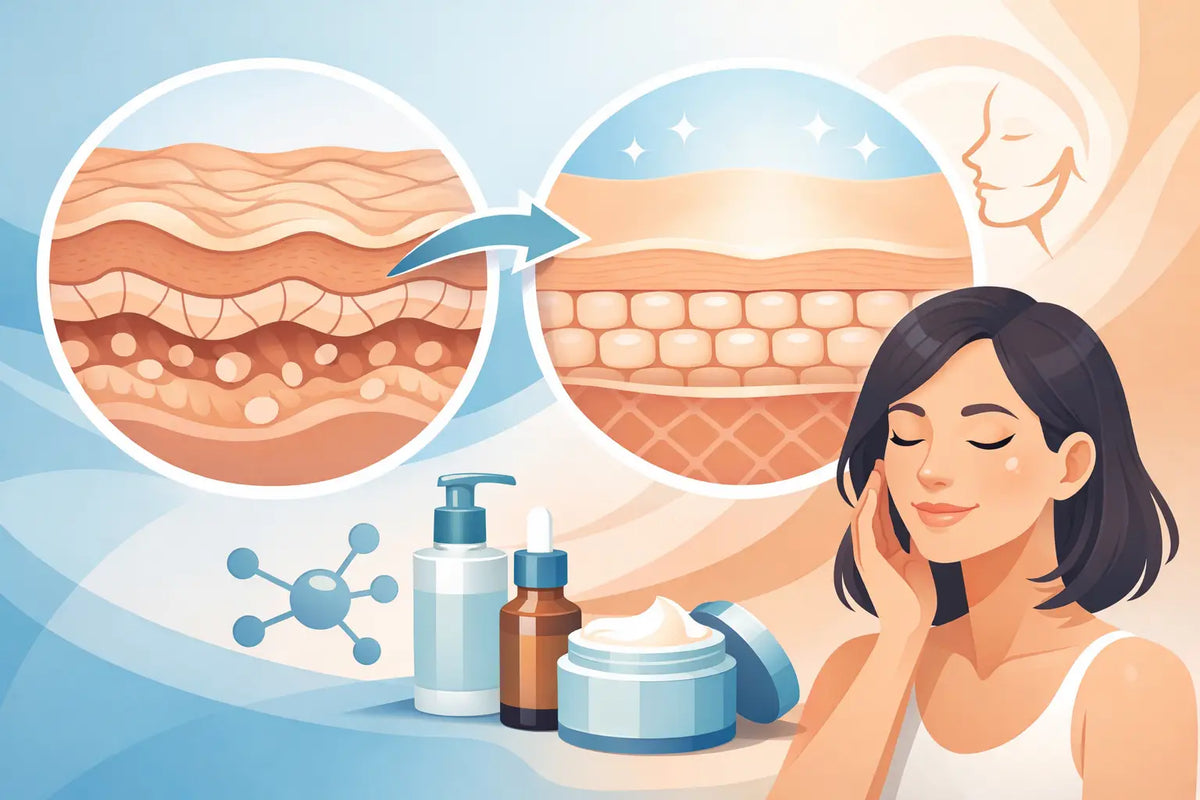
Crepey skin often shows up first where you least expect it: the delicate skin around the eyes, across the neck and chest, or on the upper arms and knees. It can look thin, finely wrinkled, and less resilient even when you are diligent about moisturizer. Learning how to treat crepey skin starts with understanding that this is not simply a dryness issue. It is a visible sign that collagen, elastin, hydration, and skin structure need more support.
The most effective approach combines daily protection with collagen-focused treatment. A rich cream can make skin feel softer, but meaningful, lasting improvement requires a routine that helps defend existing collagen while encouraging the skin to rebuild what time, sun exposure, and environmental stressors have gradually depleted.
Why Crepey Skin Happens
Healthy skin has a dense internal support network made of collagen and elastin. Collagen gives skin its cushion and firmness, while elastin helps it spring back after movement. As production slows with age, skin becomes thinner and less able to retain moisture. The surface can begin to fold into the fine, paper-like texture commonly called crepey skin.
Ultraviolet exposure accelerates this process. Sunlight breaks down collagen over time, including on areas that may be forgotten during sunscreen application, such as the neck, chest, hands, and arms. Hormonal shifts, especially around menopause, can also contribute to faster collagen loss. Genetics, smoking, repeated weight changes, dehydration, and harsh skincare habits may make the change more noticeable.
That is why treating crepey skin calls for more than temporary plumping. The goal is to improve hydration at the surface while supporting firmer-looking skin from within.
How to Treat Crepey Skin With a Smarter Routine
A consistent routine is more valuable than a crowded cabinet. Start with the essentials, then add higher-performance treatment based on the location of the concern, your skin sensitivity, and the degree of visible laxity.
Protect collagen every morning
Daily broad-spectrum sunscreen is foundational. Choose SPF 30 or higher and apply it to every exposed area, not only the face. The neck, chest, forearms, and hands often receive years of incidental sun exposure that adds up quickly.
Sunscreen will not replace collagen that has already been lost, but it helps prevent the breakdown from continuing. For exposed body skin, protective clothing and shade are equally practical tools. This matters most after any collagen-stimulating treatment, when protecting new progress becomes part of the treatment plan.
Use hydration strategically
Dehydrated skin can make fine lines and texture look more pronounced. Hyaluronic acid attracts water into the upper layers of skin, creating a smoother, more cushioned appearance. Apply a hyaluronic acid serum to slightly damp skin, then use a moisturizer to help seal in that hydration.
For crepey areas, look for a moisturizer with barrier-supporting ingredients such as ceramides, glycerin, fatty acids, and peptides. Peptides are signaling ingredients that can complement a collagen-focused routine, while a well-supported barrier helps skin better tolerate active treatments.
Hydration is visible and valuable, but it has limits. It can improve the look and feel of crepiness quickly, particularly when dryness is a major factor. It cannot, on its own, substantially tighten loose skin or restore deep structural collagen.
Add retinoids with patience
Retinoids, including retinol and prescription retinoic acid, are among the most researched topical ingredients for supporting smoother skin texture and collagen production. They can be especially useful for fine lines and sun-related changes, but they work gradually and can cause dryness or irritation when introduced too aggressively.
Start two nights per week, use a small amount, and follow with moisturizer. Increase frequency only as your skin adjusts. If you are treating the neck or chest, proceed carefully because these areas can be more reactive than the face. Retinoids are not generally recommended during pregnancy, and anyone with a skin condition or significant sensitivity should consult a dermatologist before starting.
Go Beyond Creams With Collagen-Stimulating Technology
Topical skincare supports the skin barrier and improves surface quality. Energy-based treatments address a different need: signaling the skin to produce more collagen. For people bothered by persistent crepiness and fine wrinkles, this is often where a routine can become more transformative.
Non-fractional laser technology delivers controlled heat beneath the skin's surface to stimulate collagen without creating open wounds. Because the skin surface remains intact, this approach can be a compelling option for people who want meaningful collagen support without the downtime associated with more aggressive resurfacing procedures.
An at-home device such as the NIRA Pro 3 Laser is designed to bring this collagen-focused category into a consistent, convenient routine. The advantage of at-home treatment is not a one-time dramatic intervention. It is the ability to maintain a precise treatment schedule over time, which is essential because collagen remodeling is gradual.
Use any laser device exactly as directed for the intended treatment areas. Facial devices should not be assumed to be appropriate for larger body areas, and more is not always better. Consistency, correct technique, and realistic expectations create the strongest path to visible improvement.
Know When In-Office Treatment Is the Better Fit
At-home laser technology can be an excellent option for mild to moderate fine lines, texture changes, and early laxity. But treatment should match the concern. If crepey skin is accompanied by substantial sagging, deep wrinkles, extensive sun damage, or sudden changes in texture, a board-certified dermatologist can help assess the cause and recommend a more intensive plan.
Professional options may include prescription retinoids, chemical peels, microneedling, radiofrequency, ultrasound-based treatments, or physician-administered lasers. These treatments can offer greater intensity, but they also come with higher cost, recovery considerations, and variable risk of irritation or pigment changes. The right choice depends on your skin tone, treatment area, medical history, budget, and tolerance for downtime.
Support Results With Everyday Skin Habits
Collagen-focused treatments work best when they are not fighting against daily stressors. Avoid smoking, which damages collagen and reduces circulation to the skin. Keep showers comfortably warm rather than hot, especially if body skin is dry or reactive. After bathing, apply moisturizer before skin is fully dry to reduce water loss.
Nutrition also plays a supporting role. Adequate protein provides amino acids used throughout the body, including in skin structure, while a varied diet rich in fruits and vegetables supports antioxidant intake. No food or supplement can replace sun protection or a targeted treatment plan, but overall health influences how skin looks and recovers.
Be cautious with abrasive scrubs, frequent exfoliating acids, and heavily fragranced body products on thin, crepey areas. Over-exfoliation can compromise the barrier, leaving skin temporarily smoother but ultimately more irritated, dry, and visibly textured.
What Results Can You Expect?
The timeline depends on the treatment. Moisturizers and hyaluronic acid can make skin look more hydrated within days. Retinoids typically require several weeks to months of consistent use before texture changes become noticeable. Collagen stimulation takes longer because the body needs time to build and remodel new collagen fibers.
Look for progressive changes rather than overnight tightening: skin may appear more hydrated, fine lines may look softer, and the area may begin to feel denser and more resilient. Taking photos in the same lighting every four to six weeks can make gradual improvements easier to recognize than checking the mirror each day.
If you have tried multiple products without improvement, do not assume your skin is beyond help. Crepey skin responds best to a plan built around protection, barrier support, and collagen stimulation - then followed long enough for your skin biology to do its work.


