

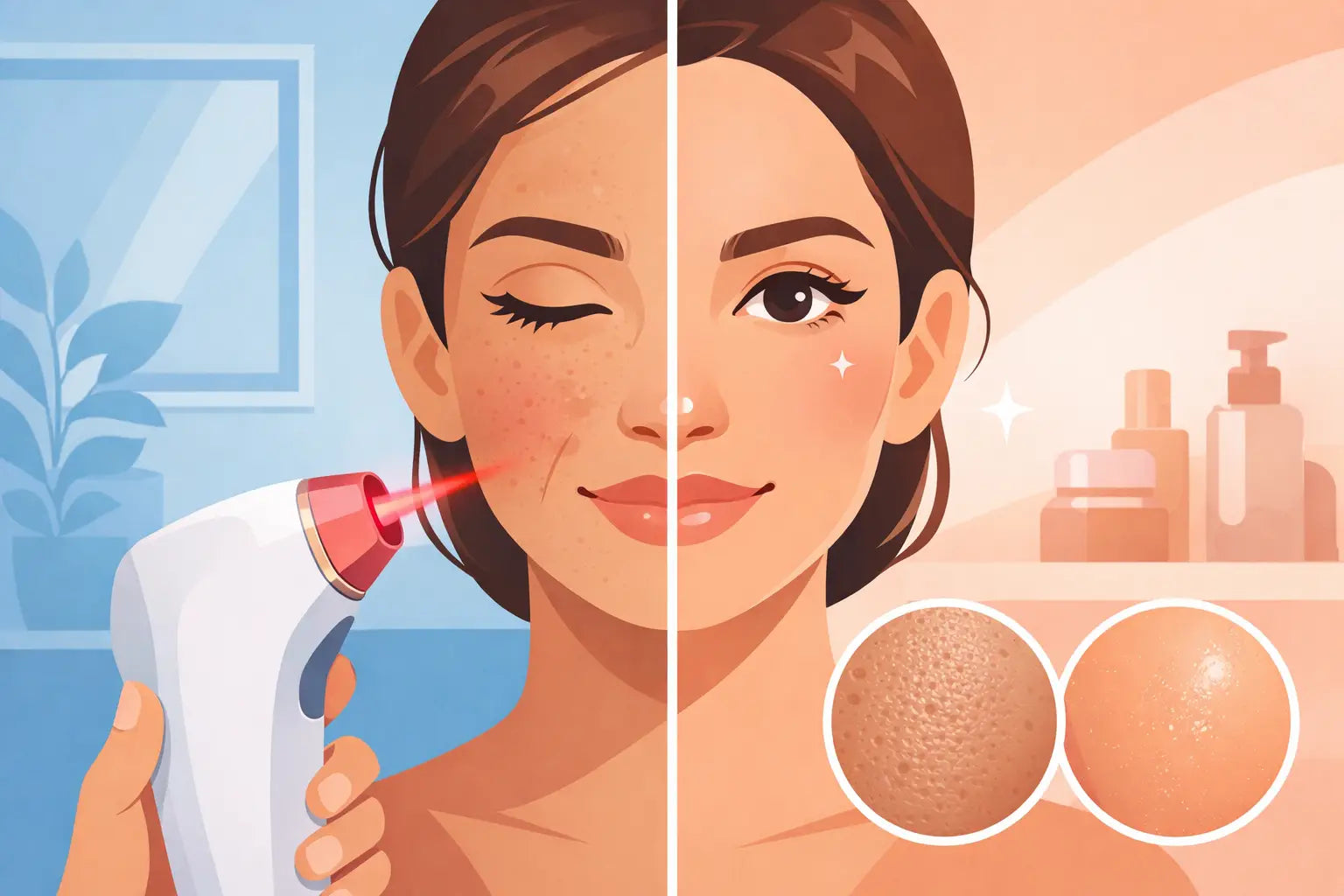
The first thing most people look for is not the technology. It is proof. When someone searches for at home laser before after results, they are usually asking a more practical question: Will this actually make a visible difference on my skin, or will it become another expensive skincare habit with subtle results nobody else can see?
That is the right question to ask. Before-and-after photos can be persuasive, but they only matter if you know how to interpret them. Lighting, angle, makeup, and timing can all shape what you think you are seeing. Real results come down to something more specific - how skin changes over time when collagen stimulation is consistent, measurable, and built into a routine you can actually maintain.
What at home laser before after results should really show
The most credible at home laser before after results are not dramatic overnight transformations. They show progressive change. Fine lines start to look softer. Crow's feet appear less etched. Skin texture looks smoother and a bit more refined. Over time, the face can look firmer, especially in areas where collagen loss tends to show up first, like around the eyes and mouth.
That matters because laser treatments are not simply masking the surface. A well-designed non-fractional laser is intended to stimulate the skin below the surface by delivering controlled heat that supports the skin's natural repair response. The visual change is gradual because collagen remodeling is gradual. If a before-and-after comparison looks too instant or too extreme for an at-home device, skepticism is healthy.
A stronger benchmark is this: can you see visible softening of lines and a more rested look after several weeks of consistent use? That is often the kind of change consumers want most. Not a different face. A fresher, smoother, tighter version of their own skin.
When before-and-after changes usually start to appear
One reason people misjudge results is that they expect a laser to behave like a temporary cosmetic fix. It does not. Clinical skincare devices work on a biological timeline, not a social media timeline.
Some users notice early improvements in skin texture within a few weeks. That can happen because the skin begins responding to repeated treatment and may look smoother or more energized. More meaningful wrinkle reduction usually takes longer. For many people, visible changes become more convincing after 60 to 90 days of regular use.
This is where consistency becomes a major factor. Missing sessions or using a device sporadically can slow progress. At-home laser technology is powerful because it makes repeated treatment realistic. Instead of scheduling office visits, rearranging workdays, and paying per appointment, you can build treatment into your week and keep the collagen stimulation going.
There is also an age and skin-condition variable. Someone with early fine lines may see visible changes faster than someone with deeper, long-established wrinkles. That does not mean deeper lines cannot improve. It means expectations should match the starting point.
How to judge before-and-after photos without fooling yourself
Good before-and-after photography is more disciplined than most people realize. If you want to assess whether results are credible, look for consistency first. The same angle, same lighting, same expression, and no makeup are essential. A photo taken in soft bathroom lighting next to one taken in bright daylight is not useful evidence.
Expression matters more than people think. A slight smile can shift crow's feet and nasolabial folds. Raised brows can smooth the forehead. Even hydration can affect how plump skin appears in a photo. That is why the best before-and-after comparisons look almost clinical. They are controlled enough to isolate the actual skin change.
It also helps to focus on specific areas instead of the whole face at once. Around the eyes, are fine lines less distinct? Around the lips, do vertical lines look softer? Along the cheeks, does skin look denser or firmer? The more targeted your assessment, the easier it is to separate real change from wishful thinking.
Why some at-home devices produce better results than others
Not every beauty device marketed as anti-aging works the same way. This is where a lot of confusion starts. Consumers often compare lasers, LED masks, radio frequency tools, and microcurrent devices as if they are interchangeable. They are not.
Laser technology is distinct because it uses light energy in a focused way to heat tissue and stimulate renewal. But even within this category, the details matter. Device design, wavelength, energy delivery, treatment coverage, and safety features all influence whether the device can generate visible improvement while still being practical for home use.
A clinically validated non-fractional laser has a meaningful advantage for people who want wrinkle reduction without the downtime and skin injury associated with more aggressive resurfacing approaches. Instead of creating columns of damage that require recovery, non-fractional technology is designed to treat skin in a gentler, more repeatable way. That makes consistent use easier, which is a major reason before-and-after results become possible outside a clinic setting.
This is also why premium devices tend to stand apart. A lower-cost tool may promise anti-aging benefits, but if treatment energy is weak, treatment areas are too small, or the user experience is frustrating, adherence drops. Results are not just about the science on paper. They depend on whether the treatment gets used enough to work.
What realistic wrinkle improvement looks like
For most users, realistic improvement means lines look less pronounced, not erased. Skin appears firmer, smoother, and more even in texture. Makeup may sit better. The face can look less tired. These outcomes are meaningful because they change how skin presents in everyday life, not just in close-up images.
It is also worth separating fine lines from folds. Fine lines caused by early collagen decline often respond better and sooner than deeper expression lines or structural folds. If your goal is to soften crow's feet, under-eye lines, or early mouth lines, before-and-after changes may feel more rewarding. If you are expecting an at-home device to fully replicate an injectable or surgical result, disappointment is likely.
That does not make at-home laser less valuable. It makes it a different category. For many people, the real win is visible rejuvenation without needles, downtime, or repeated office visits. That is a meaningful trade-off, especially if you want long-term skin quality improvement rather than a quick cosmetic shortcut.
The routine behind stronger at home laser before after results
The best at home laser before after results usually come from people who treat the device like part of a real regimen, not a one-week experiment. Skin responds to consistency. A device can support collagen production, but your routine still influences how well skin holds onto those gains.
Clean skin is the starting point. Treatments should be done exactly as directed, with enough consistency to create cumulative benefit. Supportive skincare can also matter. Hydrating formulas help maintain the skin barrier and improve overall skin quality, while ingredients that complement post-treatment care can make the skin look smoother and more resilient over time.
Sun exposure is another quiet variable. If you are investing in collagen stimulation but allowing daily UV exposure to accelerate collagen breakdown, results can plateau. Before-and-after comparisons look better when the skin is not constantly fighting new damage.
This is where an FDA-cleared, clinically tested device earns trust. You are not relying on vague beauty claims. You are choosing a treatment approach built around repeatable use, controlled energy delivery, and visible outcomes. That is one reason devices like NIRA have earned attention from consumers who want more than topical skincare alone can deliver.
Signs your results are real, not wishful thinking
The strongest sign is that your skin looks better even when conditions are not helping you. Not just in flattering light. Not just right after moisturizer. If lines still appear softer in the car mirror, on a video call, or first thing in the morning, that is usually a more honest indicator of progress.
Another sign is when change becomes easier to notice in motion, not just in still photos. Your face looks smoother when you smile. Makeup creases less around the eyes. Skin has a firmer quality when you catch your reflection from the side. These are small but high-value changes because they show up in normal life.
And finally, real results tend to build. If week four looks a bit better than baseline and week eight looks better than week four, that progression is usually more meaningful than any single photo. Skin rejuvenation is often quiet at first, then increasingly obvious.
If you are evaluating whether at-home laser is worth it, look past the promise of instant transformation. Look for technology backed by clinical evidence, use it with consistency, and judge results with the same precision you would want from any serious skincare investment. The best before-and-after is not the most dramatic one. It is the one you can trust when the mirror is honest.


