

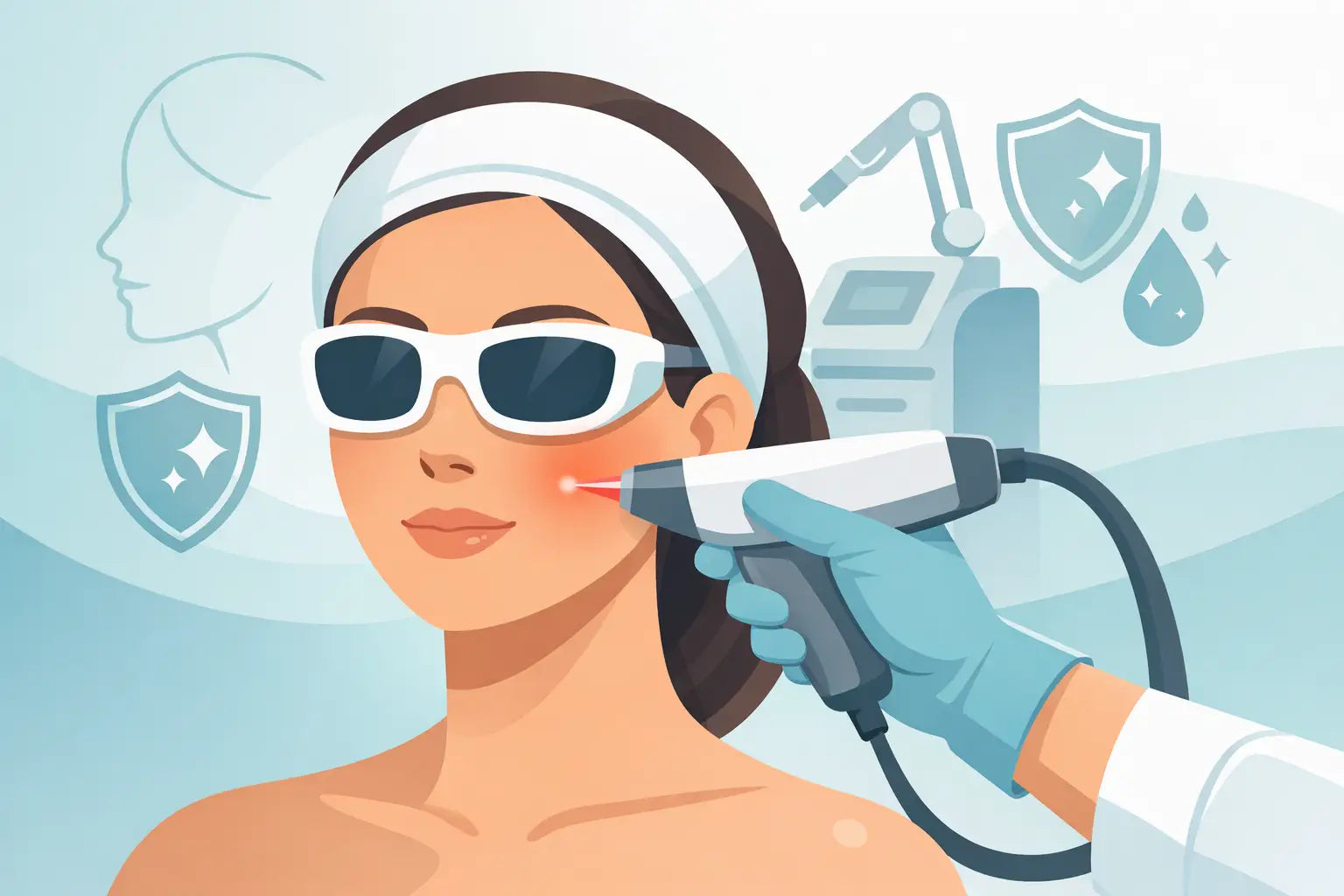
A facial laser should never feel like guesswork. If you want visible wrinkle reduction and firmer-looking skin, knowing how to use a facial laser safely is what separates a confident, effective routine from one that irritates skin or delivers inconsistent results.
At-home laser technology has made real anti-aging treatment more accessible, but safety still comes first. The right device matters, your skin condition matters, and the way you prep, treat, and care for skin afterward all influence both comfort and results. Used correctly, an at-home facial laser can fit into a fast routine and support smoother, more youthful-looking skin over time.
Why safe laser use matters
Laser energy is precise by design. That precision is a major advantage because it allows a device to target the skin in a controlled way, but it also means technique matters. More intensity is not always better, and treating too aggressively does not usually speed up results. In many cases, it just increases the chance of redness, sensitivity, or inconsistent treatment.
Safe use is really about consistency and control. A well-designed at-home device should be engineered to deliver energy within a range intended for home use, yet the person holding it still plays an important role. Clean skin, correct placement, the right treatment schedule, and attention to contraindications all help protect your skin barrier while supporting collagen-focused benefits.
How to use a facial laser safely at home
Start with the device instructions, not assumptions. Facial lasers are not interchangeable, and each model can have its own approved treatment zones, pulse pattern, contact requirements, and recommended frequency. If a device is FDA-cleared for cosmetic use, that is a strong sign it has been evaluated for its intended purpose, but you still need to use it exactly as directed.
Before your first full treatment, assess your skin honestly. If you have an active rash, sunburn, broken skin, open acne lesions, or significant irritation from retinoids or exfoliating acids, wait until your skin has calmed down. Laser treatments work best on stable skin, not stressed skin.
Skin should be freshly cleansed and fully dry unless your device instructions say otherwise. Remove makeup, sunscreen, and skincare residue so the laser can make proper contact with the skin surface. Heavy oils or occlusive products before treatment may interfere with contact or add unnecessary sensitivity depending on the device.
The treatment area should also be well lit so you can move methodically rather than rushing. Most people get better results when they follow a repeatable pattern across the face instead of randomly treating areas they notice first in the mirror.
Start lower, then build if needed
One of the most common mistakes with beauty tech is assuming the strongest setting is the best setting. Safe laser use usually means starting at a lower energy level, especially if you are new to the device or know your skin runs reactive. Once you understand how your skin responds, you can increase intensity if the device instructions support it.
A comfortable warm or prickly sensation can be normal. Sharp pain, lingering heat, or visible irritation that seems excessive is a sign to stop and reassess. Your skin should not need to endure a harsh experience in order to benefit from collagen stimulation.
Keep the laser moving with purpose
Placement matters. Most facial lasers are designed to be used with direct contact on the skin and with pulses delivered in a systematic pattern. Treat one small section at a time so you do not accidentally over-treat one area and miss another.
This is especially important around delicate zones like the crow's feet area, upper lip, and under-eye region. Even if a device is designed for precision, you should only treat areas specifically approved in its instructions. The eye area is where users need the most discipline. Never direct the laser into the eye, and do not improvise on treatment zones.
Pre-treatment checks that protect your skin
Safe use starts before the device ever touches your face. A few simple checks can dramatically reduce the odds of a poor reaction.
First, review photosensitizing medications and topicals. Certain prescriptions and even some over-the-counter ingredients can increase light sensitivity. If you are unsure whether your medication affects laser use, get medical guidance before treating.
Second, look at your recent skincare. If you used a strong peel, had waxing done, spent too much time in the sun, or pushed active ingredients too hard the night before, it may be smarter to postpone treatment. Freshly sensitized skin is not ideal for laser exposure.
Third, perform a patch test when recommended. Not every device requires one, but when it does, take it seriously. It is a small time investment that can help you gauge skin tolerance before committing to a full-face session.
What not to do when using a facial laser
The biggest safety problems usually come from impatience. Doubling up on sessions, treating more often than instructed, or stacking too many strong skincare actives around treatment can compromise your results instead of improving them.
Do not use a facial laser over tattoos, suspicious lesions, active infections, or areas with broken capillaries unless the device instructions specifically permit it. Do not treat moles or raised spots just because they sit within your usual treatment area. Those are places to avoid and, if needed, have evaluated by a medical professional.
It is also wise not to combine every device in your bathroom on the same day. If you use other energy-based tools or highly stimulating treatments, spacing them out is often the safer move. Skin responds best when it has room to recover.
Aftercare is part of safe use
A good laser session does not end when the device turns off. Post-treatment care helps maintain comfort and supports your skin barrier while the skin does its renewal work.
After treatment, keep skincare simple. Hydrating and barrier-supportive formulas tend to make the most sense, especially if your skin feels warm or looks slightly pink. Hyaluronic acid, peptides, and straightforward moisturizers are generally more compatible immediately after treatment than strong exfoliants or high-strength retinoids.
Sun protection matters even more when you are using an anti-aging device consistently. That does not mean laser use automatically makes daily life complicated. It means using broad-spectrum sunscreen, limiting unnecessary UV exposure, and treating your investment in collagen like something worth protecting.
Some redness immediately after treatment can be normal depending on the device and your skin. What you want to watch for is redness that worsens, swelling that seems disproportionate, blistering, or prolonged irritation. Those signs mean you should stop use and seek professional advice.
How often should you treat?
This is where people are often tempted to overdo it. Frequency depends on the technology and the device protocol. Some lasers are designed for daily use, while others are not. The safest schedule is always the schedule validated for that specific device.
Consistency beats intensity. Clinical-grade at-home devices are built around cumulative results, not one dramatic session. A treatment plan that feels sustainable is often the one that produces the best visible improvement over time. That is especially true for fine lines, wrinkles, and texture concerns linked to collagen loss.
Choosing the right device makes safety easier
If your goal is to use a facial laser safely, the design of the device is part of the equation. Look for a device created specifically for at-home cosmetic use, ideally one with FDA-cleared positioning, clear treatment guidance, and technology that is designed to deliver controlled energy without unnecessary downtime.
This is where non-fractional technology can appeal to people who want meaningful wrinkle-focused results without the intensity or recovery profile associated with more aggressive treatment categories. A device like NIRA is built around that balance - clinically informed performance with a routine that feels realistic at home.
That said, no device removes the need for judgment. You still need to respect treatment zones, follow timing instructions, and pay attention to how your skin responds.
When to pause and ask a professional
At-home devices are convenient, but convenience should not replace common sense. If you are pregnant, managing melasma, prone to post-inflammatory hyperpigmentation, under dermatologic care for a medical skin condition, or recovering from a recent in-office procedure, it is smart to check with a qualified professional before starting.
The same goes if your skin reacts in a way that seems unusual for you. A short pause is better than pushing through uncertainty. Good anti-aging routines are built on precision, not bravado.
Using a facial laser safely is less about doing something intense and more about doing something well. Clean prep, the right setting, consistent technique, and supportive aftercare can turn a few minutes at home into a treatment you trust and want to stick with. When your routine feels controlled, your results usually look that way too.


