

消息
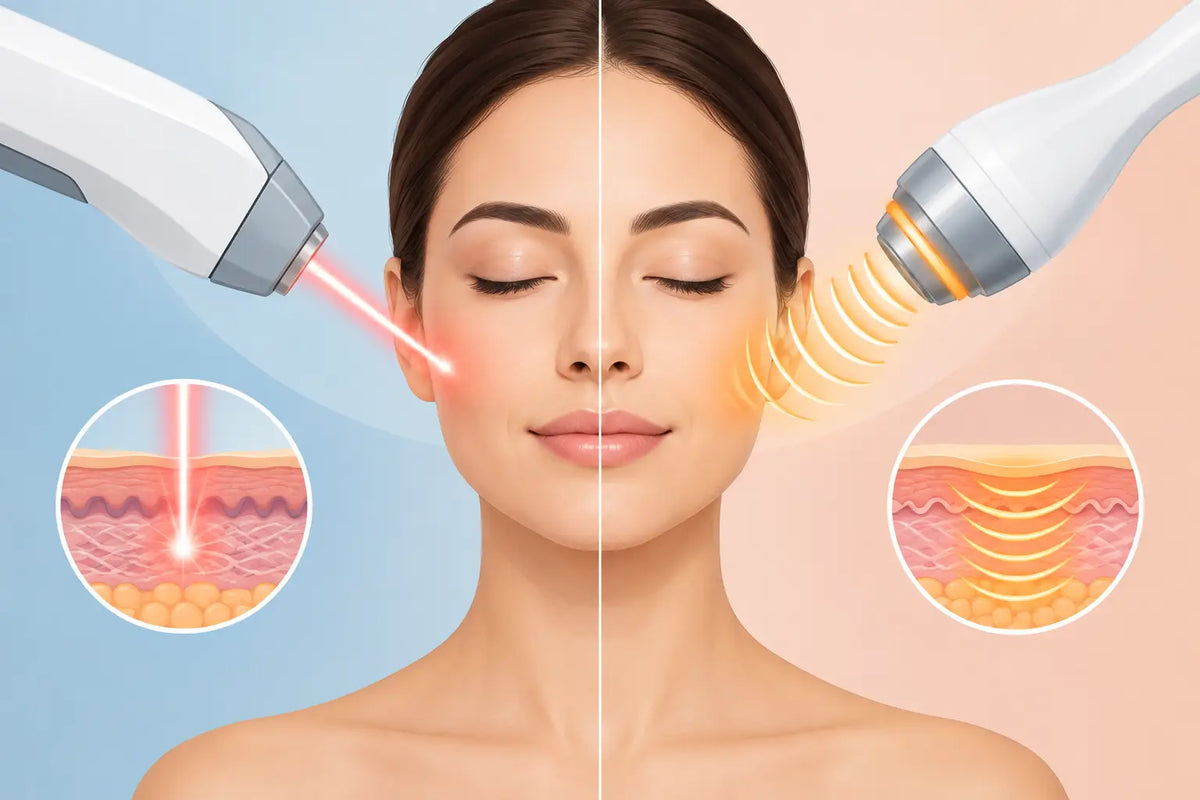

Laser Versus Radiofrequency for Firmer Skin
Laser versus radiofrequency for wrinkles: compare collagen stimulation, comfort, downtime, and at-home options to choose your skin-tightening routine.
了解更多
Can Lasers Boost Collagen? What Science Says
Can lasers boost collagen? Learn how laser heat supports firmer-looking skin, what results take time, and how at-home treatment fits a smart routine.
了解更多
How to Treat Photoaging With Laser Technology
Learn how to treat photoaging with laser technology, what collagen remodeling can improve, and how at-home, non-fractional care fits your routine daily.
了解更多
How to Improve Skin Firmness Naturally at Home
Learn how to improve skin firmness naturally with collagen-supporting habits, targeted skincare, and proven at-home technology for visible, lasting results.
了解更多
How to Support Collagen After Menopause at Home
Learn how to support collagen after menopause through sun protection, protein, smart skincare, and at-home laser care for firmer-looking skin every day.
了解更多
At-Home Wrinkle Devices: Lasers, LED and Microcurrent
Choose an at-home wrinkle device by its intended use, not a promise of a facial transformation. NIRA lasers are options for shoppers focused on wrinkles around the eyes; LED masks and microcurrent devices are different technologies that need their own device-specific evidence and instructions. TL;DR NIRA lasers are FDA-cleared for treating wrinkles around the eyes; clearance should not be extended to other claims. Compare at-home wrinkle devices by intended use, evidence, treatment tip and routine. NIRA Pro 3 Laser offers five comfort levels; NIRA Precision Laser offers five and a smaller tip. LED masks and microcurrent devices are not interchangeable with lasers. Results vary. Follow the instructions for your specific device rather than increasing treatment on your own. Why the treatment claim matters A device can sound right for your concern while being intended for something different. Start with the outcome you want, then check that the manufacturer supports that use for the exact model you are considering. For NIRA, the product-page FAQs identify the FDA-cleared use as treating wrinkles around the eyes. That wording matters: a description of how laser energy works is not permission to make a broader treatment claim. Do not read FDA clearance as a guarantee of your personal results. Nor should you assume that a device mentioned alongside another technology has been tested against it. Comparisons need to identify the actual products, the measured outcome and the treatment schedules before declaring a winner. What to compare before buying an at-home wrinkle device Use these five criteria before looking at a ranking or customer photograph: Intended use: Check the exact concern and treatment area in the device labeling. Product-specific evidence: Look for research on the model or technology being sold, not an unrelated clinic system. Treatment tip and handling: Consider whether you prefer a handheld treatment or a wearable format. Routine: Read the actual schedule and preparation steps. Do not assume every light-based device uses the same routine. Limitations and precautions: Review the instructions, warnings and eligibility before buying, especially if you have a skin condition or are receiving other treatments. A useful device comparison starts with a supported use, not a universal “best” label. This guide is a buying framework, not a report of independent hands-on testing or a clinical head-to-head trial. At a glance Option Best for shoppers prioritizing What to check Key limitation NIRA Pro 3 Laser A larger treatment tip and adjustable comfort settings Five comfort levels and the device instructions Requires active, spot-by-spot use; results are not guaranteed NIRA Precision Laser A smaller tip for targeted treatment Five power settings and the device instructions A smaller tip covers less skin per placement LED face mask A wearable light-based format The exact model's intended use, evidence and eye-safety instructions Category-wide claims cannot establish an individual mask's results Microcurrent device An electrical-current rather than light-based format The exact model's intended use, technique and precautions It should not be treated as equivalent to a wrinkle laser 1. NIRA Pro 3 Laser: a larger tip with five comfort settings The NIRA Pro 3 Laser is a handheld, non-fractional laser. NIRA describes its technology as using a 1450 nm wavelength and identifies wrinkle treatment around the eyes as the FDA-cleared use in its product-page FAQ. The device has five comfort levels and a silent-vibration mode. Those are concrete handling features to compare when deciding whether a daily handheld routine suits you. They are not proof that this device will outperform every other device for every person. NIRA Pro 3 Laser pros: A larger treatment tip than the Precision model. Five comfort levels for adjusting the treatment experience according to the instructions. A vibration option for users who prefer that feedback. NIRA Pro 3 Laser limitations: Treatment requires moving the device between individual spots rather than wearing a mask. Progress requires following a routine; a purchase alone does not establish a result. Clearance for eye-area wrinkles should not be represented as clearance for every area described in marketing or customer reviews. Best for: shoppers who prefer the larger tip and five comfort settings when choosing an at-home wrinkle laser. Verdict: consider it for the supported wrinkle-treatment use, not a broader promise. 2. NIRA Precision Laser: a smaller tip for targeted treatment The NIRA Precision Laser uses a smaller treatment tip. Its product page lists five power settings and describes a portable design for targeted use. The Precision product-page FAQ also identifies wrinkles around the eyes as the FDA-cleared treatment area. Its smaller tip is a handling difference, not evidence that it produces better results in every small area or that every area mentioned on the website is separately cleared. NIRA Precision Laser pros: A small tip for precise placement. Five settings for adjusting the treatment experience according to the instructions. A portable handheld design. NIRA Precision Laser limitations: A smaller tip covers less skin with each placement. Treatment still requires a consistent, manual routine. The model's features and intended use should be checked separately rather than assumed from the Pro 3 description. Best for: shoppers who value a small treatment tip over the Pro 3 model's larger tip. Verdict: consider it when precise placement is the priority. Compare the NIRA lasers NIRA Pro 3 Laser Handheld at-home laser with five comfort levels and a larger treatment tip. $699.00 NIRA Precision Laser Handheld at-home laser with a small precision tip and five power settings. $449.00 3. LED face masks: compare the actual mask, not the category An LED mask is a different type of light-based device from a handheld laser. A wearable format can appeal if you would rather wear a device than move a treatment tip between spots. That format preference does not establish its clinical performance. Check the exact mask's intended use, treatment schedule, precautions and supporting study. Do not assume that every red-light product has the same output or the same evidence. LED mask advantages to consider: A wearable format instead of handheld spot placement. A routine that some shoppers may find easier to accommodate. LED mask limitations to consider: Models differ, so evidence about one mask cannot automatically be applied to another. A convenient format does not establish whether it addresses your particular concern. Best for: shoppers who prioritize a wearable format and can verify that the selected model supports their goal. Verdict: wait to choose until you have reviewed a specific mask, not just a technology label. 4. Microcurrent devices: a separate decision from a laser Microcurrent devices use electrical current rather than laser light. Treat them as a separate category with their own instructions and intended uses. Avoid assuming that an electrical-current device produces the same outcome as a laser because both appear on an anti-aging shopping list. Any claim about a visible effect, its duration or a biological mechanism needs support for the specific device. Microcurrent advantages to consider: An alternative format for shoppers specifically interested in electrical-current devices. The opportunity to compare the manufacturer's demonstrated outcome with your own goal before choosing. Microcurrent limitations to consider: Technique and precautions must be reviewed for the actual model. Being included in a skincare routine does not establish equivalence to a wrinkle laser. Best for: shoppers whose goal matches the selected model's supported use. Verdict: skip unsupported claims that every microcurrent device produces the same result. How to compare the evidence fairly A credible comparison answers four questions: What was measured? A change in wrinkle appearance should be described as that outcome, not a different one. Which device was used? Results from a professional laser do not automatically apply to a home-use model. How was treatment carried out? The schedule and follow-up period affect how you interpret the findings. What does the evidence not show? A single-product study cannot establish superiority over every alternative. This guide does not assign a universal clinical winner across lasers, LED masks and microcurrent devices. The product details above come from NIRA's current product pages, checked October 30, 2026. The selection criteria help you ask better questions; they do not replace the product instructions or medical advice. Build a routine from the instructions, not from promises For both NIRA models, the product pages describe cleansing and thoroughly drying the skin before treatment, followed by the device-specific treatment steps and skincare afterward. The controls differ, so read the instructions that come with your model. Do not borrow a mask's schedule for a laser, add extra passes to speed progress or assume that more sensation means a better outcome. If you are unsure whether a device fits your circumstances, ask a qualified clinician and the manufacturer before starting. Take progress photographs under comparable lighting and conditions. A change in lighting, angle or facial expression can make a before-and-after comparison difficult to interpret. Do not use a single customer photograph as a promise of what you will experience. FAQ How do I choose my first at-home wrinkle device? Start with the intended treatment use, then compare the device's evidence, precautions and routine. Choose a format you can use as directed rather than a promise of universal results. What is NIRA FDA-cleared to treat? NIRA's Pro 3 and Precision product-page FAQs identify wrinkles around the eyes as the FDA-cleared use. Do not extend that statement to every treatment area or outcome mentioned in marketing. What is the main difference between NIRA Pro 3 and Precision? NIRA Pro 3 has a larger treatment tip and five comfort levels; Precision has a smaller tip and five power settings. Choose between those handling features while checking each model's instructions. Is an LED mask the same as an at-home laser? No. LED masks and lasers use different light-based technologies, and a mask's evidence should be evaluated for the specific model. A shared skincare goal does not make their performance interchangeable. Is microcurrent the same as laser treatment? No. Microcurrent uses electrical current rather than laser light. Review its intended use and evidence independently instead of assuming it provides the same outcome as a wrinkle laser. Does FDA clearance guarantee my results? No. FDA clearance should not be presented as a guarantee of an individual's result. The intended use and device instructions still define how the device should be represented and used. Can I increase treatment to get results faster? Follow the instructions for your specific device rather than increasing treatment on your own. Ask the manufacturer or a qualified clinician if you are uncertain about frequency, settings or other treatments in your routine. One last thing Keep the outcome and the evidence matched. NIRA is an option for shoppers considering at-home laser treatment for eye-area wrinkles; that positioning does not need a broader claim to make the product worth comparing. Related guides Guide to at-home skincare laser treatment NIRA and LYMA: differences between the lasers
了解更多
Best Treatments for Neck Crepiness That Work
Best treatments for neck crepiness include daily UV defense, collagen-supporting skincare, and laser options to firm and smooth aging skin at home daily.
了解更多
Wrinkle Prevention Routine for 40s That Works
Build a wrinkle prevention routine for 40s with daily SPF, collagen-supporting skincare, and targeted at-home laser care for firmer-looking skin over time.
了解更多
How to Layer Skincare After Laser Treatment
Learn how to layer skincare after laser treatment, what to use first, what to pause, and how to support calm, hydrated, resilient skin every day.
了解更多
Menopause Laser Results: What Skin Can Expect
Menopause laser results can mean different things. Learn what changing skin needs, which results are realistic, and how collagen-focused care can help too.
了解更多