

Your post-laser routine is not the moment to test a new exfoliating serum or layer on every active in your cabinet. When you layer skincare after laser treatment, the goal is simple: support your skin barrier while your skin does the repair work.
The right approach depends on the laser used, the intensity of treatment, and how your skin looks and feels afterward. A gentle at-home non-fractional laser routine is very different from recovery after an ablative resurfacing procedure in a dermatologist’s office. The common thread is restraint. Calm, hydrated skin is better positioned to recover comfortably and reveal the smooth, refreshed-looking results you want.
First, Match Your Routine to the Type of Laser
Not all lasers create the same level of skin disruption. After an ablative or aggressive fractional laser, your provider’s aftercare instructions take priority over every recommendation in this article. These treatments can leave skin significantly sensitive, swollen, peeling, or raw. In that window, the approved routine may be limited to a specific ointment, gentle cleansing, and strict sun avoidance.
After a non-ablative professional treatment, skin may be pink, warm, or dry but generally has less surface injury. Your clinician may allow a simple hydrating routine sooner, though the exact timeline varies.
At-home devices also require their own protocol. For example, NIRA’s non-fractional laser technology is designed to stimulate collagen without creating open wounds or requiring the downtime associated with ablative resurfacing. Still, device instructions and your skin’s response should guide the products you use immediately before and after each session.
If your skin is intensely hot, increasingly painful, blistered, oozing, or unusually swollen, stop applying nonessential products and contact your treating provider. More skincare is not better when skin is signaling distress.
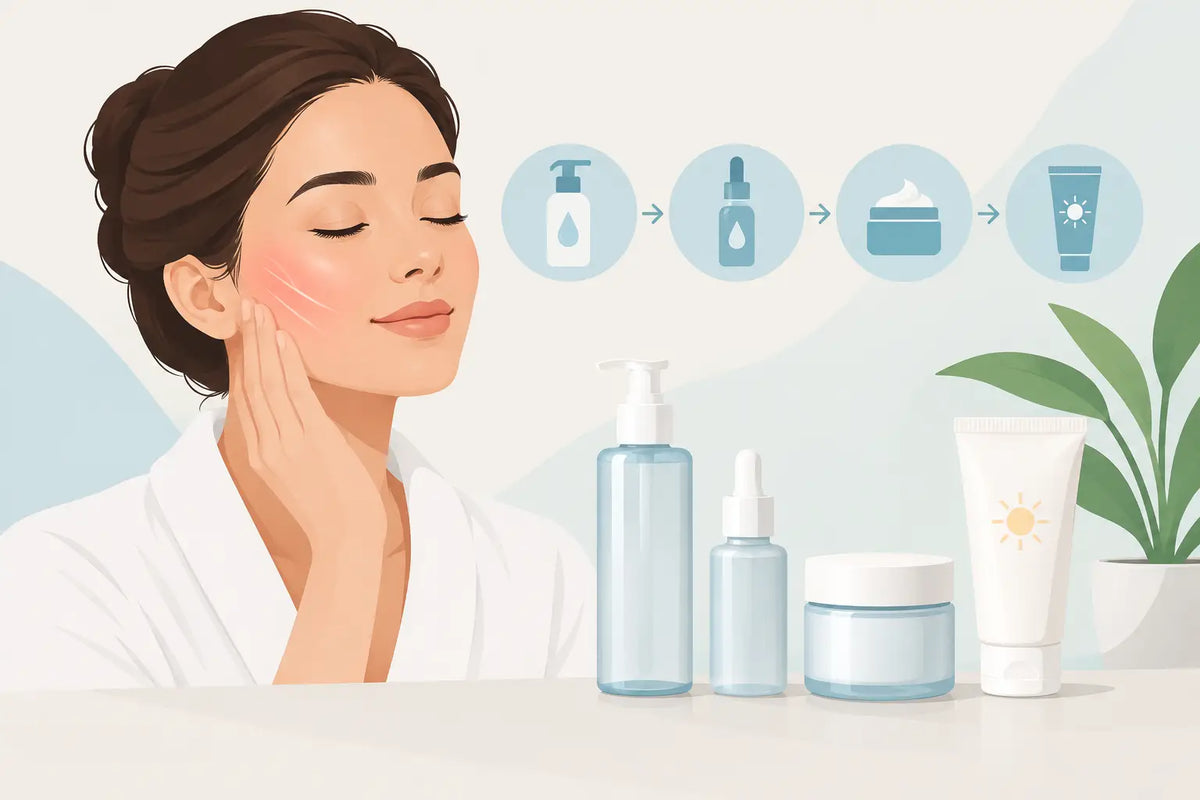
How to Layer Skincare After Laser: The Basic Order
Once your provider or device instructions say topical skincare is appropriate, use the thinnest, gentlest products first and build only as your skin tolerates them. Think hydration, comfort, and protection - not correction.
Start with a mild cleanse if needed. Use cool to lukewarm water and a fragrance-free, non-exfoliating cleanser. Avoid cleansing brushes, washcloth friction, scrubs, and very hot water. Pat dry with a clean, soft towel rather than rubbing.
Next, apply a simple hydrating serum to slightly damp skin. Hyaluronic acid is often a smart choice because it helps draw water into the outer layer of skin without functioning as an exfoliating active. Choose a formula without fragrance, strong botanical extracts, or added acids. If a serum stings or makes redness worse, rinse it away and simplify.
Follow with a barrier-supporting moisturizer or cream. Look for a comfortable formula that helps reduce moisture loss and leaves skin feeling cushioned, not coated in irritation. Ingredients such as ceramides, glycerin, squalane, and peptides can fit well in a recovery-minded routine, provided the formula itself is gentle and approved for your stage of healing.
During the day, sunscreen is the final essential layer - but only when your treating provider says it is safe to apply after your procedure. Broad-spectrum SPF 30 or higher helps protect vulnerable, healing skin from UV exposure that can worsen discoloration and undermine the appearance of your results. For many people with sensitive post-treatment skin, a mineral sunscreen is the most comfortable option. Reapply as directed when outdoors, and add physical protection such as a hat and shade.
The Products to Pause, Even If You Love Them
A strong skincare routine before treatment may include retinoids, vitamin C, exfoliating acids, or acne treatments. Immediately after laser, those high-performance staples can become a source of unnecessary irritation. This is temporary, not a step backward.
Pause retinol and prescription retinoids, alpha hydroxy acids such as glycolic and lactic acid, beta hydroxy acids such as salicylic acid, exfoliating pads, facial scrubs, and benzoyl peroxide until your provider clears them. Vitamin C is more nuanced. Some gentle formulas may be fine after mild treatments, but lower-pH formulas can sting compromised skin. Give your barrier time to settle before bringing it back.
Also skip fragranced products, essential oils, self-tanner, and masks with tingling or “warming” claims. Even products that are normally effective can be poorly timed after laser treatment. Your skin does not need a challenge right now. It needs consistency.
Reintroduce Actives One at a Time
There is no universal day on which everyone should restart retinol or exfoliating acids. Your timeline depends on the treatment, your clinician’s guidance, your history of sensitivity, and whether redness, peeling, or tenderness has fully resolved.
When you are cleared to resume active skincare, introduce one product at a time. Use it less frequently than usual at first, then watch your skin for 48 to 72 hours. If burning, itching, persistent tightness, or renewed flaking appears, step back to cleanser, moisturizer, and sunscreen until your skin is comfortable again.
This measured return matters because laser treatments and active skincare can both influence skin renewal. Used thoughtfully, they can complement a long-term plan for firmer, smoother-looking skin. Used too aggressively or too soon, they can compromise comfort and trigger a cycle of inflammation that makes progress harder to see.
Your Skin’s Signals Matter More Than a Calendar
The best post-laser routine does not rely only on what day it is after treatment. Look at what your skin is telling you. Skin that feels calm, looks evenly toned, and tolerates a bland moisturizer without stinging may be ready for a gradual next step. Skin that feels tight, shiny, rough, hot, or reactive needs fewer variables.
Keep makeup minimal while skin is sensitive, especially after more intensive procedures. If you wear it, choose clean applicators and remove it gently. Avoid picking at flakes or peeling skin. That can increase irritation and raise the risk of unwanted marks.
Hydration also starts beyond the bathroom counter. Drink water consistently, prioritize sleep when possible, and avoid heat exposure that leaves your face flushed, including saunas and very hot showers, for as long as your provider recommends. These small choices support the conditions your skin needs to recover well.
A Smarter Way to Think About Results
Laser treatments are designed to support visible skin renewal over time, often through collagen-focused processes that do not reveal their full effect overnight. Your topical routine should protect that investment, not compete with it. A gentle serum, a replenishing moisturizer, and daily sun protection can feel almost too simple, but that simplicity is strategic.
As your skin stabilizes, you can return to a more targeted routine with confidence and intention. Until then, let comfort be your benchmark. The most effective layer is the one your healing skin can actually use well.


