

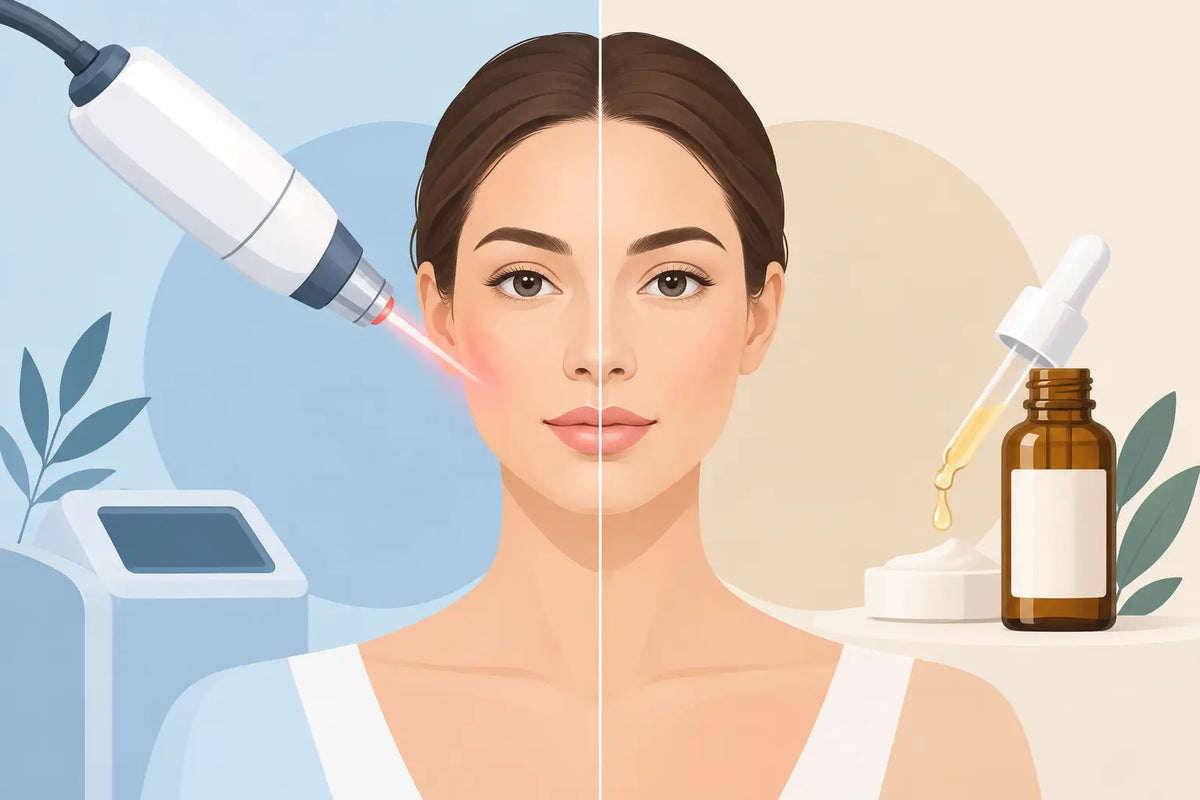
A new line that lingers around your mouth can make the choice feel urgent: do you need a stronger retinol, or is it time for a device? The laser versus retinol treatment question is less about which option is universally “better” and more about what your skin needs, how quickly you want to see change, and the routine you can realistically maintain.
Both can improve the look of aging skin. But they work through different biological pathways, come with different adjustment periods, and deliver different kinds of results. Understanding that distinction helps you invest in a plan designed for visible, lasting improvement rather than cycling through products that never quite match your goals.
Laser Versus Retinol Treatment: The Core Difference
Retinol is a vitamin A derivative applied to the skin. Once converted into retinoic acid, it encourages cellular turnover and supports collagen-related activity over time. It has earned its place in skincare because consistent use can improve the appearance of fine lines, uneven texture, dullness, and discoloration.
Laser treatment uses light energy rather than a topical ingredient. Depending on the technology, that energy can create controlled thermal stimulation in the skin to trigger a collagen response. Collagen is the structural protein that helps skin look firm, smooth, and resilient. As collagen declines with age, lines become more established and skin can begin to look thinner or less supported.
This is the practical distinction: retinol primarily asks skin to renew itself more efficiently at the surface and within the epidermis, while a collagen-stimulating laser is designed to create a targeted signal deeper in the skin. Retinol can be an excellent long-term skincare staple. Laser technology is often the more direct choice when loss of firmness and visible wrinkles are the central concern.
What Results Can You Expect?
Retinol rewards consistency and patience. Many people notice smoother texture and more even-looking skin after several weeks, while improvements in fine lines generally take a few months of regular use. The change tends to be gradual. That can be ideal for someone building a preventive routine or addressing early signs of aging.
Laser results also require time because collagen remodeling is not instant. Your body needs weeks and months to produce and organize new collagen. Still, the purpose of laser treatment is more focused: improving the look of wrinkles and firmness by addressing a key driver of visible skin aging. A clinically designed at-home laser routine can offer a practical way to keep that collagen signal consistent without scheduling repeated office visits.
The severity and type of concern matter. Fine, surface-level lines and rough texture may respond beautifully to a well-tolerated retinol routine. More persistent expression lines, crepey-looking skin, or areas where skin seems to have lost its spring often call for a collagen-centered strategy. Neither approach needs to replace every other part of your routine. In many cases, the strongest plan uses both thoughtfully.
Retinol is not the same as prescription retinoid therapy
“Retinol” covers a broad category. Over-the-counter formulas vary substantially in strength, delivery system, stability, and supporting ingredients. Prescription retinoids such as tretinoin are more potent and may produce more pronounced results, but they also have a higher likelihood of irritation and require medical guidance.
A retinol serum that works well for one person may be too strong, too drying, or simply too mild for another. This variability is one reason consumers can feel disappointed after trying retinol. The ingredient has real value, but results depend on formulation, frequency, skin tolerance, and sustained use.
Downtime, Irritation, and Daily Life
The best treatment is not just the one with compelling science. It is the one you can use consistently without disrupting your life or compromising your skin barrier.
Retinol commonly causes dryness, flaking, redness, and temporary sensitivity, especially during the first several weeks. Some people experience a period of breakouts as their skin adjusts. Starting slowly, applying it at night, using a moisturizer, and wearing broad-spectrum sunscreen every morning can make a meaningful difference. Retinol should not be used during pregnancy unless a clinician specifically advises otherwise.
In-office resurfacing lasers can deliver dramatic results, but they may involve redness, swelling, peeling, discomfort, pigment-related risk, and days or weeks of recovery depending on the treatment. That intensity is not necessary for everyone, particularly people seeking a more gradual, repeatable approach to wrinkle care.
Non-fractional at-home laser technology offers a different experience. It is designed to stimulate collagen without creating the open micro-injuries associated with ablative or fractional resurfacing. That means no peeling-based recovery cycle and a treatment that can fit into a few minutes of regular home care. NIRA’s clinical-grade at-home laser technology is built around this model: precise collagen stimulation designed for visible wrinkle reduction, with the convenience of a consistent at-home routine.
That does not mean every laser device is interchangeable or appropriate for every skin concern. Follow the device instructions exactly, use only cleared products as directed, and ask a dermatologist if you have a skin condition, a history of pigment changes, active inflammation, or questions about compatibility with medication.
Cost Is More Than the Price Tag
Retinol is usually the lower-cost entry point. A quality serum can be a reasonable monthly skincare expense, though the total adds up over years of continuous use. It is an accessible option for someone who wants a proven active ingredient and is comfortable with a gradual pace.
Professional laser sessions require a larger upfront commitment. A treatment plan can involve multiple appointments, recurring maintenance, travel time, and post-treatment care. For some patients, the clinical setting and intensity are worthwhile. For others, the cost and scheduling burden make it difficult to stay consistent.
An at-home laser sits between these categories. The initial investment is higher than a bottle of retinol, but it can make sense for someone who wants laser-based collagen support without building recurring appointments into an already full calendar. The value comes from repeatability: a quick treatment you can actually keep doing is often more useful than a plan that remains on your wish list.
Can You Use Retinol and Laser Together?
Often, yes, but timing matters. Retinol and laser are not competing ingredients in a skincare routine. One supports turnover and surface quality; the other can support collagen stimulation. Used with care, they can complement each other.
The key is protecting skin tolerance. If you are new to either treatment, introduce one at a time so you can understand how your skin responds. Use retinol on alternate evenings at first, pair it with a barrier-supporting moisturizer, and never skip sunscreen. If your skin feels stinging, tight, visibly irritated, or flaky, reduce frequency and focus on recovery.
For an at-home laser, follow the manufacturer’s treatment protocol. Many users find it simplest to separate laser use and retinol application rather than layering several powerful steps into one session. A dermatologist can offer personalized guidance if you use prescription retinoids, have melasma or rosacea, or are pursuing a more intensive in-office procedure.
How to Choose the Right Starting Point
Choose retinol if your priorities are smoothing early texture changes, maintaining a preventive routine, and improving the look of uneven tone over time. It is also a sensible starting point if you are new to active skincare and willing to build up slowly.
Consider collagen-stimulating laser treatment if wrinkles and loss of firmness are your primary concerns, if you want a more technology-driven approach, or if you are looking for a high-performance routine without the downtime and repeat scheduling of many office procedures. For many mature-skin routines, laser treatment addresses the concern that a topical product alone may not fully reach: the gradual decline in collagen support.
The most effective anti-aging plan is rarely about chasing the strongest single product. It is about selecting tools that match your skin, your goals, and your life. Start with the treatment you can use consistently, protect your results with daily sunscreen, and give collagen the time it needs to show its work.


