

A laser can be one of the most effective ways to address wrinkles that have stopped responding to creams alone. But the term gets used broadly, which is why a smart laser skin resurfacing guide starts with one essential distinction: not every skin laser resurfaces, and not every person needs the downtime that resurfacing requires.
The right choice depends on what you want to improve, how much recovery you can accommodate, your skin tone and medical history, and whether you prefer a one-time in-office treatment or a consistent at-home collagen routine. Here is how to evaluate the options with more confidence.
What Laser Skin Resurfacing Actually Does
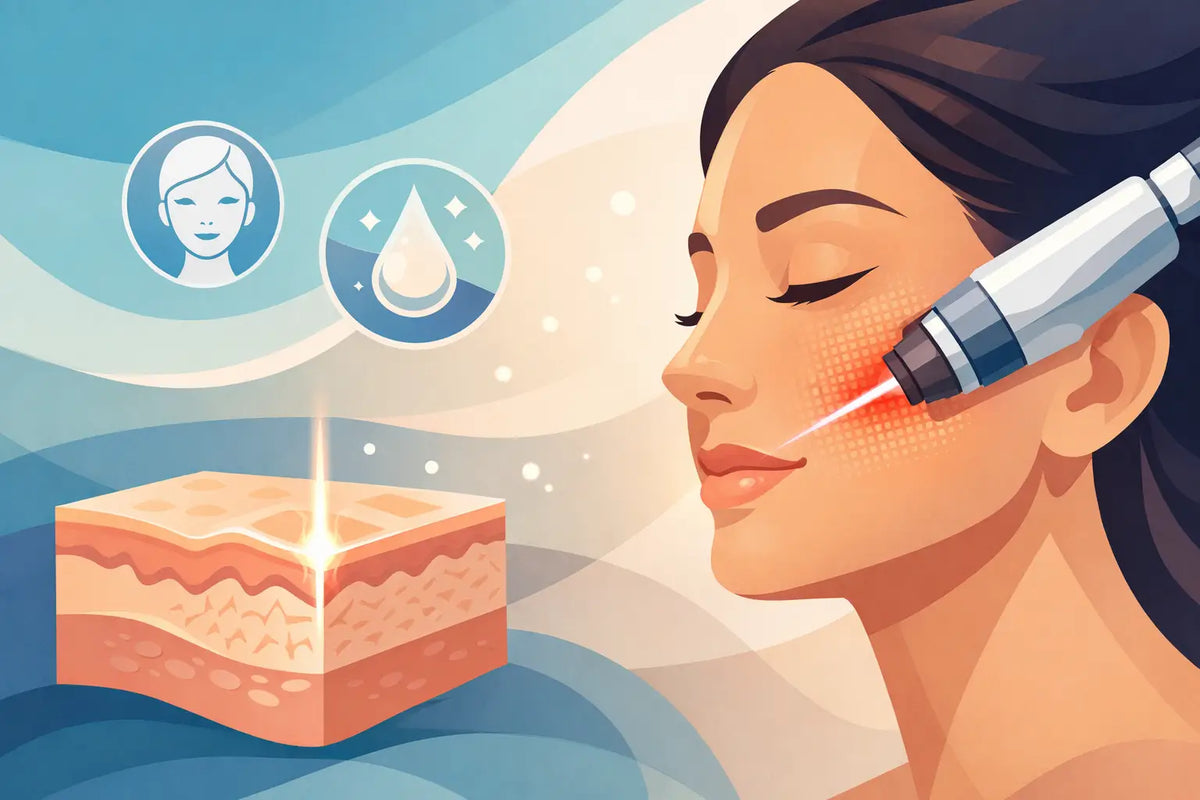
Laser skin resurfacing uses focused light energy to create controlled injury in the skin. That process triggers repair, encouraging fresh collagen production and renewal of the skin's surface. Depending on the laser, a provider may remove part of the outer skin layer, create microscopic treatment columns, or heat deeper tissue while leaving much of the surface intact.
The appeal is straightforward. Resurfacing can improve visible texture concerns that skincare cannot fully erase, including etched-in lines, sun damage, roughness, acne scarring, and uneven tone. Results can be meaningful because the treatment works below the surface, where collagen structure is formed.
That power comes with a trade-off. More intensive treatments generally involve more redness, peeling, swelling, aftercare, and a greater need for professional assessment. A procedure that promises dramatic change in a few sessions may also ask more of your schedule and your skin.
Laser Skin Resurfacing Guide: The Main Treatment Types
Ablative lasers
Ablative lasers remove a controlled portion of the skin's outer layer while heating the underlying tissue. Carbon dioxide, or CO2, and erbium lasers are common examples. They are often selected for deeper wrinkles, significant photodamage, pronounced texture changes, or certain scars.
Because ablative treatments are more intensive, recovery can range from several days to a few weeks depending on the device and treatment settings. Skin may ooze, crust, peel, and remain pink while it heals. The potential payoff is substantial improvement, but this category is not a casual appointment. It requires careful aftercare, strict sun avoidance, and an experienced medical provider.
Fractional lasers
Fractional lasers treat a fraction of the skin in tiny columns while leaving surrounding tissue intact. This approach can shorten recovery compared with fully ablative resurfacing because untreated skin supports the healing process.
Fractional treatments may be ablative or non-ablative. Ablative fractional options often target more visible texture and wrinkle concerns, while non-ablative fractional lasers focus more on heating dermal tissue with less disruption at the surface. Expect some redness and swelling either way, but the recovery profile is typically more manageable than traditional full-field resurfacing.
Non-ablative lasers and at-home collagen stimulation
Non-ablative lasers heat targeted tissue without removing the outer layer of skin. Professional non-ablative treatments can address early lines, pigmentation concerns, and mild textural changes with less downtime, although they commonly require a series of sessions.
At-home laser technology is a separate category from in-office resurfacing. It is designed for consistent, controlled collagen stimulation rather than stripping or renewing the skin's surface. NIRA's non-fractional laser approach, for example, is intended to fit into a quick routine for improving the appearance of fine lines and wrinkles over time without the peeling and social downtime associated with resurfacing.
This is an important expectation-setting moment: an at-home device is not a substitute for aggressive scar revision or deep resurfacing. It can be an excellent choice for someone who wants an advanced, repeatable way to support firmer, smoother-looking skin between professional care or instead of committing to a recovery-heavy procedure.
What Can You Realistically Treat?
Match the treatment to the concern, not to the most dramatic before-and-after photo. Fine lines around the eyes, early crepiness, and a gradual loss of firmness are often well suited to collagen-focused approaches. Deep perioral lines, extensive sun damage, pronounced acne scars, and severe texture irregularity may warrant an in-office consultation for resurfacing or combination treatment.
Pigment deserves particular care. Some lasers can improve uneven tone, but heat and inflammation can also trigger post-inflammatory hyperpigmentation, especially in deeper skin tones or skin prone to discoloration. A clinician experienced in treating your skin type should set the device, wavelength, and treatment plan. Never assume that a treatment popular on social media is automatically appropriate for your complexion.
Active acne, open wounds, a current skin infection, a history of keloid scarring, melasma, recent isotretinoin use, or a tendency to cold sores can change the plan. In some cases, treatment is still possible with added precautions. In others, another modality is safer.
Downtime Is Part of the Decision
Marketing often frames downtime as an inconvenience. In reality, it is a clinical variable. Redness and peeling reflect the degree of skin disruption, and the aftercare period can influence both comfort and outcome.
After a stronger resurfacing procedure, you may need to pause retinoids, exfoliating acids, scrubs, and other potentially irritating products. You may also be instructed to use gentle cleansing, prescribed ointments, and rigorous broad-spectrum sunscreen. Makeup may not be appropriate until the skin has healed enough. Your provider's protocol should take priority over a general skincare routine.
For lower-downtime collagen treatments, consistency becomes the larger commitment. Results usually build gradually because collagen remodeling takes time. A device used faithfully according to its instructions can be more valuable than an ambitious routine that is abandoned after two weeks.
How to Choose a Provider or Device
For in-office resurfacing, look beyond the name of the laser. The skill of the person operating it matters as much as the technology. Ask who will perform the treatment, how often they treat your skin type and concern, what level of downtime they expect, and how they handle complications such as prolonged redness or pigment changes.
Request a clear plan rather than a vague promise. A strong consultation should cover the number of sessions, preparation, pain management, aftercare, realistic results, cost, and timing of follow-up. If someone guarantees flawless skin or minimizes recovery and risks, consider that a reason to seek another opinion.
For an at-home laser device, prioritize FDA clearance for its stated indication, transparent safety guidance, a reputable warranty, and instructions you can realistically follow. Avoid treating over suspicious lesions, irritated skin, or areas specifically excluded by the manufacturer. If you are pregnant, managing a medical condition, or using prescription skincare, ask your dermatologist whether the device fits your routine.
Prepare Your Skin for Better Results
Healthy skin tolerates treatment better. In the weeks before professional resurfacing, your provider may recommend stopping certain actives, avoiding tanning, and following a customized pre-treatment routine. Do not add strong products in an attempt to "prep" your skin without guidance. Irritation before a laser appointment can increase the chance of an uneven recovery.
After treatment, sun protection is not optional. UV exposure can compromise results and raise the risk of lingering discoloration. Use broad-spectrum sunscreen daily, reapply when outdoors, and rely on hats, shade, and common sense during the healing period.
Finally, think of laser treatment as part of a longer collagen strategy. Daily sunscreen, barrier-supportive skincare, and a routine you can sustain help protect the improvement you work for. Whether you choose intensive resurfacing or gradual at-home stimulation, the best plan is the one that respects your skin, your lifestyle, and your tolerance for downtime.
A clearer, firmer-looking complexion rarely comes from chasing the strongest treatment available. It comes from choosing the level of technology and consistency that you will feel confident maintaining long after the initial glow has passed.


