

Fine lines rarely arrive alone. They tend to show up alongside skin that feels less springy, makeup that settles differently, and contours that no longer look as defined. That is why laser devices have become a serious consideration for people who want to address visible signs of collagen loss, not simply layer on another topical product.
The right at-home laser is not a replacement for every dermatology procedure, and it should never be treated as a shortcut. It is a technology-driven way to support a more consistent collagen-focused routine from home. For women who want meaningful skincare results without building their schedules around appointments, that consistency can be a powerful advantage.
Why collagen changes the way skin looks
Collagen is a structural protein that helps skin appear firm, smooth, and resilient. Natural collagen production slows with age, while sun exposure, stress, and environmental factors can accelerate visible changes. Over time, the skin may look thinner or less supported, and expression lines can become more noticeable around the eyes, mouth, and forehead.
Creams and serums can make an important contribution to hydration, surface comfort, and barrier support. Ingredients such as hyaluronic acid can visibly plump dehydrated skin, while peptides can support a well-rounded anti-aging regimen. But topical skincare primarily works at the skin's surface. When the goal is to support collagen deeper within the skin, a device-based approach may offer a different level of intervention.
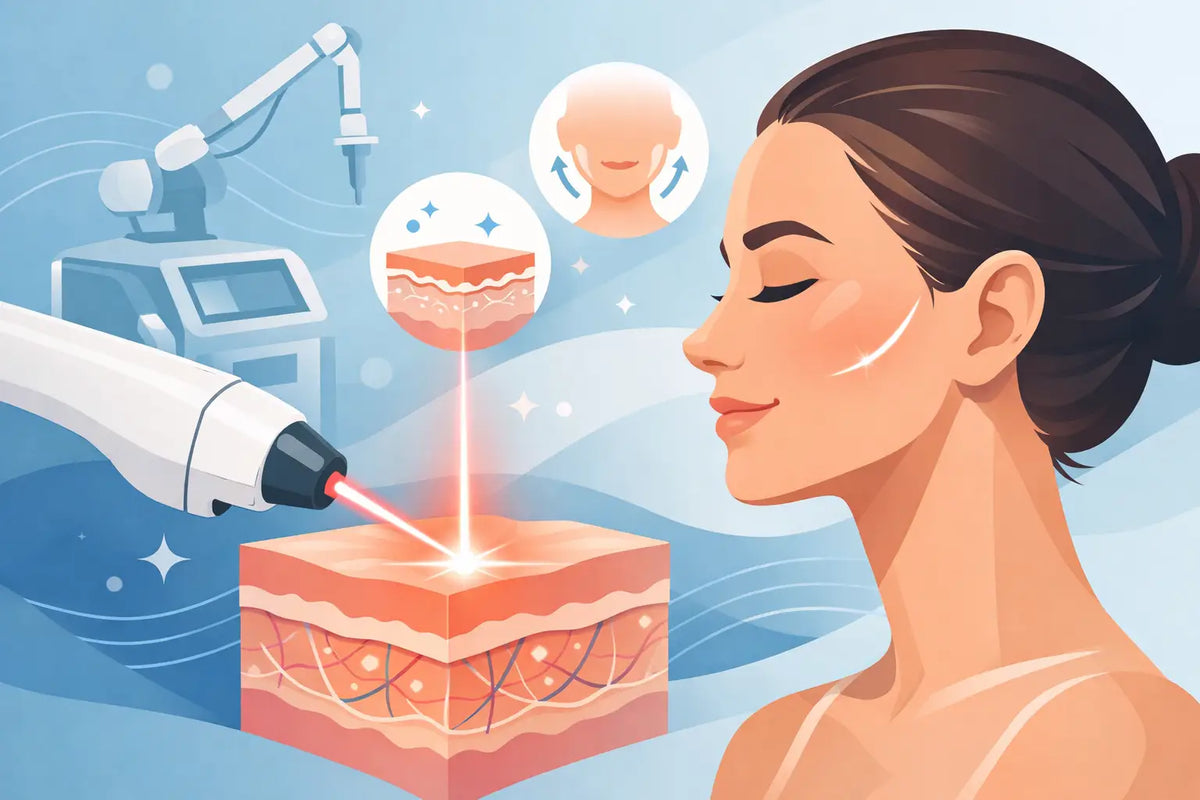
Laser technology uses controlled light energy to create a targeted thermal effect in the skin. That controlled energy is designed to signal the skin's natural renewal processes, including collagen production. The result is not an overnight change. Collagen remodeling takes time, which is why realistic expectations and regular use matter as much as the device itself.
How at-home laser devices work
Not all beauty devices operate on the same principle. LED masks use light at lower energy levels and are often chosen for concerns such as temporary redness or the appearance of blemishes. Microcurrent devices use electrical current to create a temporary lifted appearance. At-home lasers use focused light energy and are designed around a collagen-stimulation strategy.
Non-fractional laser technology and skin comfort
One key distinction is the difference between fractional and non-fractional lasers. Fractional lasers create microscopic treatment zones in the skin. They can be highly effective in a clinical setting, but they may also involve discomfort, redness, and downtime depending on the treatment intensity.
Non-fractional laser technology distributes energy without creating the same pattern of micro-injury. For an at-home anti-aging device, this approach can make regular treatment more practical. The goal is to deliver controlled energy in a format that fits into a routine, rather than requiring recovery days or an appointment calendar.
This trade-off is worth understanding. In-office procedures may be appropriate for people pursuing aggressive resurfacing, significant pigment correction, or more dramatic treatment plans supervised by a clinician. At-home laser devices are better suited to the person who values gradual, visible improvement through consistent use, especially for fine lines and wrinkles.
The treatment sensation is not the result
A common misconception is that more heat, more pain, or more intensity always means better results. That is not how thoughtful skincare technology should be evaluated. Effective treatment is about delivering energy at parameters appropriate for the device, the treatment area, and the intended use.
A quality at-home laser should include clear instructions, built-in safeguards, and a treatment protocol that makes adherence realistic. If a device is too uncomfortable or complicated to use, even impressive technology can become a drawer-bound purchase. The best system is one you can use correctly and consistently.
What results can you realistically expect?
Laser-based collagen stimulation is a long-game investment in the appearance of skin. Early changes may include skin that appears more hydrated or refreshed, but the more meaningful shift is often gradual: softened-looking lines, smoother texture, and a firmer-looking quality over weeks and months of routine treatment.
Results depend on several factors, including age, skin condition, sun exposure, treatment consistency, and the depth of the concern. Fine lines around the eyes may respond differently than deeper folds around the mouth. Someone beginning a collagen-focused routine in their forties may have a different experience from someone treating more established wrinkles in their sixties.
Before-and-after images can be helpful when they are captured under consistent lighting, angle, and expression. They should demonstrate possibilities, not promise identical outcomes. Look for a brand that discusses its technology clearly, provides clinical context, and avoids asking you to accept vague claims without evidence.
Choosing laser devices with confidence
A premium device should make the science easier to understand, not harder. Start by identifying your primary concern. If your focus is wrinkles around the eyes or mouth, look for a device designed to treat those precise areas safely. If you are focused on broader facial concerns, consider whether the treatment head and protocol fit the areas you want to address.
It also helps to consider practical details that influence whether you will stay consistent: treatment time, ease of handling, charging, skin-contact guidance, warranty support, and the brand's educational resources. A fast treatment can be especially valuable when it is part of an already full morning or evening routine.
Clinical evidence matters, but context matters too. Ask what was measured, how long participants used the device, and whether the results relate to the concern you want to treat. FDA clearance, where applicable, is another important signal that a device has been reviewed for its intended use. It is not a guarantee of a particular outcome, but it can be an important part of a credibility-first evaluation.
NIRA designs at-home laser technology around this practical reality: advanced collagen-supporting treatment should feel precise, approachable, and possible to maintain at home.
Build a routine that supports your investment
A laser device works best as part of a smart skincare plan, not as the only step. Begin with clean, dry skin if the device instructions call for it. Follow the recommended treatment pattern exactly rather than extending sessions in pursuit of faster results. More is not necessarily better, and consistency is more valuable than intensity beyond the prescribed protocol.
After treatment, use products that support hydration and barrier comfort. A hyaluronic acid serum can help draw moisture into the skin, while a peptide cream can provide a nourishing finish. During the day, broad-spectrum sunscreen is non-negotiable. Protecting skin from UV exposure helps preserve the collagen you are working to support and reduces the risk that sun damage will continue to deepen visible aging concerns.
Avoid stacking unnecessary irritation into your routine. If you use retinoids, exfoliating acids, or prescription skincare, read both product and device guidance carefully. Some people can use these categories within the same overall regimen, while others may benefit from alternating evenings or adjusting use based on sensitivity. When in doubt, a dermatologist can help tailor a plan to your skin and medical history.
Who should pause and ask a professional first?
At-home laser treatment is not appropriate for every person or every skin situation. Those who are pregnant, have an active skin infection, have a history of photosensitivity, are taking photosensitizing medications, or are managing a medical skin condition should consult a qualified healthcare professional before use. The same applies if you have recently undergone an in-office procedure or have questions about treating a specific area.
This is not a limitation of effective technology. It is what responsible use looks like. Your skin deserves a treatment plan that respects its current condition, not one built on pressure to rush results.
The most compelling reason to consider laser technology is not that it promises a different face. It is that a well-designed, evidence-led routine can help you care for the skin you have with more precision. Give collagen-focused treatment time, protect your skin daily, and choose tools that make your long-term confidence easier to maintain.


