

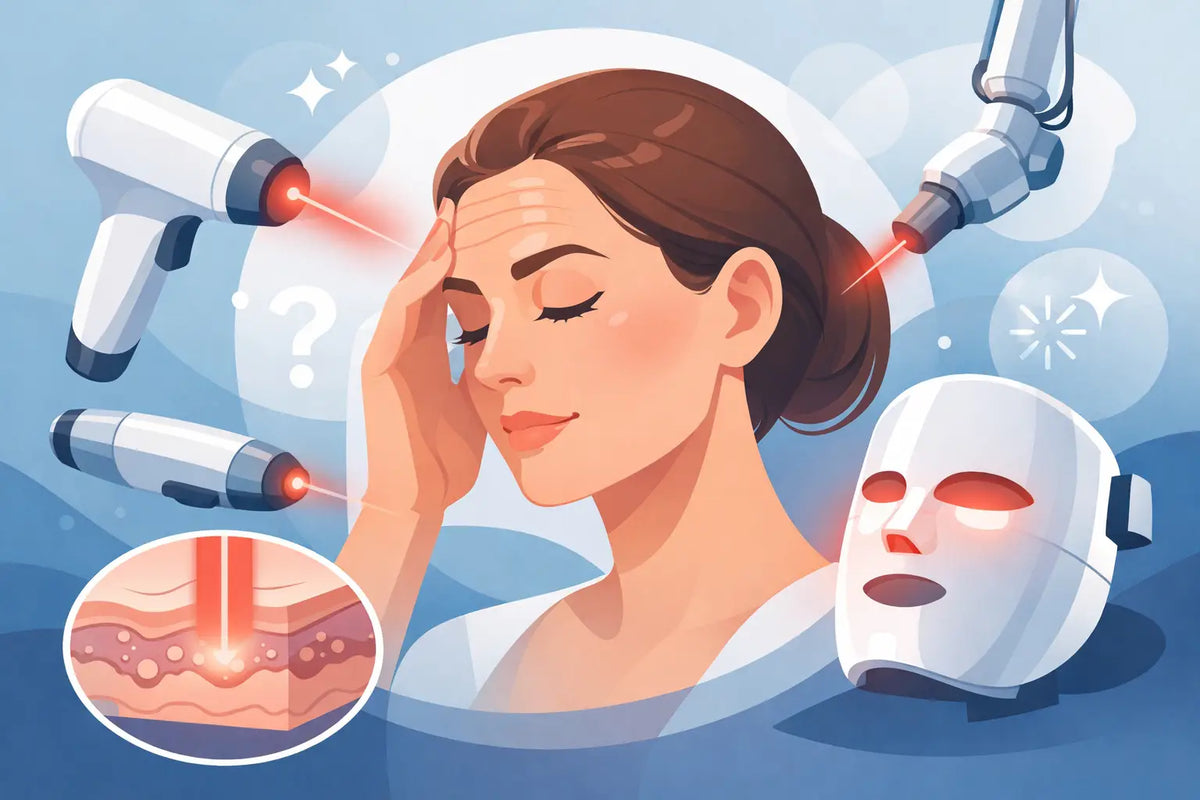
Forehead lines have a way of becoming visible in every mirror, video call, and overhead light. A laser device for forehead wrinkles offers a more targeted approach than another layer of moisturizer: it works by delivering controlled light energy to support the skin’s natural collagen response, where wrinkles begin to form beneath the surface.
That distinction matters. Forehead wrinkles are not all the same, and the right at-home device is not about chasing a quick fix. It is about choosing proven technology, using it consistently, and setting expectations that match how skin actually rebuilds itself.
Why forehead wrinkles can be difficult to treat
The forehead is one of the most expressive areas of the face. Years of raising the brows, concentrating, squinting, and reacting to the world create repeated folds in the same patterns. Over time, declining collagen, elastin, hydration, and skin thickness allow those expression lines to remain visible even when the face is at rest.
Topical skincare can improve hydration and surface smoothness, which may soften the look of fine lines temporarily. But a cream cannot produce the same targeted energy response as a laser. For lines that have begun to settle into the skin, collagen-focused technology can be a meaningful addition to a skincare routine.
There is also a practical reality: the forehead is broad and flat, but it sits close to the hairline and brows. A device needs to be designed for precise, controlled use in this area. Good technique matters as much as choosing the right category of device.
How a laser device for forehead wrinkles supports collagen
At-home anti-aging lasers are designed to create a controlled thermal response in the skin. This gentle, precise stimulation signals the body to begin its natural repair process, including the production of fresh collagen. Collagen is the structural protein that helps skin look firmer, smoother, and more resilient.
As collagen renews over time, the appearance of fine lines and wrinkles can improve. The goal is not to freeze facial movement or erase every expression. It is to help the skin better support itself so the forehead appears smoother and lines look less etched in.
Not every light-based device works the same way. LED masks use light energy and can be a relaxing part of a skincare ritual, but laser technology is more focused. A non-fractional laser is designed to deliver uniform energy without creating microscopic wounds in the skin, which can make it a compelling option for people who want a non-invasive, at-home collagen treatment without the downtime associated with more aggressive procedures.
That does not mean one category is universally better. If your goal is calming inflammation or supporting an overall routine, LED may have a place. If your concern is visible, established forehead wrinkles and you want a more targeted collagen-stimulation approach, an FDA-cleared at-home laser is worth closer consideration.
What to look for before you buy
A beauty device should earn its place on your vanity. Marketing language is easy to find; meaningful proof takes more scrutiny. Start with the technology itself, then look at how the product is designed to be used on real skin, in real routines.
First, look for FDA clearance when evaluating a device marketed for cosmetic wrinkle reduction. This is not the same as an endorsement of every possible claim, but it provides an important layer of confidence that the device has been reviewed for its intended use.
Next, prioritize clinical evidence. Before-and-after photos can be useful when they are consistent in lighting, angle, and timing, but they should not be the only proof. Look for a brand that explains what its technology does, how often it should be used, and what kind of gradual results are realistic.
Precision is another deciding factor. Broad facial devices can be useful for larger areas, while a smaller treatment tip can make it easier to work carefully across horizontal forehead lines and around the brow area. For forehead wrinkles, control is not a luxury. It is part of using the device confidently and safely.
Finally, consider whether the treatment schedule fits your life. The most sophisticated device cannot help if it stays in a drawer. A short, repeatable at-home routine is often more valuable than an ambitious plan that requires clinic appointments, recovery time, or repeated scheduling.
What results should you realistically expect?
Collagen remodeling is a biological process, not an overnight event. Some people notice that their skin feels more hydrated or looks more radiant early in a consistent routine, especially when they pair their device with thoughtful skincare. Visible changes in the look of fine lines and firmness typically require patience because new collagen takes time to develop.
Your starting point matters. Fine, early forehead lines may respond differently than deeper static wrinkles that are visible at rest. Skin age, sun exposure, genetics, facial movement, and consistency all influence the outcome. An at-home laser may improve the appearance of wrinkles, but it will not create the immediate, temporary muscle-relaxing effect associated with injectable treatments.
For some people, that is exactly the appeal. An at-home device supports a gradual, natural-looking improvement without appointments or recovery. For others with very deep lines, combining a laser routine with professional guidance may be the more appropriate path. Results-driven skincare is strongest when it is honest about those trade-offs.
How to use an at-home forehead laser well
Follow the specific instructions that come with your device, including the recommended treatment frequency and placement guidance. More is not automatically better. Laser energy is calibrated for a particular protocol, and consistency within that protocol is what supports progress.
Begin with clean, dry skin unless your device instructions say otherwise. Keep hair pulled back, stand in good lighting, and work methodically across the forehead rather than repeatedly treating one small spot. Avoid the eye area and do not use a facial laser over irritated, broken, sunburned, or actively inflamed skin.
Your skincare can support the routine, but timing matters. A simple hydrating regimen, such as hyaluronic acid and a nourishing peptide cream, can complement a collagen-focused approach. If you use prescription skincare, strong exfoliating acids, or retinoids, follow your device guidance and speak with a dermatologist when you are unsure how to coordinate products.
Daily broad-spectrum sunscreen is non-negotiable. UV exposure contributes to collagen breakdown and can work against the improvements you are trying to build. Think of sun protection as protecting the investment you are making in your skin, not as an optional final step.
Who should pause and ask a professional first?
At-home laser technology is designed to be convenient, but convenience should never replace appropriate caution. Check the device contraindications before beginning, especially if you are pregnant or nursing, have a history of photosensitivity, use medications that increase light sensitivity, have an active skin condition, or are healing from a procedure.
If you have melasma, persistent redness, a history of pigmentation changes, or uncertainty about a mark or lesion on your forehead, consult a board-certified dermatologist first. The best treatment plan is the one that respects your individual skin history.
A device should also feel comfortable to use. Mild, temporary warmth can be expected with certain technologies, but pain, prolonged redness, blistering, or unexpected skin changes are signs to stop treatment and seek professional advice.
Build a routine that makes progress possible
A laser is not meant to replace every part of skincare. It can become the performance-focused step in a wider routine built around gentle cleansing, hydration, daily sun protection, and disciplined use. That is where at-home technology shines: it gives you an advanced, repeatable treatment that fits between the moments when life is already asking for your attention.
NIRA’s non-fractional laser technology is designed around that philosophy, bringing targeted collagen stimulation into a fast at-home ritual without the recovery period of more aggressive resurfacing approaches. The real advantage is not simply owning a device. It is having a treatment you can return to consistently enough for your skin to respond.
Forehead lines reflect a life full of expression. Caring for them does not require abandoning that expression. With the right laser technology, realistic expectations, and a routine you can maintain, smoother-looking skin can become a result you build toward with confidence.


