

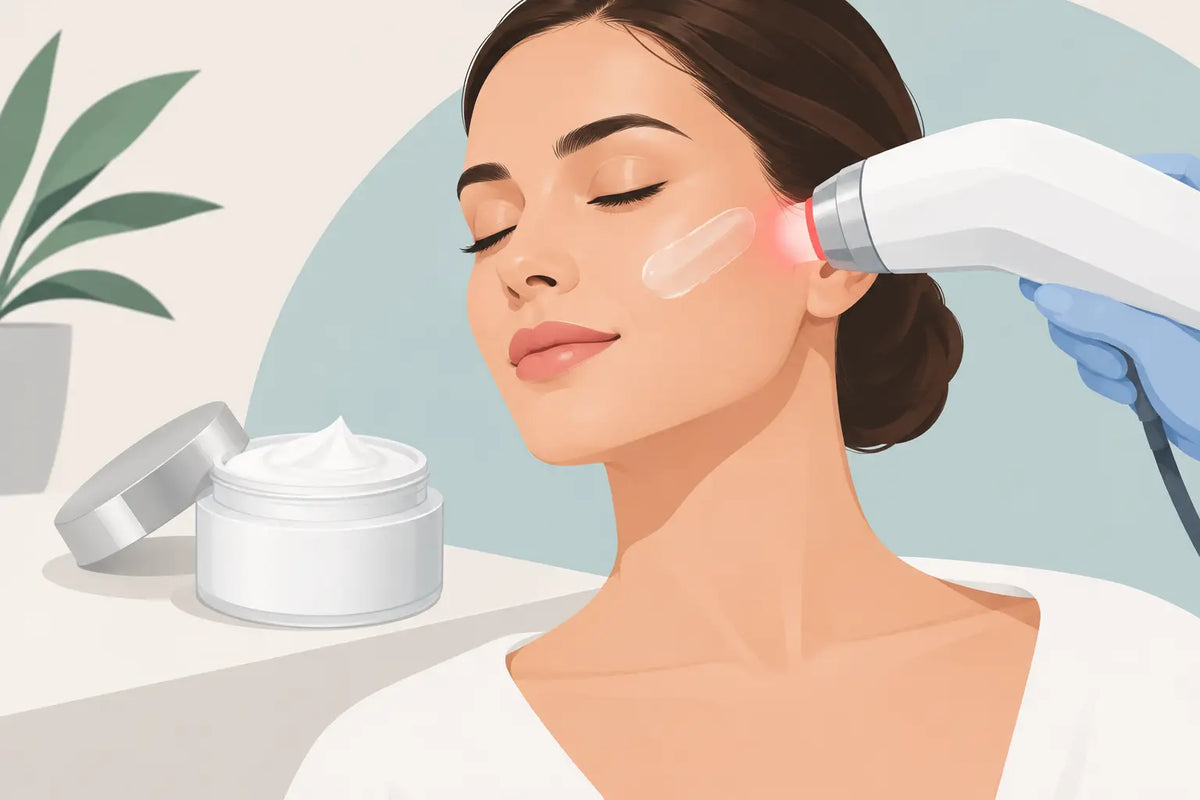
Your laser routine is only as effective as the consistency behind it. Knowing how to use peptide cream with laser treatments helps you protect that consistency: treat on clean, dry skin first, then apply your supportive skincare afterward. The order matters because your laser needs direct contact with bare skin, while your peptide cream is designed to comfort and hydrate skin after treatment.
For most at-home non-fractional laser routines, this is a simple two-step practice that fits easily into your evening skincare. The goal is not to overload skin with actives. It is to pair collagen-focused technology with a barrier-supportive topical routine that keeps skin feeling nourished, smooth, and ready for tomorrow's treatment.
Use Peptide Cream After Your Laser Treatment
Start with a freshly cleansed face. Remove makeup, sunscreen, oils, and any heavy skincare so the treatment area is clean and completely dry. Follow the directions for your specific laser device, including the recommended treatment pattern, frequency, and areas to avoid.
Once you have completed your laser session, apply a small amount of peptide cream over the treated area. Use gentle upward strokes and avoid aggressive rubbing, especially around delicate areas such as the eyes. You do not need a thick layer. A light, even application is enough to leave skin comfortable and hydrated.
This order is intentional. Applying cream before an at-home laser session can create a barrier between the device and your skin, and certain formulas may not be appropriate for use under a laser. Unless your device instructions specifically tell you otherwise, keep the skin bare during treatment and apply topical products afterward.
Why this pairing makes sense
At-home laser technology and peptide cream play different roles in a results-driven anti-aging routine. A non-fractional laser is designed to deliver controlled energy beneath the skin's surface, supporting the natural collagen-building process associated with smoother, firmer-looking skin over time. A peptide cream works at the surface, helping replenish moisture and support a healthy-looking skin barrier.
Peptides are short chains of amino acids, the building blocks involved in proteins found in skin. In skincare, they are valued for their ability to support the look of skin elasticity, softness, and visible smoothness. They are not a substitute for laser technology, and a laser is not a substitute for daily skincare. Together, they create a more complete approach: technology for collagen-focused treatment and topical care for daily comfort and conditioning.
A Simple Laser and Peptide Cream Routine
Your best routine is one you can repeat without second-guessing it. In the evening, cleanse thoroughly and pat skin dry. Use your at-home laser exactly as directed, then apply peptide cream. If your skin is prone to dryness, you can layer a gentle hydrating serum before the cream after treatment, provided the formulas are compatible with your skin and your device's instructions.
In the morning, cleanse as needed, apply moisturizer, and finish with broad-spectrum sunscreen. Daily sun protection is essential when you are investing in any collagen-focused skincare plan. UV exposure is one of the primary drivers of visible collagen breakdown, uneven tone, and premature-looking lines.
If you use a NIRA laser, follow the treatment schedule and skincare guidance provided with your specific device. NIRA's non-fractional laser technology is designed for a convenient at-home routine, but consistency and correct use still matter more than adding extra steps.
How much peptide cream should you apply?
Use enough to lightly cover the face and neck without leaving a heavy film. For many people, a pea-sized amount for the face is a practical starting point, with a little more for the neck and chest if those areas are part of your skincare routine. Press or smooth it in gently rather than massaging vigorously.
More product does not necessarily mean better results. A comfortable, well-hydrated finish is the goal. If your cream pills, feels overly occlusive, or causes persistent warmth or stinging after laser treatment, simplify the routine and reassess the formula.
Choose a Peptide Cream That Supports Your Skin Barrier
The best peptide cream to use after a laser session is generally one that feels nourishing rather than aggressive. Look for a formula built around peptides and skin-supportive hydrators, such as hyaluronic acid, glycerin, ceramides, or squalane. These ingredients can help reduce the tight, dry feeling that sometimes comes with an active anti-aging routine.
Be more cautious with products that combine peptides with potent exfoliating acids, strong retinoids, benzoyl peroxide, or high levels of fragrance. These ingredients are not inherently bad, but they can be too much for some skin types when used close to a laser session. Mature skin, sensitive skin, and skin with a compromised barrier may need an especially streamlined routine.
It depends on both your device and your skin. Some people can comfortably use retinoids on alternate evenings, while others need to pause them around laser treatments. If you are introducing a new peptide cream, patch test it first and add only one new product at a time. That makes it easier to identify what your skin responds to well.
What to Avoid Right After Laser Use
Post-laser skincare should feel calm, not corrective. Skip scrubs, exfoliating brushes, peeling pads, and at-home acid treatments immediately after your session unless your clinician or device instructions tell you otherwise. Avoid picking at dry patches or applying multiple new active products in one night.
Heat can also be an unnecessary stressor for skin that feels temporarily warm or flushed. Consider postponing hot showers, saunas, and intense exercise if your skin is reactive after treatment. Most at-home non-fractional laser routines are designed with minimal downtime in mind, but your skin's response should guide you.
A brief, mild sensation of warmth can occur with some laser devices. Persistent redness, swelling, blistering, pain, or a rash is different. Stop using the device and topical products, then contact a qualified healthcare professional for individualized guidance.
Professional Laser Treatments Need Different Aftercare
Do not assume that at-home laser aftercare applies to every laser procedure. Professional resurfacing treatments, especially ablative or fractional procedures, can create a more significant healing process. Your dermatologist or treating provider may recommend a very specific post-treatment regimen, and that plan takes priority over any general peptide cream advice.
After an in-office procedure, some providers may have you avoid active ingredients, including peptide products, until the skin has reached a particular stage of recovery. Others may approve a bland moisturizer first, then reintroduce targeted skincare later. Follow their timeline exactly, even if you normally tolerate your peptide cream well.
Consistency Creates the Visible Difference
The strongest anti-aging routines are rarely the most complicated ones. They are the routines you can maintain: clean skin, correctly used laser technology, barrier-supportive peptide cream, and daily sunscreen. Give your skin time to respond. Collagen renewal is gradual, and visible improvements in the look of fine lines and firmness build through regular use rather than one intensive night.
Treat your peptide cream as the supportive finish to your laser ritual. When your skin feels comfortable, hydrated, and cared for, staying consistent with the routine that supports your long-term results becomes much easier.


