

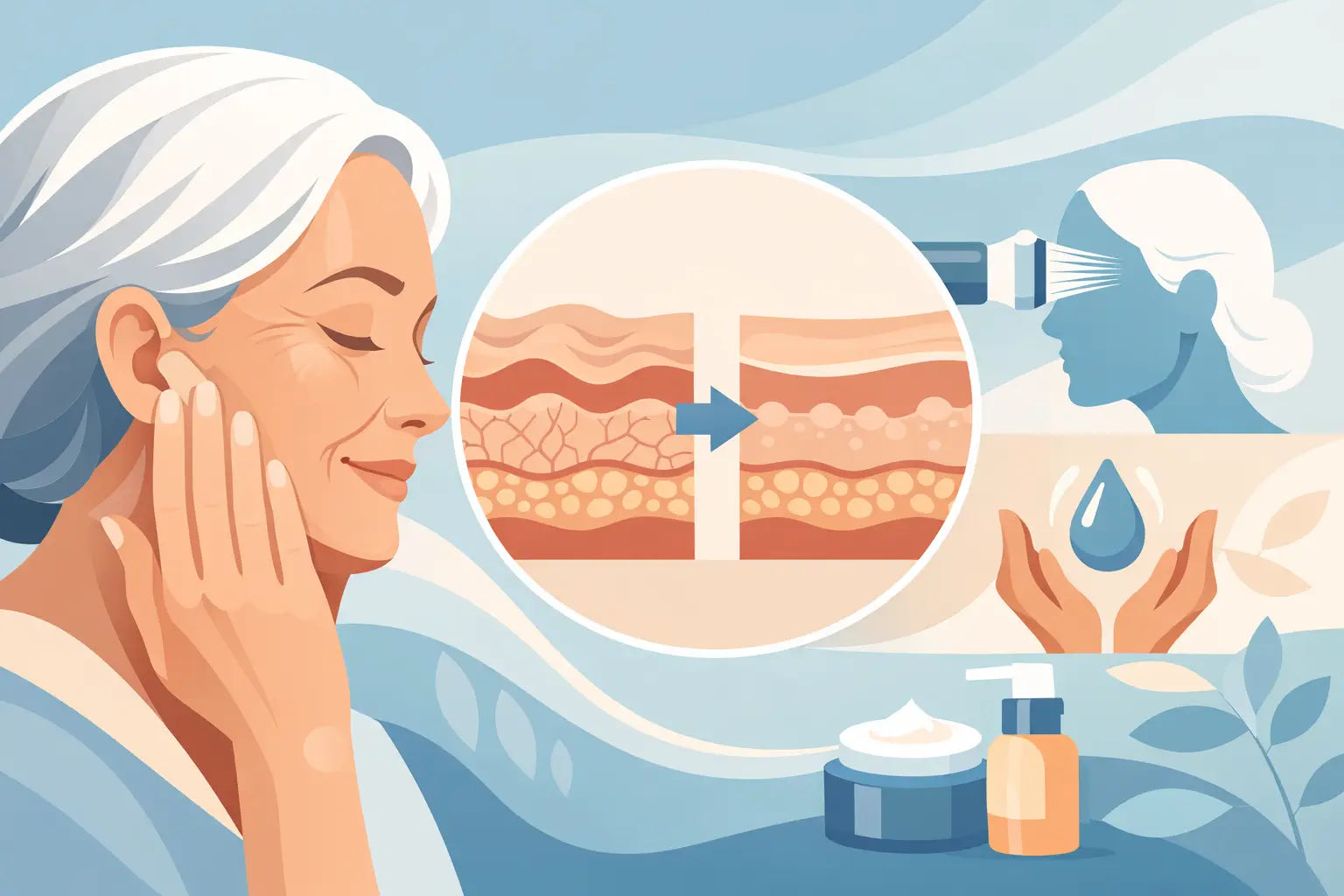
Wrinkles rarely show up alone. What most people notice first is the shift in skin behavior - less bounce, softer contours, and a texture that looks looser even when skin is well moisturized. If you’re wondering how to tighten wrinkled skin, the real answer starts with understanding why skin changes in the first place and which treatments actually address that change.
Skin laxity and wrinkles are closely related, but they are not identical. A wrinkle can come from repeated facial movement, dehydration, sun damage, or collagen loss. Loose-looking skin is more directly tied to the gradual breakdown of collagen and elastin, the structural proteins that keep skin firm, smooth, and resilient. That distinction matters, because the best approach is not simply filling skin with moisture. It is supporting the tissue underneath so skin can look firmer over time.
How to tighten wrinkled skin by targeting collagen
Collagen is the foundation of firmer skin. As natural collagen production slows with age, skin becomes thinner, less springy, and more prone to creasing. Add cumulative UV exposure, environmental stress, and years of facial movement, and the result is familiar - fine lines deepen, texture changes, and areas like the cheeks, jawline, and under-eyes can start to look less defined.
That is why the most effective skin-tightening strategies focus on stimulating collagen, not just masking dryness. Moisturizers and hydrating serums can temporarily plump the surface, which helps skin look smoother. But if your goal is visible tightening, you need a treatment plan that goes beyond surface-level hydration.
Clinical treatments often work by creating controlled energy or controlled injury in the skin to trigger a repair response. At home, the strongest category tends to be devices that use light or laser technology designed to stimulate collagen production in a more targeted way than topical products alone.
What actually works for wrinkled, loose-looking skin
There is no single answer for every face, because skin age, severity of laxity, sensitivity, and budget all shape the best option. Still, the treatments with the strongest logic behind them fall into a few clear categories.
Topical skincare helps, but usually as support. Retinoids can improve fine lines and texture by encouraging cell turnover and supporting collagen renewal over time. Peptides can help reinforce the skin barrier and improve the look of firmness. Hyaluronic acid is useful for hydration and temporary plumping, especially when skin looks more creased because it is dehydrated. These products matter, but they tend to work best as part of a broader strategy rather than as a complete tightening solution.
In-office procedures can deliver significant improvement, especially for moderate to advanced laxity. Dermatologists may use fractional lasers, radiofrequency microneedling, ultrasound-based tightening, or injectable treatments depending on the concern. These options can be effective, but they come with trade-offs. Cost is higher, downtime may be required, and results often depend on a series of appointments.
At-home devices have become far more compelling for people who want consistent treatment without building their schedule around office visits. Not every beauty device is created equal, though. The meaningful difference is whether the technology is designed to affect the deeper layers involved in collagen production. That is where laser-based devices stand apart from products that simply sit on the skin or provide a more general light exposure.
The best at-home approach to tighten wrinkled skin
If you want to know how to tighten wrinkled skin at home, consistency and mechanism matter more than hype. The ideal routine combines daily skin support with a collagen-stimulating treatment you can realistically maintain.
Start with clean skin and a treatment schedule you can stick to. High-performance devices are most effective when used regularly, because collagen remodeling happens gradually. You are not forcing an overnight change. You are signaling the skin to rebuild over time.
This is why many consumers move toward clinical-grade at-home laser technology. A well-designed non-fractional laser device can deliver targeted energy below the skin’s surface to stimulate natural collagen production while keeping treatment simple enough for real life. That combination matters. People are more likely to see results when the technology is both advanced and convenient enough to use consistently.
NIRA, for example, is built around this exact need - giving users a dermatologist-aligned laser treatment experience at home in a format that fits into a daily routine. For shoppers comparing categories, that places at-home laser technology in a different class than creams alone and in a more accessible position than repeated office procedures.
Why hydration alone does not tighten skin
One of the biggest misconceptions in anti-aging skincare is that dry skin and loose skin are the same issue. They can overlap, but they are not interchangeable. When skin is dry, fine lines often look worse because the surface is less plump. Applying a rich moisturizer or hyaluronic acid serum can make skin look smoother within minutes or hours. That is valuable, but temporary.
Tightening skin means improving how firm and supported it appears, which usually depends on collagen integrity. Think of hydration as improving the finish, while collagen support improves the structure. The smartest routines do both.
That is also why people often feel disappointed after trying product after product that promises firmer skin but delivers only short-term softness. Surface hydration has a place. It just should not be mistaken for true remodeling.
What to expect when you treat wrinkles and laxity
Results are usually incremental, not dramatic overnight shifts. This is especially true with collagen-focused treatments. In the first few weeks, many people notice skin looks a bit smoother or more refreshed. Over the following weeks and months, firmness, texture, and the depth of certain lines may begin to improve more visibly.
Patience is part of the process because collagen synthesis takes time. That does not mean all methods perform equally well. It means even the right treatment needs repetition. If a product promises instant tightening that lasts, read carefully. Immediate effects are often cosmetic or temporary, while meaningful changes in skin structure develop more slowly.
It also helps to be realistic about severity. Mild to moderate wrinkling and early laxity often respond well to consistent at-home treatment and strong skincare support. More advanced sagging may still benefit from professional intervention. The right goal is improvement, not perfection.
Habits that support firmer skin
Even the most advanced treatment works better when your daily habits stop working against it. Sun exposure is one of the fastest ways to break down collagen, so sunscreen is non-negotiable if you are trying to maintain firmness. Without it, progress becomes much harder to protect.
Sleep, nutrition, and smoking status also matter more than many people realize. Chronic stress, poor sleep, and tobacco use can all contribute to accelerated skin aging. These are not glamorous variables, but they influence how well skin repairs itself.
Your skincare routine should also avoid unnecessary irritation. Over-exfoliating or layering too many aggressive actives can compromise the barrier and leave skin looking inflamed rather than smooth. Firmer-looking skin usually comes from a controlled, consistent approach - not from doing the most.
How to choose the right treatment path
The best treatment is the one that matches both your skin goals and your lifestyle. If you want the fastest possible intervention and do not mind the cost or appointments, in-office procedures may be worth considering. If you want a more flexible, lower-friction path with credible technology behind it, an at-home collagen-stimulating device can make more sense.
If your skin concerns are mild and mostly related to dehydration, a routine built around retinoids, peptides, and hyaluronic acid may be enough to create visible improvement. But if you are seeing true loss of firmness along with wrinkles, it is reasonable to look beyond creams.
That is the real shift in modern anti-aging care. Consumers are no longer choosing between doing nothing and booking a procedure. There is now a middle ground - clinically informed, technology-driven treatment at home that can support visible results with far less disruption.
The most effective answer to wrinkled, loose-looking skin is not chasing the next miracle product. It is choosing a method that aligns with how skin actually ages, then giving it enough consistency to work. When you treat collagen as the priority, firmer-looking skin becomes a measurable goal, not just a marketing promise.


