

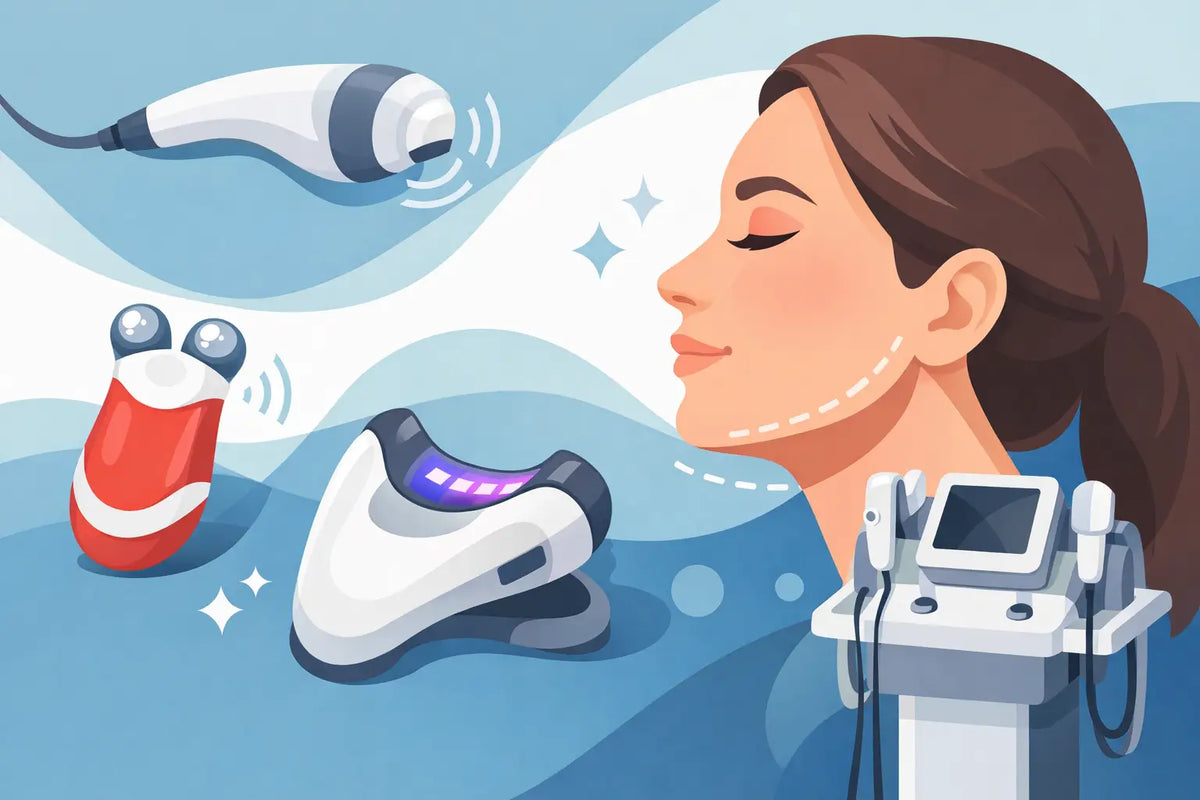
The jawline often reveals collagen loss before the rest of the face catches up. A once-crisp profile can begin to look softer, with crepey texture beneath the chin, early jowling, or a less defined transition from face to neck. The best devices for jawline laxity are not necessarily the ones with the biggest promises. They are the technologies that address the biology behind visible looseness: declining collagen, elastin damage, and a slower skin renewal process.
For at-home care, the right choice depends on whether you are seeing mild skin laxity, temporary puffiness, a loss of muscle tone, or more advanced tissue descent. No home device can reproduce a surgical lift, and that distinction matters. But consistent, clinically grounded technology can support firmer-looking skin, smoother texture, and a more refined-looking lower face over time.
Why the Jawline Starts to Lose Definition
Collagen is the structural protein that helps skin look dense, resilient, and smooth. Starting in adulthood, collagen production naturally slows. Sun exposure, hormonal changes, weight fluctuations, genetics, and the repetitive movement of daily life can accelerate the visible effects.
The lower face is especially challenging because laxity is not always only a skin concern. Early changes may be driven by thinning, less resilient skin. Later changes can include shifting facial fat, reduced support in deeper structures, and muscle changes around the chin and neck. That is why a device that works beautifully for fine lines may not create the same degree of visible lifting for pronounced jowls.
A smart at-home strategy focuses on what can be meaningfully improved: skin quality, collagen support, hydration, and temporary contour enhancement. For more substantial sagging, professional treatment or a consultation with a board-certified dermatologist or plastic surgeon may be the more appropriate next step.
Best Devices for Jawline Laxity: The Categories That Matter
At-home collagen-stimulating lasers
For skin that looks thinner, crepey, or less resilient around the jawline, an at-home laser designed to stimulate collagen is often the most compelling long-term category. These devices deliver controlled light energy to the skin to encourage the natural processes associated with collagen production and renewal. The result is not an overnight change in facial structure. It is gradual improvement in the look of fine lines, texture, and firmness with consistent use.
Non-fractional laser technology is especially appealing for people who want a precise, no-downtime routine. Rather than relying on a single occasional treatment, it allows users to build collagen-supporting care into their regular skincare schedule. The NIRA Pro 3 Laser is designed around this at-home, clinically minded approach, making it a strong fit for users focused on visible signs of collagen loss in the face and lower-face area.
When comparing laser devices, look beyond vague claims about “lifting.” Consider whether the device is FDA-cleared for its intended use, whether the brand provides clinical evidence, and whether the treatment plan is realistic enough to follow. Consistency is where at-home laser care earns its advantage.
Radiofrequency devices
Radiofrequency, often called RF, uses energy to warm targeted layers of skin. This controlled heating is intended to support collagen remodeling and can create a temporary plumping effect after use. Over a longer period, some users see an improvement in the look of mild laxity, particularly when they use the device as directed and maintain a stable routine.
RF can be a useful option when the concern is diffuse softness along the jawline and upper neck. The trade-off is that treatments may take longer, require conductive gel, and feel warmer than other at-home technologies. Results also vary widely by device output, treatment schedule, skin characteristics, and the degree of laxity present.
Use extra care around the neck. Follow the device instructions precisely, avoid areas the manufacturer excludes, and do not assume that a facial device is automatically intended for every part of the neck. People with implanted electronic devices, certain medical conditions, or recent injectable treatments should check with a qualified clinician before using RF.
Microcurrent facial toning devices
Microcurrent devices use low-level electrical currents intended to stimulate facial muscles. They are best known for a temporarily more toned, sculpted appearance, which can be helpful before an event or when morning puffiness is making the jawline look less defined.
Microcurrent is not primarily a collagen-building technology. Think of it as contour support rather than a direct solution for loose skin. Its benefits can be immediate but temporary, and regular sessions are usually needed to maintain the look. This makes microcurrent a worthwhile complement to a collagen-focused routine, especially for someone whose jawline fluctuates with fluid retention or muscle tone.
A conductive gel is essential for comfort and proper glide. Avoid using microcurrent if you have a pacemaker, implanted electrical device, epilepsy, or another contraindication listed by the manufacturer. When in doubt, choose caution over convenience.
Red light LED devices
Red and near-infrared LED devices are popular because they are gentle, convenient, and easy to layer into a skincare routine. Light therapy may support a healthier-looking complexion and help improve the appearance of fine lines over time. It can be a valuable addition for overall skin maintenance.
For jawline laxity specifically, however, LED is usually not the primary device to choose if firmer-looking skin is your central goal. The energy profile and results are generally more subtle than collagen-stimulating laser or RF technology. It is best viewed as supportive care for skin quality, not a stand-alone answer to lower-face laxity.
How to Choose the Right Device for Your Concern
Start by being specific about what you see in the mirror. If your jawline looks soft because skin appears thin, lined, or crepey, prioritize a collagen-stimulating device. If you notice a short-term loss of definition that changes throughout the day, microcurrent may offer the more satisfying immediate effect. If your concern is mild, diffuse slackness and you are comfortable with longer sessions, RF may be worth considering.
The best device is also the one you will use correctly. A sophisticated technology is only valuable when it fits your life. Look at session length, recommended frequency, required prep, replacement costs, warranty coverage, and whether the brand clearly explains expected timelines. Be skeptical of any device that promises to erase jowls in days or permanently reshape the face without professional intervention.
Your skincare routine matters, too. Daily broad-spectrum sunscreen is non-negotiable because UV exposure breaks down the collagen you are working to support. Hydrating ingredients such as hyaluronic acid can make skin look smoother and more cushioned, while peptide creams can complement a routine focused on visible firmness. These products do not replace device technology, but they help create the well-supported skin environment that makes improvement more noticeable.
A Realistic Routine for a Firmer-Looking Jawline
Choose one primary technology and commit to the recommended schedule before judging it. Collagen-focused devices require patience because collagen remodeling is gradual. Photograph your jawline in the same lighting every four weeks rather than relying on daily mirror checks, which can make subtle progress hard to recognize.
If you use more than one device, introduce them one at a time. This helps you monitor sensitivity and understand what is actually delivering value. Avoid stacking intense treatments on irritated skin, and pause if you experience persistent redness, pain, swelling, or unexpected pigment changes.
The goal is not to chase an artificially sharp or filtered-looking jawline. It is to invest in skin that looks stronger, smoother, and more supported at every angle. With the right technology, a disciplined routine, and realistic expectations, your at-home care can become a meaningful part of how you maintain confidence in your skin.


