

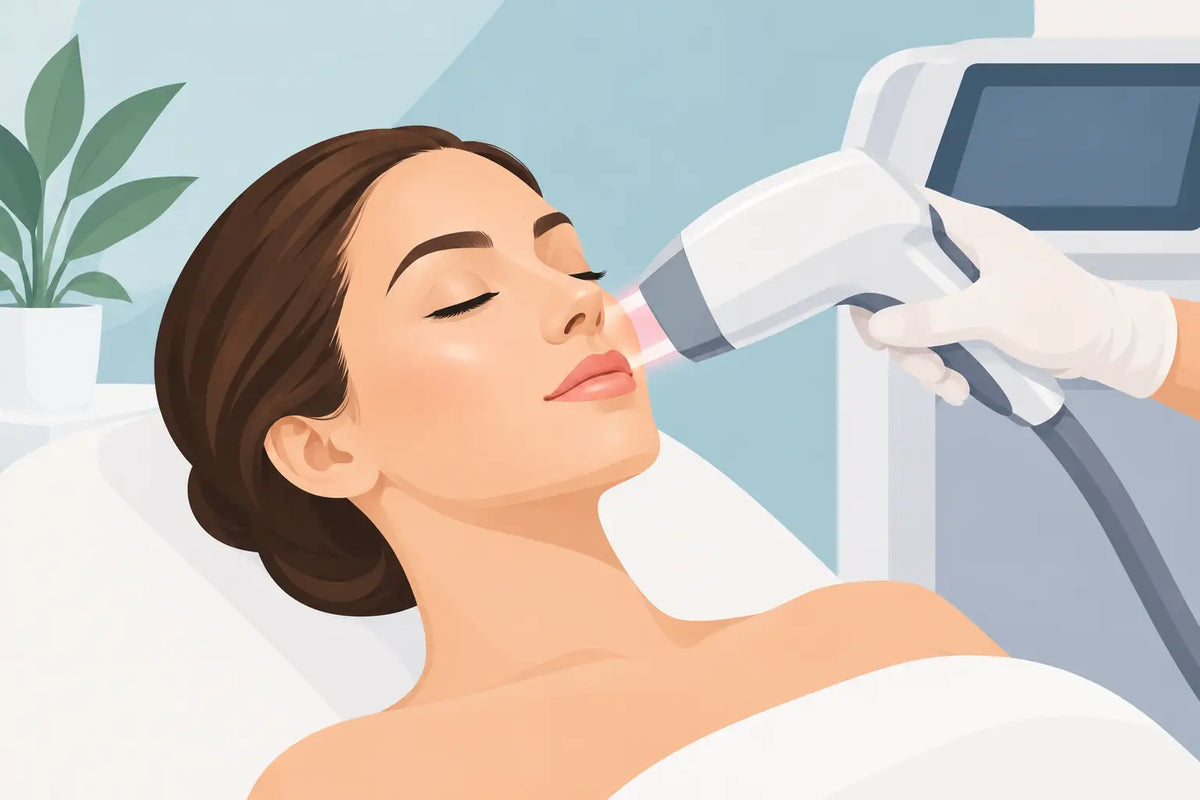
The mirror tends to reveal collagen loss before a skincare label does. Fine lines linger after you smile, makeup settles more noticeably, and the skin around the eyes or mouth can look less firm than it once did. This nonfractional laser review explains why this treatment category has become a compelling option for people who want visible wrinkle care without committing to aggressive resurfacing or recurring office visits.
Nonfractional laser technology is designed around a different approach to skin renewal: controlled, gentle heat delivered consistently to support the skin's natural collagen response. For the right person, that can mean a practical path toward smoother-looking, firmer-looking skin from home. The key is understanding what the technology does, what it does not do, and why consistency matters more than a single intense session.
What Is a Nonfractional Laser?
A nonfractional laser delivers energy across the treatment area rather than creating microscopic columns of controlled injury in the skin. Fractional laser treatments, by comparison, treat a fraction of the skin in tiny zones. They are often associated with more dramatic resurfacing, but they can also involve redness, peeling, downtime, and professional supervision depending on the treatment.
Nonfractional technology takes a gentler, non-ablative route. Rather than removing the skin's surface, it is intended to warm targeted layers beneath it. That heat can encourage fibroblasts, the cells involved in collagen production, to support the skin's natural renewal process over time.
The distinction matters because wrinkles are not only a surface concern. As collagen and elastin decline with age, skin may lose some of the internal structure that helps it look smooth and resilient. A topical moisturizer can improve hydration and temporarily soften the look of lines, but it cannot deliver light-based thermal energy into the skin. A nonfractional laser is designed to address that deeper collagen-focused goal while keeping the daily experience approachable.
Nonfractional Laser Review: What Results Can You Expect?
The honest answer is gradual improvement, not an overnight transformation. Collagen remodeling is biological work, and biology moves on its own timeline. Early changes may include skin that looks more hydrated, refreshed, or subtly smoother. With regular use over several weeks and months, many users look for softer fine lines, improved texture, and a firmer overall appearance.
Results depend on your starting point, age, skin quality, routine consistency, sun exposure, and the type of concern you want to address. Fine lines around the eyes, expression lines, and early visible laxity are often more realistic at-home targets than deep, etched wrinkles or significant skin sagging. A device can be a meaningful part of an anti-aging strategy, but it is not a replacement for surgery, injectables, or intensive in-office resurfacing when those are the outcomes someone expects.
That trade-off is precisely what makes nonfractional treatment attractive. You are choosing a lower-disruption, repeatable collagen-support routine over a more intense procedure with a larger recovery commitment. For busy professionals, caregivers, and anyone who wants to maintain progress without scheduling their life around appointments, that can be a very strong value proposition.
The At-Home Experience: Convenience With a Commitment
At-home beauty technology works best when it earns a place in your real routine. A device that takes only a few minutes is far more likely to be used regularly than a complicated treatment that stays in a drawer. Nonfractional laser devices are generally designed for short, targeted sessions, often focused on areas where wrinkles are most visible, such as the under-eye area, crow's feet, forehead, and around the mouth.
The treatment sensation is typically warmth. It should feel intentional, not alarming. Always follow the device-specific instructions for treatment areas, frequency, skin preparation, and eye safety. More intensity or more sessions do not automatically mean better results. Skin responds best to the protocol the technology was designed to deliver.
Consistency is the real differentiator. Think of your device as a long-term collagen-care practice, much like daily sunscreen is a long-term skin-preservation practice. Missing a session will not erase your progress, but sporadic use makes it harder to assess whether the treatment is working for you. Take clear photos in the same lighting before you begin, then compare them after several weeks. Subtle improvements are easier to recognize when you are not relying on memory alone.
How It Compares With Other Anti-Aging Options
Nonfractional laser technology occupies a useful middle ground between skincare alone and high-intensity professional procedures. It is more active than a serum or cream because it uses controlled light energy, yet it is designed to be gentler and more convenient than many resurfacing treatments.
Topical skincare still has an important role. Hyaluronic acid can support a plumper, more hydrated look, while peptide creams and other well-formulated products can complement a collagen-focused routine. These products are especially valuable for supporting the skin barrier and improving the immediate look and feel of skin. But they work differently from laser energy, so the strongest routine is often complementary rather than either-or.
LED devices use a different form of light and generally provide a gentler experience. They may be a good fit for people seeking broad skin-support benefits, but they do not necessarily provide the same targeted thermal action as a nonfractional laser. Microneedling, meanwhile, uses controlled mechanical injury and can be effective for some concerns, though it requires careful hygiene and may not suit everyone.
In-office lasers can offer more intensive treatment for advanced concerns. They also tend to come with higher costs, scheduling demands, potential downtime, and a need for individualized medical guidance. The best option is not universally the strongest option. It is the one that matches your skin goals, tolerance for downtime, budget, and ability to stay consistent.
Who May Be a Good Candidate?
A nonfractional laser may make sense if you are noticing fine lines, early wrinkles, loss of firmness, or a change in texture and want an advanced at-home option. It can be especially appealing for someone who has invested in quality skincare but feels that creams alone are no longer addressing the visible signs of collagen decline.
It is also well suited to people who prefer gradual, natural-looking improvement. The goal is not to look like someone else. It is to help your skin look more supported, smoother, and more refreshed over time.
However, this category is not right for every skin situation. People with active irritation, open wounds, a recent procedure, or certain skin conditions should pause and seek guidance from a qualified healthcare professional. If you are pregnant, taking medications that affect photosensitivity, or managing a medical condition, consult your clinician before starting a light-based device. Review all manufacturer safety guidance carefully and use only as directed.
What to Look for Before You Buy
The strongest nonfractional laser review is not based on a single dramatic photo or a promise that sounds too good to be true. Look for a device with transparent treatment guidance, credible clinical support, clear safety information, and a realistic explanation of its expected timeline. FDA clearance, where applicable, can be a meaningful signal that a device has met the requirements for its intended use, but it should be considered alongside the full body of product information.
Pay attention to whether the brand explains the technology in plain language. You should understand what the device is designed to treat, how often you will use it, and how the treatment fits alongside your existing skincare. A premium device should make advanced care feel more accessible, not more confusing.
NIRA's nonfractional laser approach is built around this at-home model: clinically informed technology designed to support collagen in a fast, repeatable routine. The most valuable feature is not simply that it is used at home. It is that home use makes the consistency needed for gradual improvement more achievable.
Your skin does not need a punishing routine to deserve serious results. Choose technology that fits your goals, protect your progress with daily sunscreen, and give the collagen-building process enough time to show itself.


