

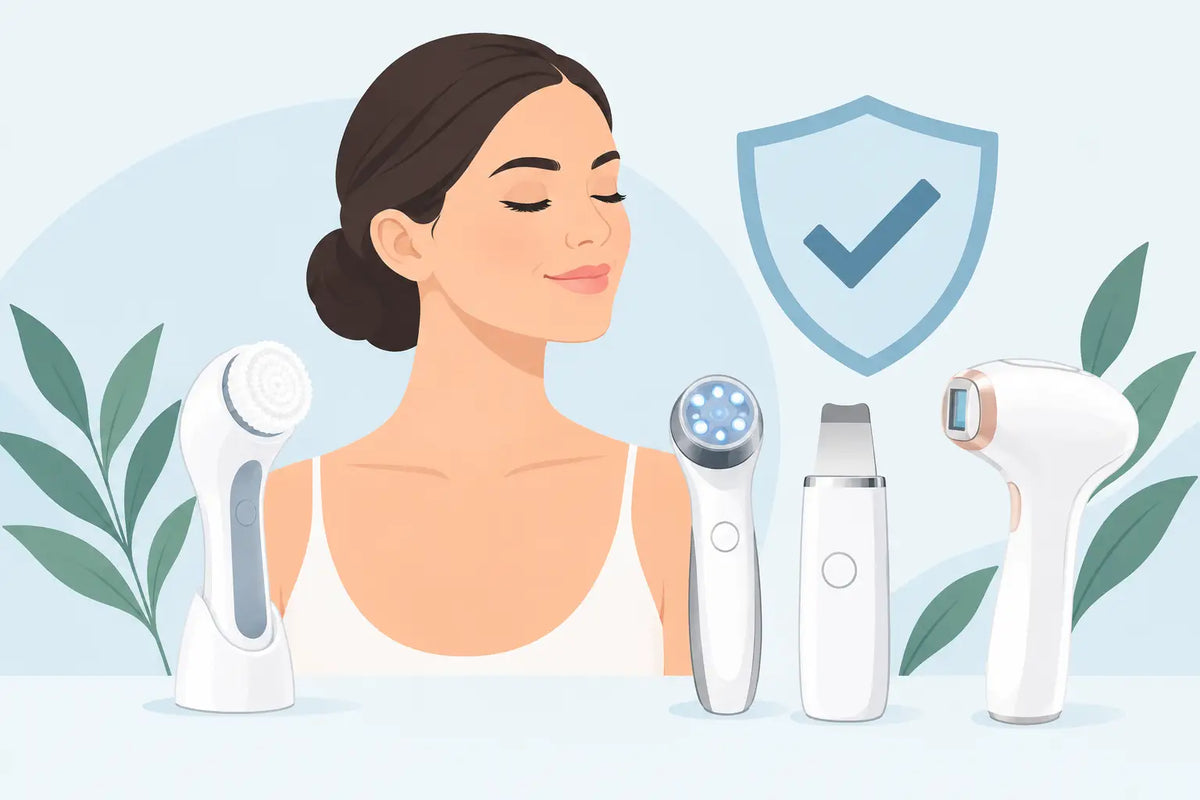
A beauty device can be FDA cleared and still be the wrong choice for your skin goals. That distinction is where a smart investment begins. This guide to FDA cleared beauty devices helps you look past marketing language and focus on what matters: the technology, the intended use, the evidence, and the routine you can realistically maintain long enough to see change.
For women noticing fine lines, crepey texture, and the gradual loss of firmness that comes with declining collagen, at-home technology can offer a powerful alternative to scheduling repeated appointments. The right device should make advanced skincare feel more accessible, not more confusing.
What FDA Cleared Actually Means
FDA cleared does not mean that a beauty device has been broadly approved for every claim a brand might make. It generally means the manufacturer has demonstrated to the FDA that its device is substantially equivalent in safety and effectiveness to another legally marketed device for a specific intended use. Many aesthetic devices receive clearance through the 510(k) pathway.
That intended use is the detail worth reading. A device may be cleared for the temporary improvement in the appearance of wrinkles around the eyes, for example, rather than for treating every skin concern on the face or delivering the same outcome as a physician-performed procedure. Clearance is meaningful because it requires regulatory review. But it is not a blank check for unlimited promises.
You may also see the word "FDA registered." Registration simply means a facility or device has been listed with the FDA. It does not carry the same meaning as FDA clearance. Similarly, terms such as "medical-grade," "professional-strength," and "clinically inspired" can describe a brand's positioning, but they are not regulatory designations.
How to Read Claims on FDA Cleared Beauty Devices
The best claims are precise. They identify the area of use, the concern being addressed, the technology involved, and the timeframe for expected visible improvement. Be cautious when a device promises to erase wrinkles, replace surgery, permanently lift skin, or work identically for every person. Skin biology does not work that way.
Look for a clear explanation of the treatment mechanism. With collagen-focused devices, the goal is often controlled energy delivery that encourages the skin's natural renewal response. New collagen formation takes time, so credible brands set expectations around consistent use and gradual results rather than overnight transformation.
Clinical evidence adds another layer of confidence, especially when it includes the number of participants, treatment duration, measurement method, and whether results were independently assessed. Before-and-after photographs can be useful, but only when lighting, angle, expression, and timing are comparable. A compelling image is not the same as clinical proof.
Match the Technology to Your Goal
Not all at-home beauty devices work through the same pathway. Choosing by the device category alone can lead to disappointing results, even if the product is FDA cleared.
Lasers for wrinkles and collagen support
At-home laser technology is designed for shoppers seeking visible improvement in fine lines and wrinkles, especially in areas where collagen loss shows up early, such as around the eyes and mouth. Non-fractional lasers use targeted energy to gently warm the skin without creating the open micro-injuries associated with ablative resurfacing. That can mean no downtime and a more convenient treatment experience, though it also means results depend on repeat use over time.
This category is especially compelling for someone who wants a focused, high-performance wrinkle routine without the expense, discomfort, or scheduling demands of frequent in-office treatments. A device such as the NIRA Pro 3 Laser is built around this at-home collagen-stimulation approach, pairing precision treatment with a routine designed to be easy to sustain.
LED light therapy for broader maintenance
LED devices use specific wavelengths of light. Red and near-infrared light are commonly used in beauty devices intended to support the appearance of skin texture and overall radiance. LED masks can be appealing for full-face treatment and a relaxing, low-effort ritual.
The trade-off is specificity. If your primary concern is deeper-looking crow's feet or pronounced expression lines, a technology designed to directly target wrinkles may be a better fit than a broad maintenance tool. LED can complement a skincare routine, but it should not be assumed to produce the same results or operate through the same mechanism as a laser.
Microcurrent and cleansing devices
Microcurrent devices are often chosen for a temporary sculpted or lifted appearance, while cleansing devices focus on removing surface buildup. Both may have a place in a beauty routine, but neither should be purchased on the expectation that it will rebuild collagen in the way a collagen-focused laser treatment is intended to.
This is not a question of one device being universally better. It is a question of matching your investment to the result you care about most: visible wrinkle reduction, temporary contouring, clearer-feeling skin, or overall glow.
A Smarter Guide to FDA Cleared Beauty Devices
Before you buy, start with the concern you want to change in a photograph, not the trend you saw on social media. Is it fine lines around the eyes? Loss of firmness through the lower face? Dullness? Uneven texture? A clear answer narrows the field quickly.
Then assess the device's treatment area and usage protocol. A device that takes two minutes and fits naturally into your evening routine may deliver more value than a more elaborate system that stays in a drawer. Consistency is not a minor detail in beauty technology. It is part of the treatment.
Also consider your comfort with sensation and your tolerance for downtime. Some energy-based treatments create warmth, while others may involve tingling or require a gradual adjustment period. At-home devices should provide explicit instructions for use, safety information, contraindications, and a realistic timeline. If the guidance feels vague, the purchase decision should be too.
Finally, separate a device's clearance from your personal suitability. People with active skin conditions, a history of photosensitivity, certain medications, or recent cosmetic procedures may need individualized advice from a dermatologist or qualified healthcare professional before introducing an energy-based device. If you are pregnant, have a medical condition, or are uncertain about compatibility with your skincare regimen, follow the device guidance and ask a clinician.
Build a Routine That Supports Results
A device does not need to replace every step of your skincare routine. It should earn its place within one. Start with clean, dry skin if the instructions call for it, use the device exactly as directed, and avoid increasing frequency in the hope of accelerating results. More treatment is not automatically better treatment.
Afterward, support the skin barrier with well-chosen hydration and moisturization. Hyaluronic acid can help skin feel replenished, while peptide-rich formulas can complement a routine centered on smoother-looking, firmer-feeling skin. Daily broad-spectrum sunscreen is essential, particularly when your goal is protecting the collagen progress you are working to support.
Track your starting point with clear photos in the same location, at the same time of day, with the same expression. Check progress after the recommended treatment period, not every morning. Collagen-supporting routines reward patience, and consistent documentation gives you a more honest view of change than memory alone.
Questions Worth Asking Before You Commit
Will FDA clearance guarantee my results?
No. Clearance supports confidence in a device's stated intended use, but results vary with skin condition, age, baseline wrinkle depth, use consistency, and adherence to the treatment instructions. Think of it as a meaningful qualification, not a personal outcome guarantee.
Is an at-home device comparable to an in-office treatment?
It depends on the technology and treatment goal. In-office procedures can deliver higher-intensity treatments and may be appropriate for deeper resurfacing or more dramatic intervention. At-home devices are designed around convenience, repeatability, and a lower-disruption experience. For many people, that consistency is their advantage.
When should I expect to see a difference?
Immediate changes are more common with treatments that temporarily hydrate or contour the look of skin. Collagen-focused improvement is typically gradual. Follow the device's recommended schedule and evaluation timeline, then judge results using consistent photographs and how your skin looks over several weeks.
The strongest beauty-tech purchase is not the one with the loudest claim. It is the device with a clear FDA-cleared intended use, credible evidence, a technology that fits your concern, and a routine you will be proud to keep.


