

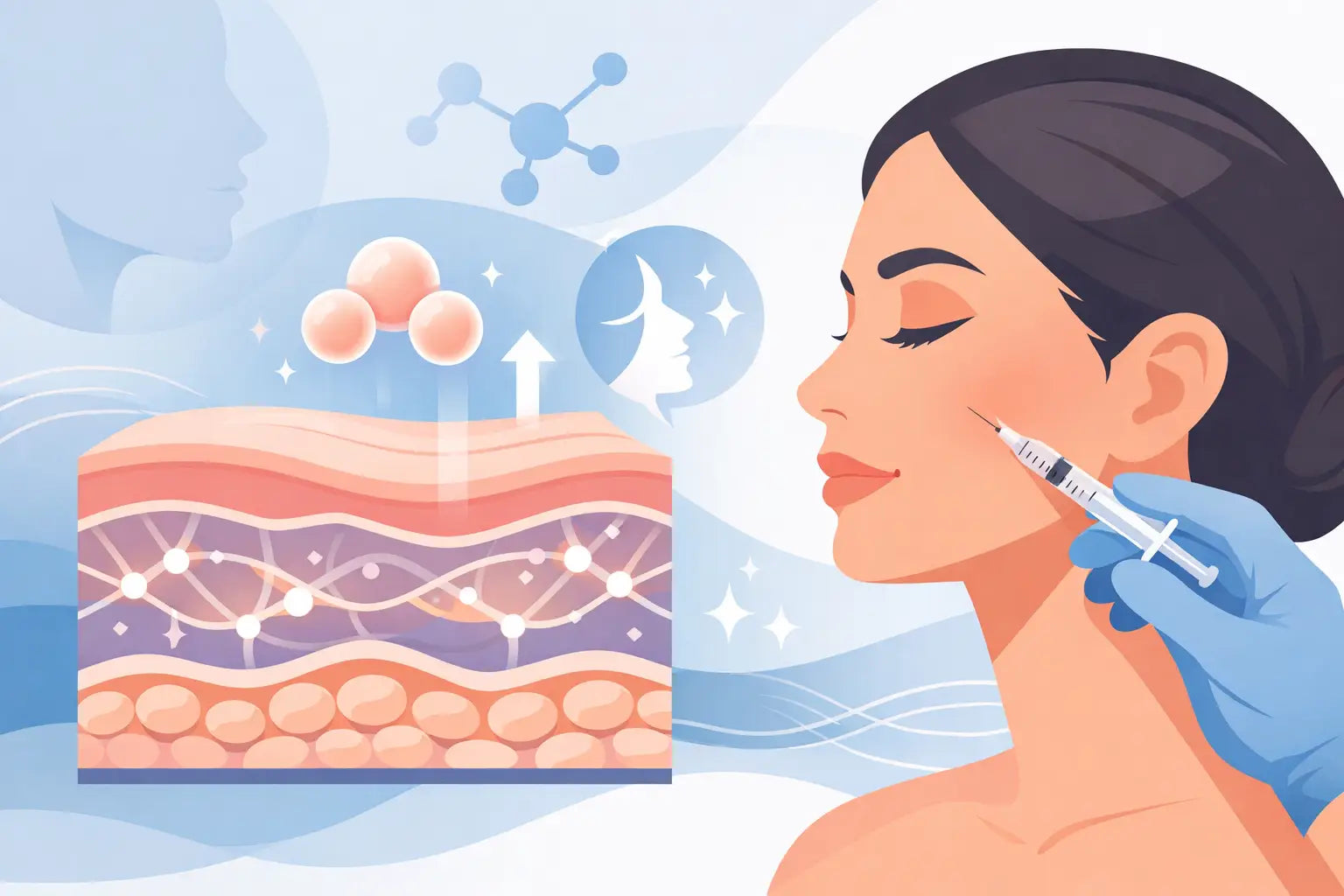
If your skin suddenly looks thinner, less springy, or more lined around the eyes and mouth, you are not imagining it. A collagen stimulating skin treatment is designed to address exactly that shift - not by masking the surface, but by encouraging the skin to rebuild some of the support structure that gives it firmness, bounce, and smoother texture.
That difference matters. Many skincare products focus on hydration, exfoliation, or temporary plumping. Those can absolutely improve how skin looks. But when the real concern is visible collagen loss, the more useful question is whether a treatment can trigger meaningful renewal below the surface, where wrinkles and laxity begin.
What is a collagen stimulating skin treatment?
A collagen stimulating skin treatment is any treatment designed to create a controlled response in the skin that signals new collagen production. Collagen is one of the key structural proteins responsible for skin firmness and resilience. As natural collagen production declines with age, skin can begin to show fine lines, deeper wrinkles, crepiness, and a less defined appearance.
The most effective collagen-focused treatments work by delivering energy or controlled micro-injury into the skin. That process activates the skin's natural repair response. Over time, that healing response can lead to fresher collagen, smoother texture, and a firmer look.
This category includes in-office procedures like microneedling, radiofrequency, and certain laser treatments. It also includes newer at-home technologies designed to deliver a similar collagen-supporting mechanism in a gentler, more convenient format. The details vary, but the goal stays the same - stimulate renewal rather than simply coat the skin.
Why collagen loss changes the way skin looks
Collagen does not disappear overnight. The shift is gradual, which is why many people first notice it as a vague change. Makeup settles differently. The skin around the eyes looks less taut. Smile lines linger. What once looked like dehydration starts to reveal itself as a deeper structural change.
That is why collagen stimulation has become such an important category in anti-aging skincare. It targets a root cause of visible aging rather than only the symptom. When collagen support improves, skin can look firmer, smoother, and more refined in a way that tends to feel more substantial than a short-term cosmetic fix.
Still, results are rarely instant. Collagen remodeling takes time. If a treatment claims dramatic overnight tightening, skepticism is healthy. The best outcomes usually come from consistency, the right technology, and realistic expectations about the timeline.
The main types of collagen stimulating skin treatment
Not every collagen treatment works the same way, and that is where many shoppers get stuck. The category sounds simple, but the treatment experience, downtime, cost, and level of visible change can be very different.
Laser treatments
Laser-based treatments use light energy to heat targeted layers of skin and trigger a repair response. Some lasers are aggressive and create visible injury with significant downtime. Others are designed to stimulate collagen more gently, with less disruption to the skin barrier.
For people who want visible anti-aging results without arranging their lives around recovery, that distinction is critical. Non-fractional laser technology, for example, is designed to deliver controlled dermal heating while keeping the treatment experience more manageable. That makes it especially appealing for people who want consistency and convenience, not a one-time ordeal.
Microneedling
Microneedling creates controlled micro-injuries using very fine needles. This can help stimulate collagen and improve texture, especially when concerns include acne marks, fine lines, and mild laxity. It is a popular option because it is well known and widely available.
The trade-off is that treatment intensity matters. More aggressive sessions may mean more recovery, and at-home rollers are not equivalent to professional devices. Results can be worthwhile, but the quality of the device, needle depth, and treatment plan all influence what you actually see.
Radiofrequency
Radiofrequency treatments use thermal energy to heat deeper layers of skin, which can support collagen remodeling and a tighter appearance over time. Some devices combine radiofrequency with microneedling for a stronger effect.
This category can be effective for firmness, but comfort level, treatment cost, and the need for repeat sessions often shape the decision. It may be a fit for someone who wants in-office support and does not mind a higher investment.
Injectables and biostimulatory treatments
Some in-office injectables are specifically designed to stimulate collagen over time. These can improve structure and volume gradually rather than acting like traditional filler alone.
They can be very effective in the right hands, but they are also a different commitment. You are not just choosing skincare. You are choosing a medical treatment path with appointments, cost, and a provider relationship.
Which collagen stimulating skin treatment works best?
The honest answer is that it depends on your skin goals, tolerance for downtime, budget, and willingness to stay consistent.
If your priority is the fastest possible change and you are comfortable with in-office procedures, a dermatologist may recommend a stronger clinical treatment. If your priority is visible wrinkle reduction you can maintain at home, a clinical-grade laser device may be a more practical fit. That is the part many people overlook. The best treatment is not always the most intense one. It is the one you will actually use as directed long enough to support real collagen remodeling.
This is where at-home laser technology has changed the conversation. For many consumers, the biggest barrier to collagen-focused treatments is not interest. It is the reality of repeated office visits, high per-session costs, scheduling, and recovery time. An advanced at-home option can remove much of that friction while still targeting the mechanism that matters.
What to look for in a collagen stimulating skin treatment
Science should lead the decision. Clinical credibility matters more than hype, especially in a category where marketing can get ahead of results.
Look first at the mechanism. How does the treatment stimulate collagen? Heat, controlled micro-injury, and targeted light energy are all established pathways, but they are not interchangeable. Then look at evidence. Are there clinical studies, measured wrinkle reduction data, or before-and-after results that show a real pattern rather than a few flattering photos?
Safety is just as important. A treatment should be designed for repeat use without creating unnecessary trauma. That does not mean every effective treatment is completely sensation-free, but it should mean the technology is intentional, tested, and appropriate for the setting where it is used.
Usability matters too. If a device takes too long, feels intimidating, or requires a complicated setup, consistency drops. In anti-aging skincare, consistency is often the dividing line between a product that sounds impressive and one that actually becomes part of your routine.
At-home collagen stimulation versus in-office treatments
This is not a question of which category is universally better. It is a question of fit.
In-office treatments tend to offer higher intensity in a single session. They may be the right move for deeper correction, more advanced laxity, or patients who want physician-directed care. But they also tend to bring higher costs, more inconvenience, and in many cases more downtime.
At-home treatments are different by design. They are built around repeated use, convenience, and cumulative results. For the right candidate, that can be a major advantage. A well-designed at-home laser treatment can support collagen production in a way that fits real life, which often leads to better follow-through.
That is one reason beauty-tech consumers are increasingly comparing advanced home devices with clinic-based options instead of defaulting to creams on one side and procedures on the other. The middle category has become far more sophisticated, and brands like NIRA have helped set a higher standard for what consumers should expect from at-home collagen-focused technology.
When should you expect results?
A collagen stimulating skin treatment usually works on a delayed timeline. Some people notice early improvements in skin smoothness or radiance, but firmer-looking skin and softer wrinkles often take weeks to become more visible. That is normal. Collagen synthesis and remodeling are biological processes, not cosmetic tricks.
Patience pays off here. The strongest results tend to come from sustained use over time, especially when treatment is paired with supportive skincare. Hydration, barrier support, and daily sun protection all help preserve the gains your skin is working to build.
It is also worth saying that collagen stimulation is not all-or-nothing. You do not need dramatic sagging to benefit. Many people start because they want to respond earlier, when lines are becoming more noticeable and skin is beginning to lose firmness. In that stage, a smart collagen-focused routine can be especially rewarding.
Is a collagen stimulating skin treatment worth it?
If your main concern is visible aging linked to collagen decline, it often is. But worth depends on whether the treatment aligns with your lifestyle and expectations.
If you want a temporary glow for an event, there are easier ways to get it. If you want to support firmer, smoother, younger-looking skin over time, collagen stimulation is one of the few approaches aimed at the structure beneath the surface. That makes it more strategic than another serum alone, and often more sustainable than chasing one-off treatments you cannot maintain.
The smartest approach is not to ask which treatment sounds the most advanced. Ask which one has credible science, a realistic treatment plan, and a format you will stick with. Skin changes when the method is right, but also when the routine becomes consistent enough to matter.
Choose the treatment that fits your life well enough to become a habit. That is usually where visible transformation begins.


