

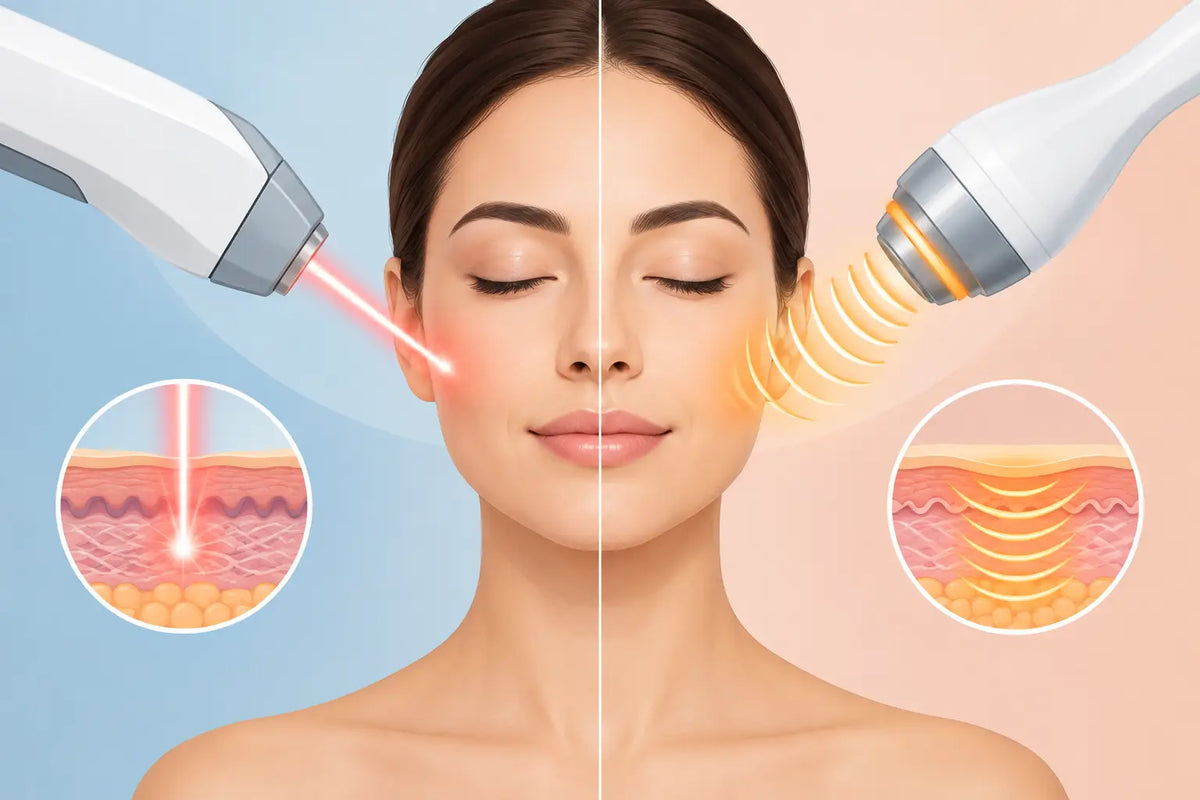
A new line around the mouth, a softer jawline, or makeup settling into crow’s feet can make collagen loss feel suddenly visible. The question of laser versus radiofrequency is really a question of how you want to address that change: with light-based energy or controlled heat, in a clinic or as part of a consistent at-home routine.
Both technologies can support firmer, smoother-looking skin. But they do not work in the same way, feel the same during treatment, or suit every concern equally. The right choice depends on your skin goals, tolerance for downtime, budget, and willingness to stay consistent long enough for collagen remodeling to show.
Laser versus radiofrequency: the core difference
Lasers use focused light energy. Specific wavelengths are absorbed by targeted structures in the skin, creating a controlled thermal effect that signals the body to repair and rebuild. For anti-aging treatments, laser energy can be used to support collagen production, improve the look of fine lines, and refine overall skin texture.
Radiofrequency, often called RF, uses electrical energy to generate heat in the skin’s deeper layers. It does not rely on light absorption or skin pigment in the same way a laser does. Instead, RF warms tissue to encourage collagen contraction and longer-term collagen remodeling.
The shared goal is healthier-looking collagen support. The distinction is how the energy reaches the skin and where it concentrates. That difference influences treatment intensity, recovery, sensation, and the results you can reasonably expect.
What lasers can do for wrinkles and texture
Not all laser treatments belong in one category. Ablative lasers intentionally remove portions of the skin’s surface. They can produce dramatic resurfacing results, but they also involve meaningful downtime, redness, aftercare, and a higher level of risk. These treatments belong in the hands of a qualified medical professional.
Non-ablative and non-fractional laser technologies take a different approach. They deliver controlled energy without intentionally removing the skin’s surface, making them relevant for people who want to target visible signs of aging with little disruption to their routine. This category can be especially appealing for fine lines around the eyes and mouth, where daily consistency matters.
For an at-home device, controlled delivery is essential. A clinical-grade at-home laser should be designed to deliver a precise, repeatable dose of energy within an established safety profile. Rather than replacing every in-office procedure, an at-home laser gives you a practical way to make collagen-focused treatment part of your regular skincare ritual.
The trade-off is patience. Collagen is not an overnight fix. Skin needs time to respond to repeated stimulation, build new collagen, and reveal gradual improvements in the appearance of wrinkles and firmness. That is why an easy routine can be more powerful than an ambitious treatment plan you cannot realistically maintain.
Why laser choice matters for skin tone and goals
Laser treatment should never be reduced to a single promise. Wavelength, energy level, treatment design, and your skin type all matter. Some in-office lasers require a more careful assessment for deeper skin tones because certain wavelengths can interact with melanin and raise the risk of unwanted pigment changes.
At-home laser devices have their own instructions, contraindications, and skin-tone guidance. Follow them precisely. If you have melasma, a history of hyperpigmentation, active skin irritation, photosensitivity, or are using prescription skin treatments, ask a dermatologist whether your routine is appropriate before starting.
What radiofrequency can do for skin tightening
RF is best known for its warming sensation and its ability to address the appearance of laxity. By heating tissue beneath the skin’s surface, radiofrequency can support a temporary tightening effect along with the slower process of collagen remodeling. Professional RF treatments are commonly chosen for areas such as the cheeks, jawline, neck, and body.
Because RF does not depend on light energy interacting with pigment, it is often presented as an option for a wide range of skin tones. That does not mean every RF device is right for every person. Treatment settings, applicator design, and heat control still matter greatly, particularly for deeper skin tones and sensitive skin.
At-home RF devices may feel convenient, but users should be realistic about their power and purpose. Consumer devices typically operate at lower energy levels than professional systems. They may offer gradual cosmetic improvement with regular use, but they are not equivalent to a medical office treatment. Heat also needs to be managed carefully. Overuse or poor technique can lead to irritation, burns, or temporary discoloration.
RF is not automatically better for loose skin
Radiofrequency is often marketed as the answer to sagging skin, but no non-surgical device can duplicate the structural change of a surgical lift. Mild to moderate concerns may respond well to a thoughtfully chosen treatment plan. More pronounced laxity, particularly in the lower face and neck, may require a conversation with a board-certified dermatologist or plastic surgeon about options with a stronger clinical impact.
This is where honest expectations protect both your skin and your investment. The best technology is not the one with the boldest claim. It is the one that matches the concern you see in the mirror.
How to choose between laser and RF
Start with the change you want to see. If fine lines, crepey texture, and visible wrinkles are your primary concern, a laser designed for collagen stimulation may be a compelling fit. If your concern centers more on the look of mild skin laxity or a less-defined contour, professional RF may deserve consideration.
Then consider your lifestyle. In-office laser resurfacing can deliver significant results, but it may involve social downtime and diligent aftercare. Professional RF can require a series of appointments and a substantial budget. At-home devices can lower the barrier to consistency, but only if you use them as directed over time.
Comfort matters, too. Both modalities can create warmth. Some people find RF heat more noticeable because it is designed to warm deeper tissue. Laser sensation varies widely by device and setting. A properly designed at-home treatment should feel manageable, not punishing. Pain is not proof that a treatment is working.
Finally, look past broad claims and ask practical questions: Is the device FDA-cleared for its intended use? Is the technology appropriate for your skin type? Are the instructions specific about frequency and safety? Does the brand explain what results are realistic, and when? Credible beauty technology should make those answers clear.
Building a collagen-focused routine at home
Energy-based skincare works best when it is supported by basics that protect the progress you are working toward. Daily broad-spectrum sunscreen is non-negotiable, because UV exposure accelerates collagen breakdown and can worsen uneven tone. A hydrating serum can support skin comfort, while peptide-focused skincare may complement a routine designed around the appearance of firmness.
Consistency is the differentiator. A few minutes of targeted treatment several times a week can be easier to sustain than repeated appointments that compete with work, travel, and family life. NIRA’s non-fractional laser approach was created around that reality: precise, at-home collagen stimulation that fits into a high-performance skincare routine without the recovery associated with aggressive resurfacing.
Do not stack multiple heat- or energy-based treatments without professional guidance. If you are using an at-home laser, avoid assuming that adding RF, strong exfoliants, or a fresh in-office procedure will speed results. Skin responds well to a deliberate plan, not constant escalation.
When to speak with a professional
A dermatologist is the right partner when your concerns include persistent pigmentation, acne scarring, active rosacea, significant laxity, or a history of keloid scarring. Professional guidance is also wise if you are pregnant, have a medical implant, take photosensitizing medication, or are unsure whether a device is compatible with your skin and health history.
For many people, the choice is not permanently laser or radiofrequency. It may be an at-home laser routine for ongoing wrinkle support, professional treatments for specific concerns, and disciplined sun protection every day. Choose the technology that you can use safely, consistently, and confidently - then give your collagen the time it needs to respond.


