

Fine lines rarely show up all at once. They build gradually as collagen production slows, skin gets thinner, and the support structure underneath the surface starts to weaken. That is exactly why collagen stimulation laser treatment has become such a sought-after category in anti-aging skincare. It targets one of the root causes of visible aging rather than simply masking it on the surface.
For anyone deciding between creams, injectables, LED devices, and clinical procedures, the appeal is straightforward. A laser treatment designed to stimulate collagen aims to improve skin firmness, soften wrinkles, and support smoother texture over time. The real question is not whether collagen matters. It is which type of treatment makes sense for your skin, your goals, and your lifestyle.
What collagen stimulation laser treatment actually does
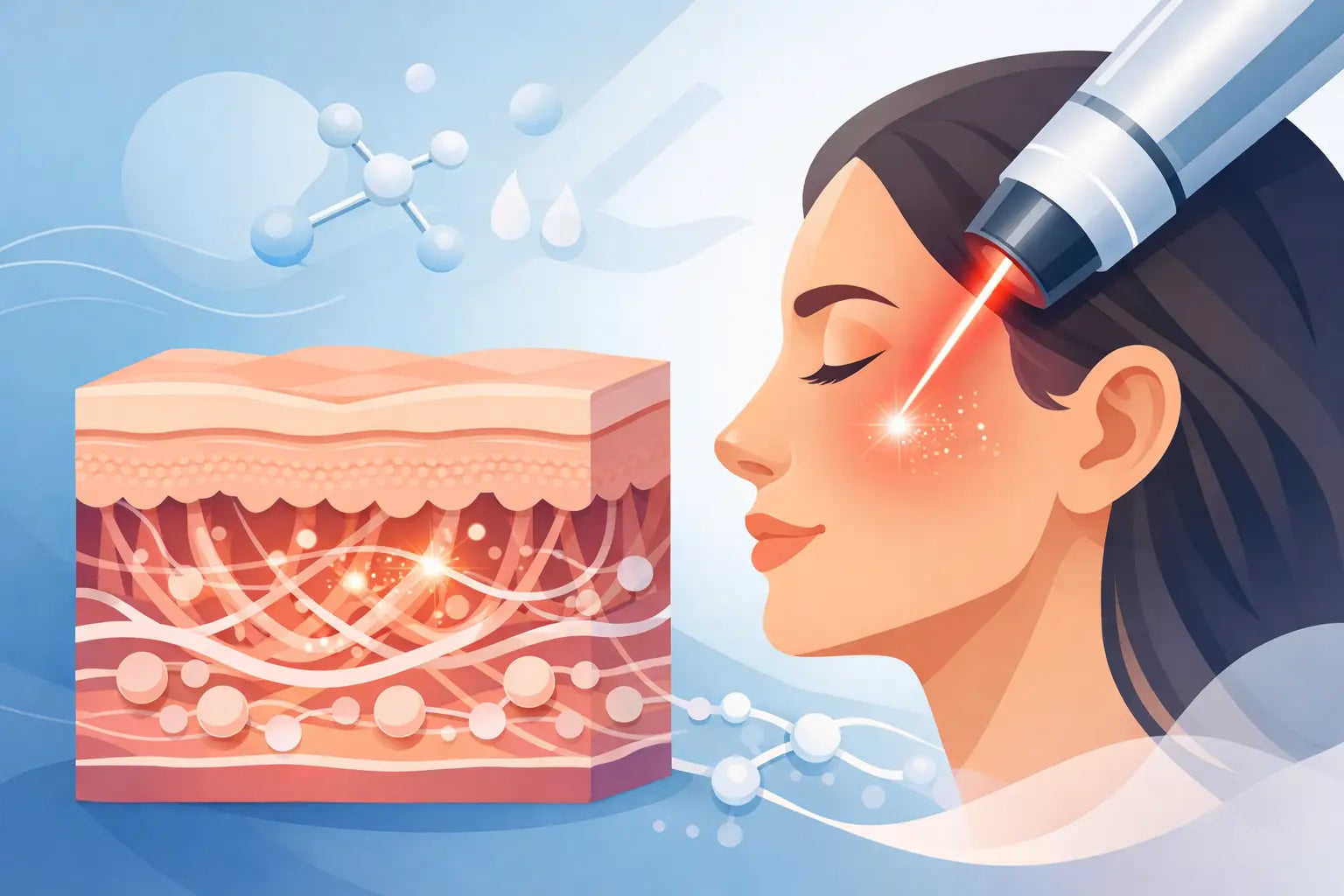
Collagen is the structural protein that helps skin look firm, resilient, and smooth. As natural collagen levels decline with age, the skin is more likely to develop laxity, creases, and a less refined texture. A collagen stimulation laser treatment works by delivering controlled laser energy into the skin, where it triggers a repair response. That repair response can encourage the body to produce fresh collagen and elastin.
This is why laser treatments are often discussed differently from basic topical skincare. A serum can support hydration and improve the look of the skin barrier, but a laser is designed to create a deeper biological response. The goal is not instant plumping for a few hours. The goal is gradual structural improvement that becomes more visible with consistency.
Not all lasers work the same way, though. Some create microscopic injury zones in the skin, while others deliver energy without the same degree of surface disruption. That distinction matters because it affects downtime, comfort, treatment frequency, and who is likely to follow through long enough to see meaningful results.
How laser energy stimulates collagen
When laser energy reaches targeted layers of the skin, it creates controlled heat. That heat signals the skin to begin a natural healing process. Fibroblasts, the cells responsible for producing collagen, can become more active during this response. Over time, new collagen fibers help reinforce the skin’s underlying structure.
This process is one reason results are not usually immediate. You may notice some early improvements in skin smoothness or radiance, but true collagen remodeling takes time. Most people see the most meaningful changes after weeks or months of regular treatment, depending on the device or procedure.
This also explains why collagen stimulation is often described as cumulative. One session may start the process, but repeated treatments are typically what build visible change. Skin is responding biologically, not cosmetically, so patience and consistency matter.
In-office vs at-home collagen stimulation laser treatment
There is no single best answer here. It depends on your tolerance for downtime, your budget, your schedule, and how aggressive you want your treatment plan to be.
In-office laser treatments are usually more intense. They can deliver significant energy in a shorter period, which may lead to faster or more dramatic results for some patients. The trade-off is that they often come with more discomfort, more recovery time, and a much higher cost over the course of a full treatment series. For many people, that makes it hard to stay consistent.
At-home devices are built around a different advantage. They bring collagen stimulation into a format that is easier to repeat regularly, which is critical because collagen renewal is an ongoing process. A well-designed at-home laser can fit into a daily routine, reduce the barriers that come with appointments, and make long-term use far more realistic.
That convenience is not a small benefit. It is often the reason people actually stick with treatment long enough to see improvement. A device you can use in minutes at home may be more practical than a clinical treatment you keep postponing.
Why non-fractional lasers matter
One of the most important distinctions in this category is fractional versus non-fractional technology. Fractional lasers treat skin by creating tiny columns of controlled injury, leaving surrounding tissue intact to support healing. They can be effective, but they are often associated with redness, social downtime, and a more intense recovery experience.
Non-fractional laser technology takes a different approach. Instead of creating those microscopic treatment zones, it delivers targeted laser energy in a way designed to stimulate collagen while being gentler on the skin’s surface. For people who want visible wrinkle reduction without the disruption of a harsher treatment path, this matters.
That is where at-home innovation has changed the conversation. Brands such as NIRA have built clinical-grade, non-fractional laser devices specifically for wrinkle reduction and collagen support at home. The value is not just the technology itself. It is the ability to access a dermatologist-aligned treatment category in a format that feels manageable, repeatable, and compatible with real life.
What results to expect
A good collagen stimulation laser treatment is not about overnight transformation. It is about progressive improvement. With consistent use, common goals include softer fine lines, improved skin firmness, a smoother look around expression-prone areas, and a more refined overall texture.
The timeline varies. Some people start noticing visible changes in a few weeks, while deeper improvements continue developing over several months. Age, skin condition, treatment intensity, and consistency all influence the outcome. Someone with mild early signs of aging may see improvement faster than someone addressing more established wrinkles or significant collagen loss.
It is also worth being realistic about what laser treatment can and cannot do. It can improve the appearance of wrinkles and firmness, but it is not the same as a surgical lift. If someone expects dramatic tightening from any collagen-based treatment alone, they may be disappointed. The best outcomes happen when the treatment goal matches the technology.
Who is a strong candidate
Collagen stimulation laser treatment is especially appealing for adults seeing the first or moderate signs of visible aging. Fine lines around the eyes, forehead creasing, smile lines, and early skin laxity are common reasons people start looking into this category.
It also appeals to people who feel underwhelmed by topical skincare alone. Moisturizers, peptides, and hyaluronic acid can absolutely support skin health and appearance, but they do not replace energy-based treatment when the goal is deeper collagen activation.
That said, not every device is right for every person. Skin sensitivity, underlying conditions, recent procedures, and skin tone considerations can all affect treatment planning. This is one reason FDA-cleared devices and clear usage guidance matter. Precision and safety are part of the value, not an extra.
How to get better results from treatment
Laser technology does the heavy lifting, but your overall routine still shapes the outcome. Hydrated skin generally responds better than dehydrated, neglected skin. Daily sun protection is essential because UV exposure breaks down collagen and can work directly against the progress you are trying to build.
Supportive skincare can also help. A well-formulated hydrating serum can improve comfort and skin appearance, while peptides may complement a collagen-focused routine. The key is to think of your regimen as layered support. Laser treatment stimulates the process. Skincare helps maintain an environment where skin can look and function at its best.
Consistency matters more than intensity for most people using an at-home device. Missing a few days will not erase progress, but sporadic use usually leads to sporadic results. The people who see the best improvements are usually the ones who make treatment part of a regular routine instead of waiting until their skin looks worse.
The biggest trade-offs to understand
The most common mistake in this category is comparing every treatment as if they should deliver the same experience. They do not. More aggressive procedures may produce faster visible change, but they often ask for downtime, discomfort, and a larger financial commitment. Gentler at-home options may require more repetition, but they can be easier to maintain and easier to live with.
There is also the question of expectations. If your priority is convenience and gradual wrinkle reduction, an at-home collagen stimulation laser treatment can be an excellent fit. If you want maximum intensity in the shortest possible time and are comfortable with recovery, an in-office option may appeal more.
For many consumers, the smartest decision is not the most aggressive treatment. It is the one they can use consistently, comfortably, and confidently.
Why this category continues to grow
Consumers are more informed than they used to be. They understand that collagen loss is a core driver of visible aging, and they are actively looking for treatments that do more than temporarily moisturize or blur. That is why laser devices built around collagen stimulation have gained so much attention. They speak directly to the biology of skin aging while fitting into a modern expectation of convenience.
The shift toward premium at-home beauty technology reflects that change. People want clinically grounded results, but they also want control, efficiency, and a treatment plan they can actually sustain. A collagen stimulation laser treatment sits at the center of that demand because it offers a credible bridge between traditional skincare and the inconvenience of repeated office visits.
If you are evaluating your options, the smartest place to start is with the treatment model you can realistically maintain. Skin improves when technology, consistency, and expectations are aligned - and that is where lasting confidence tends to begin.


