

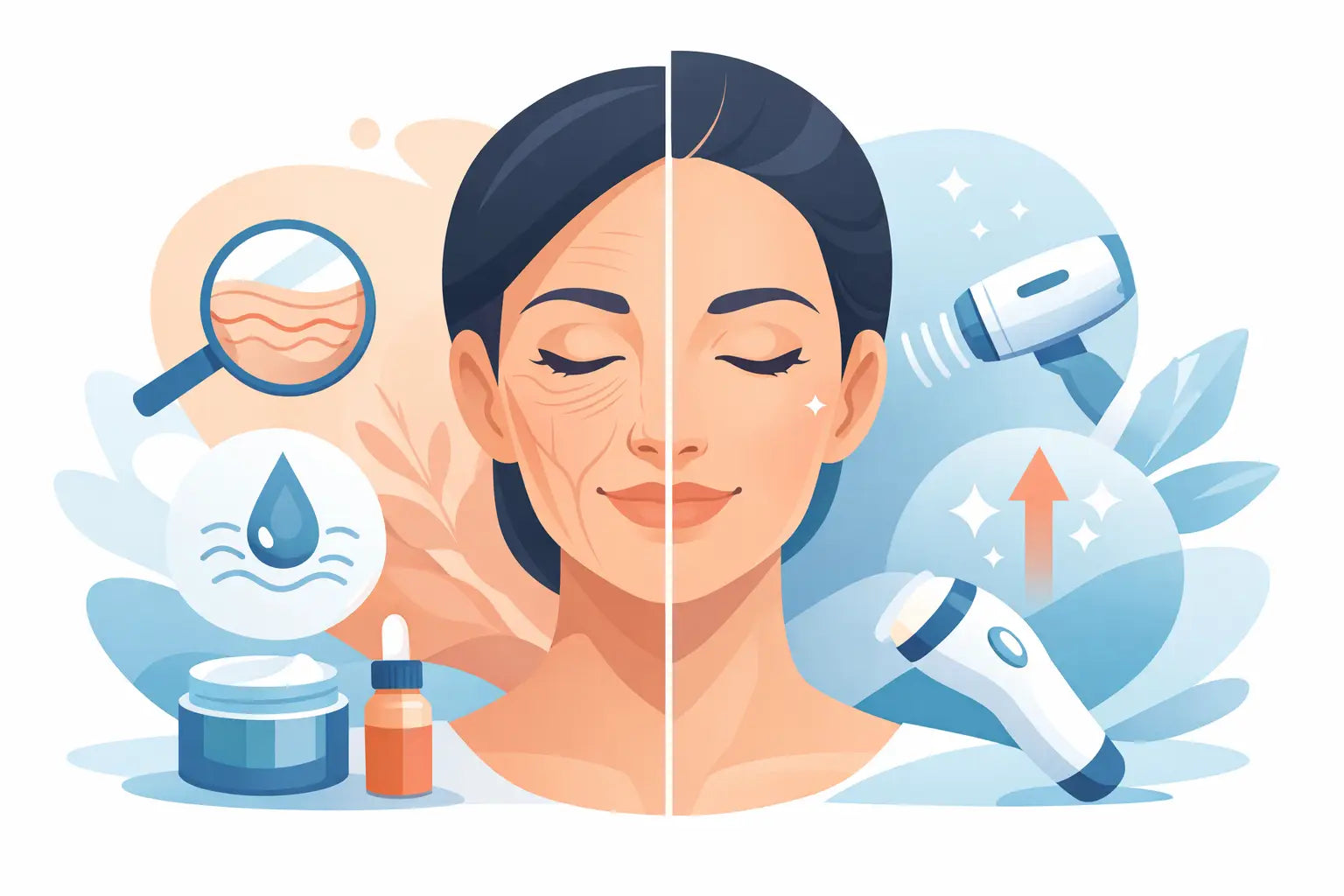
You can usually tell when a treatment is all marketing and no substance. It promises smoother skin, firmer contours, and fewer lines, but never explains what is actually changing in the skin. Real wrinkle removal and skin tightening starts deeper - at the level of collagen, cellular repair, and controlled energy delivered with precision.
That distinction matters, especially if your routine already includes quality skincare and you are still seeing creasing around the eyes, lines around the mouth, or skin that looks less taut than it used to. At a certain point, creams can support the skin, but they cannot do the full job of triggering the kind of structural renewal that aging skin needs. If your goal is visible improvement, the smartest question is not what sounds impressive. It is what can actually stimulate change.
What wrinkle removal and skin tightening really involve
Wrinkles and loose skin are related, but they are not identical concerns. Wrinkles form as collagen, elastin, and skin density decline over time. Repeated facial movement, sun exposure, and slower cell turnover all make those lines more noticeable. Skin laxity shows up when the underlying support structure weakens, so the skin no longer looks as firm or lifted.
That is why effective wrinkle removal and skin tightening usually depend on collagen stimulation. Collagen is the structural protein that helps skin stay smooth, resilient, and firm. As collagen production declines with age, skin becomes thinner, less elastic, and more prone to etched-in lines.
When a treatment can meaningfully encourage new collagen, it has the potential to improve both texture and firmness. This is the reason energy-based devices have become such an important category in anti-aging skincare. They are designed to go beyond surface-level hydration and create a biological response in the skin itself.
Why topicals alone often hit a ceiling
A well-formulated serum or cream can absolutely improve the look of skin. Hydrators can temporarily plump fine lines. Peptides can support a healthier-looking barrier. Retinoids can improve turnover and texture over time. These are worthwhile tools.
But there is a difference between making wrinkles look softer and treating the causes that make them more visible in the first place. Most topical products work at or near the surface. They can refine, smooth, and support. They typically do not deliver the same kind of targeted energy needed to heat the dermis in a controlled way and trigger a stronger collagen response.
This is where many people get frustrated. They are consistent. They are buying premium skincare. Yet the deeper folds, crepey areas, and loss of firmness remain. That does not mean skincare failed. It means the treatment category may be too limited for the result they want.
The most effective wrinkle removal and skin tightening treatments
There is no single answer for everyone because the right treatment depends on severity, downtime tolerance, budget, and how quickly you want to see change. Still, the field tends to break into a few clear categories.
In-office lasers and procedures
Dermatology clinics offer powerful options for resurfacing and tightening, including fractional lasers, radiofrequency treatments, ultrasound-based procedures, and injectables. These can produce meaningful results, especially for advanced photoaging or pronounced laxity.
The trade-off is just as clear. In-office treatments often come with higher cost, scheduling friction, discomfort, downtime, or the need for repeated appointments. For some people, that is worth it. For others, it creates a gap between wanting results and actually staying consistent enough to get them.
At-home beauty devices
At-home devices have improved dramatically, but not all technologies are equally effective. Some focus on temporary cosmetic effects, while others are built around more meaningful skin renewal.
The strongest at-home wrinkle removal and skin tightening solutions use energy in a way that is both controlled and repeatable. That matters because collagen remodeling is not a one-time event. Skin improves through cumulative stimulation over time.
This is why clinical-grade home devices have become so compelling for consumers who want visible change without making office visits part of their routine. Used consistently, the right device can bridge the gap between convenience and results.
Supportive skincare
Skincare still plays an important role. Hyaluronic acid can improve hydration and reduce the look of dehydration lines. Peptides can help support smoother, healthier-looking skin. Antioxidants can defend against environmental stress. These products work best as support, not as a substitute for collagen-focused treatment when firmness and deeper wrinkles are the main concern.
Why laser technology stands out
Laser-based wrinkle treatment has earned attention for a reason. When designed well, it delivers light energy into the skin with precision, creating a controlled thermal effect that can stimulate natural collagen renewal. That process helps skin gradually appear firmer, smoother, and more refined.
The phrase designed well is doing important work here. Not every laser experience is the same. Aggressive fractional lasers can be effective, but they often come with redness, recovery time, and a level of intensity that many people do not want to manage regularly.
A non-fractional approach is different. Instead of creating microscopic injury zones that require visible recovery, it can focus on stimulating collagen while being far more compatible with everyday use. For consumers who want a treatment they can realistically stick with, that usability matters almost as much as efficacy.
This is where a brand like NIRA has helped reshape expectations around at-home anti-aging. By bringing dermatologist-aligned laser technology into a fast daily format, it makes collagen stimulation more accessible without turning treatment into a major event.
What to look for in an at-home device
If you are comparing options, the best device is not the one with the most dramatic claims. It is the one with the strongest combination of technology, safety, clinical support, and ease of use.
Start with mechanism. If a product cannot clearly explain how it works in the skin, be skeptical. Terms like sculpting, lifting, and rejuvenating can sound compelling, but they mean very little without a real physiological basis.
Next, look for clinical credibility. FDA-cleared positioning, published testing, and measured wrinkle reduction carry more weight than vague testimonials. Before-and-after photos are useful too, but they should support evidence, not replace it.
Then consider consistency. A treatment only works if it becomes part of your life. If the device is cumbersome, uncomfortable, or requires too much recovery, adherence drops. The most effective routine is often the one you can maintain for months, because collagen remodeling takes time.
Finally, think in systems, not just standalone tools. A device paired with supportive skincare can help maximize skin comfort, hydration, and visible results. That combination tends to outperform a fragmented routine built around disconnected products.
What kind of results are realistic
This is where honesty matters. No legitimate wrinkle treatment makes 20 years disappear overnight. Real skin improvement is gradual, and the timeline depends on the treatment type, your age, your baseline collagen levels, and how consistent you are.
Fine lines usually respond first. Skin may start to look smoother and more refreshed before it looks significantly firmer. Deeper wrinkles and laxity often take longer because they reflect more advanced structural change. That does not mean they cannot improve. It means expectations should match biology.
Consistency is what separates people who see a difference from people who say nothing worked. Collagen production does not respond well to sporadic effort. If a treatment is backed by science and designed for regular use, staying with it matters.
It also helps to think in layers. Better hydration can improve immediate skin appearance. Ongoing collagen stimulation can improve firmness and wrinkle depth over time. Daily sun protection helps preserve the gains. The strongest anti-aging routines are rarely built on one step alone.
Who benefits most from wrinkle removal and skin tightening at home
At-home treatment makes the most sense for people who want visible anti-aging results but do not want the cost, inconvenience, or downtime of repeated in-office procedures. That includes women noticing early to moderate collagen loss, fine lines that are becoming more persistent, or skin that simply looks less firm than it used to.
It is also ideal for people who value control. You can treat consistently on your schedule, track your progress in real time, and build a routine that feels sustainable rather than disruptive.
That said, severe laxity or very deep etched wrinkles may still benefit from a combination approach that includes professional care. There is no weakness in that. Good skincare decisions are not about choosing the most extreme option. They are about choosing the most appropriate one.
The most useful mindset is this: wrinkle removal and skin tightening should not be reduced to hype, hope, or one miracle product. It is a process of stimulating the skin to behave more like younger skin again. When the technology is credible and the routine is consistent, that process can become something you actually see in the mirror.


