

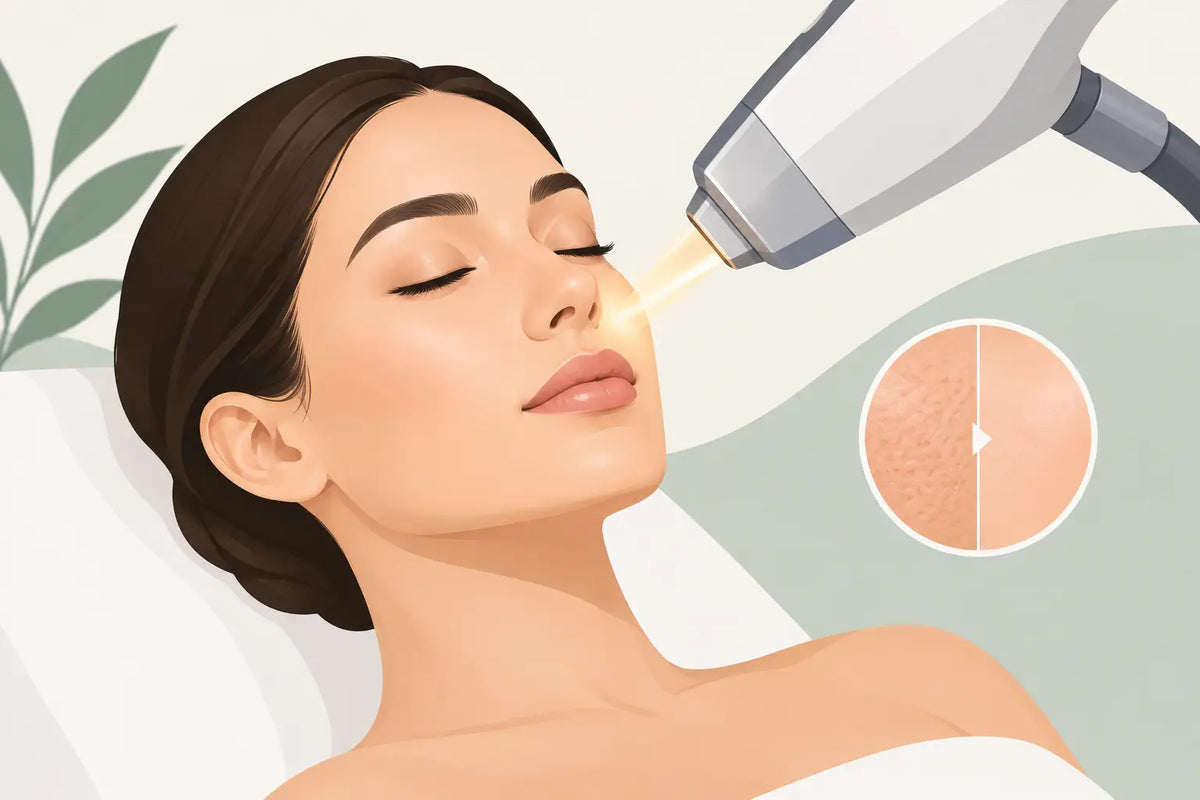
Fine lines do not appear overnight, and meaningful skin improvement rarely comes from a single appointment or one new serum. This nonfractional laser guide explains why controlled, consistent laser energy has become a compelling option for people who want to support collagen at home without planning their lives around recovery time.
For many women with visible crow’s feet, expression lines, crepey texture, or skin that no longer feels as firm as it once did, the appeal is practical as much as aesthetic. The right device can make a collagen-focused treatment part of a routine you can actually maintain.
What is a nonfractional laser?
A nonfractional laser delivers energy across the full treatment area rather than creating a grid of tiny, separated treatment columns. In skincare, this approach is often paired with non-ablative technology, meaning the goal is to warm targeted layers of skin without removing its surface.
That distinction matters. Skin responds to carefully controlled thermal energy by initiating a natural repair response. Fibroblasts, the cells associated with collagen production, are encouraged to do the work they already know how to do: support skin structure over time. The visible goal is smoother-looking texture, softened fine lines, and firmer-looking skin.
Nonfractional does not mean aggressive. In fact, the appeal of this category is precision. At-home devices are designed around a lower-energy, repeat-use model that fits a consistent skincare routine. Instead of relying on a high-intensity treatment followed by downtime, users build results through regular sessions.
Nonfractional vs. fractional laser treatments
Fractional lasers treat only fractions of the skin at a time, leaving surrounding areas untreated in a pattern of microscopic columns. Depending on the device and setting, fractional treatments can be ablative or non-ablative. They are commonly associated with in-office procedures, more intensive resurfacing goals, and a recovery period that may include redness, swelling, peeling, or sensitivity.
Nonfractional laser technology treats the targeted area more uniformly. When used in an at-home, non-ablative format, it is generally chosen for gradual collagen support with little to no expected downtime. This makes it especially appealing for early to moderate visible signs of aging, including fine lines around the eyes and mouth.
Neither category is automatically “better.” Fractional resurfacing may be more appropriate for someone addressing significant sun damage, deeper textural scars, or more dramatic resurfacing goals under professional care. A nonfractional at-home device can be a stronger fit for someone who values convenience, wants a gentler experience, and is prepared to use the device consistently for progressive change.
Why collagen is the real focus
Collagen is the structural protein that helps skin look firm, springy, and smooth. Natural collagen production declines with age, while sun exposure, stress, and environmental factors can further affect the look of skin. The result is familiar: lines linger longer after expressions, skin can feel thinner, and contours may appear less defined.
Topical skincare plays an important role in hydration and barrier support, but a cream cannot deliver laser energy into the skin. This is where a clinically designed at-home laser offers a different mechanism. It is not replacing your moisturizer or peptide cream. It is designed to complement a thoughtful routine by targeting the collagen process beneath the surface.
That process takes time. Collagen remodeling is not an overnight event, which is why honest expectations are essential. Some people notice their skin feels smoother or more hydrated-looking early in a routine, while visible improvements in the appearance of lines and firmness tend to build with continued use. Before-and-after results can be motivating, but your own progress will depend on your starting point, consistency, skincare habits, and biology.
Who may benefit from a nonfractional laser guide at home?
At-home nonfractional laser devices are often a strong match for people who want more than topical skincare alone but are not looking for the expense, scheduling, or recovery associated with repeated office treatments. They can be particularly useful for skincare-conscious adults seeing fine lines around the eyes, forehead, lips, neck, or other areas specified by their device instructions.
They are also suited to people who appreciate a short, repeatable ritual. A treatment that takes only a few minutes is easier to maintain than one that requires an appointment, commute, and recovery plan. Consistency is not a minor detail here. It is central to the treatment model.
That said, laser devices are not right for every situation. If you have an active skin infection, open wounds, a suspicious lesion, a history of light sensitivity, or are using medications that increase photosensitivity, speak with a qualified healthcare professional before treatment. Those who are pregnant, nursing, managing a skin condition, or receiving dermatologic care should also review the device guidance and consult their clinician when appropriate.
How to choose an at-home laser device
The phrase “at-home laser” covers a wide range of products, and not all of them use the same technology or meet the same standards. Start with the evidence, not the marketing language. Look for a device that clearly explains its technology, intended use, safety features, treatment protocol, and clinical support.
FDA clearance is another meaningful consideration. It does not mean a device is a miracle or that it will produce identical results for every person. It does indicate that the device has gone through a regulatory review process for its specified use. Read the exact claims carefully and avoid treating clearance as a substitute for following instructions.
Design also matters more than it may seem. A device should feel easy to use around the areas you want to treat, provide clear guidance on placement and frequency, and include safety measures that encourage proper use. If a tool is complicated, uncomfortable, or difficult to fit into your routine, it is less likely to earn the consistency required for visible change.
NIRA’s nonfractional laser approach is built around this reality: professional-grade skincare technology is most valuable when it is precise enough to inspire confidence and simple enough to use regularly at home.
How to use a nonfractional laser safely and consistently
Always begin with the instructions that come with your specific device. Treatment frequency, approved areas, skin preparation, and post-treatment recommendations can vary. More sessions than recommended do not necessarily mean better results. Laser energy is dosage-dependent, and the prescribed schedule is part of using the technology responsibly.
Start with clean, dry skin unless your device specifically directs otherwise. Keep treatment focused on approved areas, and avoid using the device over irritated skin, active breakouts, or areas that are healing. If your routine includes retinoids, exfoliating acids, or other potent actives, follow the manufacturer’s guidance on timing. A simplified routine may be more comfortable around treatment days for some users.
Daily broad-spectrum sunscreen is non-negotiable. Any collagen-focused routine should protect the skin you are working to support. Sun exposure contributes to visible aging and can undermine the progress you are trying to build. Hydrating products, including hyaluronic acid serums and barrier-supportive moisturizers, can also help skin feel comfortable and cared for as part of a well-rounded routine.
Take standardized photos before you begin. Use the same location, lighting, facial expression, and angle every few weeks. The face you see every day can make slow improvements difficult to recognize. Consistent photos offer a clearer view of changes in the appearance of fine lines, texture, and overall smoothness.
What results should you realistically expect?
A quality at-home nonfractional laser is not a replacement for surgical lifting, injectable treatments, or intensive medical resurfacing. It is a distinct option for people who want to improve visible signs of aging through regular collagen-focused care.
Expect progress, not perfection. The most satisfying results are often subtle at first: makeup sits more smoothly, fine lines look less pronounced, and skin appears more refined. Over time, those smaller changes can add up to a complexion that looks more rested, firmer, and more like the version of your skin you want to see in the mirror.
The best treatment is the one you can use correctly, consistently, and confidently. When advanced laser technology fits your real life, caring for your skin stops feeling like another appointment and becomes a few focused minutes invested in yourself.


