

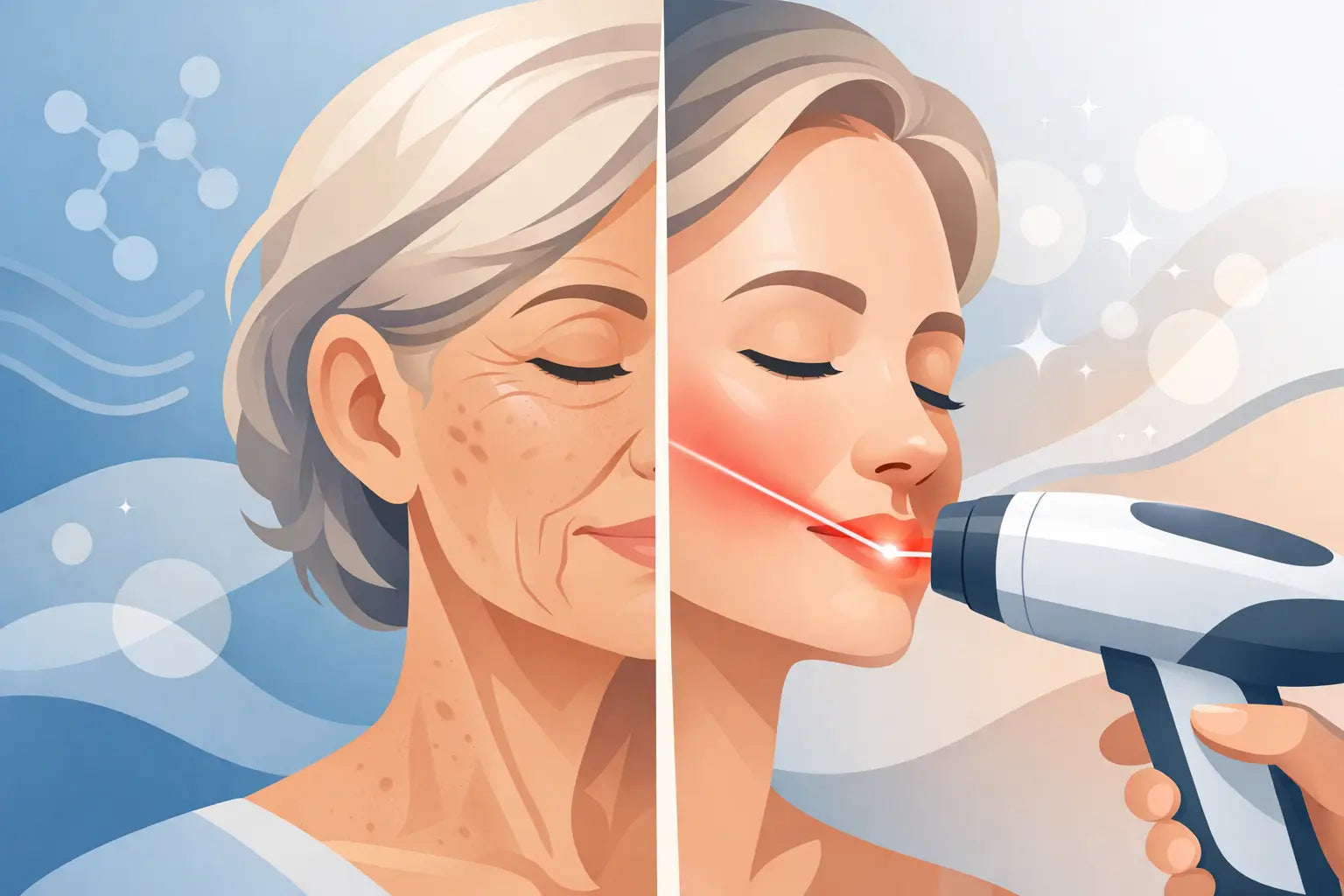
The mirror usually tells the story first - a crease that lingers after you stop smiling, skin that looks thinner around the eyes, a jawline that feels less defined than it did a few years ago. When serums stop feeling like enough, laser treatment for aging skin moves into the conversation for one reason: it targets collagen where visible aging actually begins.
That matters because aging skin is not just about surface dryness or dullness. Over time, collagen production slows, elastin weakens, and the skin’s support structure starts to change. Fine lines become etched, texture gets rougher, and laxity becomes harder to ignore. A well-designed laser approach can help address those deeper changes by stimulating the skin’s natural repair response instead of only coating the surface.
How laser treatment for aging skin actually works
Not all lasers work the same way, and that is where many people get confused. In general, laser devices deliver focused light energy into the skin. That energy creates a controlled thermal effect, which signals the skin to produce more collagen and renew itself over time.
For aging concerns, the goal is usually not a dramatic one-day transformation. It is gradual structural improvement. As collagen rebuilds, skin can appear firmer, smoother, and more even. Fine lines may soften first, while deeper wrinkles and laxity often improve more slowly.
The biggest distinction is between aggressive resurfacing lasers and non-ablative or non-fractional options. Ablative treatments remove layers of skin and can deliver significant results, but they usually come with more downtime, more discomfort, and a higher recovery burden. Non-ablative treatments heat the tissue without removing the top layer, which makes them more approachable for people who want meaningful results with less interruption to daily life.
That trade-off matters. The strongest treatment on paper is not always the best treatment for a real person with a job, social plans, sensitive skin, and limited time for recovery.
What laser treatment can improve
The best candidates for laser treatment for aging skin are usually trying to correct a cluster of concerns rather than one single issue. Lasers can help reduce the look of fine lines, improve skin texture, support firmness, and soften visible signs of collagen loss. Some treatments also improve uneven tone caused by sun damage, though that depends on the type of laser being used.
Wrinkles around the eyes are a common target because the skin there is thinner and often shows aging earlier. Forehead lines, smile lines, and crepey texture can also respond well when collagen stimulation is consistent enough over time. If your main concern is mild to moderate aging, laser treatment may be especially appealing because it works below the surface where those changes begin.
Still, expectations matter. Lasers can improve the appearance of aging skin, but they do not stop aging or create the same effect as surgery. If someone has significant sagging or very deep folds, they may need a different approach or a combination plan.
In-office lasers versus at-home devices
This is where the decision becomes practical. In-office laser treatments can be powerful, but they often ask for a lot in return - higher cost, scheduling, recovery time, and in some cases repeated sessions to maintain results. For many people, the issue is not whether clinic treatments work. It is whether they fit real life.
At-home laser devices have changed that equation. The best ones are designed to deliver clinically relevant energy in a format that is safe, consistent, and easy to use as part of a regular routine. Instead of one aggressive appointment followed by downtime, you get a more manageable pattern of repeated treatments that build over time.
That consistency is not a compromise if the technology is strong enough. It can actually be an advantage. Skin remodeling responds well to repeated stimulation, and many consumers are more likely to stay committed to a five-minute treatment at home than to a series of expensive office visits.
A clinically developed non-fractional laser approach is especially compelling for people who want visible wrinkle reduction without the disruption associated with harsher procedures. That is why beauty-tech users increasingly compare advanced at-home lasers not just to creams and masks, but to professional categories.
Why collagen stimulation is the real anti-aging target
A lot of anti-aging marketing focuses on immediate effects - smoother feel, more glow, better hydration. Those benefits matter, but they are often temporary. The deeper question is whether a treatment helps skin behave younger.
Collagen stimulation is central because collagen gives skin its structure. As levels decline with age, the skin becomes less resilient and more prone to lines, thinning, and looseness. Laser energy can trigger a wound-healing response that encourages fresh collagen production, which is why results often continue improving after the treatment itself.
This is also why patience is part of the process. New collagen does not appear overnight. Early changes may include smoother texture or a softer look to fine lines, while firmer-looking skin often develops more gradually over several weeks or months.
If you are comparing options, this is the difference between a treatment that temporarily makes skin look better and one that is designed to help rebuild what aging has depleted.
What to expect from treatment and results
Your experience depends on the device and treatment setting. In-office sessions may involve stronger sensations, redness, or peeling, particularly with resurfacing lasers. Some people are comfortable with that trade for faster visible change. Others decide the downtime is not worth it.
At home, the experience should feel much easier to maintain. The most advanced devices are built for comfort and routine use, so the process fits into daily life instead of taking it over. That ease matters because results with aging skin often come from consistency, not intensity alone.
Visible improvement usually happens in stages. You may first notice that makeup sits better, skin looks less tired, or crow’s feet seem less sharp in certain light. With continued use, firmness and wrinkle appearance can improve more noticeably. The pace varies based on age, skin condition, treatment frequency, and how much collagen loss is already present.
Good skincare can support those gains. Hydration helps skin look healthier immediately, while ingredients like peptides and hyaluronic acid can complement laser use by supporting the skin barrier and improving the look of plumpness. But skincare works best here as a partner, not a substitute.
Is laser treatment right for every kind of aging skin?
Not automatically. The right answer depends on your concerns, your skin tone, your sensitivity level, and how much downtime you are willing to accept. Some lasers are better for resurfacing. Others are better for collagen support. Some skin types need more caution with heat-based treatments, especially when pigment concerns are involved.
This is why technology choice matters more than the word laser alone. Two treatments can both be called laser treatments and deliver very different experiences and outcomes. Consumers who do best are usually the ones who look past the category label and focus on what the device is designed to do.
If your goals are smoother skin, softer wrinkles, and firmer-looking texture without putting your routine on hold, a non-fractional laser may be the more realistic fit. It offers a middle ground between underpowered beauty devices and high-downtime clinical procedures.
For many women with mature skin, that balance is exactly the point. You do not want another product that overpromises and underdelivers. You also may not want to commit to the cost and recovery of repeated office treatments. You want technology that feels credible, measurable, and easy to keep using.
The smarter way to think about laser treatment for aging skin
The better question is not whether laser treatment is worth it in theory. It is whether the treatment matches the kind of results you want to maintain. Aging skin responds best to approaches that are both biologically meaningful and realistically sustainable.
That is why the category is moving toward sophisticated at-home solutions backed by clinical testing and dermatologist-aligned design. When a device can stimulate collagen, reduce the appearance of wrinkles, and fit into a real routine, it becomes easier to stay consistent long enough to see true change. NIRA built its approach around that idea - clinical-grade laser technology designed for visible anti-aging results without the friction of office-based treatment cycles.
If your skin is showing the signs of time and you are ready for something more advanced than topical skincare alone, laser can be a smart next step. The key is choosing an approach you will actually use long enough to let your skin do what it is built to do: repair, rebuild, and look stronger with every cycle.


