

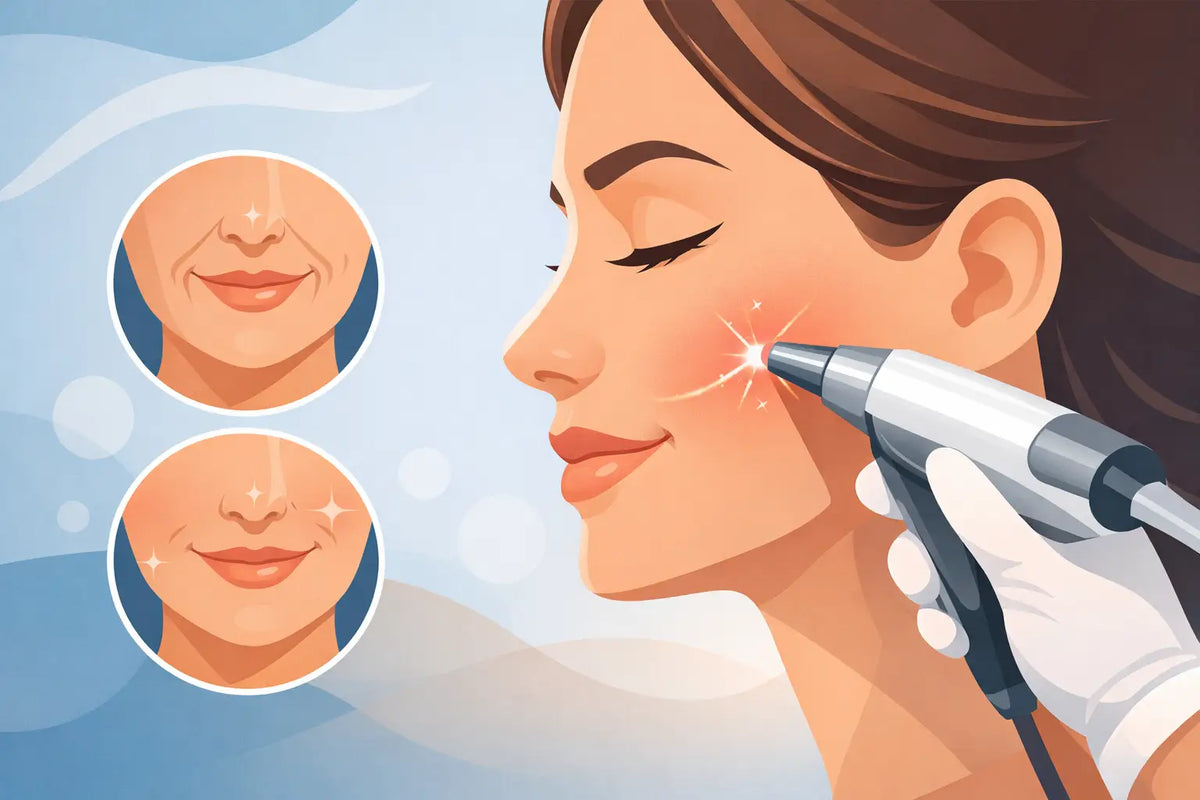
Smile lines are often one of the first changes people notice in photos: the creases that run from the sides of the nose toward the corners of the mouth can make the lower face look more tired, even when you feel rested. A laser for smile lines can be a powerful option because it addresses a central cause of visible folding: declining collagen support beneath the skin.
The right approach is not about trying to erase every expression. Smile lines are part of a naturally expressive face. The goal is smoother-looking skin, improved firmness, and a softer transition through the midface so your skin looks refreshed at rest and in motion.
Why Smile Lines Become More Noticeable
Smile lines, also called nasolabial folds, deepen for more than one reason. Repeated facial movement contributes, but the larger shift is structural. Over time, collagen and elastin production slow, skin becomes less resilient, and the cheeks can lose some of the volume and support that once kept the area lifted.
Sun exposure, smoking, dehydration, weight changes, and genetics can all influence when those changes become visible. This is why a topical moisturizer may temporarily plump the surface but cannot fully change the underlying collagen architecture that affects the depth of a fold.
That distinction matters when choosing treatment. If your concern is fine, etched texture around the upper part of the smile line, collagen-stimulating laser treatment may make a meaningful visible difference. If the fold is primarily caused by significant volume loss or lower-face laxity, a laser can improve skin quality but may not completely flatten the crease on its own.
How a Laser for Smile Lines Works
Laser technology uses focused light energy to create a controlled response in the skin. Depending on the device and treatment type, that energy may heat targeted layers of tissue, prompting the skin's natural repair process and supporting new collagen production over time.
As collagen remodels, skin can become firmer, smoother, and better able to reflect light evenly. Around smile lines, that can translate to softened fine lines and a less pronounced appearance of shallow folds. Results develop gradually because collagen renewal is gradual. That is a strength, not a drawback: changes tend to look like your skin at its best rather than an abrupt change in facial expression.
Not all lasers work the same way. In-office ablative and fractional lasers deliberately create microscopic treatment zones in the skin and can deliver more intensive resurfacing. They may be appropriate for deeper texture concerns, but they also commonly involve redness, peeling, downtime, and a more involved recovery period.
Non-fractional at-home lasers are designed around a different experience. They use controlled energy to support collagen stimulation without intentionally creating an open wound in the skin. For people who want to treat consistently without arranging appointments or stepping away from work and social plans, this category can make long-term skin maintenance more realistic.
What Results Can You Realistically Expect?
A laser can improve the appearance of smile lines, but realistic expectations produce better decisions. The most visible improvements are often in fine wrinkling, crepey texture, and mild to moderate folds where skin laxity and collagen loss are key factors. The area may look smoother, more supported, and less shadowed.
Deep, fixed nasolabial folds can still improve, but they are less likely to disappear completely with laser treatment alone. When a fold is driven by more substantial midface volume loss, the treatment plan may require a dermatologist's assessment to determine whether other options are appropriate. A credible skin technology routine should never promise that one device solves every type of facial aging.
Consistency also matters. A single treatment does not rebuild a meaningful amount of collagen overnight. With at-home laser technology, regular use according to the device instructions is what gives skin repeated opportunities to respond. Many users begin to notice early changes in texture and radiance first, while firmness and wrinkle improvement become more apparent over the following weeks and months.
At-Home Laser vs. In-Office Treatment
The best choice depends on your goals, comfort with downtime, budget, and how much intensity your skin needs. An in-office procedure may be a better fit for someone seeking aggressive resurfacing for pronounced photoaging and who is prepared for recovery. It also gives you direct physician oversight, which can be especially valuable for complex concerns or deeper skin tones that need a carefully selected treatment setting.
At-home laser technology offers a different kind of value: repeatable collagen support built into a routine you can actually sustain. There is no commute, no waiting room, and no need to plan around a recovery window. For many people, the ability to perform short treatments consistently is more practical than relying on occasional clinic visits.
NIRA's FDA-cleared, non-fractional laser technology is designed for this at-home model, helping users target visible signs of collagen loss with a focused, convenient treatment experience. As with any device, use it only as directed and choose a model intended for the areas you plan to treat.
A Smarter Routine for the Smile-Line Area
Laser treatment works best as part of a skin-supporting routine, not as a substitute for every other healthy habit. Start with clean, dry skin if your device instructions call for it. Treat the skin around the smile-line area with careful placement, avoiding the lips and following the recommended schedule rather than adding extra sessions in pursuit of faster results.
After treatment, support the skin barrier with ingredients that improve hydration and comfort. Hyaluronic acid can help draw water into the skin's surface, creating a temporarily fuller look, while a well-formulated peptide cream can complement a routine focused on smoother-looking skin. These products do not replace collagen stimulation, but hydrated skin often looks more refined and reflects the benefits of a consistent device routine more clearly.
Daily broad-spectrum sunscreen is equally nonnegotiable. UV exposure accelerates collagen breakdown, which works against the progress you are trying to create. If you are investing time in improving smile lines, protecting that investment every morning is one of the highest-impact steps you can take.
Safety and When to Ask a Professional
A quality at-home laser should have clear instructions, defined treatment areas, and appropriate safety guidance. Do not use a device over active irritation, open skin, suspicious lesions, or an active cold sore outbreak. If you use prescription skincare, have a history of pigmentation changes, are prone to cold sores, or are managing a skin condition, ask your dermatologist before starting a new laser routine.
Be especially cautious with the temptation to stack intensive treatments. Combining an at-home laser with strong exfoliating acids, retinoids, or professional procedures without a plan can leave skin unnecessarily irritated. Skin that is calm, hydrated, and protected is better positioned to maintain a healthy-looking glow.
Take baseline photos in consistent lighting before you begin. Smile lines can change subtly from week to week, and photos make it easier to see gradual improvements that the mirror may not reveal. Look beyond the fold itself: smoother texture, a more even appearance, and firmer-looking skin around the mouth are all meaningful signs of progress.
The most rewarding approach to smile lines is not chasing a frozen, expressionless result. Choose technology that supports your skin's own collagen response, commit to the routine, and give your face the time it needs to look more rested, resilient, and unmistakably like you.


