

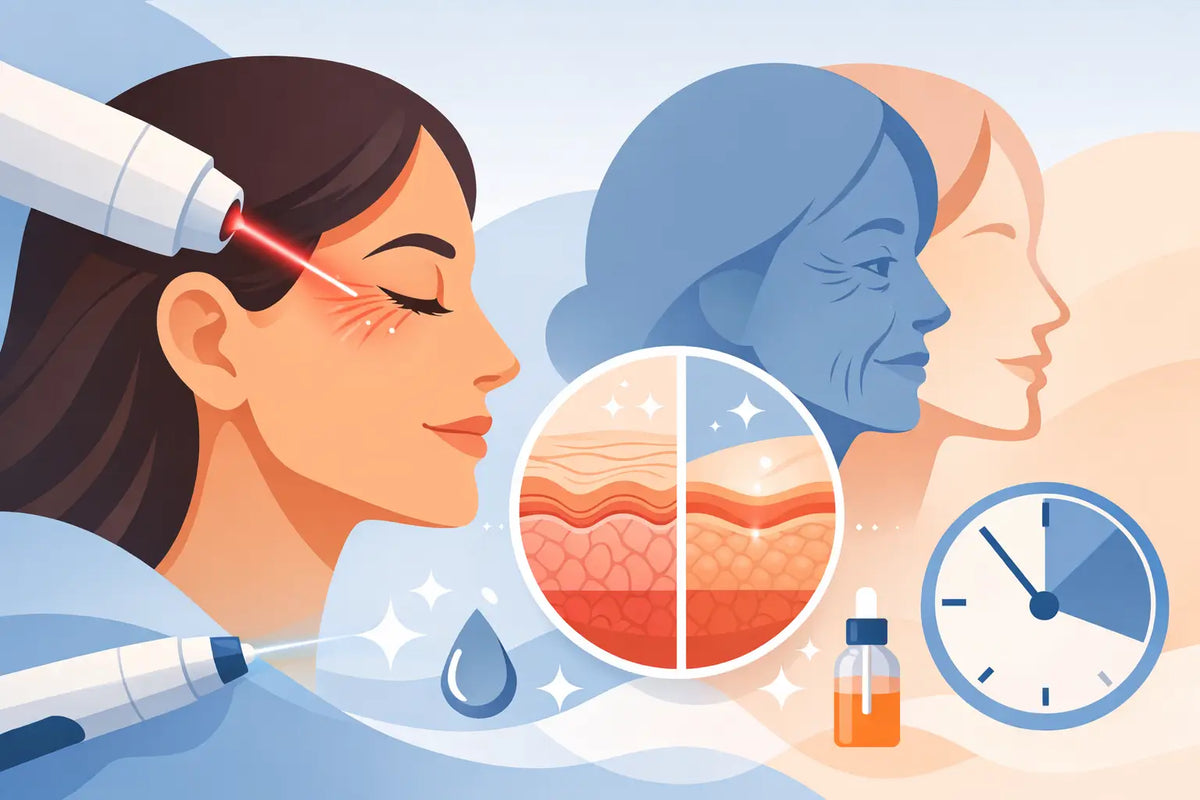
Fine lines rarely arrive all at once. They tend to show up first around the eyes, mouth, and forehead, then become more noticeable as collagen production slows and skin loses some of its natural firmness. So, does facial laser help wrinkles? Yes, the right laser technology can visibly improve the look of fine lines and wrinkles by supporting the skin’s own collagen-building process. The key is understanding which type of laser fits your goals, skin, lifestyle, and tolerance for downtime.
Does Facial Laser Help Wrinkles? The Science Behind It
Wrinkles are not simply a surface-level concern. Over time, the skin produces less collagen and elastin, the structural proteins that help keep it firm, smooth, and resilient. Sun exposure, repetitive facial movement, environmental stressors, and natural aging all accelerate that process.
Laser treatments work by delivering controlled light energy into targeted layers of the skin. That energy creates a gentle thermal response, signaling the body to begin repair processes that include new collagen production. As collagen remodels over time, skin can look smoother, firmer, and more refreshed.
This is why lasers are fundamentally different from a moisturizer or even a high-performance serum. Topicals can hydrate, support the skin barrier, and improve the appearance of temporary dehydration lines. Laser energy is designed to work beneath the surface, where age-related collagen loss begins.
Results are gradual because collagen renewal is gradual. Some people notice an early improvement in glow or skin texture, but meaningful wrinkle reduction typically develops over weeks and months of consistent treatment. That slower progression is a feature of collagen remodeling, not a sign that the treatment is ineffective.
Not All Facial Lasers Treat Wrinkles the Same Way
The term “laser treatment” can describe very different technologies. Choosing the right category matters because it affects comfort, recovery time, treatment frequency, and the kind of results you can expect.
Ablative lasers
Ablative lasers remove a controlled portion of the outer skin layer to trigger significant resurfacing. They can create dramatic improvements in deeper lines, uneven texture, and sun damage, but they are generally performed in a clinical setting and require meaningful recovery. Redness, peeling, sensitivity, and strict aftercare are part of the trade-off.
For someone with advanced photoaging or deep etched-in wrinkles, an in-office ablative procedure may be worth considering with a qualified dermatologist. It is not, however, the only path to visible improvement.
Fractional lasers
Fractional lasers treat microscopic columns of skin while leaving surrounding tissue intact. This approach can shorten healing time compared with fully ablative resurfacing, though it may still involve redness, swelling, and several days of social downtime depending on the device and treatment intensity.
Fractional treatments can be effective for texture, fine lines, and more pronounced signs of aging. They are often performed as a series, and they may be a good option for people seeking stronger resurfacing than an at-home device can provide.
Non-fractional, non-ablative lasers
Non-ablative lasers heat targeted tissue without removing the skin’s surface. They are designed to stimulate collagen with a gentler experience and minimal to no downtime. At-home laser technology can fit into this category, offering a way to build a consistent collagen-supporting routine without repeated appointments.
The trade-off is straightforward: lower-intensity, no-downtime treatments usually require more consistency and patience than a powerful in-office procedure. For many people, that is exactly the advantage. A treatment that fits into a daily routine is easier to maintain than one that requires scheduling, recovery, and a larger upfront investment each time.
What Results Can You Realistically Expect?
A facial laser can help soften the appearance of fine lines and wrinkles, especially in areas where collagen loss is beginning to show. The best results are often seen in crow’s feet, under-eye creasing, forehead lines, lines around the mouth, and overall skin texture. Skin may also look firmer as collagen support improves.
Expect improvement, not a frozen or filtered version of your face. Laser-based collagen stimulation does not replace the volume lost in the cheeks or dramatically relax dynamic expression lines the way injectable treatments can. It is a different strategy: strengthening the skin’s own support structure so it looks smoother and more resilient over time.
Your starting point matters. Fine lines caused by dehydration may improve quickly with hydration and barrier support. Wrinkles created by decades of sun exposure, deep folding, or volume loss can improve with laser treatments, but may need a broader plan that includes professional care. Age, genetics, sun habits, skin tone, device type, and consistency all shape the outcome.
Before-and-after photographs should be viewed with a practical eye. Look for changes in line depth, skin texture, and firmness under comparable lighting, angles, and facial expression. Real results tend to look naturally refreshed, not artificially transformed overnight.
Consistency Is What Makes At-Home Laser Treatment Powerful
An at-home laser is not designed to be a one-time event. Its value comes from regular, controlled treatments that support collagen production over time. This makes it especially appealing for people who want clinical-grade skincare technology without the time, expense, and recovery associated with repeated office visits.
For best results, follow the device’s treatment schedule exactly. More is not always better. Laser devices are engineered for a specific frequency and duration, and using them beyond the instructions will not necessarily speed collagen remodeling.
A simple routine also helps people stay consistent. Start with clean, dry skin unless your device instructions say otherwise. Complete your laser treatment, then apply supportive skincare such as a hydrating hyaluronic acid serum and a peptide-rich moisturizer. During the day, broad-spectrum sunscreen is non-negotiable. Protecting your skin from UV exposure helps preserve the collagen you are working to support.
NIRA’s non-fractional laser technology is designed around this practical reality: a quick, at-home approach that makes regular collagen-focused treatment more attainable for people who want visible wrinkle care without pressing pause on their lives.
Laser vs. LED: Why the Difference Matters
LED masks and laser devices are often placed in the same beauty-tech conversation, but they do not use the same type of light or deliver energy in the same way. Red light LED devices can be a useful addition to a skincare routine and may support a healthy-looking complexion. Laser technology is more focused and can deliver targeted energy intended to stimulate collagen in the skin.
Neither category needs to be framed as an all-or-nothing choice. LED may be appealing for broad, relaxing skincare sessions, while an at-home facial laser may be the better fit when reducing the appearance of wrinkles and improving firmness is the central goal. The right investment depends on the outcome you want to prioritize.
Who Should Be Careful With Facial Laser Treatments?
Laser treatments are not appropriate for every person in every circumstance. If you have an active skin infection, an open wound, a history of light-triggered conditions, or a condition that affects wound healing, speak with a healthcare professional before using laser technology. The same applies if you are taking medications that can increase light sensitivity.
People with melasma, hyperpigmentation concerns, or deeper skin tones should be especially thoughtful about device selection and professional guidance. Certain laser modalities can carry a higher risk of pigment changes when used incorrectly or at inappropriate settings. A device designed for at-home use should always be used only as directed, and a dermatologist can help you evaluate whether it is appropriate for your individual skin history.
Do not treat over suspicious spots, active inflammation, or areas that have recently undergone another intensive procedure without clearance from your provider. The safest anti-aging routine is one that respects the skin barrier rather than constantly challenging it.
How to Decide Whether a Facial Laser Is Worth It
A facial laser is worth considering if your goals include softer fine lines, firmer-looking skin, and an at-home strategy that goes beyond creams alone. It is particularly compelling for someone who values gradual, natural-looking improvement and can commit to a regular routine.
If you want a major change in deep wrinkles within days, a clinic-based resurfacing treatment may be more aligned with your expectations. If you want to support collagen continuously, avoid social downtime, and invest in a technology-led routine you can keep using at home, a non-ablative laser may offer a smarter long-term fit.
The most effective wrinkle strategy is rarely one dramatic intervention. It is the repeated choice to support collagen, protect skin from UV damage, use proven skincare consistently, and choose technology that you will genuinely use. That is how a smoother, firmer-looking complexion becomes not just possible, but sustainable.


