

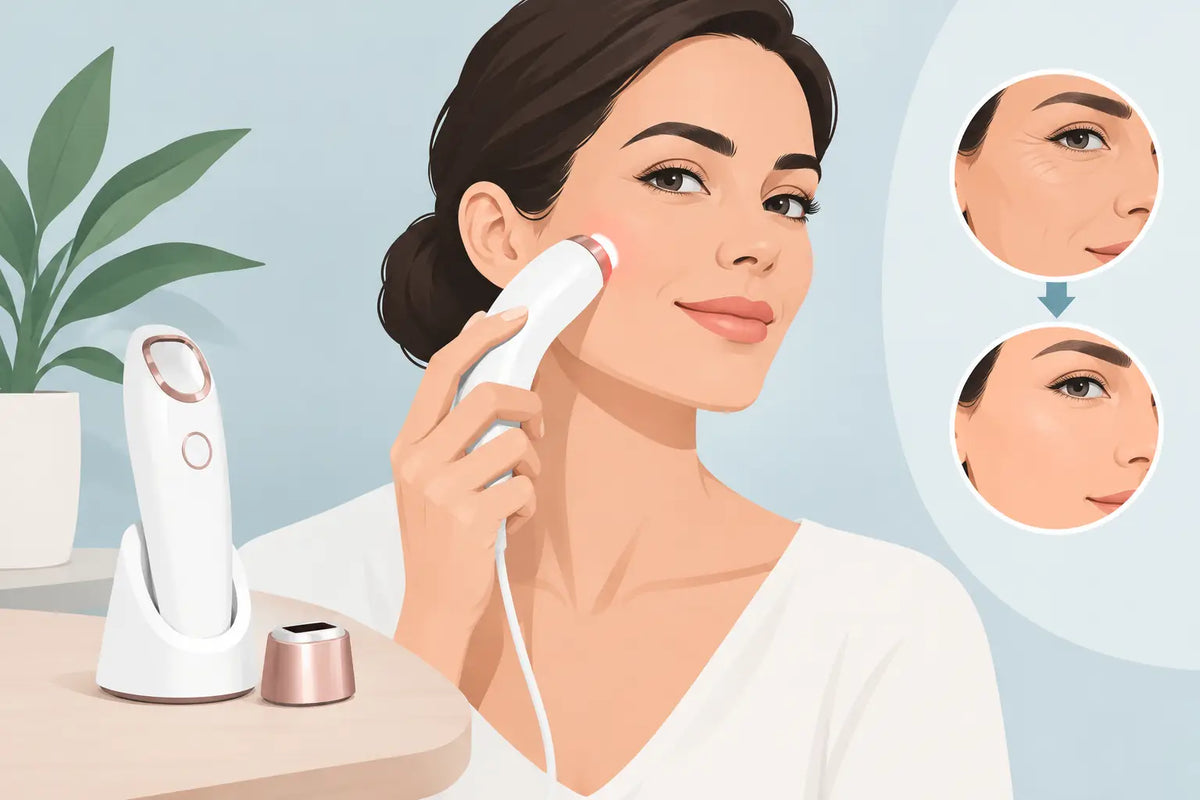
Creams can make skin feel softer in minutes. A home wrinkle laser is designed to work on a different timeline and at a deeper level: supporting the collagen that gives skin its firmer, smoother appearance. That distinction matters when reading any home wrinkle laser review. The right device is not a replacement for a single serum or a dramatic overnight fix. It is a precision tool for people who want to make consistent, science-led progress on fine lines and wrinkles without building their schedules around appointments.
The appeal is easy to understand. In-office energy treatments can be effective, but they also require travel, treatment planning, recovery considerations, and an ongoing investment. An at-home laser makes collagen-focused care more accessible, provided you choose technology with a credible safety profile and use it as directed.
What a Home Wrinkle Laser Is Designed to Do
Wrinkles are not only a surface concern. As collagen and elastin production naturally decline, skin can become less resilient and less able to rebound from repeated facial movement. Fine lines around the eyes, mouth, forehead, and cheeks may gradually become more noticeable.
A well-designed at-home wrinkle laser delivers controlled light energy to create gentle heat in the skin. That heat is intended to trigger the body's natural renewal response, including the production of fresh collagen. Over time, this can help soften the look of wrinkles, improve the appearance of skin firmness, and create a smoother overall texture.
The word “laser” can sound intimidating, especially for anyone who associates laser treatments with peeling, redness, or downtime. But not every laser uses the same approach. Non-fractional at-home devices are designed for regular use without intentionally creating visible injury to the skin's surface. That makes them fundamentally different from more aggressive resurfacing treatments performed in a clinic.
The trade-off is straightforward: gentler technology generally calls for patience and consistency. You are building visible improvement gradually rather than pursuing a short-term dramatic change followed by recovery time.
Home Wrinkle Laser Review: What Results Are Realistic?
The most useful reviews separate immediate cosmetic effects from genuine long-term change. Immediately after a treatment, skin may look slightly flushed or feel warm. Some users also notice a temporary, healthy-looking glow from increased circulation. Those effects are not the main reason to invest in laser technology.
Collagen remodeling takes time. Most people should approach an at-home laser routine expecting incremental improvement over several weeks, with more meaningful changes developing over a few months of consistent use. Fine lines often respond before deeper, established wrinkles. Skin may also look more refined and feel firmer before a person sees a major difference in a specific crease.
Results depend on several personal variables: age, baseline collagen levels, sun exposure history, skin quality, treatment consistency, and the depth of the wrinkles being treated. A device may be especially compelling for early-to-moderate signs of aging, or for maintaining results alongside a thoughtful professional skincare plan. Very deep wrinkles, significant skin laxity, or volume loss may still call for an in-office consultation and a more comprehensive treatment strategy.
That is not a weakness of at-home technology. It is a realistic way to choose it. The goal is visible, cumulative improvement that fits into real life.
How At-Home Lasers Compare With Other Devices
Beauty devices are often grouped together, but their mechanisms and expected outcomes are not interchangeable. Understanding the category protects you from comparing a laser to the wrong alternative.
LED masks use light-emitting diodes, not laser energy. Red light devices can be a calming, supportive addition to a skincare routine and may improve the look of overall skin vitality. However, their treatment experience and energy delivery differ from an at-home laser designed specifically for wrinkles and collagen stimulation.
Microcurrent devices use low-level electrical currents to create a temporary lifted appearance by stimulating facial muscles. They can be useful before an event or as part of a contour-focused routine, but they do not address collagen in the same way a laser does.
Radiofrequency devices use heat to support skin tightening, often across broader areas of the face. They can be a good option for people focused primarily on laxity. For targeted facial wrinkles, a precision laser treatment may make more sense, particularly around areas such as crow's feet and smile lines.
Topical skincare remains essential, but it has a different role. Hyaluronic acid supports hydration and can temporarily plump the appearance of fine lines. Peptides and retinoids can support a more effective anti-aging routine. Yet even exceptional skincare cannot deliver light energy into the skin. The strongest routines often pair daily topical care with a device that addresses collagen support more directly.
The Features That Separate a Serious Device From a Gadget
A polished design alone is not evidence of performance. Before purchasing, look beyond marketing language and assess whether the device is built around meaningful standards.
First, identify the technology. The brand should clearly explain whether the device uses laser energy, LED, radiofrequency, or another modality, as well as why that modality is appropriate for wrinkles. Vague claims about “rejuvenation” are less helpful than a clear explanation of what the device is designed to target.
Next, look for clinical evidence that relates to the actual product or technology. Strong evidence should explain the treatment protocol, the timeline for results, and what was measured. Before-and-after photography is valuable when it is consistent in lighting, angle, and timing, but it should complement clinical support rather than replace it.
FDA clearance is another important consideration for US consumers. It does not mean a device is suitable for every person or that results are guaranteed. It does indicate that a device has gone through a defined regulatory pathway for its intended use. Clear safety guidance, a warranty, a trial or return policy, and access to responsive customer education also signal that a brand stands behind its technology.
NIRA's approach centers on non-fractional laser technology for people who want a premium, at-home path to smoother-looking skin without the disruption of traditional resurfacing treatments. When evaluating any device in this category, the key question is whether its design makes consistent use feel practical enough to sustain.
Consistency Is the Real Treatment Plan
The best device is not necessarily the one with the longest feature list. It is the one you can use correctly and consistently. A treatment that takes only a few minutes and fits naturally into an evening skincare routine has a major advantage over a device that stays in a drawer because it feels complicated.
Start with clean, dry skin unless your device instructions specify otherwise. Follow the recommended treatment pattern precisely, including how long to treat each area and how often to use the device. More energy or more frequent sessions do not automatically produce faster results. Overuse can increase irritation without improving collagen outcomes.
After treatment, return to a simple, supportive routine. Hydrating ingredients can help skin feel comfortable, while daily broad-spectrum sunscreen is non-negotiable. UV exposure is one of the clearest contributors to collagen breakdown, so protecting your skin is part of protecting the investment you are making in a wrinkle-focused device.
Photos can make progress easier to recognize. Take them in the same location, at the same time of day, without filters, and with a relaxed expression. Because changes happen gradually, these consistent comparisons often reveal improvement that is easy to miss in a daily mirror check.
Safety, Skin Tone, and When to Pause
At-home laser devices should always be used according to their instructions and contraindications. Before beginning, read the full safety information, especially if you have a medical condition, a history of photosensitivity, active irritation, or are using medications that can increase light sensitivity.
Avoid treating over broken skin, active infections, or areas with a new rash. If you are pregnant, breastfeeding, managing a skin condition, or receiving professional dermatologic treatment, ask your physician or dermatologist whether a specific device is appropriate for you. The same goes for anyone with concerns about pigmentation changes or a history of melasma.
A well-designed device should make the treatment experience clear and manageable, not uncertain. Mild temporary warmth or redness may occur, depending on the technology and your skin, but pain, persistent irritation, or unexpected changes should be a reason to stop and seek professional guidance.
Is a Home Laser Worth It?
A home wrinkle laser can be worth the investment when your goal is gradual, visible collagen support and you are willing to commit to a routine. It is particularly appealing for people who want more than topical skincare can offer, but do not want the recurring expense, downtime, or scheduling demands of frequent in-office treatments.
It may be less satisfying for someone seeking an immediate transformation before a major event, or for someone with deep structural aging concerns that require clinical procedures. The strongest decision comes from matching the technology to the outcome you actually want.
Think of an at-home laser as a long-term act of skin confidence, not a shortcut. With the right device, realistic expectations, daily sun protection, and steady use, small changes can become the kind of visible improvement that feels unmistakably your own.


