

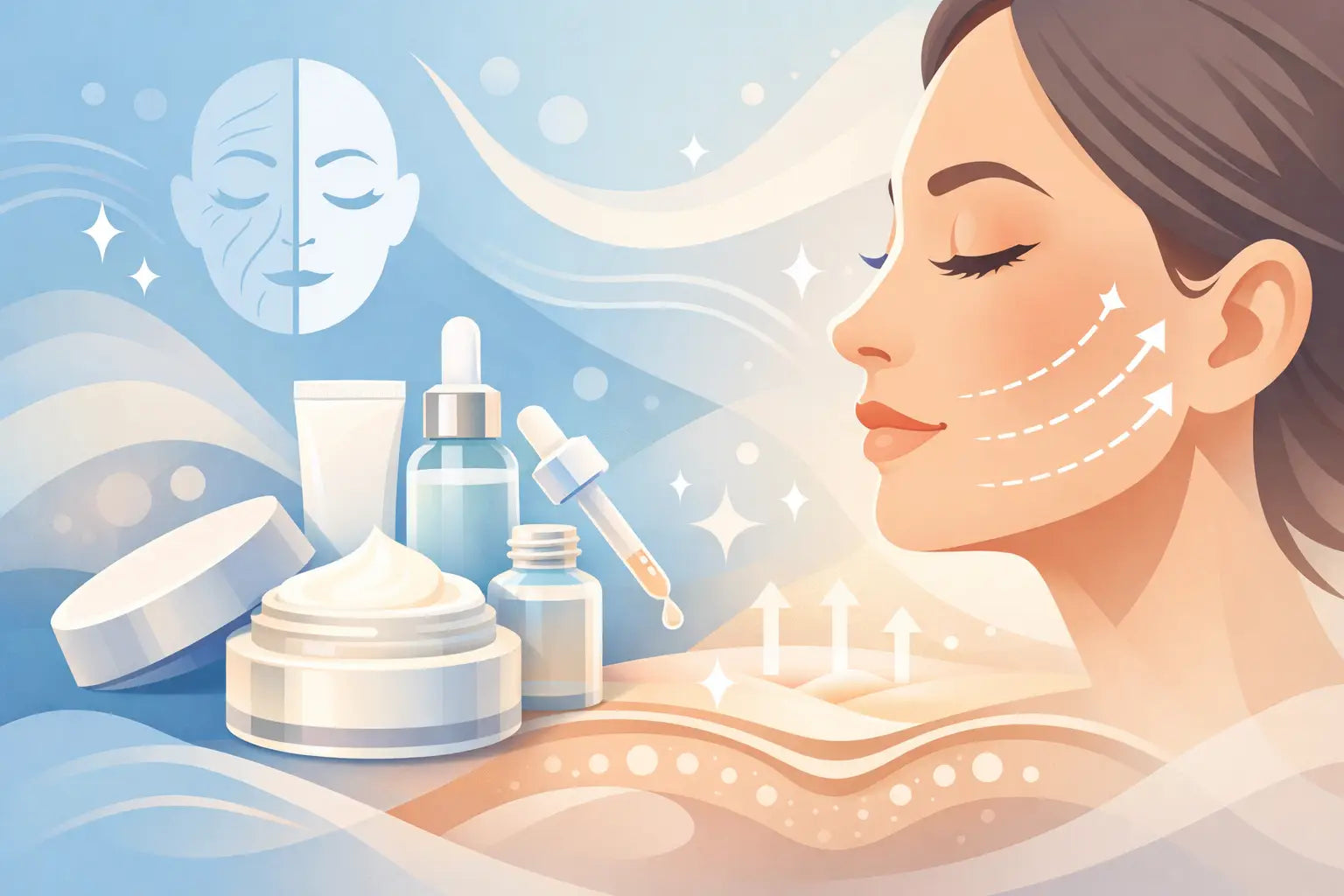
A mirror is honest about collagen loss. What shows up first is not always a deep wrinkle - it is often the softer shift underneath it: skin that looks a little less springy, a little less lifted, a little more tired by the end of the day. That is why interest in skin tightening and wrinkle reduction cream keeps growing. People are not just looking for moisture. They want visible change.
The real question is whether a cream can actually firm skin and reduce wrinkles in a meaningful way. Sometimes yes. Sometimes only to a point. The difference comes down to ingredients, consistency, and whether you are trying to treat surface dehydration, early fine lines, or more advanced collagen loss.
What a skin tightening and wrinkle reduction cream can actually do
A well-formulated cream can improve how skin looks and feels in several ways. First, it can increase hydration, which immediately makes fine lines appear softer. Second, it can support the skin barrier, helping skin stay smoother and less reactive. Third, certain active ingredients can encourage collagen-supporting processes over time, which is where longer-term wrinkle improvement comes from.
This is the part many shoppers miss: tightening is not one single mechanism. Some products create a temporary tightening effect through film-forming ingredients that make skin feel firmer for a few hours. Others work more gradually by improving hydration, reducing inflammation, and supporting collagen production. The best formulas usually do both - deliver an instant cosmetic improvement while also targeting the structural causes of visible aging.
Still, there is a limit. A cream sits on and within the upper layers of the skin. It can absolutely improve texture, radiance, and the look of fine lines. But if the concern is deeper laxity, etched-in wrinkles, or more advanced collagen depletion, topical skincare may need help from a device-based approach that reaches the skin in a different way.
The ingredients that matter most
If a cream claims to firm and smooth, the ingredient list should explain how. Vague promises are easy. Measurable results are ingredient-driven.
Peptides for visible firmness
Peptides are among the most relevant ingredients in a skin tightening and wrinkle reduction cream because they are used to support the skin’s natural repair and renewal processes. Different peptides behave differently, but many are designed to help skin look firmer, smoother, and more resilient over time.
They are especially appealing for people who want results without the irritation often associated with stronger actives. The trade-off is that peptides tend to be gradual. They are not overnight ingredients. They reward consistency.
Hyaluronic acid for immediate plumping
Dehydrated skin looks older than it is. Hyaluronic acid helps draw water into the skin, which can quickly improve the appearance of fine lines and roughness. This does not replace collagen, but it does make skin look fuller and healthier, often fast.
That immediate plumping effect is one reason so many people think a product is “working” after a day or two. Sometimes it is. But often what they are seeing first is hydration, not structural tightening. That is still valuable - it is just important to know the difference.
Retinoids for wrinkle improvement
If wrinkle reduction is the main goal, retinoids remain one of the most studied topical categories. They help speed cell turnover and can support collagen production over time. For many people, they are a cornerstone ingredient.
The catch is tolerance. Retinoids can cause dryness, flaking, and sensitivity, especially at the start. Mature skin can benefit from them tremendously, but formula design matters. A cream that combines performance with barrier support is often easier to stick with than an aggressive treatment that leaves skin irritated.
Antioxidants and barrier support
Antioxidants such as vitamin C can help defend skin against environmental stress that contributes to visible aging. Ceramides, fatty acids, and soothing ingredients help maintain the barrier so skin stays stronger and more comfortable. These may not sound as exciting as “lifting” claims, but they play a major role in how well skin ages over time.
Healthy skin responds better to actives. It also looks smoother, calmer, and more refined.
Why some creams disappoint
Not every anti-aging cream underperforms because the concept is flawed. Sometimes the issue is simpler.
The formula may rely heavily on marketing language and lightly on effective concentrations. It may promise dramatic lifting when it really delivers temporary hydration. It may also ask too much of one product. A cream can support visible improvement, but it is not always the right standalone solution for every level of aging.
Another common issue is inconsistency. Collagen remodeling is not a weekend project. Most people need at least 8 to 12 weeks of regular use to judge whether a wrinkle cream is making a real difference. If the product is used randomly or layered over too many competing actives that cause irritation, results can stall.
Cream vs device-based treatment
This is where skincare becomes more strategic. Topical products and beauty technology are often framed as competitors, but in practice they do different jobs.
A cream is ideal for daily hydration, barrier maintenance, and ingredient delivery. It is easy to use, easy to layer, and essential in nearly every routine. A device-based treatment, especially one designed to support collagen production, can address aging through a different mechanism. That matters when your skin goals include visible firmness, smoother texture, and reduction in established wrinkles.
For someone in their early 30s with mild dehydration lines, a high-quality cream may be enough to create satisfying improvement. For someone noticing loss of bounce around the cheeks, fine lines turning into static wrinkles, or a general decline in firmness, creams alone may start to feel limited.
That is often why a combined approach performs better. A science-backed topical can help the skin look plumper, calmer, and more supported, while an at-home clinical-grade device targets the collagen side of the equation more directly. In a premium anti-aging routine, these are not redundant steps. They are complementary ones.
How to choose the right formula for your skin
The best cream is not necessarily the most expensive or the one with the longest ingredient list. It is the one that matches your skin condition, goals, and tolerance.
If your skin feels dry, thin, or crepey, look for a richer texture with hyaluronic acid, ceramides, and peptides. If your primary concern is visible lines and uneven texture, a formula with retinoid support may be the better choice, provided your skin can handle it. If sensitivity is part of the picture, skip products that lean too heavily on fragrance or overly aggressive exfoliants.
Texture matters more than many people realize. A cream that pills under sunscreen or makeup, or feels too heavy to use consistently, will not earn a place in your routine no matter how advanced the formula is. Compliance is part of performance.
How to get better results from your cream
Application habits make a difference. Use your cream on slightly damp skin when possible, especially if it contains humectants like hyaluronic acid. Give active products time to work before layering too many extras on top. Most of all, protect your results with daily sunscreen.
This is the unglamorous truth behind wrinkle prevention and treatment: UV exposure breaks down collagen. You cannot ask a cream to rebuild what daily sun exposure keeps damaging. The more serious you are about firming and smoothing, the more serious you need to be about sun protection.
It also helps to be realistic about timing. Immediate softness and glow can happen quickly. Firmer-looking skin and reduced wrinkle depth usually take longer. If a product seems miraculous overnight, the effect is probably cosmetic rather than structural.
When it is time to go beyond cream
There is no failure in needing more than topical skincare. Skin aging is biologic, not personal. Collagen production slows, elasticity changes, and repeated facial movement becomes more visible over time.
If you are using a well-formulated cream consistently and still not seeing enough improvement in firmness or wrinkle depth, that does not mean skincare has failed. It may mean your skin now needs a higher-performance approach. This is where clinically validated at-home technology has changed the category. Brands like NIRA have helped close the gap between traditional creams and in-office treatments by giving consumers access to more advanced wrinkle-focused care from home.
For many people, that is the sweet spot: a sophisticated cream for daily support and a collagen-focused device for deeper visible change. It is efficient, evidence-led, and aligned with how skin actually ages.
The smartest way to think about a skin tightening and wrinkle reduction cream is not as a miracle in a jar, but as one important part of a results-driven system. When the formula is well designed and the expectations are grounded in skin science, a cream can absolutely earn its place - and if your goals have outgrown what a cream can do alone, that is useful information too. Better skin starts with using the right level of treatment for the result you want to see.


