

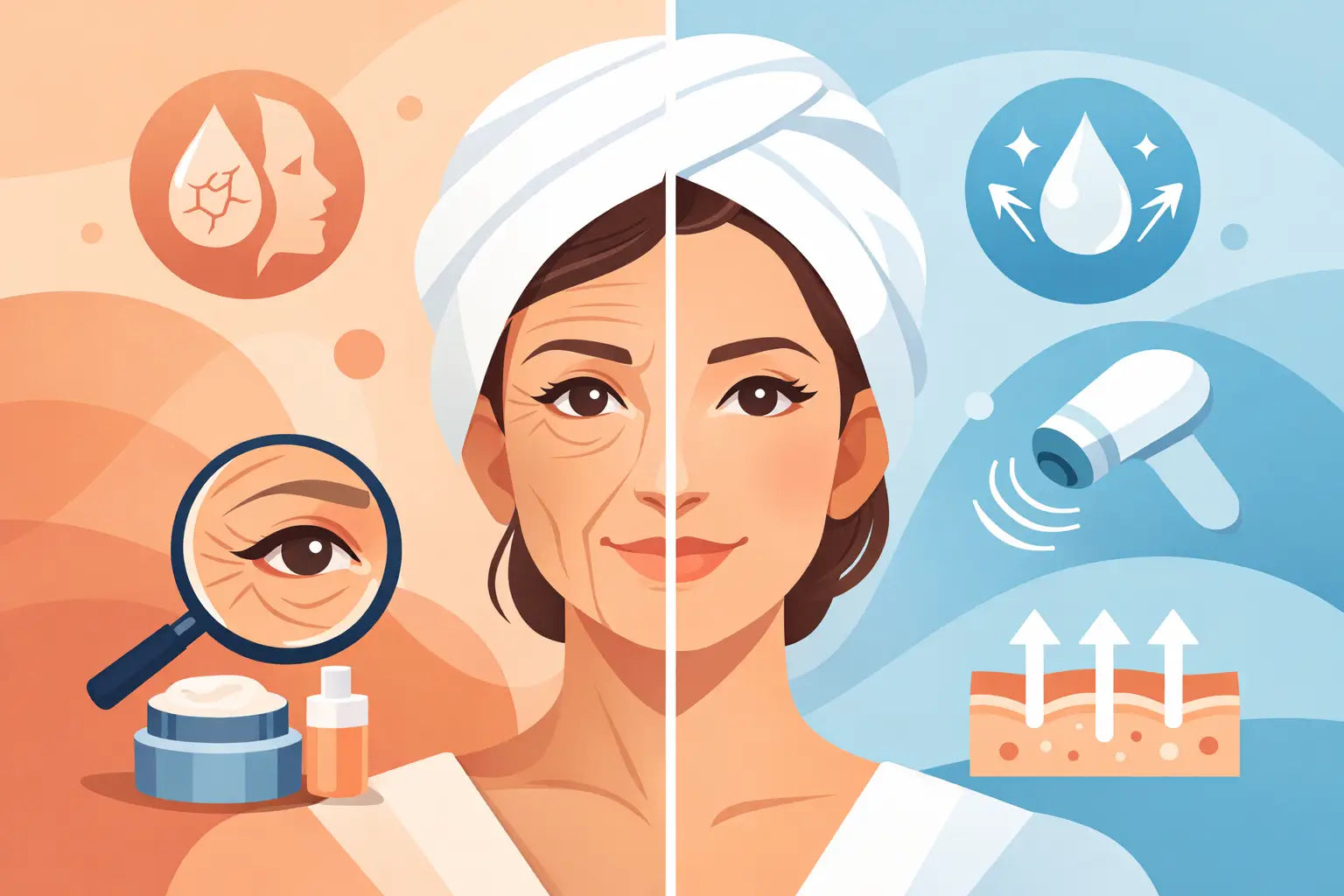
If your skin suddenly looks thinner, less springy, or more lined than it did a year ago, you are not imagining it. Figuring out how to reduce wrinkles and tighten skin usually comes down to one core issue - collagen loss. Once collagen production slows, fine lines linger longer, skin folds more easily, and that firm, lifted look becomes harder to maintain with skincare alone.
That is why the most effective approach is not chasing a single miracle product. It is choosing treatments and products that match how skin actually ages. Some options hydrate the surface and make wrinkles look softer. Others support repair over time. The strongest results usually come from a strategy that improves skin quality at multiple levels, especially when collagen stimulation is part of the plan.
How to reduce wrinkles and tighten skin by targeting collagen
Wrinkles and laxity do not form for exactly the same reason, but they are closely connected. Fine lines often begin with repetitive facial movement, dehydration, and early structural decline. Loose or crepey skin tends to show up as collagen and elastin weaken deeper in the skin. If you only moisturize, skin may look smoother for a few hours but not noticeably firmer over time.
Collagen is the structural protein that gives skin support, density, and bounce. In younger skin, collagen is produced and remodeled efficiently. With age, that process slows. Sun exposure accelerates the problem, and so do lifestyle factors like poor sleep, stress, and smoking. The result is familiar - wrinkles deepen, pores can appear more visible, and skin starts to look less tight around the eyes, mouth, jawline, and neck.
That is why collagen-focused treatments matter. They address the underlying support system, not just the top layer. This is also where many people start separating marketing claims from real performance. A cream can be helpful, but it cannot do the same job as a technology designed to stimulate skin renewal below the surface.
What actually works for wrinkles and skin tightening
There is no single best answer for everyone, because your age, skin sensitivity, wrinkle depth, and tolerance for downtime all matter. Still, the most reliable options tend to fall into a few categories.
Topical skincare plays an important role, especially when the goal is prevention or mild improvement. Retinoids can support cell turnover and improve the look of fine lines over time. Peptides can help reinforce a stronger-looking skin barrier and support smoother texture. Hyaluronic acid helps draw in water, which can make skin look plumper and less creased. These are valuable tools, but they are usually not enough on their own once wrinkles are established or skin laxity becomes more noticeable.
In-office treatments can produce meaningful results because they work deeper in the skin. Chemical peels, microneedling, radiofrequency, and laser procedures all have a place, depending on the concern. The trade-off is that stronger treatments often come with higher cost, repeated appointments, recovery time, and more variability in comfort level.
At-home beauty technology has become the category many consumers now look at more seriously, especially when they want visible change without building their life around clinic visits. Not all devices are equal, though. Some focus mainly on temporary surface effects. Others are engineered to stimulate collagen in a more meaningful way. That difference matters if your goal is firmer skin, not just a short-lived glow.
Why laser technology stands out
When people compare anti-aging devices, they often put LED, microcurrent, radiofrequency, and laser in the same mental bucket. They are not the same. Each uses a different mechanism, and each has different strengths.
Laser technology is compelling for wrinkle reduction because it can deliver energy in a precise way that supports collagen renewal. The best at-home systems are designed to do this without the burden many people associate with aggressive in-office resurfacing. That is a major shift. It means you can make collagen stimulation part of your routine instead of saving it for occasional treatments.
For consumers who want results but also want convenience, that matters. The ideal treatment is not just effective in theory. It has to be realistic enough to use consistently.
A smarter routine for smoother, firmer skin
If you are serious about improving wrinkles and laxity, think in layers. Your routine should include daily protection, supportive skincare, and one treatment step that can create real structural change over time.
Start with sun protection every single day. This is the least glamorous part of anti-aging, but it has the biggest long-term payoff. UV exposure breaks down collagen and accelerates visible aging faster than almost anything else. If you are investing in corrective treatments but skipping sunscreen, you are making the job harder.
Next, use skincare that supports hydration and repair. Dehydrated skin exaggerates lines, especially around the eyes and mouth. A hyaluronic acid serum can help attract water and improve the look of surface texture. A peptide cream can help skin feel stronger and more resilient. These are not substitutes for collagen stimulation, but they can make the skin environment healthier and improve the visible result.
Then add a treatment that goes beyond the surface. This is the step most people miss. If you are wondering why a shelf full of premium skincare still is not tightening your skin enough, this is usually the reason. To improve firmness in a more noticeable way, you need a mechanism that helps trigger renewal where structural aging is happening.
How to use at-home laser treatments effectively
Consistency matters more than intensity spikes. Many people get excited about a device, use it heavily for a week, and then stop. Skin remodeling does not work that way. Collagen stimulation is a cumulative process.
The strongest at-home routines are short, repeatable, and easy to sustain. That is part of what makes advanced at-home laser technology so appealing. Instead of scheduling your year around office appointments, you can build treatment into real life. A few minutes done consistently is far more powerful than an expensive treatment plan you never stick with.
This is where a clinically validated option can change the experience. NIRA uses non-fractional laser technology designed to reduce wrinkles, tighten skin, and stimulate collagen with a treatment experience that fits into daily life. For shoppers comparing categories, that combination of precision, safety profile, and convenience is a meaningful advantage.
Common mistakes that slow results
One of the biggest mistakes is expecting instant tightening from methods that are meant to work gradually. Hydration can create a quick cosmetic improvement, but collagen remodeling takes time. If a treatment claims to rebuild support structures in the skin, patience is part of the process.
Another mistake is stacking too many aggressive products at once. More is not always better. If your skin is constantly irritated, you may end up with redness, dryness, and a rougher texture that makes lines look worse. A focused routine usually outperforms an overloaded one.
People also tend to underestimate the impact of inconsistency. Using a great serum twice a week or a powerful device only when you remember will not give you the result you are hoping for. Skin responds best to routines that are steady and sustainable.
Finally, many consumers choose based on trend rather than mechanism. A product being popular does not mean it is the best match for your concern. If loose skin is the issue, ask whether the treatment is actually designed to support firmness. If wrinkles are becoming more etched, ask whether it does more than hydrate.
How to choose the right wrinkle and tightening approach
The right plan depends on where you are starting. If your concerns are early and mild, a disciplined routine with sunscreen, proven topicals, and a collagen-focused device may be enough to create visible improvement. If you have deeper folds, more advanced laxity, or significant photodamage, you may still benefit from professional treatment, but at-home technology can help maintain momentum between appointments or reduce the need for frequent visits.
It also depends on your lifestyle. Some people are comfortable with downtime and larger upfront treatment sessions. Others want privacy, flexibility, and a routine they can control at home. Neither approach is wrong. The best one is the one you will actually follow.
That is the real answer to how to reduce wrinkles and tighten skin: support collagen, protect what you have, and choose tools that are strong enough to make a difference but practical enough to stay in your life. When your routine is built around how skin changes with age, better results stop feeling like guesswork and start feeling achievable.
Your skin does not need more hype. It needs a plan that respects the science, fits your schedule, and keeps working long after the first use.


