

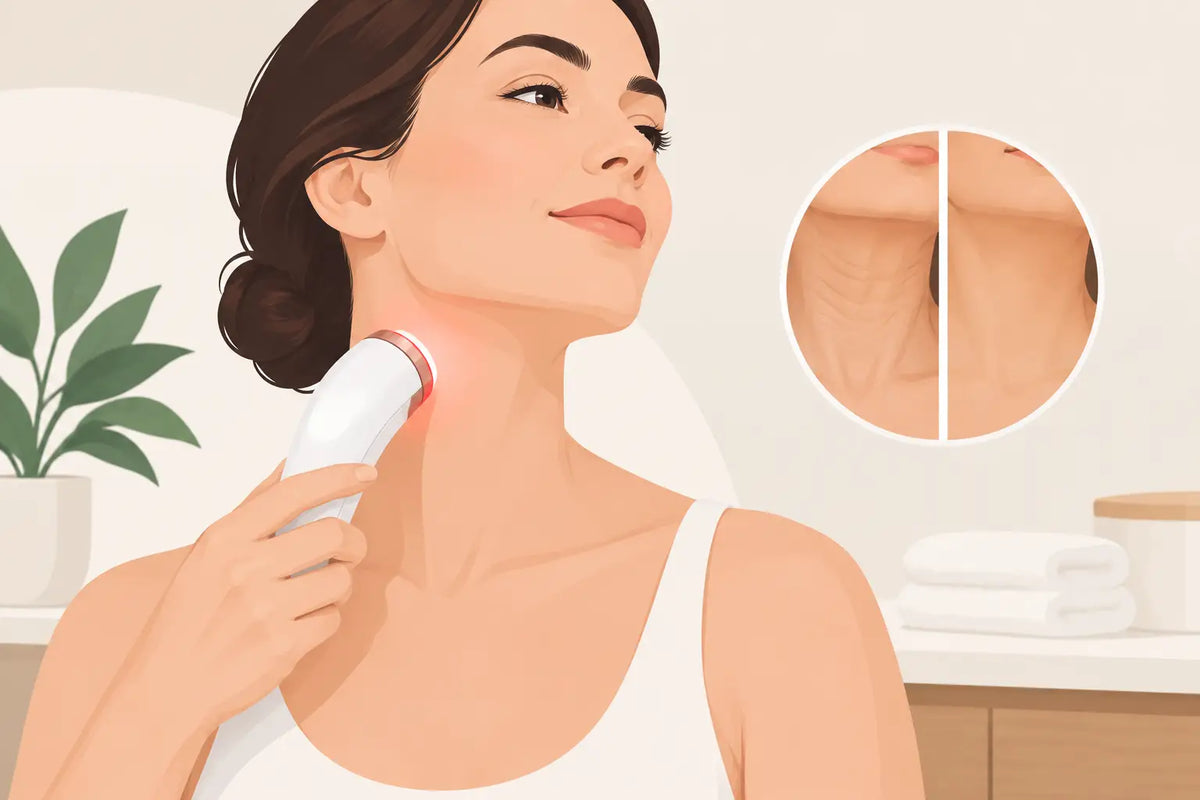
The neck can reveal collagen loss before the face does. Repeated phone posture, sun exposure, and naturally thinner skin can make horizontal creases look more defined over time. A home laser for neck lines offers a more advanced option than topical skincare alone, but results depend on choosing the right technology and using it consistently enough to support visible change.
Unlike a quick-fix procedure, at-home laser treatment is designed to work gradually with your skin's natural renewal process. The goal is not to erase every established line overnight. It is to help skin look smoother, firmer, and more resilient by encouraging the collagen that gives the neck its structure.
Why Neck Lines Need a Different Strategy
Neck skin is not simply an extension of facial skin. It is thinner, often has fewer oil glands, and is exposed to daily stress that a face routine may overlook. That combination can lead to crepey texture, fine lines, and deeper horizontal bands that do not respond fully to even an excellent moisturizer.
Topical ingredients still have a role. Hyaluronic acid can temporarily plump the appearance of dehydration lines, while peptides and retinoids can support a stronger-looking skin barrier over time. Yet a cream cannot deliver energy into the skin in the same way a laser can. When lines are linked to declining collagen and skin laxity, a device that targets collagen stimulation may make a meaningful difference.
The trade-off is patience. Collagen remodeling is biological work, not an instant cosmetic effect. The best outcomes come from treating the neck as part of a long-term skincare plan, not from using a device sporadically before an event.
How a Home Laser for Neck Lines Works
At-home laser devices use controlled light energy to create a gentle warming effect below the skin's surface. This can signal the skin to produce fresh collagen, a structural protein that helps keep skin dense, smooth, and supported. As that collagen network is renewed, fine lines may appear softer and the overall neck area may look more refined.
Not all light-based devices work in the same way. LED masks use lower-energy light and can be a welcome addition to a routine, particularly for overall skin maintenance. A laser is a more targeted technology, designed to deliver a specific wavelength with greater precision. For someone focused on visible neck lines, that precision matters.
It also matters whether the device is intended for the treatment area. The neck requires thoughtful energy delivery because the skin is delicate. Choose a device with clear instructions for neck use, safety features that support accurate application, and a clinically grounded approach to wrinkle reduction. FDA clearance is another meaningful signal that a device has been reviewed for its intended use, though it does not mean every user will have identical results.
Why non-fractional technology can be appealing
Some professional lasers create microscopic treatment zones that involve downtime, redness, or peeling. These in-office approaches can be appropriate for more intensive concerns, but they are not always practical for a busy schedule.
Non-fractional at-home laser technology takes a different approach. It is designed to stimulate collagen without deliberately injuring the skin's surface, allowing treatment to fit into a regular routine. For many people, that means a more comfortable path to consistent use. The results are typically more gradual than aggressive in-office resurfacing, but convenience is not a minor benefit when consistency determines the outcome.
What Results Can You Realistically Expect?
A home device is most effective for fine lines, early crepiness, and mild-to-moderate loss of firmness. With regular use, the first change may be skin that looks better hydrated and has a smoother texture. More visible improvement in the look of lines often follows as collagen production progresses over several weeks and months.
Deep, etched-in neck rings may soften but may not disappear completely. The same is true for loose skin caused by significant aging or weight change. In those cases, at-home treatment can still be valuable as part of a maintenance plan, but an in-office consultation may be the better choice if you want a more dramatic change.
Your starting point matters, too. Sun damage, smoking, menopause-related collagen changes, and genetics all affect the skin's response. A credible beauty technology brand should be direct about that reality. Promising transformation is different from promising perfection.
How to Use a Neck Laser Safely and Effectively
Clean, dry skin is the starting point. Remove makeup, sunscreen, and heavy skincare so the device can make proper contact with the treatment area. Follow the device-specific schedule exactly. More treatments than recommended will not force collagen to build faster and may increase irritation.
Move methodically across the areas where horizontal lines are most visible, using the application pattern in the instructions. Avoid treating over the thyroid area or using a laser on irritated, sunburned, broken, or actively inflamed skin unless your device instructions specifically state otherwise. Do not treat suspicious lesions or changing moles. If you have a medical condition, are pregnant, take photosensitizing medication, or have recently had an injectable or professional procedure in the area, ask your healthcare provider before beginning.
Daily sun protection is non-negotiable. UV exposure breaks down collagen, working against the progress you are trying to create. Apply broad-spectrum sunscreen to the neck every morning, and extend your application to the sides and back of the neck if those areas are exposed.
After treatment, keep the rest of your routine supportive rather than aggressive. A hydrating serum and a barrier-supporting moisturizer are sensible partners. If you use retinoids or exfoliating acids, pay attention to how your skin feels and adjust if dryness or sensitivity develops. The goal is a steady routine your skin can tolerate, not the most complicated routine possible.
Laser, LED, or an In-Office Treatment?
The right choice comes down to your concern, budget, and tolerance for downtime. LED can support a gentle, low-commitment routine, but it may not be the best standalone choice for someone whose main goal is visibly smoother neck lines. In-office lasers and other procedures may deliver stronger results faster, particularly for advanced concerns, but they require appointments, recovery planning, and a much larger investment.
A high-quality at-home laser sits between those options. It offers targeted collagen support with the privacy and convenience of home use. For people who will actually follow a consistent regimen, that can be a powerful advantage. NIRA's approach to non-fractional laser technology is built around this balance: clinically aligned treatment designed to fit into real life.
A few habits that protect your results
Device treatment works best when it is paired with choices that stop creating new neck stress. Raise your phone closer to eye level when possible, moisturize the neck as deliberately as the face, and avoid skipping sunscreen because you are wearing a high neckline. These details will not replace collagen stimulation, but they help preserve the smoother, firmer appearance you are working toward.
The most useful home laser is the one you can use correctly and consistently. Give your neck the same intention you give your face, track progress with photos in similar lighting, and allow time for your skin's collagen story to change.


