

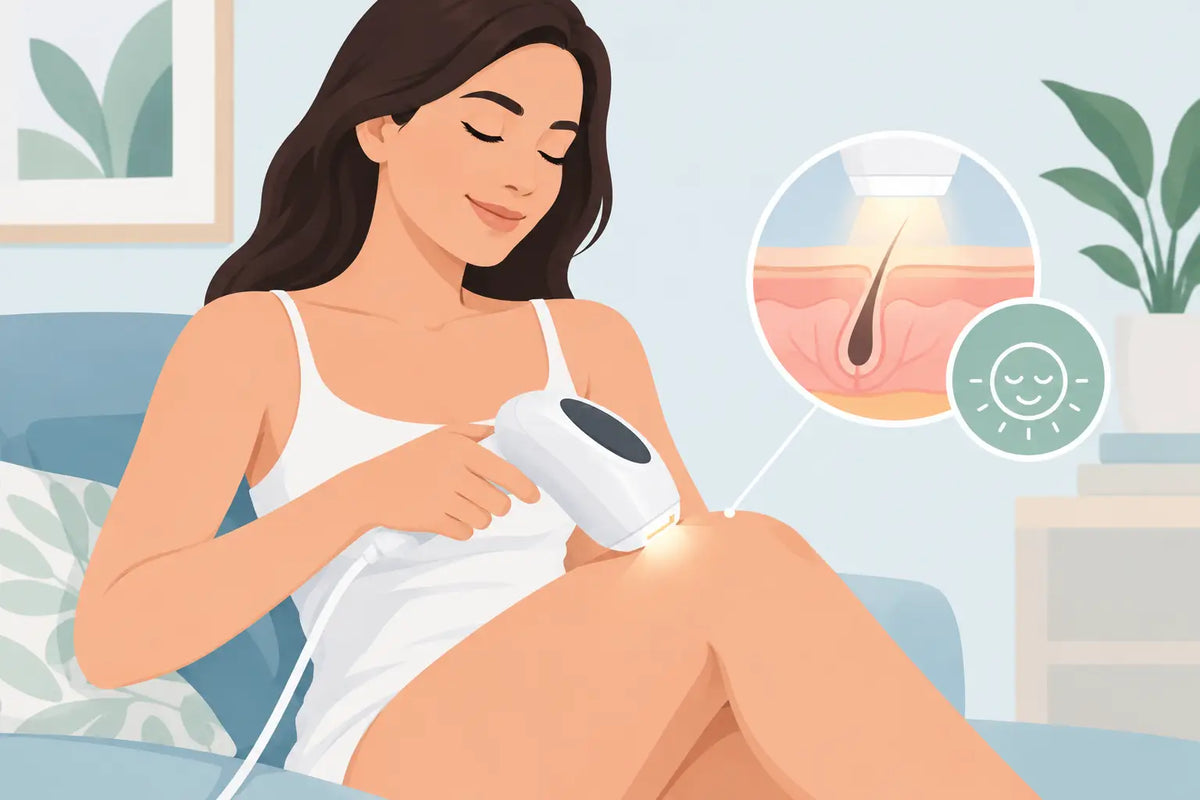
That quick, warm pulse is often the moment that surprises first-time users. So, are home lasers painless? Many people find well-designed at-home facial lasers very comfortable to use, but “painless” is personal. The most accurate expectation is a brief sensation of warmth, tingling, or a light snap that fades immediately after each treatment area.
A home laser should not feel like a painful in-office procedure. Still, comfort depends on the device technology, the area you are treating, your skin’s sensitivity, and whether you follow the recommended routine. Knowing what is normal can make the experience feel far less intimidating and help you stay consistent enough to support visible, long-term results.
Are Home Lasers Painless for Everyone?
No skincare treatment feels identical for every person. At-home lasers are designed for regular, consumer-friendly use, and many people report little more than a warm, gentle sensation. Others may notice a stronger prickly feeling in thinner or more sensitive areas, such as around the mouth, eyes, or upper lip.
The goal is not to “push through” significant discomfort. A quality at-home laser treatment should feel brief and manageable, not sharply painful or increasingly hot. If a device causes sustained burning, stinging that lingers, or visible skin irritation, stop treatment and review the manufacturer’s instructions before using it again.
There is also an important distinction between a sensation and damage. Collagen-stimulating energy works by delivering controlled light and heat to targeted layers of skin. Feeling a quick pulse can be part of that process. Pain that continues after treatment is not something to ignore.
What Does an At-Home Facial Laser Feel Like?
Most users describe the experience in simple terms: warm, quick, and localized. You may feel a small burst of heat as the laser contacts the skin, followed by nothing at all once you move to the next spot. Because treatments are typically fast, the sensation does not have much time to build.
The feeling can vary from one part of the face to another. The forehead and cheeks may feel mild, while areas with thinner skin or less cushioning may feel more noticeable. Skin that is already dry, irritated, freshly exfoliated, or sun-exposed can also be more reactive than calm, healthy skin.
This is one reason thoughtful device design matters. Clinical-grade at-home technology should deliver a controlled treatment experience, not rely on aggressive intensity to create results. NIRA’s non-fractional laser technology is designed to stimulate collagen without the downtime commonly associated with more invasive resurfacing treatments.
Home Lasers Versus In-Office Treatments
An in-office laser treatment may be significantly more intense because it can use higher energy levels and may deliberately create controlled injury in the skin. Depending on the procedure, numbing cream, recovery time, redness, swelling, peeling, or other aftereffects may be part of the plan.
At-home laser devices are built for a different role. Rather than one aggressive appointment followed by downtime, they are intended to fit into a consistent skincare routine. The trade-off is that results are gradual and depend on following the recommended treatment schedule. For many people, that is a worthwhile exchange: a few minutes at home instead of appointments, recovery days, and the cost of repeated professional treatments.
Why the Sensation Can Vary
Your experience is shaped by more than your pain tolerance. A few factors can make an at-home laser feel more or less noticeable.
First, treatment area matters. Bony areas and delicate facial zones may feel warmer than fuller areas of the cheek. Second, skin condition matters. If your skin barrier is compromised from over-exfoliation, a new retinoid, a recent peel, or sun exposure, nearly any active treatment can feel more intense.
Device settings and technique also matter. Use only the intensity, treatment time, and frequency specified for your device. More is not better. Over-treating does not accelerate collagen production, and it may increase the chance of temporary irritation.
Finally, individual sensitivity varies. Hormonal changes, certain medications, recent cosmetic procedures, and skin conditions can all affect how skin responds. This is why a device’s safety information and contraindications deserve the same attention as its before-and-after photos.
How to Make Home Laser Treatments More Comfortable
Comfort starts before the first pulse. Treat clean, dry skin unless your device instructions specifically say otherwise. Makeup, sunscreen, excess oil, or skincare residue can interfere with contact and make it harder to judge how your skin is responding.
Use the device exactly as directed, including its recommended placement and treatment pattern. Do not repeatedly pass over the same spot because you are chasing a stronger sensation. Controlled, consistent coverage is more valuable than intensity.
It also helps to schedule treatments when your skin is calm. Avoid using your laser over areas that are sunburned, visibly irritated, broken out, or healing from another procedure. If you use potent active ingredients, such as prescription retinoids or exfoliating acids, follow your device guidance and consult a dermatologist when you are unsure how to coordinate your routine.
After treatment, keep skincare simple and supportive. A gentle hydrating formula and daily broad-spectrum sunscreen can help maintain a healthy-looking skin barrier. If your skin feels warm or slightly flushed, give it a break from potentially irritating products until it returns to normal.
When Discomfort Is a Sign to Pause
Brief warmth is one thing. Persistent burning, blistering, marked swelling, prolonged redness, or a change in skin color are reasons to stop and seek medical guidance. Do not try to compensate by lowering frequency without first understanding what caused the reaction.
You should also check with a qualified healthcare professional before using an at-home laser if you are pregnant, have a history of light sensitivity, take medications that increase photosensitivity, have an active skin infection, or have recently had an injectable, peel, or energy-based procedure. Product-specific instructions should always lead the decision.
This is not about making at-home devices feel complicated. It is about treating advanced skincare technology with the precision it deserves. The right device, used correctly, should make a high-performance routine feel empowering rather than uncomfortable.
FAQs About Home Laser Comfort
Should I use numbing cream with a home laser?
Usually, no. Consumer laser devices are designed to be used as instructed without numbing cream. Numbing products can mask a sensation that would otherwise tell you to pause, and they may not be compatible with a device’s treatment protocol. Use one only if the device manufacturer and your healthcare professional specifically advise it.
Does a stronger feeling mean better results?
No. A more intense sensation is not proof of better collagen stimulation or faster wrinkle reduction. Effective treatment is based on the device’s energy delivery, treatment plan, and your consistency over time, not how much discomfort you can tolerate.
Will my skin be red afterward?
Some people may see temporary warmth or mild redness, especially in sensitive areas. That should be short-lived. Significant or persistent redness is not a result to normalize.
The best at-home laser routine is one you can use consistently and confidently. When the treatment feels controlled, your skin is prepared, and expectations are realistic, those few minutes of advanced skincare can become one of the easiest parts of your anti-aging routine.


