

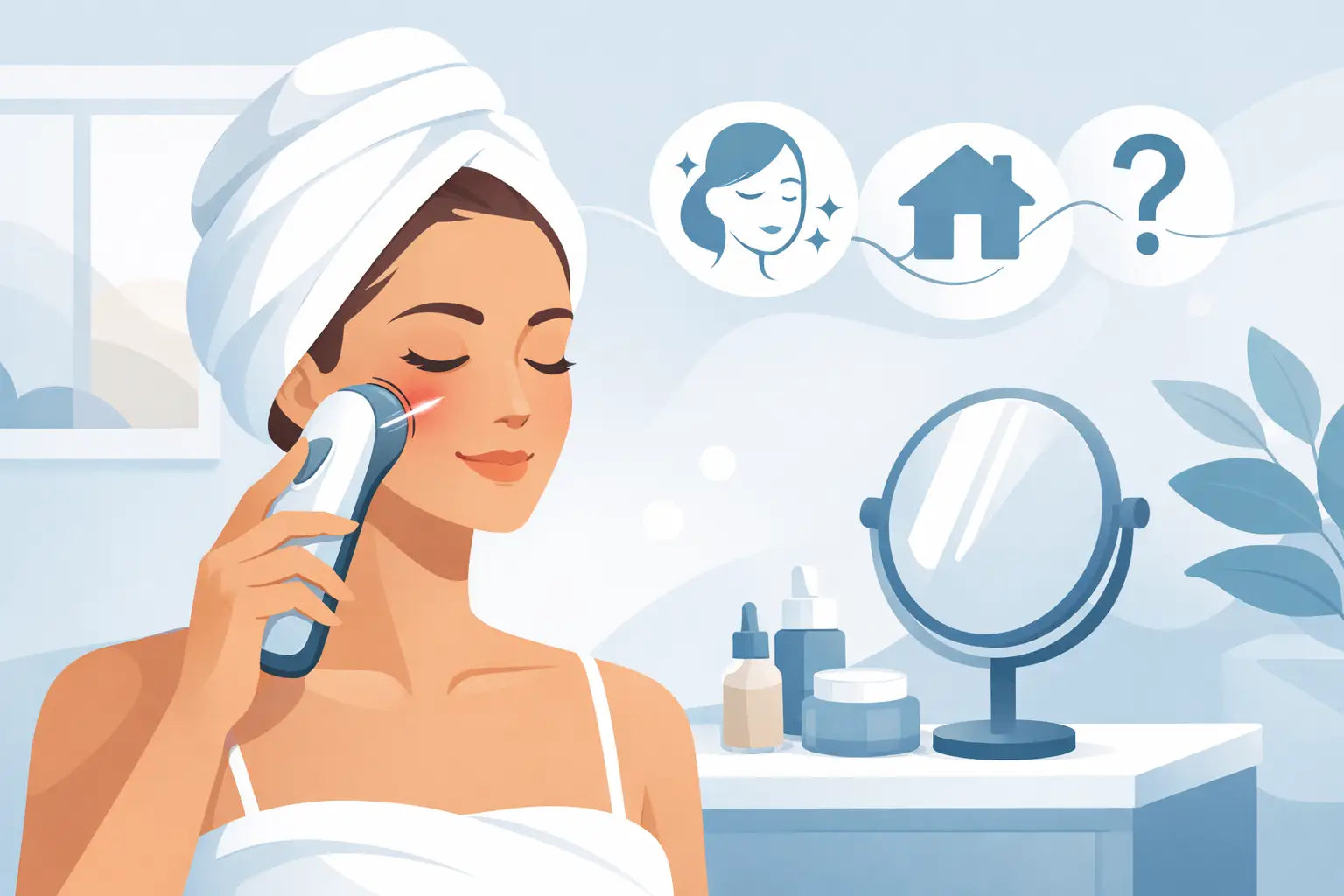
Clinic appointments are easy to postpone. Fine lines are not. That gap is exactly why interest in the at home skincare laser category keeps growing. People want real anti-aging technology they can use on their schedule, without turning every skin goal into a standing office visit.
The appeal makes sense, but so does the skepticism. Not every device category delivers the same level of change, and not every light-based treatment works the same way. If you are comparing an at home skincare laser to creams, LED masks, or in-office procedures, the right question is not just whether it works. It is how it works, what kind of results are realistic, and whether the trade-off between convenience and intensity makes sense for your skin.
What an at home skincare laser actually does
A true skincare laser uses focused light energy to interact with skin in a very specific way. In anti-aging applications, that energy is designed to support the skin’s natural repair response, which can help stimulate collagen and improve the look of fine lines and wrinkles over time.
That is very different from products that simply sit on the skin’s surface. Topical skincare absolutely has a role, especially when you are supporting hydration and barrier health, but a laser is operating at a different level. It is not replacing moisturizer. It is targeting one of the core mechanisms behind visible aging - collagen decline.
This is also where confusion tends to start. Many shoppers group lasers, LED devices, radio frequency tools, and microcurrent together because they all live under the broad umbrella of beauty tech. But these technologies are not interchangeable. Some are better for temporary effects, like a short-term lifted look or reduced puffiness. Others are built for longer-term structural improvement. Lasers stand out because of their ability to deliver precise energy with collagen-focused intent.
Why people choose an at home skincare laser over in-office treatments
The biggest reason is obvious: convenience. A treatment you can do at home in a few minutes is much easier to maintain than one that requires scheduling, travel, downtime, and a much higher price per session.
That convenience matters more than people admit. Skin improvement is rarely about one dramatic moment. It is about consistency. A device that fits into a nightly routine often has a practical advantage because it actually gets used.
Cost is the second major factor. In-office laser treatments can be effective, but they are also expensive and often require a series. For many consumers, the real comparison is not between an at-home device and a clinic laser in a perfect world. It is between an at-home device and doing nothing at all because office treatments feel too costly or disruptive.
The trade-off is intensity. At-home devices are designed for consumer use, which means safety and ease are part of the product experience. You should expect a different treatment profile than a more aggressive professional procedure. That does not mean no results. It means a different pathway - typically more gradual, more routine-based, and better suited to sustained use.
How results happen over time
One reason some people quit too early is that collagen remodeling is not instant. If your goal is smoother-looking skin, softened lines, and firmer texture, you are looking for cumulative change.
That timing matters when setting expectations. An at home skincare laser is not makeup, and it is not a one-night rescue treatment before an event. It is better thought of as a high-performance skin investment. With regular use, the skin can look more refined, more resilient, and less creased, especially in areas where expression lines and age-related collagen loss are starting to show.
The best candidates are usually people who want visible anti-aging improvement without the disruption of more aggressive treatments. Fine lines, mild to moderate wrinkles, and early skin laxity tend to be the sweet spot. If someone is expecting a single device to replicate a surgical result, disappointment is almost guaranteed. If they want meaningful improvement in texture and wrinkles through disciplined use, the category becomes much more compelling.
At home skincare laser vs LED and topical skincare
This is where the decision gets practical. If you are trying to choose between categories, the best option depends on the level of change you want.
LED devices are often appealing because they feel easy and gentle. For some users, they can be a useful addition to a broader routine. But if your main concern is deeper wrinkle reduction and collagen support, many shoppers eventually start looking for a technology with more targeted power.
Topical skincare is essential, but on its own it has limits. Serums and creams can improve hydration, support the barrier, and make skin look healthier and more radiant. Those are meaningful benefits. Still, if your concern is the visible breakdown of firmness and the formation of etched lines, many people find they need more than surface-level care.
That is why premium beauty-tech users often combine categories rather than choose only one. A laser addresses collagen-focused treatment. Supportive skincare helps maintain comfort, hydration, and skin quality around that treatment. Used together, they make more sense than either one forced to do every job alone.
What to look for in an at home skincare laser
The first filter is credibility. In a crowded device market, claims are easy to make. Proof is harder. Look for technology backed by clinical testing, FDA-cleared positioning where applicable, and clear education on what the device is designed to treat.
The second filter is treatment design. Some devices rely on harsher treatment concepts that can feel intimidating for home use. Others are built around a more comfortable experience intended to support consistent use. That distinction matters because the best device is not the one that sounds most extreme. It is the one you can use correctly and regularly enough to see change.
Ease of use also matters more than shoppers think. If a device feels complicated, messy, or time-consuming, it tends to drift into a drawer. A premium at-home treatment should feel advanced, but it should also feel realistic within a busy life.
This is one reason clinically validated, non-fractional approaches have gained attention. They are designed to deliver targeted laser energy in a format that aligns better with regular at-home treatment, making visible wrinkle reduction more achievable for real-world users, not just highly motivated early adopters. Brands like NIRA have built strong consumer trust by focusing on that intersection of science, safety, and routine-friendly performance.
Who should be cautious
Even in a results-driven category, nuance matters. Not every device is right for every person, and not every skin concern should be self-treated. Anyone with a significant skin condition, unusual sensitivity, or questions about whether a device fits their skin type should read directions carefully and speak with a qualified professional when needed.
There is also the issue of patience. If you know you are unlikely to follow through with regular use, an at-home device may not be your best investment. The technology can be impressive, but consistency is still the multiplier.
And if your skin goals are more advanced - deeper folds, significant laxity, or concerns that may call for injectables, surgery, or physician-led procedures - it helps to be honest about that from the start. An at home skincare laser can be powerful within its lane. It does not need to pretend to be every category at once.
The smartest way to use one
The users who tend to be happiest are the ones who approach laser treatment as part of a disciplined anti-aging routine, not a random experiment. They follow the recommended schedule, track progress over a realistic window of time, and support the skin with good daily care.
That means starting with clean skin, using the device as directed, and pairing it with skincare that helps maintain hydration and comfort. Hyaluronic acid and peptide-focused products can be especially complementary because they support the overall look and feel of the skin while the device targets wrinkle-related concerns.
Photos help too. Skin changes gradually, so memory is not always reliable. A simple before-and-after comparison taken in the same lighting can be much more persuasive than day-to-day guesswork.
The category is not really about replacing dermatology. It is about bringing a more advanced level of wrinkle care into everyday life. For the right user, that is the real shift: less waiting, less interruption, and more control over how skin aging is managed. If you want a treatment that asks for consistency but gives you the chance to see meaningful change at home, a laser may be the first device in your routine that actually earns its space on the counter.


