

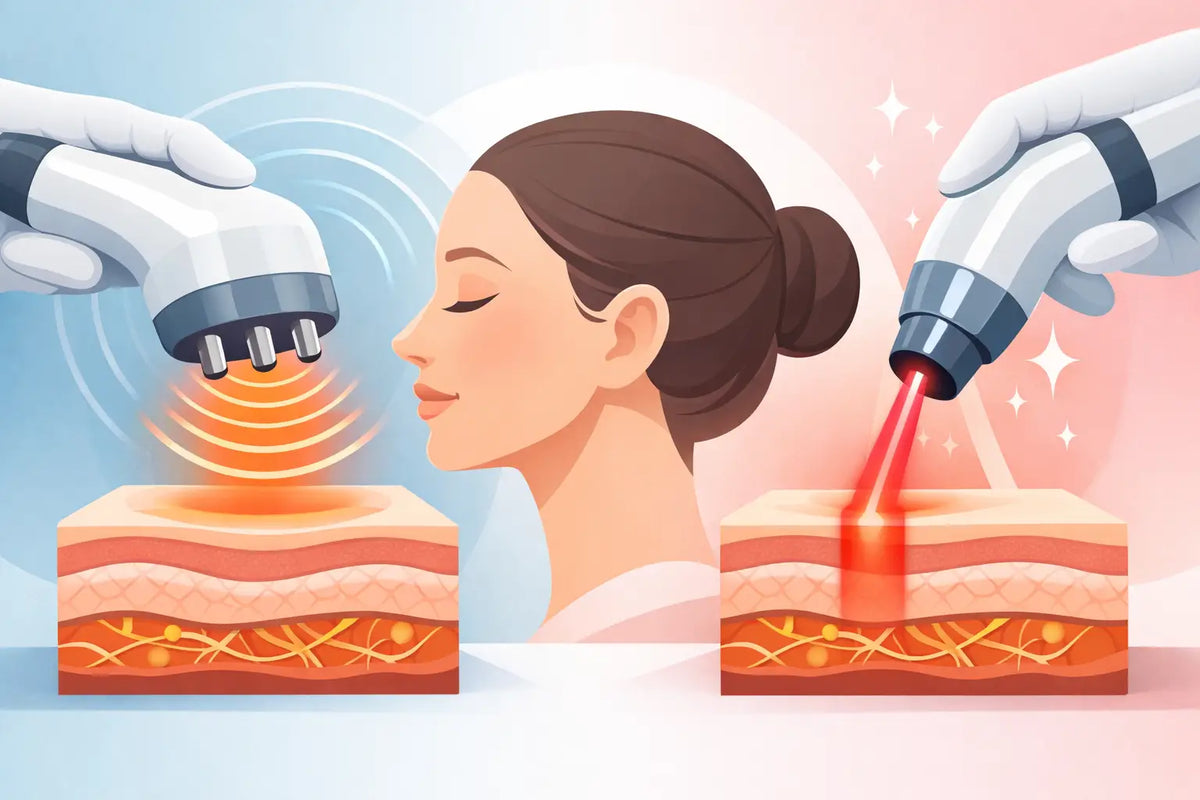
Fine lines around the eyes, a softer jawline, and makeup settling into creases all point to the same underlying shift: collagen is becoming less abundant and less organized. A thoughtful radiofrequency laser comparison can help you choose technology based on what your skin actually needs, rather than the promise on the box. The first distinction matters most: radiofrequency and laser treatments are not the same thing, even though both can be part of a high-performance skin-firming plan.
Radiofrequency vs. Laser: The Core Difference
Radiofrequency, often called RF, uses electrical energy to create controlled warmth beneath the skin’s surface. That heat is designed to support collagen remodeling, which can improve the look of laxity, texture, and fine lines over time. It does not use light.
Lasers use focused light energy at specific wavelengths. Depending on the type of laser, that light can target water in the skin, pigment, blood vessels, or deeper dermal tissue. For wrinkle-focused treatments, the goal is often to create a controlled collagen-stimulating response that supports smoother, firmer-looking skin.
The terms are frequently grouped together because both technologies can be used for visible signs of aging. But the experience, downtime profile, treatment precision, and ideal use case can be very different. Choosing well begins with knowing whether you want a heat-based tightening approach, a light-based collagen approach, or a clinical plan that combines modalities.
Radiofrequency Laser Comparison: What Changes Results
The best device is not automatically the strongest one. Results depend on the energy type, where it is delivered, how consistently it is used, and whether the treatment fits your tolerance for recovery time.
How radiofrequency treatments work
RF devices warm tissue through electrical current. In professional settings, providers may use monopolar, bipolar, multipolar, or microneedling RF technologies. At-home devices generally operate at lower energy levels than in-office equipment and require repeated use to create gradual, visible change.
RF can be a compelling option when mild skin laxity is the main concern. It is commonly used on the face, jawline, and neck, where skin can begin to look less defined. Treatment is often described as a warming sensation. The right temperature range is essential: too little heat may not deliver a meaningful collagen signal, while too much heat increases the risk of discomfort or injury.
The trade-off is patience. RF tightening is typically subtle at first, and its best results often build across a series of treatments or a consistent at-home routine. It can support a firmer look, but it is not a substitute for a surgical lift when significant laxity is present.
How wrinkle-focused laser treatments work
Not all lasers are alike. Ablative lasers remove microscopic columns or layers of skin and can produce dramatic resurfacing results, but they also require substantial recovery. Fractional non-ablative lasers create targeted zones of thermal stimulation while leaving portions of the skin intact, typically with less downtime than ablative treatments.
Non-fractional, non-ablative laser technology takes a different approach. Rather than creating micro-injuries across the skin, it delivers laser energy to heat targeted tissue and encourage the collagen response associated with smoother-looking lines. This category can be especially appealing for people who want an at-home wrinkle treatment without the disruption of peeling, prolonged redness, or scheduling repeated office visits.
For areas where fine lines are concentrated, treatment precision matters. The eye area, for example, has delicate skin and often shows early changes in collagen. A device designed for targeted use can make it easier to treat crow’s feet, under-eye lines, lip lines, and forehead wrinkles consistently.
Depth, precision, and recovery time
RF and laser technologies both generate heat, but they do so differently. RF heat can be more diffuse, which may suit broader areas where firmness is the priority. Laser energy is wavelength-specific and can be engineered for highly targeted treatment.
Recovery is another major dividing line. In-office ablative laser resurfacing may deliver significant improvement, but it can involve days or weeks of redness, peeling, and strict aftercare. Professional RF microneedling may also create temporary redness, swelling, and pinpoint marks.
At-home RF and non-ablative laser devices are designed around convenience and repeatable use. That does not mean every device delivers the same quality of energy or has the same safety profile. Look for a technology with clear treatment instructions, appropriate safety features, and a credible explanation of how it supports collagen.
Which Technology Fits Your Main Concern?
If your top concern is loose-looking skin along the jawline or neck, radiofrequency may be worth considering. Its controlled heat can support the appearance of firmer, more toned skin when used consistently. Results tend to be gradual, which suits someone willing to commit to a long-term routine.
If fine lines and wrinkles are your primary concern, a wrinkle-focused laser may be the more direct choice. Laser technology can be particularly relevant when your goal is to soften the visible creasing around expressive areas of the face. A non-fractional laser approach is also attractive for those who want to stay consistent without planning social downtime around treatment.
For sun damage, uneven pigment, acne scarring, or more advanced texture concerns, an in-office consultation is often the better starting point. Those goals may call for a specific professional laser category, chemical peel, prescription skincare, or a combination plan. Technology should match the concern, not simply the trend.
What to Look for in an At-Home Device
At-home beauty technology can be a powerful part of a mature-skin routine, but it should earn your trust. Marketing language such as “professional strength” is less useful than details about the technology, intended treatment area, and clinical evidence.
Prioritize these four questions before you buy:
- Is the device FDA-cleared for its intended cosmetic indication?
- Is the energy type clearly identified as radiofrequency, LED, laser, or another modality?
- Does the brand share clinical testing or measured outcomes, rather than relying only on testimonials?
- Can you realistically use it as directed for the recommended treatment schedule?
A laser device such as NIRA Pro 3 is designed around this practical reality: targeted, non-fractional laser treatment for people who want to address visible wrinkles at home without building recovery time into their calendar. For a consumer focused on fine lines, that specificity can be more valuable than a device that tries to address every concern at once.
Don’t Confuse RF, Laser, and LED
LED masks are frequently included in the same shopping conversation, but they belong in a separate category. Red and near-infrared LED treatments use low-level light and are generally positioned to support skin appearance and overall skin wellness. They can be pleasant, easy to use, and useful within a broader routine, but they do not operate like a collagen-targeting laser or a radiofrequency device.
This is where expectations protect your investment. A red-light mask may be a nice complement for someone seeking a calming, full-face ritual. It should not be purchased with the expectation that it will perform identically to a device designed to deliver controlled laser or RF energy for wrinkles or laxity.
Topical skincare plays a supporting role, too. Hyaluronic acid can help skin look hydrated and temporarily more plump, while peptides and retinoids can support a well-rounded anti-aging routine. But topical products do not replace the tissue-level thermal stimulation created by properly designed energy devices. The strongest routines pair proven technology with daily sun protection and skincare that supports the skin barrier.
Safety and Realistic Expectations
No radiofrequency laser comparison is complete without discussing safety. Read device instructions carefully, use only on recommended areas, and avoid treating irritated, sunburned, or broken skin. People who are pregnant, have implanted electronic devices, take photosensitizing medications, have an active skin condition, or have a history of abnormal scarring should ask a qualified healthcare professional before beginning treatment.
Be especially cautious with devices that make dramatic claims but provide little information about their technology or testing. Higher intensity is not always better, particularly near the eyes. A well-designed device balances meaningful treatment energy with features that support controlled, repeatable use.
Expect improvement to look progressive, not overnight. Collagen turnover takes time. Early changes may include a more refreshed look or smoother makeup application, while more visible refinement in fine lines and firmness can develop with continued use. Take photos in consistent lighting each month. This is one of the clearest ways to see gradual change that a daily mirror check can miss.
The right choice is the one you will use consistently, safely, and with confidence. Whether you choose RF for the look of firmness or a non-fractional laser for targeted wrinkles, select technology that gives your skin a credible path to visible improvement without asking your life to pause.


