

Fine lines that seem deeper by the end of the day, skin that no longer looks as firm around the eyes or jawline, and makeup that settles differently are all signs of changing collagen. When comparing laser vs radiofrequency skin tightening, the real question is not which technology is universally better. It is which approach is better aligned with your skin goals, your tolerance for downtime, and the consistency you can realistically maintain.
Both lasers and radiofrequency treatments use controlled energy to encourage the skin’s natural repair response. Both can support firmer, smoother-looking skin over time. But they deliver energy differently, target different structures, and can create very different treatment experiences.
How skin tightening actually works
Collagen is the structural protein that helps skin look resilient, dense, and smooth. As collagen production slows with age, skin can begin to lose some of its bounce. Wrinkles become more visible, especially in expressive areas such as the forehead, around the eyes, and around the mouth.
Skin-tightening technologies work by delivering energy that gently warms targeted tissue. This controlled stimulus signals the body to begin a repair process that can support new collagen production. Results are gradual because collagen remodeling is gradual. You are not simply masking the look of lines for a day. You are supporting a longer-term change in how the skin behaves and appears.
That shared goal can make lasers and radiofrequency seem interchangeable. They are not. The technology behind the treatment affects where energy goes, how it is absorbed, and what type of concern it is best positioned to address.
Laser vs radiofrequency skin tightening: the core difference
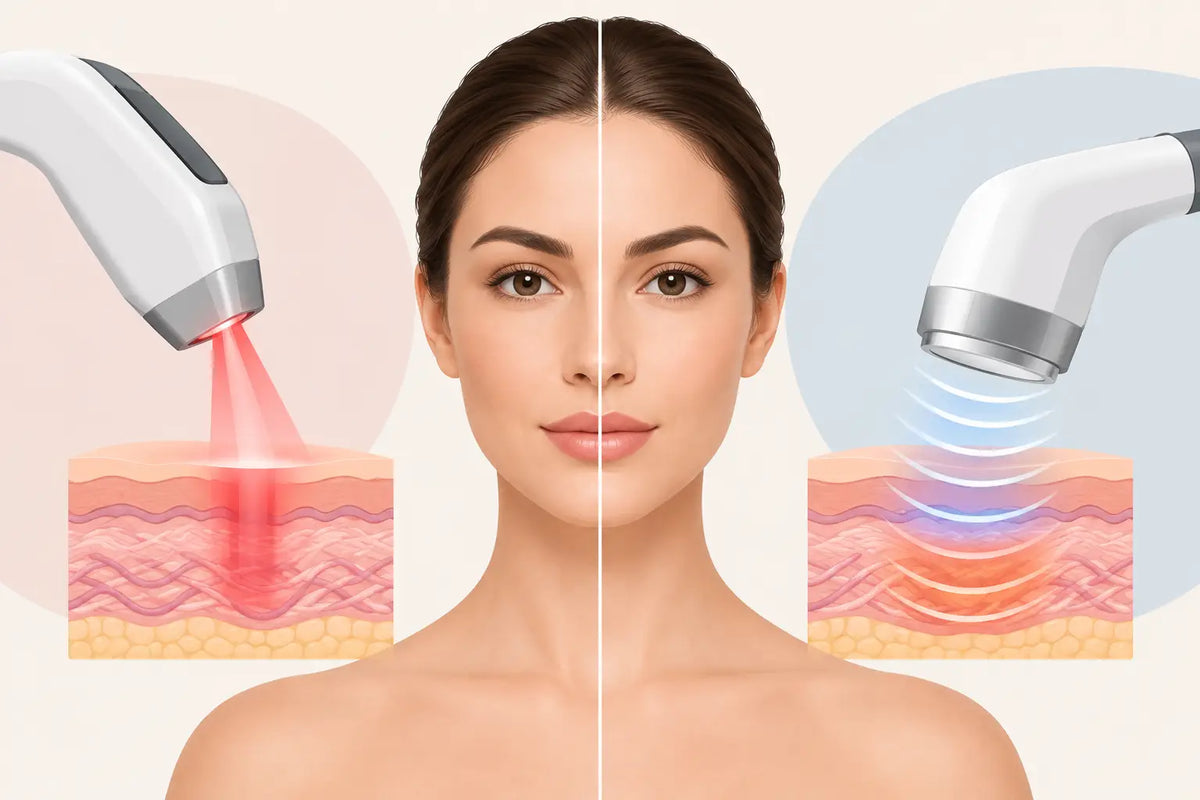
Laser energy uses a focused wavelength of light. Depending on the device and wavelength, that light can be absorbed by water, pigment, or other components in the skin. For skin rejuvenation, many nonablative lasers are designed to create controlled heat below the skin’s surface while keeping the outer layer intact. This can stimulate collagen while avoiding the significant peeling and recovery associated with more aggressive ablative laser resurfacing.
Radiofrequency, often called RF, uses electrical energy to generate heat within the skin. Unlike laser light, radiofrequency is not primarily dependent on pigment absorption. That is one reason RF is often discussed as an option across a broad range of skin tones. It can heat the dermis and, depending on the device, deeper tissue to support collagen remodeling and a temporarily tighter appearance.
In simple terms, laser treatments use light-based energy, while radiofrequency treatments use electrical energy converted into heat. Both can be valuable. The best choice depends on what you want to improve and how a specific device is designed to deliver that energy.
What lasers can do for wrinkles and texture
Laser technology is often especially compelling for people focused on fine lines, visible wrinkles, and skin texture. Light-based energy can be precisely directed, making it useful for delicate facial areas where signs of aging often appear first.
Not all lasers create the same experience. Ablative lasers remove portions of the outer skin layer and may deliver dramatic resurfacing results, but they also involve more downtime and greater aftercare demands. Fractional lasers treat microscopic columns of skin, leaving surrounding tissue intact to support healing. Nonablative lasers heat targeted tissue without removing the outer layer, offering a more gradual, lower-downtime path to collagen support.
For at-home use, safety and repeatability matter. An at-home nonfractional laser such as NIRA is designed around consistent treatments that fit into a real routine, rather than a single intense appointment followed by recovery. This approach may suit someone who wants to target the appearance of crow’s feet, forehead lines, or smile lines without putting life on pause.
The trade-off is patience. A gentler, at-home treatment plan requires regular use and time for collagen changes to become visible. Results are built through consistency, not one dramatic session.
What radiofrequency can do for laxity
Radiofrequency is frequently chosen for concerns related to mild skin laxity, particularly when the goal is a firmer-looking jawline, cheeks, or lower face. Because RF can create heat at different depths, some professional systems are designed to address tissue beneath the surface where laxity can begin.
There are several forms of radiofrequency treatment. Surface RF devices apply energy through electrodes placed on the skin. RF microneedling combines needles with radiofrequency energy to deliver heat deeper into the skin. Professional treatments can be more intensive, while at-home RF devices tend to use lower energy levels and require repeated sessions.
RF is not automatically the better option for sagging skin, just as laser is not automatically the better option for every wrinkle. The degree of laxity matters. Mild looseness may respond to collagen-focused treatment, but significant skin sagging is unlikely to be transformed by any noninvasive device alone. Honest expectations protect both your investment and your confidence.
Results, comfort, and downtime
The treatment experience can be a deciding factor. Nonablative laser treatments may create a warming or prickling sensation, depending on the device and treatment area. More intensive in-office lasers can cause redness, swelling, and peeling that may last days or longer.
Radiofrequency often feels warm, with some treatments delivering a deeper heat sensation. Professional RF microneedling adds the sensation and recovery considerations of microneedling, including temporary redness, swelling, and pinpoint bleeding. Surface-level RF may involve less downtime, though results can still depend heavily on the device’s energy level and treatment schedule.
Neither category should be judged by discomfort alone. More sensation does not always mean better results, and a gentle treatment is not automatically ineffective. The right level of intensity is the one that can safely produce meaningful collagen stimulation for your concerns while fitting into your life.
Which treatment is right for your goals?
Choose based on the concern you see in the mirror, not the technology trending on social media. If your priority is visible fine lines, crepey texture, and early signs of collagen loss around expressive facial areas, a laser-based approach may be particularly relevant. If your main concern is mild laxity through the lower face or jawline, radiofrequency may deserve a closer look.
Skin tone, skin sensitivity, history of hyperpigmentation, and active skin conditions also matter. Laser wavelengths and settings must be appropriate for your skin, especially if you are prone to post-inflammatory dark marks. Although RF is less reliant on pigment absorption, it still requires proper technique and appropriate use. Pregnant individuals, people with implanted electronic devices, and anyone with a medical condition affecting healing should seek medical guidance before using energy-based treatments.
The biggest overlooked factor is consistency. A treatment you can perform safely and regularly is often more valuable than a complicated plan you abandon after two weeks. For many people, the strongest strategy is not choosing a single miracle technology. It is pairing a proven device routine with daily sunscreen, effective hydration, and skincare that supports the skin barrier.
Set expectations that support better results
Collagen remodeling takes time. With either laser or radiofrequency skin tightening, early changes may include a fresher, more hydrated-looking appearance, while firmer-looking skin and softened lines can develop more gradually over weeks and months. Before-and-after photos should be assessed in consistent lighting, with the same facial expression and angle. Small changes are easy to miss when you see your own face every day.
A thoughtful treatment plan also means respecting your skin. Do not stack multiple intense devices, strong exfoliants, and aggressive treatments simply because faster sounds better. Skin responds best when it has the support to recover.
The most empowering choice is the one that gives you a credible path to visible improvement without asking you to compromise your comfort, schedule, or confidence. Start with the concern you want to change, choose technology designed for that goal, and give your collagen the consistency and time it needs to respond.


