

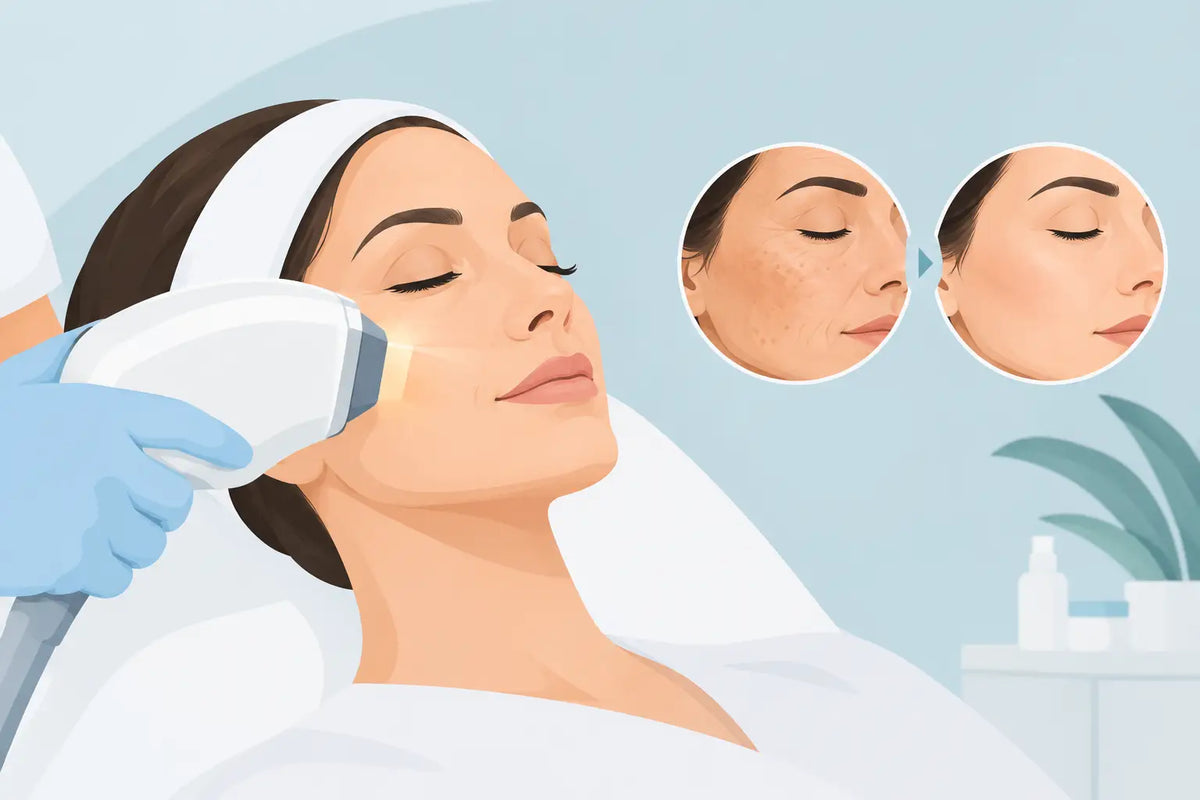
Sun damage rarely announces itself all at once. It shows up gradually: fine lines that stay after you stop smiling, rougher texture around the cheeks, uneven tone, and skin that no longer looks as firm or reflective as it once did. If you want to treat photoaging with laser technology, the goal is not simply to polish the surface. It is to encourage healthier-looking skin from within by supporting the collagen that gives skin its smoothness and structure.
For many people, laser treatment sounds like an in-office commitment involving downtime, repeated appointments, and a long recovery calendar. That can be true for some laser categories. But not every laser approach works the same way. Understanding the difference helps you choose a treatment strategy that fits both your skin goals and your real life.
What photoaging does to your skin
Photoaging is visible skin aging caused primarily by cumulative ultraviolet exposure. Unlike chronological aging, which happens naturally over time, photoaging is accelerated by sun exposure and can be compounded by tanning, inconsistent sunscreen use, pollution, smoking, and other environmental stressors.
UV exposure contributes to oxidative stress and activates processes that break down collagen and elastin. Collagen is the structural protein that helps skin look firm and supported. As its quality and quantity decline, fine lines deepen, skin texture becomes less even, and the face can begin to look less lifted.
Common signs include crow's feet, forehead lines, crepey texture, enlarged-looking pores, uneven pigmentation, dullness, and reduced elasticity. These changes can occur even in people who have been diligent with skincare for years. Topical products are valuable, especially sunscreen and ingredients that support hydration and skin renewal, but they may not fully address collagen loss on their own.
How lasers help treat photoaging
Laser technology uses controlled light energy to create a biological response in the skin. Depending on the laser type and settings, that response may target pigment, resurface portions of the skin, or gently heat tissue to support collagen remodeling.
Collagen remodeling is the part that matters most for fine lines and visible loss of firmness. When skin receives precisely controlled thermal energy, it can initiate a repair response. Over time, this may support the production of new collagen and improve the organization of existing collagen. The visible result is often smoother, firmer, more refined-looking skin.
The word "laser" covers a wide range of treatments, and those differences matter. A treatment designed for brown spots is not necessarily the best option for wrinkles. A high-intensity resurfacing laser may produce more dramatic short-term change, but it can also involve redness, peeling, strict aftercare, and downtime. The right choice depends on what you want to improve, your skin tone and sensitivity, your tolerance for recovery, and how consistently you can follow a treatment plan.
Fractional versus non-fractional laser approaches
Fractional lasers create microscopic treatment zones in the skin while leaving surrounding tissue untreated. This approach can be effective for deeper texture concerns, scars, and more advanced photoaging. It also commonly comes with a period of redness, swelling, flaking, or social downtime. More aggressive resurfacing should be evaluated and performed by a qualified medical professional, particularly for deeper skin tones or anyone prone to post-inflammatory hyperpigmentation.
Non-fractional laser technology takes a different path. Rather than creating microscopic wounds or ablating the surface, it is designed to deliver controlled energy without the same type of visible injury. This makes non-fractional treatment especially appealing for people focused on wrinkles and collagen support who want to stay consistent without planning around recovery.
That trade-off is straightforward: aggressive procedures can be appropriate when a clinician recommends them for significant damage, while gentler, non-ablative approaches generally depend on regular use and gradual improvement. For many people, consistency is not a compromise. It is the strategy.
Why at-home laser treatment fits a modern routine
Photoaging develops over years, so meaningful improvement should not be framed as an overnight event. A high-quality at-home laser device makes it easier to build collagen-supporting treatment into the routine you can actually sustain.
NIRA uses non-fractional laser technology designed to target the appearance of fine lines and wrinkles through collagen stimulation, without needles, surface damage, or the disruption associated with many in-office resurfacing treatments. The appeal is practical as much as it is technical: treatment can take minutes, not an afternoon away from work, family, or your calendar.
At-home treatment also gives you control over consistency. Instead of waiting weeks between appointments, you can follow the device-specific schedule at home and monitor gradual changes in areas that often show photoaging first, including around the eyes, mouth, forehead, and cheeks.
The best candidate is not necessarily someone looking for a dramatic one-time transformation. It is someone who wants to invest in visible, cumulative skin improvement and is willing to make treatment a repeatable part of self-care.
How to use laser technology strategically for photoaging
The device instructions always come first. Laser devices differ in treatment area, frequency, preparation, and safety requirements, so use only an FDA-cleared device as directed and do not improvise with treatment times or settings.
Start with clean, dry skin unless the manufacturer directs otherwise. Makeup, heavy products, and residue can interfere with a precise routine. Treat the recommended areas methodically rather than chasing every line in one session. Consistency and proper placement are more valuable than over-treating.
After treatment, return to the fundamentals. Use a hydrating formula that supports your skin barrier, then moisturize as needed. During the day, broad-spectrum sunscreen is non-negotiable. There is little value in investing in collagen support while allowing ongoing UV exposure to continue breaking down the collagen you have.
A strong photoaging routine usually has three layers: daily UV protection, topical support for hydration and skin quality, and a collagen-focused treatment technology used according to its protocol. Each layer does a different job. Sunscreen helps prevent further visible damage. Topicals help maintain comfort, hydration, and surface radiance. Laser technology is designed to address the structural changes that make lines and laxity more noticeable.
What to expect from results
Collagen is not an instant-results ingredient. Skin needs time to respond, which is why the most credible laser plans emphasize progressive improvement rather than a next-day promise. Some people first notice a more hydrated, refreshed look. With continued treatment, fine lines may appear softer and skin may look smoother and firmer.
Your starting point matters. Mild early photoaging may respond differently than decades of sun exposure, deep etched wrinkles, or significant pigment changes. Laser treatment can be part of a powerful anti-aging plan, but it cannot replace sun protection, reverse every form of damage, or produce the same outcome for every person.
Take photos in consistent lighting before you begin and at regular intervals afterward. This is more useful than evaluating your skin in a different mirror each day. Look for changes in line depth, texture, firmness, and overall radiance over time.
Safety and when to seek professional guidance
A laser device should feel like advanced skincare, not a guessing game. Follow the contraindications and safety directions that come with your specific device. Avoid treatment on irritated, broken, or actively inflamed skin, and be particularly cautious if you are using prescription acne medication, have a history of light-triggered conditions, or are healing from a procedure.
If you have melasma, active acne, rosacea, a history of hyperpigmentation, or a darker skin tone with concerns about pigment shifts, a dermatologist can help you decide which treatment approach is appropriate. Professional guidance is also the right next step for suspicious spots, rapidly changing pigmentation, deep scars, or concerns that extend beyond cosmetic photoaging.
Protecting your eyes is equally essential. Use the device only in approved treatment areas and exactly as instructed. More energy, more passes, or more frequent sessions do not automatically mean better results.
A smarter long-term approach to sun-aged skin
The most effective approach to photoaging is proactive, not punitive. You do not need to erase every expression line to see a meaningful difference in how your skin looks and feels. The goal is skin that appears smoother, stronger, more supported, and more like you at your most rested.
Choose technology that matches your appetite for downtime, your skin concerns, and your ability to be consistent. Then protect the progress with sunscreen every day. When collagen-focused laser care becomes a simple ritual instead of an occasional rescue plan, gradual improvement has the chance to become visible confidence.


