

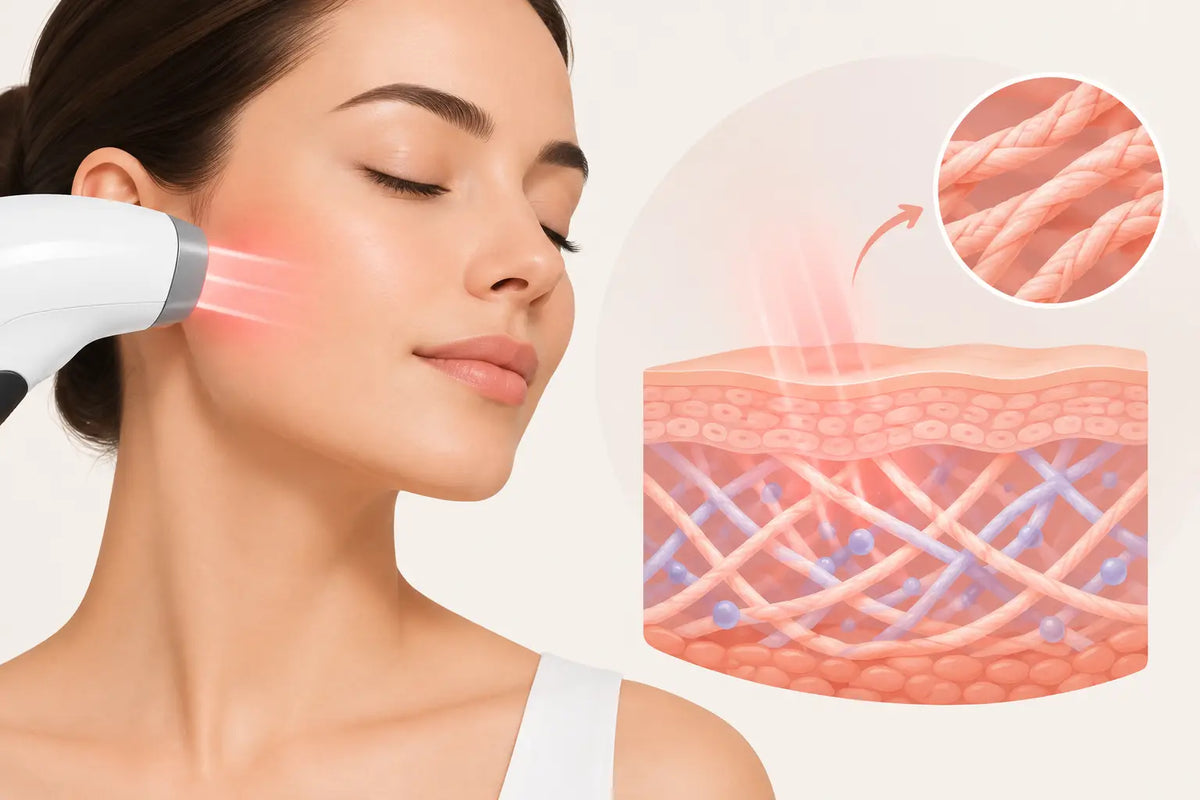
Fine lines around the eyes, a softer jawline, and skin that no longer looks as springy as it once did all trace back, in part, to collagen loss. So, can lasers boost collagen? Yes. The right laser technology can use precisely controlled heat to signal the skin’s natural repair response, supporting new collagen production over time. But the type of laser, the treatment plan, and your consistency all influence what you see in the mirror.
Collagen-focused laser treatment is not about changing your face overnight. It is about helping skin do more of what it did naturally when collagen production was higher: maintain structure, bounce, and a smoother-looking surface.
Can Lasers Boost Collagen in the Skin?
Collagen is a structural protein that gives skin much of its firmness and resilience. Beginning in adulthood, the body gradually produces less of it. Sun exposure, smoking, stress, hormonal shifts, and normal aging can accelerate that decline. As collagen fibers become fewer and less organized, fine lines become more visible and skin can begin to feel thinner or less supported.
Lasers work by delivering light energy into targeted layers of the skin. When that energy is absorbed, it creates controlled thermal stimulation. This process can activate fibroblasts, the cells responsible for producing collagen and other components of the skin’s supportive matrix.
The immediate effect may be subtle. The more meaningful change happens gradually as the skin responds to that stimulation and remodels its collagen over weeks and months. That is why collagen-building laser care rewards a long-term mindset. You are supporting a biological process, not applying a temporary surface fix.
Why Controlled Heat Makes a Difference
Not all heat is helpful. Effective laser treatment depends on delivering energy at an appropriate wavelength, intensity, and duration for the treatment goal. Too little energy may not provide meaningful stimulation. Too much can increase discomfort, downtime, and risk, especially when the skin barrier is compromised or the device is not used correctly.
Professional lasers can be powerful, but they often come with recovery time, scheduling demands, and a significant cost per session. At-home laser technology is designed around a different experience: controlled, repeatable treatment that fits into a consistent routine. Rather than one aggressive appointment, users can build cumulative stimulation through regular use.
For people who want visible improvement without arranging their lives around clinic visits, this distinction matters. A few minutes of disciplined at-home care can be easier to sustain than treatments that require appointments, recovery, or a larger upfront commitment.
Fractional vs. Non-Fractional Laser Treatments
Laser devices are not interchangeable, and the language can be confusing. Fractional lasers create tiny, controlled zones of injury in the skin while leaving surrounding tissue intact. They can produce dramatic resurfacing benefits, but some treatments involve redness, peeling, social downtime, and a more involved aftercare plan.
Non-fractional lasers use a different approach. They deliver laser energy without creating the same pattern of micro-injuries associated with fractional resurfacing. Depending on the technology and treatment parameters, this can make them well suited to frequent, convenient collagen-supporting care with minimal disruption to daily life.
Neither category is automatically better. Fractional treatments may make sense for someone seeking intensive resurfacing for pronounced texture concerns under professional supervision. Non-fractional technology may be a stronger fit for someone focused on fine lines, early visible aging, and maintaining a consistent collagen-stimulation routine at home.
The key is matching the technology to your skin goals, tolerance for downtime, budget, and willingness to stay consistent.
What Results Can You Realistically Expect?
Laser-driven collagen production takes time because collagen remodeling takes time. Some people notice that their skin looks more refreshed or feels smoother early in a treatment plan. Firmer-looking skin and softer-looking fine lines generally develop more gradually as treatment continues.
Results also depend on the concern being treated. Fine lines around the eyes and mouth, crepey-looking texture, and mild loss of firmness may respond differently than deeper folds, significant laxity, or scars. Lasers can support improvement, but they do not replace every aesthetic treatment or erase advanced signs of aging.
Your baseline skin health matters, too. A consistent routine that includes daily broad-spectrum sunscreen, gentle cleansing, hydration, and targeted topical ingredients helps protect the collagen you have while your laser routine supports what comes next. Repeated UV exposure, on the other hand, works against collagen-building efforts.
Think of laser care as a compounding investment. Small, repeatable sessions can create more meaningful visible change than sporadic use followed by long gaps.
How to Get More From a Collagen-Focused Laser Routine
Consistency is the foundation. Follow the specific usage instructions for your device rather than assuming more treatment will produce faster results. Collagen stimulation is not a race, and overuse can create unnecessary irritation.
Start with clean, dry skin unless your device instructions say otherwise. Use the laser in the recommended treatment areas and avoid the eyelids, broken skin, active rashes, suspicious lesions, and any area your device’s safety guidance identifies as off-limits. If you use prescription skincare, have a history of light sensitivity, are pregnant, or have a medical condition affecting your skin, ask a qualified healthcare professional whether laser treatment is appropriate for you.
After treatment, support your skin barrier. Hydrating ingredients such as hyaluronic acid can help skin feel comfortable, while a well-formulated moisturizer or peptide cream can complement a complete anti-aging routine. Sun protection is non-negotiable. If you are investing in collagen support, protecting skin from daily UV exposure is one of the highest-value steps you can take.
Progress photos can also help you evaluate change fairly. Take photos in the same location, with the same lighting and expression, every few weeks. Day-to-day mirror checks can hide gradual improvements that become much clearer over a longer timeline.
At-Home Laser Care: Who Is It For?
At-home collagen-stimulating laser devices are especially appealing for people who value convenience but do not want to settle for a routine built only around topical products. Creams and serums play an important role in hydration, barrier support, and ingredient delivery. A laser adds a technology-based treatment step designed to reach beyond the skin’s surface.
It can be a compelling option if you are noticing early-to-moderate fine lines, especially around the eyes, or if your goal is to preserve a smoother, firmer-looking complexion over time. It may also suit people who want to maintain results between professional appointments or prefer a more gradual approach without clinic downtime.
NIRA’s FDA-cleared, non-fractional laser technology was designed around this practical reality: clinically guided collagen support that can fit into a fast, repeatable home ritual. The best device is still the one you can use correctly and consistently, so choose based on the treatment area, safety features, usage schedule, and evidence behind the technology.
Questions to Ask Before Choosing a Laser Device
A premium device should make it easier to feel confident in your routine, not leave you guessing. Look for clear directions, credible clinical support, appropriate regulatory positioning, and transparent guidance on who should not use the device.
Consider what kind of outcome you want. If your priority is a gentler routine for visible lines and ongoing collagen support, a non-fractional at-home laser may align well with your needs. If you are concerned about deep wrinkles, substantial laxity, or significant scarring, a consultation with a dermatologist can help you understand whether an in-office procedure, an at-home device, or a combination approach is most realistic.
Also be honest about your routine. A treatment that takes only minutes and fits into your evening skincare ritual is more likely to become a habit. And with collagen, the habit is where the opportunity lies.
Your skin does not need a dramatic disruption to deserve meaningful care. Give it precise technology, daily protection, and enough time to respond. The most rewarding changes often begin with a routine you can keep.


