

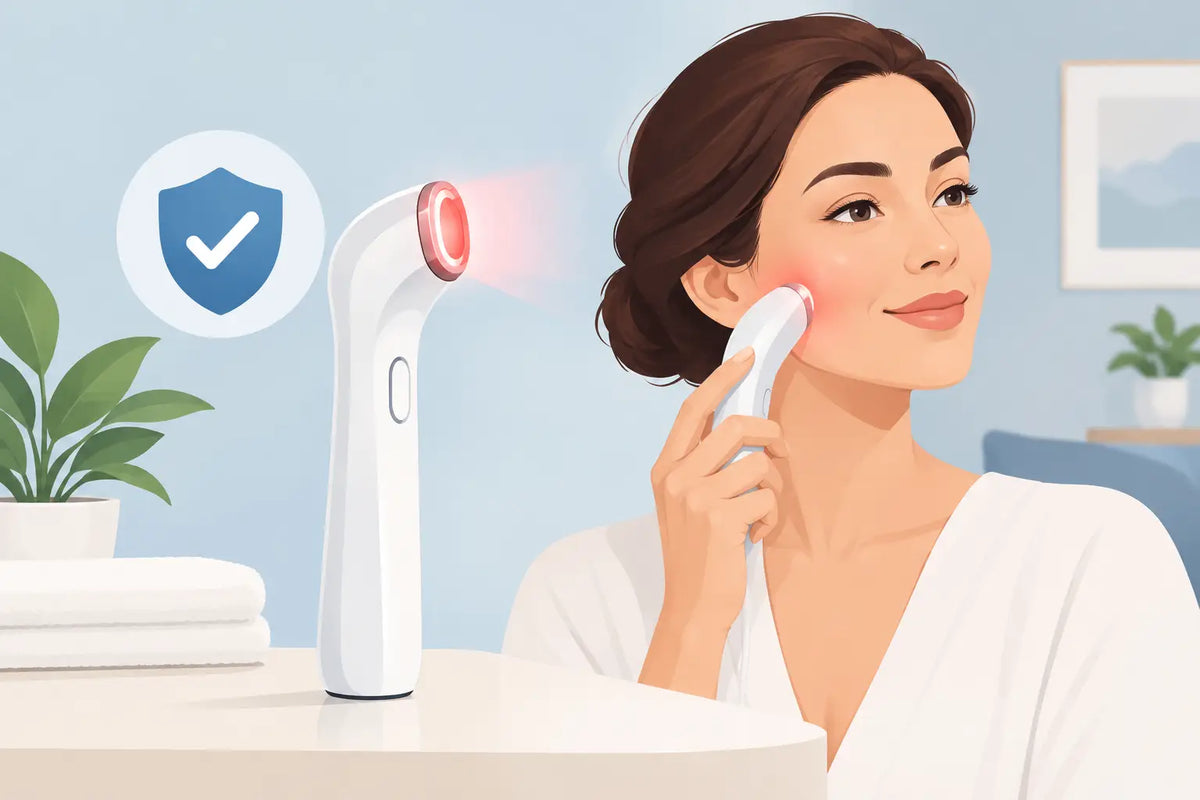
A laser is a serious skincare technology, not just another beauty accessory. That is why an FDA cleared laser guide should start with the question that matters most: what does clearance actually tell you about the device you are bringing into your routine?
For anyone noticing deeper expression lines, crepey texture, or the gradual loss of firmness that comes with collagen decline, at-home laser technology can be a compelling option. But the best results come from choosing with clarity, using the device consistently, and understanding what a laser is designed to do - and what it is not.
What FDA Clearance Means for an At-Home Laser
When a medical device is FDA cleared, it generally means the manufacturer has shown that the device is substantially equivalent in safety and effectiveness to a legally marketed predicate device for its intended use. For many aesthetic devices, this process is known as 510(k) clearance.
That distinction matters. FDA clearance is not the same as FDA approval, a term more commonly associated with certain drugs and higher-risk medical devices. It also does not mean every laser on the market is appropriate for every skin concern, skin type, or user. Clearance is tied to a specific device, its technology, instructions, and intended claims.
Still, clearance is an important credibility signal. It indicates that the device belongs in a regulated medical-device category rather than the broad universe of cosmetic gadgets making vague promises. A responsible brand should be clear about its device category, intended use, safety instructions, and the clinical rationale behind its technology.
Why Laser Technology Is Different From a Cream or LED Mask
Topical skincare is valuable. Hydrating ingredients can support the skin barrier, antioxidants can help defend against environmental stressors, and retinoids may improve the appearance of fine lines over time. But creams and serums work primarily at or near the surface of the skin.
Laser energy works differently. Depending on the technology and treatment parameters, it is designed to deliver controlled light energy into targeted layers of skin. This controlled interaction can support the skin's natural collagen response, which is central to improving the appearance of wrinkles and firmness over time.
Not all light-based devices belong in the same category. LED masks use light-emitting diodes and typically offer a gentler, broader approach to skin appearance. Lasers use focused, coherent light and are engineered for a different level of precision. In-office fractional lasers can create controlled micro-injuries and may involve visible downtime. Non-fractional at-home laser technology is designed around a more convenient treatment experience, often with no planned social downtime when used as directed.
The trade-off is straightforward: more aggressive procedures can involve more recovery, discomfort, expense, and scheduling. An at-home laser is built for a consistent routine. Its value comes from making clinically informed collagen care realistic enough to maintain.
How to Read an FDA Cleared Laser Guide With Confidence
Marketing language can make every device sound equally advanced. Look beyond phrases such as "professional-grade" or "clinical-inspired" and focus on specifics.
First, identify the device's intended use. Is it designed for the appearance of fine lines and wrinkles? Is it intended for the full face, targeted areas around the eyes and mouth, or another area? A device should only be used according to its cleared indications and instructions for use.
Next, understand the treatment mechanism. A brand should be able to explain whether its device uses laser energy, LED light, radiofrequency, microcurrent, or another modality. These technologies are not interchangeable. If collagen stimulation is your priority, ask how the technology is intended to support that outcome and what evidence is available.
Then consider the routine itself. The most sophisticated device is not useful if its regimen is too complicated to follow. A practical at-home laser plan should fit into real life: a few minutes, clear treatment zones, straightforward guidance, and a realistic commitment period. Visible change in collagen-related concerns is gradual because collagen remodeling is gradual.
Finally, review safety information with the same attention you give results. Look for guidance about proper eye protection if required, treatment frequency, contraindications, and when to pause use. A premium device experience should make these details easy to find, not bury them behind a sales page.
What Results Should You Expect?
At-home laser treatments are not an overnight fix for every line in the mirror. The most credible expectation is progressive improvement in the look of fine lines, wrinkles, skin texture, and firmness with consistent use over time.
Your starting point matters. Fine lines caused by repetitive movement, dehydration, and early collagen loss may respond differently than deep, etched wrinkles or significant skin laxity. Lifestyle also plays a role. Daily sunscreen use, a supportive skincare routine, sleep, smoking status, and sun exposure all influence how skin ages and how results present.
Photography can help you see changes more objectively. Take baseline photos in the same location, at the same time of day, with similar lighting and a relaxed expression. Check in at regular intervals rather than scrutinizing your face after every treatment. Collagen-focused skincare rewards consistency, not impatience.
If your concern is severe laxity, pronounced scarring, active inflammatory skin disease, or a changing lesion, an at-home device may not be the complete answer. A dermatologist can help determine whether an at-home laser, prescription skincare, an in-office procedure, or a combination approach best suits your skin and goals.
Safety Starts With the Right Routine
Use a laser only on clean, dry skin unless the manufacturer specifically instructs otherwise. Follow the recommended number of passes and treatment schedule. More treatments than directed do not automatically mean better results, and can increase the chance of irritation.
Avoid treating over areas that are broken, sunburned, actively irritated, or recovering from a procedure unless you have guidance from a qualified healthcare professional. Be especially thoughtful if you use prescription acne treatments, retinoids, exfoliating acids, or other active products that can affect skin sensitivity. Your device instructions and dermatologist should guide your timing.
Certain health conditions, medications, and cosmetic procedures may also require extra caution. Pregnancy, photosensitizing medications, a history of light-triggered reactions, recent injectables, and recent resurfacing treatments are all reasons to read the complete safety information and seek professional advice when needed.
Sunscreen remains non-negotiable. Collagen-building technology and daily UV protection work best as part of the same strategy. Protecting skin from ongoing UV exposure helps preserve the progress you are working to create.
Choosing an At-Home Laser That Earns a Place in Your Routine
The right device should feel like an investment in a repeatable ritual, not a complicated project. Prioritize a brand that explains its technology in plain language, provides a clear treatment protocol, and offers transparent support after purchase. Clinical data, before-and-after photography with consistent conditions, and an understandable warranty or guarantee can help you evaluate confidence beyond a headline claim.
NIRA's approach reflects what many results-focused consumers want from at-home laser care: non-fractional laser technology designed to fit a regular skincare routine, paired with education that makes the process feel approachable rather than intimidating.
Do not choose solely on treatment time or the boldest wrinkle-reduction claim. Consider the areas you want to treat, your tolerance for routine, your current skincare regimen, and whether the company gives you enough information to use the device responsibly. The strongest beauty technology is technology you understand and can use consistently.
An FDA-cleared laser can be a meaningful part of a long-term skin strategy, especially when your goal is smoother, firmer, more confident-looking skin without organizing your life around appointments. Choose precision over hype, follow the protocol, and give your skin the steady care that visible change requires.


