

Key Takeaways
- Retinol is a powerful topical agent for cellular turnover and surface refinement.
- At-home laser treatments deliver energy deeper into the dermis to stimulate new, foundational collagen, a critical component that topical products cannot reach alone.
- The optimal strategy is a combination: Retinol refines the surface; Laser repairs and builds the structure underneath.
- NIRA’s technology is FDA-Cleared, clinically proven, and takes just two minutes a day, fitting into an efficient lifestyle.
- Proactive skincare in your 30s and 40s is about investing in long-term resilience, giving you the freedom to feel effortlessly beautiful in any setting.
Effective skincare is not a cost, but a strategic investment. The goal isn't fleeting trends; it's maximizing long-term skin health and retaining control over the aging process.
As you navigate your late thirties and early forties, this investment strategy becomes critical. You move past merely reacting to surface-level concerns and begin focusing on proactive collagen preservation.
The debate often centers on which powerful element to choose: topical retinol vs laser technology. Retinol is a household name, an acknowledged pillar of any serious routine. Laser treatments, once confined to the clinic, offer a new level of at-home accessibility.
The truth, grounded in science and proven effectiveness, is that this is not an "either/or" choice. Instead, these two modalities represent a complementary powerhouse, creating a layered defense that delivers
Understanding Collagen Dynamics
Around age 35, the natural decline of collagen production begins to accelerate, transitioning from gradual loss to a more noticeable shift in skin quality. By your 40s, collagen levels can drop significantly, contributing to visible signs of aging like wrinkles, decreased elasticity, and thinner skin. For women entering or approaching perimenopause, hormonal shifts intensify this, as the drop in estrogen further accelerates the loss of both collagen and elastin.
This is why traditional topical routines often hit a plateau. They address surface concerns well, but they may lack the power required to trigger the deeper, dermal-level renewal needed for lasting preventative care. Your skin demands a strategy that works both topically and structurally.
The Power and Limits of Retinol
Retinoids, including retinol, are vitamin A derivatives renowned for their ability to influence cell communication. Their primary strength lies in encouraging cellular renewal and signaling skin cells to stimulate more natural collagen production on their own. They are highly effective for improving surface texture, minimizing the appearance of fine lines, and evening out pigmentation.
However, retinoids are inherently limited by two factors:
- Penetration Depth: As a topical solution, retinol primarily affects the epidermis (the outer layer of skin). It initiates cellular turnover but does not deliver the precise, controlled energy deeper into the dermis needed for comprehensive collagen remodeling.
- Potential Irritation: High-concentration retinoids, while potent, can lead to visible peeling, redness, and sun sensitivity, demanding cautious integration and downtime that doesn't align with a busy, efficient lifestyle.
Retinol is foundational, a daily maintenance agent for the skin's surface. But to achieve Proactive Beauty and truly safeguard your long-term investment, you must also address the dermis where collagen lives.
The Precision Power of Laser Technology
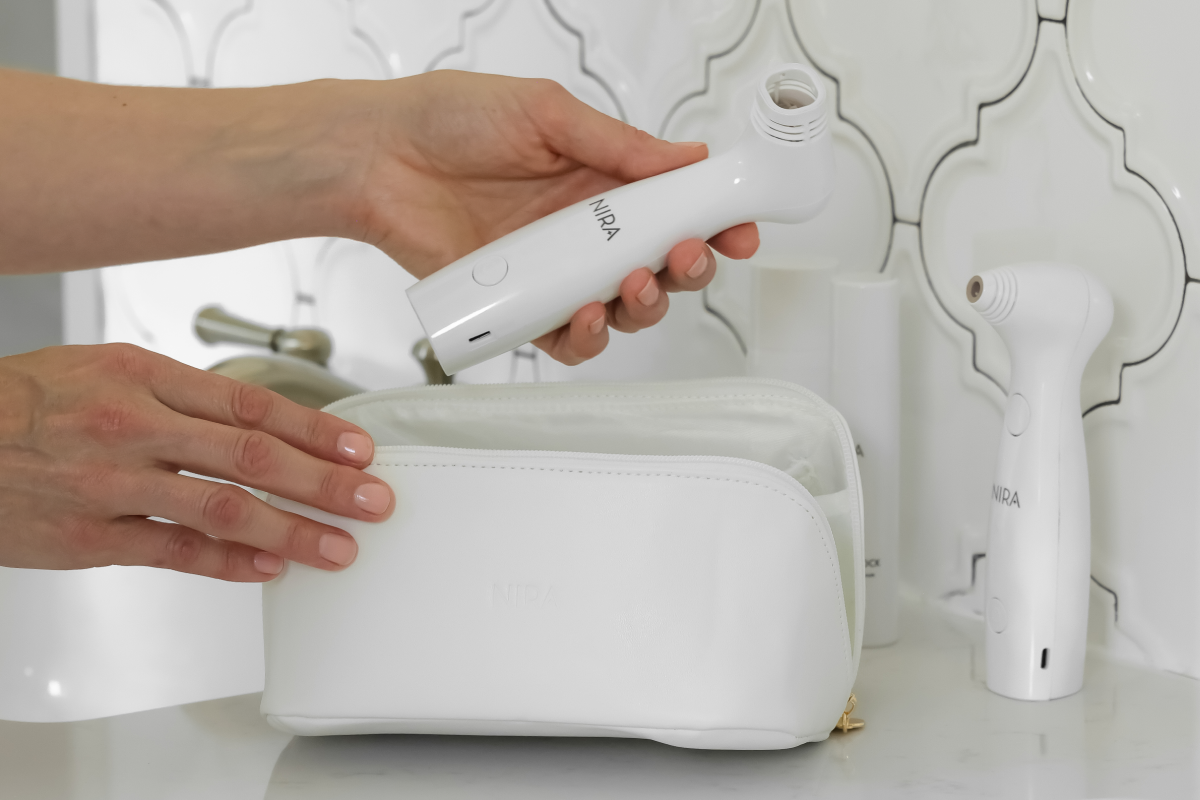
This is where a precise, non-fractional laser device provides the missing structural element to the retinol vs laser equation. Unlike topical creams, which rely on chemical messages, non-fractional lasers, like the NIRA Pro, deliver targeted thermal energy to the dermis, safely bypassing the surface layer of the skin.
NIRA’s technology is designed to gently heat the water molecules in the dermis. This controlled thermal micro-injury signals the body’s natural wound healing response, aggressively prompting the creation of new, fresh collagen. This process is the deepest form of collagen renewal possible outside of a clinical setting.
Key facts about NIRA’s at-home laser device:
- Clinically proven to reduce wrinkles by stimulating natural collagen.
- FDA-Cleared, providing a necessary level of scientific and regulatory authority that confirms its claims.
- Completely painless, distinguishing it from older, ablative technologies, and making it suitable for a daily routine.
Just Two Minutes for Long-Term Skin Strength
The optimal skincare strategy includes a combined routine that capitalizes on the strengths of both retinol (topical cellular renewal) and laser (deep dermal collagen synthesis).
A powerful dual-action routine involves:
-
Laser Activation: Use your NIRA at-home laser device for two minutes a day to directly stimulate foundational collagen renewal in the dermis. This tackles the root cause of lines and loss of elasticity.
- Topical Refinement: Follow your laser treatment with a targeted routine that includes retinol to refine surface texture, minimize pores, and address pigmentation. This creates a cohesive, compounded effect that maximizes results at every layer of the skin.
This strategic layering of powerful mechanisms accelerates results, ensuring your daily investment yields maximum returns.
Invest in Your Long-Term Beauty
The true value of this dual-modality approach goes far beyond superficial aesthetics. It is about investing in your future self and giving yourself the foundational support to live your life fully. When your skin feels structurally stronger, smoother, and more vibrant from within, you unlock an effortless beauty.
This proactive approach means less time worrying about how you look under harsh lighting and more time focusing on what matters. You gain the freedom to look and feel your best even without makeup, meeting friends for brunch, attending spontaneous work events, or simply enjoying your morning routine without feeling self-conscious. This tangible peace of mind is the compounded result of effective, science-backed skincare.
The choice is clear: don't choose between the two best methods. Master both for a proactive beauty strategy that ensures visible results, consistency, and a profound sense of self-control.
Frequently Asked Questions
-
Which product should be applied first: Retinol or the NIRA Laser? The laser treatment should be performed first on clean, dry skin. NIRA’s non-fractional laser energy needs to reach the dermal layer unhindered. After the laser treatment is complete, you should follow up with your topical skincare, including your retinol product, and then your moisturizer.
-
Can I use my Retinol product and the NIRA Laser on the same night? Yes, you can. However, sensitive skin types may prefer to apply the laser treatment in the morning and their retinol product in the evening, or alternate them on different nights to mitigate potential irritation from the combined active ingredients. Always listen to your skin.
-
How does the NIRA Laser go deeper than Retinol? Retinol is a large molecule that works primarily in the upper layers of the skin (epidermis). The NIRA laser uses non-fractional light energy, which is designed to safely pass through the epidermis and deliver a precise, controlled burst of thermal energy directly to the dermis, the deep layer responsible for producing collagen.
-
How long does the laser treatment take, making it practical for a busy routine? The NIRA laser is engineered for efficiency, with each treatment taking just two minutes a day for the full face. This minimal time commitment ensures the device is effortlessly integrated into even the busiest professional’s schedule.
-
Why do dermatologists recommend a dual approach like retinol + laser? Dermatologists value both cell-to-cell communication (retinol) and collagen synthesis (laser). Retinol works on fine lines and texture, while the non-ablative laser stimulates foundational collagen from within, achieving a more complete and resilient anti-wrinkle result than either product could accomplish alone. We advise consulting with a dermatologist for a personalized regimen that combines both methods.


