

Skincare Blog
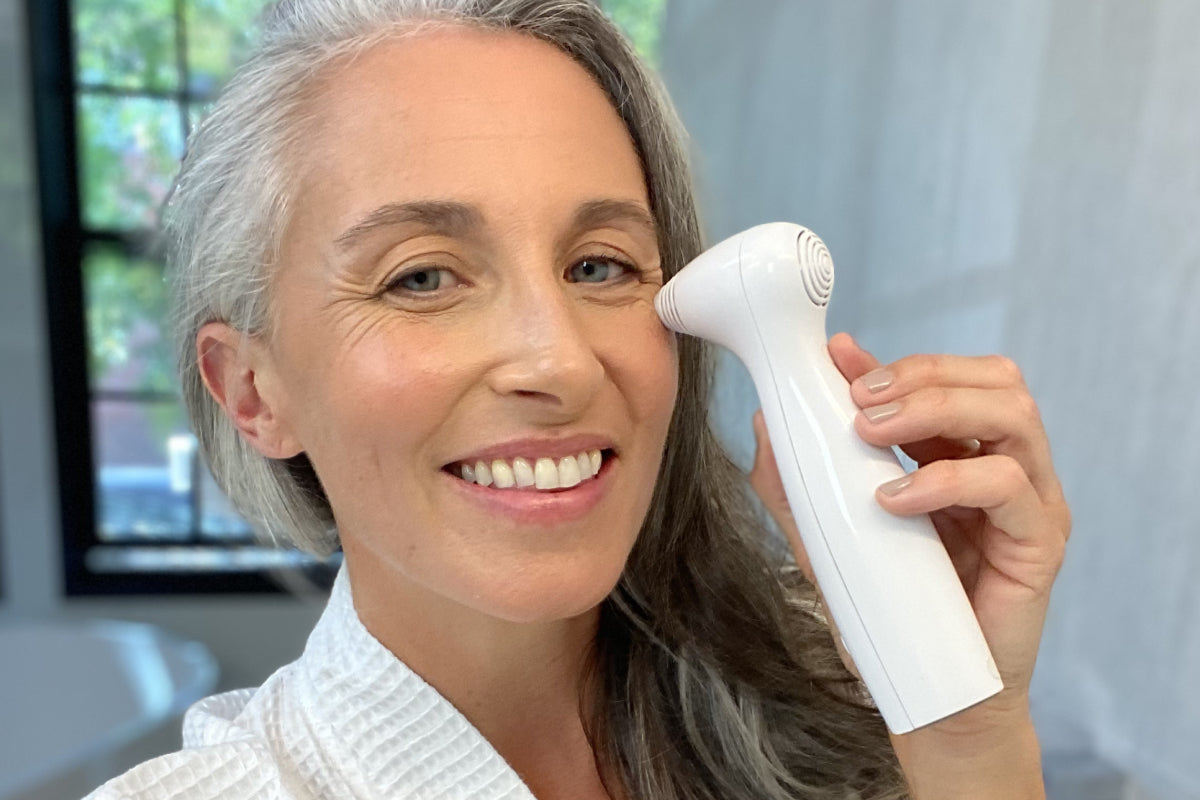

Bye-Bye Fine Lines: At-Home Tricks for Smooth Eyes
Key Takeaways Collagen Decline at Midlife: Collagen loss accelerates significantly during menopause due to declining estrogen, resulting in deeper wrinkles and reduced firmness. Topicals Stay on the Surface: Most anti-aging creams cannot penetrate the skin barrier to stimulate deep collagen renewal, offering only temporary surface hydration. Laser Targets the Dermis: NIRA’s non-fractional laser technology bypasses the surface to gently heat the dermis, directly triggering the production of new, lasting collagen. Clinical Results, Effortless Ritual: FDA-cleared NIRA Lasers are clinically proven to reduce wrinkles in a simple, pain-free 2-minute daily ritual, delivering long-term results. The skin around your eyes is the most delicate on your face, and often the first place to show subtle changes as you mature. For many women navigating midlife, the appearance of fine lines under the eyes is less about aging and more about wanting their skin to reflect the energy they feel inside. You deserve a solution that is powerful, convenient, and truly effective, allowing you to prioritize self-care without sacrificing your busy schedule. The goal isn't to look 25 again, but to restore firmness and smoothness so your eyes look as bright and vibrant as your spirit. In the pursuit of that renewed radiance, you don't have to choose between clinical results and an easy at-home routine. This guide dives into the science-backed strategies and powerful technology that empower you to take control of your skin's health and reduce the appearance of those fine lines right from the comfort of your home. Understanding Why the Eyes Tell the First Story The skin around the eyes is significantly thinner than the rest of the face, making it vulnerable to both natural aging and environmental factors. The primary reason fine lines and crow’s feet form around the eyes is the breakdown of collagen and elastin. These essential proteins form the supportive structure that keeps skin plump and resilient. As early as your mid-twenties, collagen production naturally begins to decline, which accelerates as you enter your 40s and 50s, often due to hormonal shifts. Without this firm foundation, the thin skin around your eyes begins to weaken and form lines when you smile or squint. This process is compounded by external factors, which your busy, active lifestyle may contribute to: Sun Exposure: Unprotected UV exposure is a major accelerator of collagen breakdown and is responsible for a huge portion of visible aging signs. Repetitive Movements: Smiling, squinting, or rubbing your eyes creases the skin, and over time, the lines become permanent. Dehydration and Sleep: Lack of sufficient water and quality sleep hinders your skin’s natural repair mechanisms, leading to a duller, more lined appearance. The solution must be able to reach beyond the surface to the deep layers where collagen production occurs, giving your skin the signal it needs to rebuild. Empowering Your Routine: Daily Habits for Firmer Skin Achieving smoother eye skin is a marathon, not a sprint. Your consistent daily routine provides the foundation that all advanced treatments build upon. Choose Smart Topical Support While topical creams alone won't rebuild your collagen scaffolding, the right ingredients can significantly support the process, hydrating and protecting the delicate eye area: Peptides: These are like little messengers that signal your skin cells to produce more collagen and elastin, strengthening the skin structure and helping to smooth wrinkles. Hyaluronic Acid (HA): A powerful molecule that draws and holds up to 1,000 times its weight in water, HA instantly plumps the skin's surface to reduce the appearance of fine lines and maintain crucial moisture. Look for formulas with different molecular weights for both surface and deeper hydration. Antioxidants (like Vitamin C and E): These ingredients defend against environmental stressors, protecting the collagen you already have from damage caused by free radicals. Never Skip Sun Protection This is the single most important step in preventing new fine lines under the eyes and protecting your investment in skin renewal. Use a broad-spectrum SPF 30 or higher every day, even when it's cloudy, and don't forget the corners of your eyes where crow's feet love to gather. Mindful Application The way you apply products matters just as much as what you apply. Always use your ring finger, the one with the lightest touch, to gently tap products around the orbital bone. Never rub or pull, as stretching the thin skin breaks down delicate tissue and exacerbates sagging over time. NIRA's At-Home Laser Device To genuinely address under-eye fine lines and loss of firmness, you need a technology that can reach the dermis to stimulate deep, lasting collagen renewal. This is where the NIRA at-home laser shines. NIRA invented the world’s first and only painless, at-home laser technology. Designed by laser industry experts, NIRA laser devices are FDA-cleared and clinically proven to reduce fine lines and wrinkles around the eyes and mouth. How NIRA Targets Fine Lines Unlike LED devices, which use less targeted light, NIRA lasers use the same non-fractional, non-ablative laser technology as dermatologists. This means it targets the true source of aging without pain, redness, or downtime Focused Thermal Energy: The device emits a precise 1450 nm wavelength that is perfectly optimized to be absorbed by water in the dermal layer of the skin where collagen lives. Collagen Trigger: This focused energy gently heats the dermis to an ideal temperature (just under the pain threshold of 45℃), which triggers the body’s natural response to begin producing new, healthy collagen. Visible Renewal: This consistent stimulation over time remodels the skin's structure from the inside out, visibly reducing crow’s feet, brightening the under-eye area, and increasing firmness. NIRA’s at-home laser is specifically engineered to target the hardest-to-treat areas around the eyes and mouth in just two minutes a day. This effortless ritual seamlessly fits into your busy life, finally delivering the professional-grade results you've been looking for. In fact, NIRA was voted the #1 Eye Brightener in CurrentBody's Customer Choice Awards. Maximizing Your Visible Transformation For maximum results, integrate the NIRA at-home laser device with high-quality topical products that enhance skin healing and hydration: Clean Skin First: Always begin with a clean, dry face to ensure optimal laser light absorption. Laser Treatment: Use the NIRA Laser daily on your targeted areas, moving the device after each successful pulse. Hydrate and Protect: Immediately follow your treatment by applying NIRA's Moisture-Lock Hyaluronic Acid Serum and Youth Renewal Peptide Cream. The serum replenishes hydration, and the peptide cream reinforces the collagen-boosting work of the laser, providing dramatic wrinkle reduction in as little as 60 days. Visible improvements typically begin to appear in 10–12 weeks of consistent daily use, as the collagen renewal cycle takes time. The most empowering part is that the results are long-lasting; users have maintained their wrinkle reduction benefits for up to three months after stopping treatment. You’re not getting a temporary fix; you're triggering your skin's innate ability to renew itself. Frequently Asked Questions Is the NIRA Pro Laser safe for the delicate skin under my eyes? Yes, NIRA's non-fractional laser technology is designed to be safe for use around the eyes. It delivers gentle heat to the dermis without damaging the surface or causing pain, and it is FDA-cleared for use in this delicate area. How is NIRA different from using a microcurrent device for eye wrinkles? Microcurrent devices primarily tone the facial muscles, offering temporary lifting effects. NIRA is fundamentally different; it uses laser energy to penetrate the dermis and stimulate the natural, long-term production of collagen, which actually rebuilds the skin's structure and reduces wrinkles. How quickly will I see a visible reduction in the fine lines under my eyes? Because NIRA works by building your natural collagen, the process is gradual and long-lasting. Most users begin to see visible improvements within 10 to 12 weeks of consistent, daily use. Can I use my regular eye cream with at-home laser devices? Yes. We recommend performing the laser treatment on clean, dry skin first, and then immediately following up with hydrating and collagen-supporting products like NIRA's Moisture-Lock Hyaluronic Acid Serum and Youth Renewal Peptide Cream to maximize your results. Is NIRA a permanent solution for my eye wrinkles? NIRA provides lasting, natural-looking results by encouraging your body to rebuild its own collagen. However, the aging process, sun exposure, and pollutants continue to break down collagen over time. For permanent maintenance of results, daily use is recommended, much like brushing your teeth.
Learn more
How Collagen Hits the 40s Curve (And How Lasers Can Save the Day!)
Key Takeaways Collagen Loss Accelerates at Midlife: Declining estrogen during menopause causes a rapid drop in collagen, making the skin thinner, drier, and more prone to sagging. Topicals Alone Fall Short: Creams and supplements cannot penetrate the skin deeply enough to significantly rebuild collagen at the source. Lasers Provide Deep Activation: NIRA's non-fractional laser technology gently heats the dermal layer to stimulate and rebuild natural collagen where it truly matters. Results are Effortless: The NIRA Pro Laser treats your full face in just minutes a day with no pain, redness, or downtime, fitting easily into any routine. Pair for Power: For maximum results, combine your NIRA laser treatment with a peptide cream (like NIRA's Youth Renewal Peptide Cream) to further support the skin’s structure and hydration. Seeing a sudden shift in your skin can feel surprising. It is a natural process, not a personal failure, and it is a change that you can address with knowledge and powerful, proven tools. Gone are the days when aging meant expensive, uncomfortable clinic visits or simply settling for less. Now, modern science empowers you to take control of your skin's vitality, starting with understanding its most essential building block: collagen. This is about embracing your strongest, most beautiful skin, at every chapter of life. By understanding the "why" behind midlife skin changes, you can choose solutions that deliver genuine, lasting results and restore a look you love, effortlessly and on your own terms. The Midlife Shift: Why Your Skin Suddenly Changed Collagen is the foundational protein that provides strength, structure, and resilience to your skin. It’s the scaffolding that keeps your complexion looking firm and plump. The truth is, the decline in collagen starts in your mid-20s, much earlier than you might think. By age 30, production slows by about 1% every year. The Impact of the 40s and Menopause As you approach and enter your 40s and 50s, the collagen narrative changes dramatically. Significant Decline: Collagen levels can drop by up to 30% during the first five years of the menopausal transition alone. By age 50, you may have lost up to 50% of your total collagen. The Hormonal Shift: This accelerated loss is largely driven by a sharp decline in estrogen during perimenopause and menopause. Lower estrogen impairs the production of collagen and compromises the overall integrity of the skin's structure. Visible Changes: This rapid decline leads to the common signs that women notice, such as sagging skin around the jawline, deepening wrinkles and fine lines, and a thinner, less resilient texture. External factors, like years of sun exposure, pollution, and chronic stress, further accelerate this breakdown, which is why a comprehensive approach is so essential. Why Traditional Solutions Fall Short (and What Works) You’ve likely invested countless resources in topical creams and serums, hoping they would deliver meaningful collagen restoration. It is frustrating to spend money on promises that only result in superficial hydration or minor, fleeting improvements. Here is the simple, scientific reality: to effectively restore firmness and truly regenerate the skin's foundation, you must stimulate the dermal layer where collagen and elastin reside. Most collagen molecules found in topical products are too large to penetrate the skin’s protective barrier, confining their effect to surface moisture. While powerful active ingredients like Vitamin C, retinoids, and peptides are invaluable, their primary function is to chemically signal the skin to encourage its own natural production. They work from the surface down. For women seeking significant structural renewal in the face of midlife collagen loss, the skin requires a proven method to physically reach and revitalize the deep cellular activity. This deep, targeted approach is what sets clinically proven laser technology apart from surface-level topical solutions. Reclaiming Your Radiance: The Clinically Proven Path to Renewal The only way to genuinely reactivate and strengthen your skin's support structure is through a method proven to reach the dermis. NIRA offers that power in an easy-to-use, at-home device. The Science of Non-Fractional Laser Technology NIRA lasers use a one-of-a-kind, patented non-fractional, non-ablative technology with a specific 1450nm wavelength. Targeted Rejuvenation: The laser gently heats the dermal layer of the skin, where the collagen and elastin reside, without causing pain, redness, or damage to the surface. The Healing Signal: This gentle heat activates the fibroblast cells, essentially "tricking" your skin into sparking its natural wound-healing response. This process includes remodeling existing collagen and stimulating the production of brand-new collagen. Clinical-Grade Technology: Unlike many light therapies that only work superficially, NIRA's laser is designed by experts, FDA-cleared, and clinically proven to stimulate collagen at the source for real, lasting wrinkle reduction. It is safe for all skin types and tones. Effortless Rituals for Your Busy Life For busy women juggling multiple responsibilities, consistency is the key to lasting results. NIRA is designed to fit seamlessly into your life, not take over your day. Fast Treatment Time: NIRA’s at-home laser device treats your entire face in just 2 to 5 minutes a day. That's comparable to brushing your teeth, making it simple to keep up with daily. No Downtime: Because the non-fractional technology doesn't damage the skin's surface, there is no redness, pain, or recovery time. You can apply makeup immediately and get on with your day. Long-Term Investment: While professional laser treatments offer immediate but expensive results that require downtime, NIRA delivers gradual, yet comparable, improvements that build over time. The cumulative energy from consistent daily use can eventually surpass that of a single, sporadic in-office visit. Pairing for Maximum Results You can amplify your skin renewal by pairing your laser treatment with scientifically sound topical products. Peptides (Surface Support): The Youth Renewal Peptide Cream features a potent multi-peptide complex, clinically proven to boost collagen production by up to 258%. This strengthens the skin barrier and accelerates the repair process after a laser treatment. Hyaluronic Acid (Deep Hydration): Applying the Moisture-Lock Hyaluronic Acid Serum immediately after using the laser helps to seal in hydration and further enhance skin elasticity. Its low molecular weight HA can penetrate deeply to activate the fibroblasts essential for collagen production. The NIRA iOS App: The NIRA experience extends beyond the at-home laser device. The complementary iOS app acts as your personal skincare expert, featuring a skin analysis with detailed information on up to 11 distinct skin concerns. The app also allows you to track your progress with before and after pictures. It’s the simple, smart way to quantify your transformation and own your skin’s journey. When you use the laser to activate the cells deep inside and follow up with a powerful peptide cream and HA serum, you create a dynamic duo that targets your skin's health from the inside out. Look and Feel Your Best Without Self-Consciousness Midlife should be a time of empowerment, not anxiety about appearance. You deserve solutions that reflect your strength and fit your busy, complex life. By integrating NIRA's proven laser technology, you move past the frustration of ineffective creams and quick-fix gadgets. Imagine meeting friends, attending events, or simply walking out without makeup, knowing your skin looks firmer, smoother, and more radiant because you invested in a solution that works. This is a commitment to yourself. It's time to stop chasing fleeting trends and embrace a ritual that is as effective as it is effortless. Your skin deserves a clinically proven path to renewal, designed by experts to give you a visible transformation. Frequently Asked Questions How quickly will I see visible results when using the NIRA Laser? Most users begin to see visible improvements in fine lines and texture after 8-12 weeks of consistent daily use, with results seen by 90 days. Is the NIRA Laser safe for sensitive or mature skin? Yes, NIRA's patented non-fractional technology is FDA-cleared, non-ablative, and designed to be gentle and painless, making it safe and effective for all skin types and tones. How does the NIRA Laser differ from an in-office laser treatment? NIRA uses the same core laser technology as professionals, but delivers a lower, safer power spread over consistent daily sessions. This approach avoids the pain, redness, and high cost of a single, high-intensity in-office treatment, delivering gradual yet comparable results. Can I use the NIRA Laser if I already use retinol or vitamin C products? Yes, but not simultaneously. Apply your NIRA Laser to clean, dry skin first. You can then layer your Vitamin C or peptide serums, followed by a cream. It is best to avoid aggressive acids or peels on the same day you use your device. Does the NIRA Laser help with more than just wrinkles? Yes, the core mechanism of boosting natural collagen and renewing skin has been reported to improve overall skin texture, firmness, elasticity, and even reduce the appearance of dark spots and hooded eyes. Empower your skin with the most effective, effortless at-home laser. Start your 90-day journey to renewed radiance today.
Learn more
Can At-Home Lasers Cause Skin Damage? Safety Myths Debunked!
Key Takeaways Non-Ablative Safety: Unlike harsh in-office treatments, at-home non-fractional lasers heat the deep tissue to stimulate collagen without burning the skin surface. Zero Downtime: There is no peeling, redness, or recovery needed, making daily use seamless. The Gold Standard: Trust only FDA-cleared devices, as this is the verified standard for both safety and efficacy claims. Fast Results: The treatment takes just two minutes a day, fitting into even the busiest schedules. Deeper Renewal: This technology works beyond the surface to stimulate natural collagen production from within, providing lasting wrinkle reduction and firmer skin. As a confident woman navigating midlife, you are discerning about where you invest your time, energy, and money. When considering an at-home laser skin treatment, it is completely natural to approach the idea with a healthy dose of skepticism, especially when older technology often required painful office visits and lengthy downtime. The truth is, laser technology for at-home use has evolved into a safe, clinically-proven path to visible skin renewal. To help you move from hesitation to empowered action, let’s tackle the most persistent safety myths head-on, replacing outdated fears with scientific clarity and assurance. Myth 1: At-Home Lasers Are Too Powerful and Will Burn or Scar My Skin The Fact: Modern Devices Use Targeted, Non-Ablative Technology with Zero Downtime The fear of burns and scarring stems from a misunderstanding of how professional, high-powered lasers work compared to advanced at-home devices. Traditional ablative lasers vaporize the skin's outer layer to trigger healing, resulting in significant redness, peeling, and weeks of recovery. At-home laser skin treatment uses a completely different, patented approach. Devices like NIRA utilize a non-ablative, non-fractional laser that precisely warms the deep layer of the skin (the dermis) without injuring the surface. This controlled thermal process, called selective photothermolysis, is key to its safety and comfort. The energy delivered is scientifically calibrated to reach the exact temperature needed to initiate the body’s natural collagen production mechanism, known as neocollagenesis. Because the skin's surface remains intact, there is no pain, no blistering, and absolutely no downtime required. You simply treat your skin and move on with your day, confident in a device engineered for maximum safety and convenience. Myth 2: At-Home Lasers Are Gimmicks That Don’t Deliver Real Results The Fact: Only FDA-Cleared Devices Are Clinically Proven to Work In a crowded market of skincare gadgets, it is easy to dismiss any device that promises powerful results at home. Many non-FDA-cleared tools rely on weak light energy (LED or radiofrequency) that works only superficially or requires dozens of treatments to achieve marginal results. This leads to user disappointment and cynicism. The difference lies in validation and clinical credibility. When choosing an at-home laser skin treatment, selecting a device that is FDA-cleared is paramount. FDA clearance means the technology has been rigorously reviewed and scientifically proven to be both safe and effective for its intended purpose. NIRA’s technology is clinically proven to stimulate natural collagen, the foundational protein responsible for skin's firmness and elasticity. This is not a surface-level promise; it is deep, cellular renewal that results in tangible change: softer lines, firmer texture, and a more radiant complexion. Myth 3: You Have to Be a Professional to Use a Laser Safely The Fact: The Ritual is Effortless and Designed for Daily Self-Care The complex nature of professional lasers often leads to the myth that you need extensive training to operate one. This simply isn’t true for modern, consumer-grade non-fractional lasers. The beauty of contemporary at-home laser skin treatment lies in its simplicity. A primary goal in developing NIRA’s technology was to put the power of professional results safely into your hands, without requiring complex settings or lengthy procedures. The entire daily ritual for your face takes just two minutes and involves a simple, automated point-and-treat motion. Clinical Confidence: Investing in Your Skin’s Future Owning every chapter of life means feeling confident in your skin. By addressing and debunking these common myths, we reinforce a vital message: you no longer have to choose between clinical efficacy and safety, or between high cost and convenience. Choosing an FDA-cleared, non-ablative at-home laser skin treatment is an investment in your long-term self-worth and emotional relief . It is a strategic decision rooted in science that supports the renewed radiance and firmer texture you seek, validating your commitment to powerful self-care every single day. Always remember to encourage consulting a dermatologist for personal guidance, but feel empowered by the fact that the most advanced tools are now safely within your reach. Frequently Asked Questions Is it possible for an at-home laser to cause hyperpigmentation or dark spots? Reputable non-ablative, non-fractional lasers, like those cleared by the FDA, have an extremely low risk of causing hyperpigmentation because they do not injure the skin's surface where most pigment resides. They safely target the dermis. NIRA uses 1450nm wavelength which is not absorbed in melanin and is safe for all skin types and has shown no discoloration issues in professional clinical studies. Do I need to wear protective eyewear while using an at-home laser? Devices specifically designed for at-home use, such as the NIRA laser, have built-in safety mechanisms that prevent the laser from firing unless the tip is flush against the skin, rendering separate eyewear unnecessary for general use. Always follow the manufacturer's directions exactly. How does the device ensure the laser treatment is evenly applied across my face? Advanced at-home laser skin treatment tools use a specialized treatment tip and sensor to ensure each spot receives a precise, uniform dose of energy to safely stimulate collagen. The user moves the device spot-by-spot, often following an indicator light to guarantee full coverage. Can I use my other retinol or Vitamin C serums immediately after using the device? Yes. Because non-ablative lasers do not create open wounds or damage the surface of the skin, you can immediately follow your two-minute treatment with your favorite serums and creams to support the renewed collagen growth. If I stop using the at-home laser, will my wrinkles immediately return? The collagen you build will not disappear overnight; however, since collagen production naturally declines as we age, consistent use is key to maintaining the wrinkle-reducing benefits. Think of it as a long-term investment in sustained skin health and firmness. Your improvements from using NIRA consistently will continue even a few months after you stop using NIRA. After several months of non-use, your benefits will level off for a few more months, then your skin will continue to age naturally again and degrade over time.
Learn more
From Clinics to Comfort: Why More Women Over 60 Are Switching to At-Home Laser Skincare
Key Takeaways Empowering Convenience: At-home laser devices eliminate the time, cost, and logistics of traditional in-office appointments, making daily renewal simple. Targeted Efficacy: The technology uses gentle, non-ablative heat to stimulate the skin’s natural collagen production deep within the dermis. Clinically Proven Trust: Reputable at-home lasers, like NIRA, are FDA-Cleared and clinically proven, ensuring safety and measurable wrinkle reduction results. Minimal Time Commitment: The full treatment takes just two minutes a day, fitting easily into any schedule. The journey of skin renewal is a lifelong one, and women over 60 are embracing this stage with newfound energy and wisdom. It’s a time to prioritize comfort, effectiveness, and treatments that celebrate natural radiance, rather than attempting to reverse the clock. For decades, the path to advanced skin rejuvenation meant scheduling costly appointments and facing uncomfortable downtime at a clinic. But a powerful shift is happening: trusted, clinically proven laser technology has moved out of the dermatologist’s office and directly into the home. The modern woman values simplicity and trust. She seeks solutions that integrate seamlessly into a busy, fulfilling life, without the logistical hassle or high cost of in-office procedures. This move to at-home devices is fueled by a desire for convenience, discretion, and reliable results, which is why the conversation around the best laser treatment for the face has changed entirely. The True Cost of Clinic Visits: Beyond the Price Tag Traditional, in-office laser treatments certainly have their place, but they often come with significant barriers. For many women in this age group, the obstacles are about much more than money. Think of the time commitment: coordinating schedules, driving to appointments, and dedicating hours for the treatment itself. Then comes the downtime, which can involve redness, peeling, or sensitivity, which is a disruption that many of us simply don't have the patience for anymore. These treatments were once the only pathway to serious skin rejuvenation, but the landscape has evolved to honor convenience and safety. A new era of effective at-home solutions allows women to reclaim their time and self-care ritual on their own terms. Understanding Collagen Renewal For skin to maintain its youthful vitality, it relies on a powerful structural protein called collagen. As we navigate the natural stages of life, collagen production slows down. This process accelerates significantly after menopause due to the drop in estrogen, leading to thinner skin, a loss of firmness, and the noticeable appearance of wrinkles. By age 50, a woman may have lost up to half of her natural collagen. Creams and serums can certainly hydrate and nourish the surface, but to truly influence the structure of the skin, you need to work deeper. This is where non-ablative laser technology, like that found in advanced at-home devices, offers a scientifically sound approach. The secret lies in gentle heat. NIRA's patented non-fractional laser technology works by delivering precise, non-damaging heat deep into the dermis. This controlled warmth signals the skin's cells to wake up and naturally begin the process of producing new collagen, a process called neocollagenesis. Because this process is stimulated without damaging the outer layer of the skin, there is no pain, no redness, and zero downtime. It's a fundamental principle of renewal: you are simply encouraging your skin’s own natural healing ability to rebuild what time has diminished. What Makes NIRA the Best Laser Treatment for Your Face? When choosing an advanced skincare device, authority and safety must come first. Many women over 60 prioritize trustworthiness and clinical proof when researching new routines. This quest for the best laser treatment for the face naturally leads to devices that carry legitimate seals of approval. NIRA devices offer professional-grade wrinkle reduction that is both FDA-Cleared and clinically proven to stimulate natural collagen production. This is a crucial distinction. FDA clearance means the device has been rigorously reviewed and demonstrated its safety and effectiveness for its intended use. By investing in a single, reliable at-home device, you are choosing a treatment endorsed by dermatology experts, rather than relying on endless tubes of cream with unverified claims. You are investing in genuine, measurable results that compound over time. The Ease of a 2-Minute Daily Ritual One of the most compelling reasons women are transitioning from clinic to comfort is the sheer ease of integration into daily life. For the busy woman who values her schedule, complex, multi-step routines simply don’t work. This generation is looking for products that simplify their routine, not complicate it. The NIRA ritual requires minimal time and effort. In just two minutes a day, you can treat the entire face. It’s an easy, consistent application that fits around your morning coffee, evening wind-down, or any small window of time you can spare. This commitment to simplicity is a reflection of a core belief: that self-care should be empowering, not burdensome. You don't have to overhaul your life to achieve radiant skin; you simply need a targeted, powerful tool that makes every minute count. Frequently Asked Questions How does an at-home laser stimulate collagen without pain or downtime? The NIRA laser uses non-ablative, non-fractional laser technology. This means it delivers heat below the skin's surface to trigger collagen renewal without damaging the outermost layer, eliminating the redness, peeling, and recovery time typically associated with ablative clinical lasers. Is an at-home device really as effective as an expensive clinic treatment? Quality at-home devices are FDA-Cleared and clinically proven to achieve genuine wrinkle reduction results, though they often require consistent, daily use over time. While the power level is moderated for safe home use, the principle of stimulating collagen renewal is the same as in-office non-ablative procedures. The difference is the cumulative effect of consistent daily care versus infrequent, high-power treatments. How quickly can I expect to see visible improvement? Clinical results will vary based on individual skin type and consistent use. Generally, the most visible wrinkle reduction benefits occur after a full 90-day treatment cycle, which allows enough time for the new collagen to mature and strengthen the skin. Does the NIRA laser work on all skin tones? Unlike many aesthetic lasers, the NIRA laser is designed to be gentle and safe for all skin types and tones. The non-ablative technology is a safe alternative for people with skin tones that can be sensitive to other types of light-based treatments. Can I use my regular creams and serums with the laser treatment? Absolutely. The laser works beneath the skin's surface. Applying high-quality skincare products immediately afterward, particularly those rich in peptides or hyaluronic acid, can support and enhance the skin renewal process, providing deep nourishment and moisture to the freshly stimulated skin The shift to at-home laser skincare is more than a trend; it's an investment in a self-care ritual that respects your time and delivers proven results. By choosing devices like NIRA, you are choosing a gentle, authoritative path to rediscover the firm, radiant skin that reflects how you feel inside.
Learn more
Laser vs. Creams: What Really Works for Wrinkle Reduction After 60
Key Takeaways Collagen Loss Accelerates After 50: The decline in estrogen during menopause speeds up collagen loss, leading to deeper wrinkles and sagging skin. Creams Can't Reach the Dermis: Topical anti-aging products and supplements mostly offer surface-level hydration because the molecules are too large to penetrate and stimulate deep collagen renewal. Laser Works at the Source: NIRA’s non-fractional laser technology bypasses the surface to gently heat the dermis, directly triggering the production of new, natural collagen. Proven, Painless, and Quick: The FDA-cleared NIRA Lasers are clinically proven to reduce wrinkles in a simple, pain-free 2-minute daily session, offering lasting, long-term results. Embracing the wisdom and grace that comes with life after 60 also means navigating the natural changes in our skin. If you are like many women, you have searched for the definitive answer to smoothing fine lines and restoring a radiant look. You’ve likely tried countless aging products, spending time and money on promises that often fade away. The core of this conversation boils down to a simple question: when you are seeking real renewal, does a laser or a cream deliver the lasting, profound results you deserve? The answer lies not just on the surface, but deep within your skin, at the source of collagen production. Why Skin Renewal is a Different Journey After 60 As we mature, our skin changes significantly due to a natural process that begins much earlier than we often realize. Collagen is the building block that gives your skin its strength, structure, and youthful bounce. The Role of Collagen and Menopause Collagen production naturally slows down as early as your mid-20s. However, around the age of 50, this loss accelerates dramatically due to the sharp decline in estrogen during menopause. Estrogen is vital because it stimulates the production of collagen, and when it drops, your skin loses the ability to maintain its firmness and elasticity. By age 50, you may have lost up to 50% of your collagen. This rapid decline leads to deeper wrinkles, increased sagging around the jawline, and a noticeably thinner, drier texture. This means that simply addressing the surface is no longer enough. For lasting improvements, we need a solution that works from the inside out to reignite your skin’s natural renewal processes. Why Topical Anti-Aging Products Fall Short It is easy to be drawn in by the promises of expensive creams and serums, but the truth about most topical aging products is a matter of molecular size. Creams Can't Reach the Source Collagen molecules are simply too large to penetrate the skin's protective outer barrier (the epidermis) and reach the deeper layer where new collagen is produced (the dermis). Topical collagen creams can hydrate the surface and make skin look temporarily plumper, but they cannot signal the cells in the dermis to produce new collagen. Oral supplements have limited evidence that they directly benefit the skin, with most studies being short-term and funded by manufacturers. They are not a magic pill. While nourishing ingredients like Retinol, Hyaluronic Acid, and Peptides signal the skin to renew itself, they do not provide the deep, proven stimulation needed to restore significant collagen loss. For a meaningful change after 60, your skin needs a way to bypass the surface barrier and address the loss at its deepest source. Laser-Focused Beauty: The Power of Targeted Renewal This is where advanced at-home laser technology offers a true game-changing alternative to traditional aging products and procedures. Instead of topical application, a non-fractional laser uses focused light to create a precise, controlled renewal response beneath the surface. The Gentle Science of NIRA's Non-Fractional Laser NIRA lasers are FDA-cleared devices that utilize the same advanced laser technology trusted by dermatologists to effectively stimulate the deep dermal layer. Deep Penetration:The non-fractional laser is specifically tuned to a 1450nm wavelength to pass safely through the top layer of skin (epidermis). Targeted Heating: This light is absorbed by the water in the dermis, gently heating the collagen-producing cells (fibroblasts) to just the right temperature. Natural Renewal: This safe heating action signals the body’s natural healing response to remodel existing collagen and stimulate the production of new collagen, strengthening and rejuvenating the skin from within. Why NIRA Stands Out In a market crowded with gadgets, NIRA’s at-home laser devices can be trusted to bring profound results. Clinically Proven: NIRA is FDA-cleared and clinically proven to stimulate natural collagen production and visibly reduce wrinkles. A study showed that treatments successfully improved wrinkles with a high satisfaction rate and no serious adverse effects. Painless and Safe: Unlike aggressive in-office ablative or fractional laser treatments, which often come with pain, redness, and downtime, NIRA’s technology is non-ablative, gentle, and designed to be pain-free for daily use on all skin tones. Simple Science: The entire face can be treated in just 2 minutes a day. This simple, consistent ritual is more effective for long-term collagen building than a sporadic, high-intensity procedure. Embracing a Lifetime of Radiant Beauty Your skin journey is a personal story, and at this stage of life, simplicity, comfort, and efficacy are paramount. When evaluating aging products, remember the difference between temporary surface hydration and lasting, deep dermal renewal. The right choice is to select a tool that works with your body’s inherent ability to heal and rebuild. By incorporating a precise, clinically proven device like the NIRA Pro Laser into your daily self-care ritual, you are making a meaningful investment in your skin's health for years to come. It is a simple, powerful step to maintain smooth, firm skin. The visible improvements are gradual, yet comparable to in-office results, building over time with continued, consistent use. You don’t have to chase impossible standards, only commit to honoring your skin and celebrating its vitality at every stage. Frequently Asked Questions Do I need to stop using my favorite creams with the NIRA Laser? No. The NIRA Laser works best on clean, dry skin to ensure maximum energy absorption. You can continue to use your favorite hydrating serums or nourishing creams, like the Youth Renewal Peptide Cream, immediately after your laser treatment to lock in moisture and accelerate your results. Why do dermatologists recommend devices over topical aging products for mature skin? Dermatologists recommend integrating an at-home laser device because mature skin requires treatment that goes beyond the surface. A laser can stimulate the necessary collagen production deep in the dermis, delivering targeted, lasting results that creams simply cannot achieve alone. How quickly will I see results compared to a filler or a strong chemical peel? Unlike temporary dermal fillers which offer immediate volume, NIRA delivers gradual, natural-looking improvement over time by rebuilding your own collagen. Most users begin to see visible changes in smoothness and firmness within 8–12 weeks of consistent daily use, with full results around 90 days. Is the daily commitment worth the effort if I already have a busy routine? Yes. NIRA’s at-home lasers are intentionally designed for busy lives, requiring only 2 minutes per day for your entire face. This effortless daily ritual is the key to achieving and maintaining powerful, long-term skin renewal, making it a sustainable and effective investment compared to sporadic, time-consuming clinic visits. If I stop using a NIRA Laser, will my wrinkles immediately return? Collagen loss is a continuous process due to aging and sun damage. Clinical results show that up to 70% of users maintain their wrinkle reduction benefits for up to three months after ceasing treatment, but signs of aging will eventually begin to reappear. For long-lasting firmness, consistent daily use is recommended, much like brushing your teeth. Start your 2-minute daily ritual with NIRA’s anti-aging products today, and invest in smooth, firmer, and naturally radiant skin. It’s time to choose proven science over fleeting trends.
Learn more
How Collagen Declines After Menopause - It’s Not Too Late To Rebuild It!
If you are a woman navigating your 60s and beyond, you have a wealth of experience, wisdom, and joy to celebrate. Yet, many wonderful women share a common experience: a noticeable and often sudden change in skin texture, firmness, and elasticity around the time of menopause. This change is not simply the natural progression of time; it is a profound biological shift rooted in the decline of a crucial protein: collagen. Understanding this process isn’t a matter of chasing youth, but of reclaiming a sense of comfort in your own skin. It is about celebrating renewal and knowing that proven, gentle solutions are available to support your body’s ability to rebuild. The Simple Science: Understanding Collagen’s Role Collagen is the foundational scaffolding of healthy skin, responsible for its structure, bounce, and firmness. While the production of collagen naturally slows down over the years, a major inflection point occurs when a woman enters menopause. The sharp drop in estrogen levels that accompanies menopause drastically accelerates the loss of collagen and elastin, the two proteins vital for skin structure. It is estimated that by age 50, you may have already lost up to half of your total collagen. This dramatic, hormonally driven reduction is why you might notice a rapid thinning of the skin, a decrease in firmness, and the appearance of more pronounced lines and wrinkles, particularly around the jawline, neck, and eyes. Addressing this shift requires engaging the deep, natural process of skin renewal. Activating Natural Collagen Renewal The key to lasting renewal is not adding outside collagen, but activating your body's innate ability to produce its own. Many topical products contain collagen molecules that are too large to penetrate the skin's surface, offering hydration but little else in the way of structural change. This is where the science of targeted energy shines. The process of stimulating your body's natural resources, known as collagen stimulation, works by delivering gentle, non-ablative laser heat beneath the surface of the skin. This controlled warmth signals the dermis (the inner layer of the skin) to begin a natural healing response. This intentional thermal signaling prompts the cells to renew and rebuild the collagen you’ve lost. This gentle method allows for genuine, structural skin rejuvenation, supporting your skin’s strength from the inside out. Trust Over Trends: The NIRA Way For women who value proven results, trust and safety are paramount. NIRA offers an authoritative at-home solution. Our laser technology is designed to be completely painless and requires no downtime, making it a simple and safe choice for regular use. Crucially, the NIRA at-home laser is FDA-cleared and clinically proven to deliver visible wrinkle reduction by gently stimulating natural collagen production. This clearance provides the assurance that the device meets high standards for efficacy and safety. We are committed to gentle, clinically-backed methods that honor your skin's needs and support your desire for dependable results without the need for frequent, costly in-office appointments. Ease and Ritual: Making NIRA Part of Your Day The treatment takes just two minutes a day. The process is simple: glide the handpiece over the targeted areas like the delicate skin around the eyes, the forehead, and the mouth. There is no discomfort, no redness, and no recovery time. This short, daily commitment transforms your routine into a reliable ritual of self-care and renewal. Key Takeaways Menopause Accelerates Collagen Loss: The sharp decline in estrogen post-menopause dramatically accelerates the breakdown of skin-firming collagen and elastin. Topical Products Have Limitations: Most collagen molecules in creams cannot penetrate the skin barrier to create structural change in the deeper layers. Renewal Starts Within: The most effective method is activating your body's natural collagen stimulation process beneath the skin's surface. Proven, Gentle Technology: The NIRA laser uses non-ablative, controlled heat for deep dermal warming, is FDA-cleared, and clinically proven to reduce wrinkles without pain or downtime. Simple Daily Commitment: The NIRA ritual takes just two minutes a day, offering professional-grade wrinkle reduction results conveniently at home. Frequently Asked Questions Why do topical collagen creams often fail to rebuild skin structure? The collagen molecules used in most topical creams are generally too large to pass through the skin barrier to reach the dermis where collagen is produced. They may provide surface hydration, but they cannot engage in the deeper collagen stimulation needed for genuine structural renewal. Is the NIRA laser treatment painful, and is there any recovery time? The NIRA laser uses non-ablative technology designed to be completely painless. It uses gentle, controlled heat to signal the skin's natural renewal process without causing any surface damage or requiring downtime. You can immediately return to your normal routine. How long should I use the NIRA laser before I see visible results? While individual results vary, the natural process of collagen production takes time. Consistent daily use of the NIRA laser for collagen stimulation often shows noticeable wrinkle reduction and improved firmness within 90 days of consistent use. How does the NIRA laser work to rebuild collagen? The NIRA laser delivers gentle, patented, non-ablative fractional laser light deep into the skin's dermis. This gentle heat warms the tissue, creating a precise, controlled signal that prompts the body's natural wound-healing response. This response is essentially the process of collagen stimulation and renewal, rebuilding the foundational support of your skin. Is the NIRA laser FDA-cleared? Yes, the NIRA laser technology is FDA-cleared. This clearance confirms that the device has been rigorously reviewed and proven safe and effective for its intended use of visible wrinkle reduction through collagen stimulation.
Learn more
Home Laser Device Buying Guide: What Matters Most (2025 Edition)
For the proactive woman in her mid-thirties to mid-forties, skincare is not about chasing youth; it’s about strategic investment. You demand efficiency, measurable results, and scientific credibility from your tools. This is precisely why the at-home wrinkle laser market requires a smart, data-driven approach. Cutting through the noise of fleeting trends, the decisive factor in choosing a device is its proven capacity to deliver long-term structural change to your skin. Below is your guide to selecting a technology that aligns with your philosophy of effortless integration and compounded confidence. 1. Deep Collagen Stimulation is Non-Negotiable The visible changes in your skin like the appearance of fine lines, wrinkles, and a subtle loss of elasticity, are directly linked to collagen, the structural protein responsible for skin's firmness and bounce. The natural decline of collagen production begins in your twenties, but this process accelerates significantly as you approach and enter your forties. It is estimated that collagen levels can drop by up to 30% by your 40s, and up to 50% by age 50. This decline is often compounded by hormonal shifts, where a drop in estrogen accelerates the loss of both collagen and elastin. To truly mitigate the appearance of wrinkles, any solution must penetrate the outer layer of the skin (the epidermis) to reach the deeper dermal layer where collagen production occurs. Topical products alone often fall short of delivering this deep stimulation. The most effective approach is a technology designed to safely trigger the skin’s natural renewal process. 2. Understanding the Wrinkle Laser Difference The term 'at-home device' covers a vast range of technologies. When investing in a solution for wrinkle reduction, distinguishing between them is critical to ensuring your desired outcome. Non-Fractional, Non-Ablative Laser Technology (NIRA) This technology delivers targeted heat precisely to the dermal layer, stimulating the fibroblasts responsible for producing new collagen. It works at a wavelength that targets the water in your skin without heating the pigment or breaking the surface. The Mechanism: This process uses gentle, precise heat to signal a natural, controlled collagen production response in the dermis. This controlled thermal stress encourages the remodeling of existing collagen and the production of new collagen, resulting in long-term wrinkle reduction and improved skin texture. The Benefit: Since this is a non-ablative, non-fractional method, it avoids the pain, redness, and downtime associated with older fractional or ablative laser methods. It is safe for all skin tones and types. Alternate Device Options Fractional Lasers: Often provide results but can require significant downtime, causing discomfort, redness, and a multi-day recovery period as the skin heals from controlled micro-injuries. Microcurrent Devices: Primarily offer temporary muscular toning and lifting by stimulating facial muscles. While they provide a transient firming effect, they do not deliver the heat or energy depth required to stimulate lasting, clinically significant dermal collagen production. LED Light Therapy: Effective for surface concerns like inflammation or mild acne, but its light waves generally lack the energy and depth required to generate the sustained, deep dermal heat necessary for comprehensive collagen remodeling. 3. Efficiency is the Ultimate Luxury A truly smart investment must be backed by transparent data and seamlessly integrate into your busy schedule. For time-conscious professionals, the commitment to consistency is as vital as the technology itself. The Clinical Authority NIRA’s patented laser technology is FDA-cleared and clinically proven to reduce wrinkles by stimulating natural collagen. This third-party validation provides a necessary level of confidence in the device's safety and effectiveness. Engineered for Daily Life The greatest technology is useless if it sits in a drawer. Efficiency is the core of smart beauty. The NIRA wrinkle laser, for instance, is engineered to treat the full face in as little as two minutes daily. NIRA is enjoyable to use with many users stating that it feels like a warm massage after each treatment. This minimal time treatment and cordless-convenience ensures compliance and, consequently, long-term results. The device works on clean, dry skin, eliminating the need for messy conductive gels or extensive prep time. Choose Technology that Compounds Confidence In the preventative skincare landscape, choosing the right wrinkle laser is a decision that defines your long-term success. It is about selecting a solution that is clinically sound, supremely efficient, and built for lasting results. By prioritizing FDA-cleared, non-ablative laser technology that stimulates deep dermal collagen, you are making a confident investment in your skin’s structural integrity. This approach provides measurable prevention and results that truly build with consistency, affirming that smart beauty always starts with science and efficiency. We encourage you to consult with a dermatologist for personalized skincare advice. Key Takeaways Investment Mindset: View your wrinkle laser as a high-value, long-term asset, favoring clinically proven technology over temporary solutions. Collagen Loss: The degradation of collagen (up to 50% by age 50) is the primary target for effective wrinkle prevention. Non-Fractional Laser: This specific technology delivers the deep dermal heat required for genuine collagen remodeling without causing pain or requiring downtime. Efficiency is Key: Clinical results are dependent on consistency, making a rapid, simple daily routine essential for success. Frequently Asked Questions How long until I see results? Most users see visible improvements in fine lines and wrinkles after 60–90 days of consistent, daily use, due to the natural cycle of collagen renewal. Does an at-home laser hurt? No. NIRA's non-fractional technology is designed to gently heat the dermis just below the pain threshold, making the experience painless and redness-free. Can I use a wrinkle laser with my favorite serums? Yes, the laser should be used on clean, dry skin, and then followed with hydrating and nourishing products, maximizing the benefits of your existing skincare routine. Is it safe for all skin tones? Yes. NIRA's non-fractional laser technology is FDA-cleared and safe for all skin types and tones because its wavelength does not impact melanin, unlike some fractional lasers. Is this an investment that pays off? Yes. Compared to the recurring cost of in-office fillers or lasers, an at-home device offers long-term, compounding value at a fraction of the total expense. You have the clarity and the data. Now, take action. Step into proactive beauty with the precision of an FDA-cleared wrinkle laser designed for your efficient, professional life. Stop managing symptoms and start compounding confidence. Your investment in NIRA is an investment in measurable, long-term results. Get started today.
Learn more
Is a Home Laser Worth It? The Real ROI of Skincare Tech
TL;DR: Invest in the Dermis: For lasting wrinkle reduction, topical products are insufficient. The NIRA laser uses a specific 1450nm wavelength to safely and painlessly stimulate collagen production where it matters most. Maximize Efficiency: The at-home laser device allows users to treat the entire face in just 2 minutes a day, enabling cumulative collagen-building energy with zero downtime. Proven ROI: The NIRA Pro Laser is FDA-cleared and clinically proven, representing a single, cost-effective investment that delivers lasting results, often maintained for months after treatment completion, dramatically undercutting the long-term cost of professional cosmetic procedures. Is a Home Laser Worth It? The Real ROI of Skincare Tech For women in their 30s and 40s, the approach to long-term beauty is defined by two core values: efficacy and value. The concept of investing in an at-home laser device often prompts the rational question: Is the expense genuinely justified and will I be happy with the results? The smart woman's answer shifts the perspective from a simple cost assessment to a calculated evaluation of long-term Return on Investment (ROI) in skin health. It is a commitment to measurable prevention, not just a purchase. The goal is to control the aging process with a proven solution that is truly a good value. This means choosing technologies that deliver deep, consistent results while fitting effortlessly into a demanding routine and a sensible budget. The Core Investment: Why Collagen Cannot Wait The foundation of lasting wrinkle reduction is collagen, the crucial protein providing skin with its structural integrity and youthful bounce. While topical creams provide necessary hydration and superficial benefits, they simply cannot reach the dermis to reliably trigger the deep, long-term cellular process of collagen renewal. This is the key functional gap that true laser technology is designed to bridge. Starting in your 30s and 40s, the natural decline in collagen production, accelerated by sun exposure and hormonal shifts, becomes visibly apparent through sagging skin and the deepening of fine lines. To genuinely protect and prevent future loss, one must engage the skin at the source. This is the scientific imperative behind a focused at-home laser device. Science You Can See: Clinically Proven, Effortlessly Integrated into Your Skincare Routine A worthwhile investment must be grounded in science, offering predictable and repeatable outcomes. The NIRA Pro Laser provides this certainty. It is an FDA-cleared device that utilizes patented non-ablative, non-fractional laser technology at an optimal 1450nm wavelength. This specific device is clinically validated to target the water within the dermal tissue, generating controlled, gentle heat that signals the body to initiate its natural healing process: the production of new, strong collagen. Crucially, this non-ablative approach means the skin's surface remains undamaged, making the treatment completely painless and requiring zero downtime. Unlike the recovery periods often associated with intense in-office treatments, an effective at-home solution must deliver clinical results without compromising daily productivity. Maximizing Efficiency: The 2-Minute Ritual Proactive women prioritize their time. The idea of consistent laser treatment is only viable if it is seamlessly integrated into a busy life. The NIRA Pro Laser is engineered for maximum efficiency, treating the entire face in just two minutes a day. This is where the power of consistency surpasses the occasional high-cost, high-downtime visit to a clinic. By consistently delivering cumulative, collagen-building energy every day, the long-term impact on skin structure is powerfully compounded. Invest Early To Look Effortless For Longer The term "investment" in skincare should reflect a favorable cost-benefit analysis over the long term for a solution that truly turns-back the clock to renew and rejuvenate skin. Consumer topicals and over-the-counter beauty devices lack blinded clinical studies proving anti-aging efficacy, except for NIRA lasers. Thus, we need to compare NIRA to spa treatments and in-office doctor procedures. While the upfront cost of an at-home laser device is higher than a bottle of serum, its real efficacy is needed to get meaningful results. Influencer-driven fads, trending serums, and the growing push toward injectables can add up quickly, without delivering real change. NIRA’s value stands out not only against in-office treatments, but also the endless cycle of new skincare trends. The Financial Breakdown: Smart Economics vs. Recurring Costs When we analyze the actual numbers, the NIRA at-home laser establishes itself not just as a beauty tool, but as a financial asset. Let’s compare the trajectory of costs over a single year. The In-Office Scenario: Standard protocol for professional non-ablative laser treatments typically requires a series of 4 to 6 sessions to achieve baseline results, followed by maintenance. Cost per session: Average $750 – $2,000 Initial Series (4 sessions): $3,000 – $8,000 Time Cost: Each appointment requires 30-60 minutes travel time, gas & parking costs, a 45 minute numbing period, and the procedure itself. That is roughly 3 hours of your day, repeated each month for 4 months. The NIRA Scenario: Daily 2-minute treatments 6 days per week. Cost: A one-time device purchase $649 (full retail price) Maintenance Cost: $0 Time Cost: 2 minutes per day in your own bathroom. Daily treatments 6-days per week equals 25 days equaling 50 minutes of treatment time each month. The ROI Realized: By choosing NIRA, you reach a "break-even" within the first month in both time spent and expenses. By the time you would have paid for your first professional session, the device has saved you between $100 to $1,350. By avoiding a standard 4-session professional package, you effectively save between $2,500 and $3,500 in your first four months. Plus, you save at least 2 hours of travel and treatment time compared to NIRA that takes less than an hour for the full month. This doesn’t even count the “downtime” you will have with professional treatments where your skin is typically red and swollen for 1 to 4 days depending on the intensity of treatments. How do you calculate the costs of such downtime? Now over the four months, let’s do the math: NIRA: Expense = $649, Time = 200 minutes (3.3 hours) In-Office: Expense = $,5500, Time = 12 hours + 4 days downtime (averages) —------------------------------------------------------------------------------------------------------------ ROI ($)= (5500-649)/649 = 747% ROI (time)= (12-3.3)/3.3 = 263% Thus, you achieve a financial return over 700% and time return over 250%. Warren Buffett's best annual return ever, was 59.3%. Thus, your smart money is well spent with NIRA over in-office professional treatments. Spa Treatments: Injectables or fillers done every few months Cost per session: Average $500 on average Initial Series (4 sessions) over 8 months: $2,000 Time Cost: Each appointment requires 30-60 minutes travel time, gas & parking costs, waiting room time and the procedure itself. That is roughly 2 hours of your day, repeated each of 4 treatments. Now over the four months worth of treatments, let’s do the math: NIRA: Expense = $649, Time = 200 minutes (3.3 hours) In-Office: Expense = $2000, Time = 8 hours (averages) —------------------------------------------------------------------------------------------------------------ ROI ($)=(2000-649)/649 = 300% ROI (time)= (8-3.3)/3.3 = 142% Here again we see a fantastic return for the first series of injections. In case you might think this return is disappointing compared to the in-office fraction laser, consider that you need to continue a series of injections every 1 to 2 years, so this return keeps compounding forever! The in-office laser treatments are typically good for 2-4 years depending on your skincare goals. Thus both return 600% over time, a return that beats Wall Street experts every time! If you’re considering topical treatments, you’re looking for a minimal efficacy that simply does not compare to home laser or in-office results. Thus, NIRA effectively replaces decades of recurring, costly serums and creams combined with perpetual disappointing results. These calculated investments embody proactive beauty: acquiring a powerful, clinically validated tool early to preserve skin integrity and reduce the need for expensive corrective measures in the future. The result is skin strength that builds with consistency and an emotional benefit that is perhaps the greatest ROI of all: the confidence of knowing you’re taking effective, informed control of your skin's future. What About Risks and Guarantees Now consider the opportunity costs. What if you’re not happy with the results of either in-office treatment? Will they guarantee you results? That’s highly unlikely and your time and money will be lost forever. What about the NIRA option? Of course if you’re not happy with the results, your time will be spent, but that’s a small fraction of the professional time investment. Regarding the costs, NIRA can’t be beaten with a full 90-day unconditional money-back guarantee. Regarding the risks, we know the in-office procedures risk pain, erythema, and side effects ranging from swelling to infection. NIRA has none of these and is essentially a risk-free medical device. So now you can tell your friends that not only does your skin look amazing, but you can tell them you made a killer investment return with guaranteed results and no risk. You can take that one to the bank and everywhere you travel with amazing skin! Frequently Asked Questions Is an at-home laser device truly effective, or is it just another expensive gadget? NIRA is FDA-cleared and clinically proven to stimulate natural collagen production, leading to measurable wrinkle reduction. Clinical studies confirm that results are typically visible after about 90 days of consistent, daily use. How is the NIRA Laser different from an in-office laser treatment? Both use similar non-ablative laser technology to stimulate collagen. The NIRA laser uses a lower, gentler power level that is safe for daily at-home use with no pain or downtime. Consistent daily use allows the device to deliver cumulative energy that can surpass the effect of a single, high-powered in-office session over time. If I'm busy, how can I commit to a daily treatment? The NIRA Pro Laser is designed for efficiency, treating the full face in just 2 minutes a day. It is engineered to seamlessly fit into your existing routine, delivering maximum impact for minimal time investment. What is the long-term benefit of using an at-home laser device consistently? Because collagen takes time to rebuild, consistency is essential for preservation and stimulation. Consistent use continually strengthens the skin's structure, resulting in smoother, firmer skin and sustaining those benefits over time, unlike other devices that may only offer temporary benefits. Is the NIRA Laser safe for all skin tones? Yes. NIRA's non-fractional, non-ablative technology is clinically proven to be safe and effective for all skin types and tones, as it stimulates collagen without causing damage to the skin's surface or affecting melanin levels. The true measure of a skincare investment isn't the initial price tag, but the compounded value of consistent, clinically proven results that grant you control over your skin's future. The at-home laser device delivers professional-grade collagen stimulation in an efficient, 2-minute daily ritual, making it the definitive, long-term asset for skin health. Invest in confidence, because smart beauty starts early, works consistently, and lasts a lifetime.
Learn more
Top 5 Common Skin Concerns After 65 - and How Laser Can Help
Key Takeaways Collagen is the Key: Skin concerns after 65, from deep wrinkles to loss of firmness, are fundamentally caused by the natural decline and eventual loss of up to 50% of your body's collagen. The Power of Laser: NIRA’s FDA-Cleared, non-ablative laser technology works deep beneath the surface to stimulate your skin’s natural collagen production. Enhanced Results: Pairing the laser with the Youth Renewal Peptide Cream delivers a multi-faceted approach, offering an ingredient complex that is clinically shown to dramatically boost collagen formation and visibly reduce wrinkles. Trust and Safety: Always consult with a licensed dermatologist before starting a new skincare regimen. NIRA encourages simple, proven, and safe self-care. Stepping into your retirement years is a celebration of a life well-lived. This stage of life is meant for renewal, discovering new passions, and living with radiant confidence. Yet, as our lives evolve, so too does our skin. You may notice that the simple routines and lotions that worked in your 40s and 50s no longer provide the visible lift or deep comfort you desire. It is perfectly normal for skin to change as we age. The key to truly embracing this stage isn't chasing some unrealistic ideal of youth, but adopting solutions that are proven, gentle, and designed to support the skin you have today. Imagine the freedom of meeting friends for lunch or attending a long-awaited event with skin that simply glows, allowing you to step out the door feeling poised and entirely yourself; even choosing to go without a drop of makeup. Embracing this kind of assurance moves beyond simple serums and focuses instead on profound, foundational support: encouraging your body’s own natural processes for renewal. This is where understanding collagen, the fundamental building block of firm skin, becomes essential. The Simple Science of Skin Renewal Your skin’s strength, plumpness, and smooth texture are thanks to a protein called collagen. Think of collagen as the natural scaffolding that keeps your skin firm and resilient. Unfortunately, as we gracefully mature, our natural collagen levels begin to decline significantly. In fact, by age 50, you may have lost up to half of your skin's collagen. This loss accelerates further due to hormonal shifts, leading to the familiar concerns that appear after 65. Instead of temporarily masking these issues, the most effective solution is one that wakes up your skin’s inherent ability to produce new collagen. This is the simple science behind non-fractional laser technology. The NIRA Pro Laser works by delivering a gentle, non-ablative heat pulse deep beneath the skin’s surface. This precisely controlled warmth signals the underlying cells to kickstart natural collagen production, all without causing pain or damaging the top layer of your skin. It is an approach that respects your skin's maturity while offering the profound renewal you seek. Top 5 Skin Concerns After 65, and the Path to Renewal As skin thins and cellular renewal slows, new concerns appear that require a gentle yet powerful approach. Here are the five most common challenges and how a non-fractional at-home laser ritual targets their root cause. Deep Wrinkles and Fine Lines This is often the most visible change. Lines form not just from muscle movement, but from the deep structural collapse caused by collagen loss. Wrinkles appear deeper and more entrenched because the skin’s internal mattress has deflated. How Laser Treatment Helps: By safely sending therapeutic heat deep into the dermis, the NIRA laser stimulates the renewal of new collagen. This new collagen gradually fills in the structure beneath the surface, leading to a visible reduction in the depth and prominence of wrinkles, particularly around the eyes and mouth, restoring a smoother texture. Loss of Firmness and Sagging Skin The loss of collagen and elastin fibers (a process accelerated by hormonal changes after menopause) results in skin that looks less taut, particularly along the jawline, neck, and cheeks. This "sagging" is a loss of structural support. How Laser Helps: Firmness is directly tied to collagen density. As the laser treatment encourages the production of new collagen, it helps thicken and re-anchor the underlying structure of the skin. This natural process leads to gradual but meaningful skin tightening and an improved appearance of facial contours. Fragile and Thinning Skin Older skin often becomes thinner and more translucent, making it more susceptible to tearing, bruising, and overall fragility. This is a direct consequence of decades of sun damage and diminished collagen layers. How Laser Helps: The core action of laser collagen stimulation is thickening the dermis. By rebuilding the skin’s inner support network, the non-ablative laser helps improve skin thickness and resilience over time. This makes the skin less fragile and more robust, giving it back some of its protective strength. Age Spots and Uneven Pigmentation Years of accumulated sun exposure appear as sun spots, liver spots, or a general blotchiness, contributing to an overall dull, uneven tone. While certain medical procedures target pigment directly, overall skin renewal helps improve the complexion. How Laser Helps: While the primary function of the NIRA laser is dermal remodeling (collagen renewal), pairing the device with clinically effective topicals enhances overall results. NIRA's Youth Renewal Peptide Cream is designed to complement the laser treatment by incorporating ingredients like Vitamin C, known to brighten and even skin tone. A healthier, renewed dermal layer also reflects light more evenly, enhancing overall radiance. Chronic Dryness and Dehydration As oil and sweat gland activity decreases, skin often struggles to retain moisture, leading to persistent dryness and a rough, scaly texture. How Laser Helps: The process of activating natural skin repair mechanisms improves the general health and function of the skin barrier. When the barrier is healthy, it is better equipped to retain moisture. This deep cellular change, coupled with topical hydration, can alleviate chronic dryness. For maximum effect, follow your laser ritual with NIRA’s intensely hydrating serums and the Youth Renewal Peptide Cream, which is clinically proven to contain ingredients like Hyaluronic Acid, a powerhouse for moisture-locking. Reclaim Your Radiance With NIRA You deserve to know that your skincare is safe and effective. That's why trust is paramount. The NIRA Laser is distinguished in the at-home device market because it is FDA-Cleared and clinically proven to reduce wrinkles by stimulating natural collagen. Unlike harsher treatments that require painful downtime or involve repeated, expensive office visits, NIRA is proud to offer the only at-home laser technology that is completely painless. This commitment to comfort and ease means you can achieve professional-grade results from the comfort and convenience of your home. The gentle approach means no redness, no peeling, and no interruption to your busy life. Frequently Asked Questions Is an at-home laser device really effective on older skin? Yes. The NIRA laser is FDA-Cleared and clinically proven to stimulate collagen production, which is the foundational way to address the structure and appearance of mature skin. Since collagen loss is the root cause of deep wrinkles and sagging, stimulating its renewal is highly effective, even for concerns developed over many years. Does the laser treatment hurt or require downtime? No, the NIRA laser is designed to be completely painless. It uses non-ablative technology, meaning it heats the tissue beneath the surface to encourage collagen renewal without damaging or causing redness to the top layer of your skin. There is no recovery time needed. How quickly can I expect to see improvements in firmness or wrinkles? Clinical results show that the combination of the NIRA laser and the Youth Renewal Peptide Cream can result in a visible reduction in wrinkles by 44% in just 60 days of consistent use. Consistency is key for long-term collagen renewal. Can I use the NIRA laser on my neck and hands, not just my face? Absolutely. The NIRA device can be safely used on any area of the face, neck, and chest where you are concerned about wrinkles, fine lines, and skin laxity. NIRA’s at-home laser treatment can also be used to rejuvenate your hands. How does this compare to expensive, in-office fractional laser procedures? In-office fractional lasers are typically much more aggressive and can involve pain, significant redness, and several days of downtime. The NIRA device uses the same fundamental science of stimulating heat-activated collagen but in a gentle, non-fractional, low-energy dose that makes it safe and comfortable for daily, at-home use, providing long-term results without the need for recovery. The later chapters of life are your time to shine. Don’t let concerns about your skin diminish your confidence. By choosing the proven, simple technology of the NIRA laser, you are choosing an act of compassionate self-care that celebrates your beautiful story and embraces the power of renewal. This comprehensive system truly represents the best anti-aging skin care ritual for women who value safety and visible, long-lasting results.
Learn more
Home Laser 101: How Often to Use It for Safe, Effective Results
Key Takeaways Frequency is Daily: The optimal, clinically-proven frequency for using your skin laser treatment machine is once a day. For potential enhancement, you may use it up to twice daily. Results Timeframe: Expect visible improvements after 8–12 weeks, with optimal, long-lasting results in about 90 days. Safety Protocol: Always ensure the treatment feels warm, not painful, and use the device on clean, dry skin to maximize the safe, non-invasive technology. Long-Term Strategy: Consistent daily use is essential to sustain collagen production and maintain your revitalized appearance over time. Investing in an at-home skin laser treatment machine is a proactive step toward maintaining youthful, resilient skin. For busy, data-driven individuals, this device represents more than just a gadget; it's a strategic tool for managing future skin health on a convenient, daily schedule. The key to transforming this investment into visible results isn’t raw power, it’s consistency. If you’ve purchased one of these advanced devices, a critical question arises: how often should you use it to see meaningful, lasting improvement without compromising the safety and integrity of your skin? The answer is rooted in the science of collagen, emphasizing a daily, non-invasive approach for optimal results. The Daily Commitment: Why Consistency Compounds Results When you invest in an advanced treatment, the goal of long-term improvement is measurable. Unlike surgical procedures or aggressive in-office lasers designed for immediate but intense trauma, at-home non-fractional laser technology is designed for gentle, cumulative energy delivery. The Science of Daily Activation Collagen is the structural protein that keeps your skin firm, smooth, and lifted. Starting in your mid-20s, the body’s production of collagen slows down. To counteract this, non-fractional lasers work by emitting a specific wavelength of 1450nm to safely heat the dermis (the collagen layer) below the pain threshold. This controlled heating subtly stimulates fibroblast cells, triggering the body's natural wound-healing response, which includes the rebuilding of new collagen. This process is analogous to exercising a muscle: daily, consistent effort yields far better long-term results than sporadic, intense sessions. Daily Use is Optimal: With a skin laser treatment machine like the NIRA Laser, daily use is strongly recommended for best results. The 90-Day Mark: Users typically begin to see visible improvements in skin texture, firmness, and fine line reduction after 8–12 weeks of consistent daily use, with optimal results visible at 90 days. Can You Use It More Than Once a Day? For those with a high-performance routine, a twice-daily treatment (morning and evening) is an option for potentially enhanced results. However, if your skin is particularly thin, start with once per day to avoid over-treating and drying out the skin. It is generally recommended to wait at least one minute before retreating an area and to avoid treating any area more than twice within a single hour. The Safety of Daily At-Home Laser Treatments A key concern for high-efficacy treatments is safety. Unlike older fractional or ablative laser procedures, which intentionally cause visible damage, downtime, redness, and peeling to force a healing response, modern non-fractional devices are designed to avoid this surface trauma entirely. The NIRA Laser uses FDA-cleared, non-fractional technology that targets the deep dermal layer while keeping the skin surface intact. This approach is proven safe for all skin types and tones without risk of hyperpigmentation or pain, making it suitable for consistent daily use. For personalization and comfort, the devices feature five comfort levels. The best practice is to set the device to a level where you feel warmth, but absolutely no pain. Best Practices for Maximizing Safety and Efficacy To ensure your investment delivers the best return, follow these fundamental guidelines: Start Low and Build Up: Begin with the lowest setting and gradually increase the intensity. Feeling warmth indicates the laser is working; feeling pain means the setting is too high. Ensure Full Contact: The laser needs to be flat against your clean, dry skin to deliver the precise energy pulse. Use on Clean Skin: Always start with a clean, dry face to ensure maximum laser energy absorption. Finish with Hydration: Post-treatment, apply supportive topicals like NIRA’s Moisture-Lock Hyaluronic Acid Serum and Youth Renewal Peptide Cream. These products lock in moisture and contain collagen-boosting ingredients to further enhance your results. The Power of Long-Term Maintenance For a proactive skincare enthusiast, the goal is long-term preservation, not just catching up with existing damage. Once you achieve your desired results at the 90-day mark, continuing a consistent daily routine is essential for long-term maintenance. Collagen naturally breaks down over time due to sun exposure, pollutants, and age. While results can be long-lasting, discontinuing use entirely means signs of aging will eventually return as natural collagen production slows again. Daily use ensures you consistently signal your skin to keep up the collagen production, safeguarding your skin’s firmness and youthful texture. Frequently Asked Questions Is an at-home laser as effective as a treatment at a dermatologist's office? At-home non-fractional lasers deliver lower power, but when used consistently over a long period, they can accumulate a high amount of total energy, delivering clinical-grade results comparable to professional treatments for reducing fine lines and improving texture, and are significantly more convenient and cost-effective. How long does a daily session take? A typical daily session using a device like the NIRA Pro Laser to treat the full face takes just minutes a day. The NIRA Precision Laser for targeted areas like crow’s feet and under eye wrinkles only takes two minutes. This short treatment time makes daily consistency highly manageable. Does daily use hurt my skin or increase sensitivity? No. Non-fractional laser technology is designed to gently heat the dermis below the pain threshold without damaging the skin's surface, eliminating the redness, peeling, and sensitivity associated with older, ablative treatments. You can customize the five comfort levels to your skin's sensitivity to ensure a painless experience. Will I lose my results if I stop using the laser? Collagen naturally degrades over time due to age and environmental factors. While many users maintain wrinkle reduction benefits for up to three months after stopping the treatment, the signs of aging may eventually reappear if daily support is discontinued. Should I use my serums before or after the laser treatment? For optimal results, use the laser on clean, dry skin to ensure maximum light absorption, and then apply your hydrating and collagen-boosting serums and creams immediately afterward. Choosing a consistent, science-backed routine is the smart approach to long-term skin health. By committing to a quick, daily routine with your skin laser treatment machine, you are actively investing in the preservation of your skin's firmness and texture, taking control of how you age.
Learn more
Laser Skincare in Your 30s & 40s: Prevent Wrinkles Before They Start
For a busy woman, skincare isn't a frivolous expense, it's a calculated self-investment. You're not looking for miracle creams; you're seeking proven, proactive strategies that fit your high-performance lifestyle and help you stay ahead of the aging curve. This means addressing the root cause of aging: collagen loss. While you may not see deep wrinkles yet, collagen production begins slowing in your mid-20s, and by age 40, your levels can drop by up to 30%. This guide is about utilizing smart, scientifically backed technology to preserve your skin's health now, so you can redefine how you age later. The Science of Prevention: Why Collagen Care Starts Now The foundation of firm, smooth, and resilient skin is collagen. As a structural protein, it acts as the scaffolding that keeps your complexion lifted and elastic. Here is the compelling truth for women in their 30s and 40s: The Decline Is Real: After age 20, your body produces about 1% less collagen every year. This gradual decline is why skin begins to feel thinner and loses its "bounce-back" feel. Hormones Accelerate Loss: For women approaching or in perimenopause (typically beginning in the 40s), a drop in estrogen accelerates the degradation of collagen and elastin. This can cause a rapid, noticeable shift in skin quality. Topicals Can Only Do So Much: While ingredients like Vitamin C, Retinol, and Peptides are crucial and act as "messengers" to support the surface and signal cells to work harder, most topical creams and supplements cannot penetrate the skin deeply enough to stimulate or rebuild collagen effectively at the dermal source. You need a solution that reaches the dermis, the deeper layer where collagen truly resides and is produced. The Game-Changer: Non-Fractional Anti-Aging Laser Technology This is where a medical-grade, at-home anti-aging laser is a true investment. It's the technology that bridges the gap between surface-level skincare and high-cost, in-office procedures NIRA Lasers employ patented non-fractional, non-ablative laser technology. This distinction is critical because it delivers: Precision and Depth: The laser emits a 1450 nm wavelength. This wavelength is specifically optimized to penetrate the epidermis (outer layer) without damage and be absorbed deep within the dermis. Collagen Activation: This targeted energy gently heats the dermis to a temperature threshold that stimulates the body’s natural healing response. This response includes activating the fibroblast cells to renew existing collagen and produce new collagen. No Pain, No Downtime: Unlike old fractional laser technology, which can be painful, risk-related to irritation and hyperpigmentation, and requires downtime. NIRA's non-fractional approach causes no damage to the skin's surface. This means you can use it daily without any redness or recovery period.NIRA is the only at-home laser that is FDA-cleared and clinically proven to reduce wrinkles by stimulating this natural collagen production. This is the scientific validation smart investors demand. NIRA: Clinically Proven, Effortlessly Integrated Smart technology should make life simpler, not more complicated. For busy individuals, efficiency is paramount. The NIRA laser system is designed for maximum impact with minimal time commitment: Fast, Daily Rituals: The NIRA Pro Laser treats the entire face in just two minutes a day. Even with the largest possible treatment area (full face, neck, chest, and hands) the longest treatment time is less than five minutes. Consistency is the Key to Long-Term Results: Much like saving for retirement, true anti-aging results are compounded over time with consistent, daily use. Most users begin seeing visible results, such as softer lines and improved firmness, within 60 to 90 days. The Long-Term Payoff: The consistent, gentle energy delivered daily by the NIRA laser offers a more cumulative and sustainable result than sporadic, high-intensity in-office treatments. Furthermore, 7 out of 10 users maintain their wrinkle reduction benefits for up to three months after stopping treatment. Powering Your Skincare Routine with Science To maximize your investment, combine the laser's deep dermal action with potent topical support. Moisture-Lock Hyaluronic Acid Serum: Apply this after your laser treatment. The serum contains both low and high molecular weight Hyaluronic Acid (HA). The Low Molecular Weight HA promotes cellular activation (fibroblasts) which aid in collagen production, while the High Molecular Weight HA locks in moisture and shields the skin barrier from pollutants. Youth Renewal Peptide Cream: This cream is formulated with a multi-peptide complex (Matrixyl 3000® and Argireline®) that is clinically proven to boost collagen production by 258% in just 60 days. Applying it as the final step in your routine enhances elasticity and provides dramatic wrinkle reduction. Key Takeaways This approach to wrinkle prevention is a calculated investment, leveraging clinical authority and daily efficiency to manage your skin's health proactively. The Investment Thesis: Skincare in your 30s and 40s must target the deeper dermis to actively stimulate new collagen production, addressing the natural decline (approximately 1% per year) that begins after age 20. The Non-Fractional Advantage: The core technology is a non-fractional, non-ablative laser that delivers a precise 1450 nm wavelength to the dermal layer. This patented method safely generates the heat needed for collagen renewal without damaging the skin's surface, ensuring the treatment is painless and requires zero downtime. Efficiency Drives Consistency: The device is engineered for a high-performance lifestyle, offering a full-face treatment in just two minutes a day. Consistent, daily application is the compounding factor that leads to visible results in 60 to 90 days. Clinically Proven Results: NIRA's technology is FDA-cleared and proven to reduce wrinkles. Pairing the laser with supportive topicals, like the Youth Renewal Peptide Cream, significantly enhances efficacy, as the cream's complex is clinically shown to boost collagen production by up to 258%. Frequently Asked Questions 1. Is this a painful treatment, and is there any recovery time (downtime)? No. The NIRA laser utilizes non-ablative technology, meaning it treats the lower dermal layer without wounding the skin's surface. This is a critical distinction from traditional or fractional lasers. The treatment is designed to be completely painless and requires zero downtime, allowing you to integrate it into your daily routine and immediately apply makeup or sun protection. 2. How quickly should I expect to see definitive wrinkle reduction results? Results are cumulative and depend on consistency. While initial changes may be subtle, most users report visible improvements in wrinkle reduction and overall skin firmness within 60 to 90 days of dedicated daily use. Think of this as a long-term investment: consistent, moderate stimulation yields sustainable results. 3. How does this non-fractional laser differ from high-end anti-aging creams? Most topical products contain molecules too large to penetrate the outer skin layer (the epidermis) effectively enough to influence structural collagen deep within the dermis. The laser, with its optimized 1450 nm wavelength, bypasses the epidermis to deliver targeted, activating heat energy directly to the dermal layer, making it far more effective at stimulating foundational collagen renewal than surface-level creams. 4. Is the device safe to use every single day? Yes. The NIRA laser's gentle, patented technology is specifically designed and FDA-cleared for daily use. Unlike more aggressive, high-intensity treatments that require long intervals between sessions, the daily application is key to continually stimulating the body’s natural collagen production mechanism, leading to compounded, long-term skin health. 5. Do the wrinkle reduction benefits last, or do I need to use it forever? The collagen that the device helps your body create is foundational and long-lasting. While continued periodic use is recommended for maintenance and ongoing prevention, clinical data shows that 7 out of 10 users maintain their wrinkle reduction benefits for up to three months after stopping regular treatment Invest in Your Skin’s Future: Look and Feel Your Best, Barefaced Your skin is an asset that deserves proactive management. Investing in the NIRA anti-aging laser is about gaining control over how you age. It's choosing a data-backed, non-invasive path to long-term skin health. By incorporating this powerful, two-minute, FDA-cleared technology into your daily routine, you are committing to proactive beauty. You move beyond simply reacting to wrinkles and move toward building a solid, resilient foundation that keeps your skin looking as vibrant and accomplished as you feel. Start now. The fastest path to long-term skin health is consistent, intelligent action.
Learn more
Your Ultimate Guide to At-Home Skincare Laser Treatment
Navigating life in your 40s and 50s comes with a well-earned sense of confidence and self-awareness. You’ve built a career, nurtured a family, and curated a life that reflects your values. This chapter isn’t about chasing youth; it’s about owning your story and showing up as the most vibrant version of yourself. As our bodies change, so does our skin, reflecting hormonal shifts and life’s rich experiences. For many of us, this means seeing more fine lines, a loss of firmness, and a desire to restore the skin’s natural radiance. The world of advanced skincare can feel overwhelming, but what if you could access professional-grade technology from the comfort of your own home? At-home skincare laser treatments are redefining the way we approach skin renewal, putting the power of dermatology right into your hands. This guide will walk you through how this innovative technology works and why it’s becoming an essential ritual for women who value evidence-backed beauty and visible results. Understanding At-Home Laser Technology For years, effective laser treatments were confined to dermatology clinics and med spas. The goal of these treatments has always been to address signs of aging at their source, deep within the skin’s layers. At-home skincare lasers operate on the same core principles, using focused light energy to create change where it matters most. NIRA’s technology, for example, was developed by laser industry experts to bring these professional-grade results home. Our devices use a patented, non-fractional laser to gently and safely heat the dermis, the layer of skin responsible for generating collagen. Collagen is the structural protein that gives skin its youthful firmness and elasticity. As we age, collagen production naturally declines, leading to common concerns like wrinkles and sagging skin. By creating a controlled and gentle warmth directly into the skin dermis, the laser signals your cells to ramp up their natural collagen production, effectively rebuilding your skin’s supportive structure from the inside out. The NIRA Difference: Clinical Confidence Without Compromise We understand that you’re discerning about the products you bring into your life. You’re knowledgeable about ingredients, you research before you buy, and you demand solutions that are both effective and safe. That’s why trust and transparency are at the core of everything we do. Here’s what sets NIRA’s approach to at-home laser treatment apart: FDA-Cleared and Clinically Proven: Safety and efficacy are non-negotiable. NIRA’s technology is FDA-Cleared and has been clinically proven to reduce fine lines and wrinkles. This isn’t about hope in a bottle; it’s about science you can rely on. A Comfortable, Gentle Experience: Many women, especially those with sensitive skin, worry about discomfort with advanced treatments. Our non-fractional laser technology works without damaging the skin’s surface, which means you won’t experience any pain, redness, or downtime. To further accommodate skin sensitivity, our lasers also feature five comfort levels. Designed for Your Busy Life: Your time is valuable. A skincare routine needs to fit seamlessly into your day, not complicate it. NIRA laser treatments are remarkably quick and easy, requiring just two to five minutes daily to achieve visible results. An Effortless Skincare Ritual for Visible Transformation Integrating an at-home laser treatment into your daily routine is simple. The key is consistency. With just a few minutes each day, you can achieve visibly firmer, more youthful-looking skin in about 90 days. We offer two devices designed to meet your specific skin renewal needs: NIRA Precision Laser: With a small precision tip, this device is perfect for targeting hard-to-treat areas. In just two minutes a day, you can address fine lines and wrinkles around the eyes and mouth. Users have reported a visible reduction in crow’s feet, a brighter under-eye area, and lifted, less hooded eyes. NIRA Pro Laser: For those seeking broader skin renewal, the NIRA Pro features a larger treatment tip to cover the full face, neck, chest, and even the back of your hands in minutes. It is the largest and fastest painless at-home laser available, making it an incredibly efficient tool for comprehensive skin rejuvenation. To enhance your results, follow your laser treatment with products designed to hydrate and nourish the skin. Our Moisture-Lock Hyaluronic Acid Serum deeply hydrates and amplifies moisture retention, while the Youth Renewal Peptide Cream uses a powerful multi-peptide complex to further support collagen production and dramatically reduce the appearance of wrinkles. Key Takeaways The NIRA approach is designed for the empowered woman who values visible, proven results without sacrificing convenience. Redefining Midlife Beauty: This phase of life is about owning your confidence and vitality, not chasing youth. The focus shifts to skin renewal and supporting the strength and radiance you already possess. Science-Backed Collagen Renewal: Unlike creams that only treat the surface, the NIRA device uses patented, non-fractional laser technology to deliver gentle heat directly to the dermis. This stimulates your body's natural production of collagen from the inside out, addressing the root cause of fine lines and loss of firmness. The Power of Clinical Proof: NIRA technology is FDA-Cleared and clinically proven to reduce the appearance of fine lines and wrinkles, providing the credible, evidence-backed efficacy discerning women demand. Effortless Integration: The treatment fits seamlessly into a busy life, requiring only two to five minutes daily with absolutely zero pain, redness, or downtime. This makes consistency easy to achieve. Visible Transformation: By committing to this quick, easy ritual, users can expect to see visibly firmer, smoother, and more youthful-looking skin in approximately 90 days. Frequently Asked Questions Do at-home skincare lasers actually work? Yes, when they utilize verified technology. NIRA's devices are FDA-Cleared and clinically proven to stimulate natural collagen production, which effectively reduces fine lines and wrinkles. This is not a superficial treatment; it uses focused light energy to initiate the skin’s own regenerative process deep within the dermis. The key is consistent, daily use, which our efficient 2–5 minute treatment supports. How does NIRA's non-fractional technology compare to intense professional laser treatments? Professional fractional lasers penetrate the skin deeply but create micro-wounds, leading to pain and necessary downtime. NIRA uses a non-fractional laser that delivers controlled, gentle heat to the collagen-producing layer of the dermis without damaging the skin's surface for the dermis itself. This difference means you get clinically validated collagen stimulation and visible wrinkle reduction without the pain, redness, or recovery time associated with clinic visits. Is the NIRA at-home laser painful to use, and is there any downtime? The NIRA laser treatment is designed to be painless, with no associated redness or downtime. Our non-fractional technology ensures the skin's surface is not damaged. The device features five comfort levels, allowing you to gradually adjust the intensity as your skin adapts, always maintaining a comfortable experience. You can easily complete your 2-5 minute ritual and continue immediately with your day. How quickly should I expect to see visible results after starting the NIRA skincare ritual? While the collagen renewal process begins immediately, visible results require consistency. Users typically see noticeable improvement in skin firmness and a reduction in fine lines in about 90 days of consistent daily use. Like any meaningful self-care investment, the transformation is a gradual, lasting process of renewal, not an overnight fix. What is the key difference between the NIRA Precision and the NIRA Pro laser? Both devices use the same proven non-fractional laser technology to stimulate collagen. The difference lies in the treatment area size: NIRA Precision Laser: Features a small, targeted tip, ideal for treating fine lines and wrinkles around the eyes (crow’s feet) and mouth. NIRA Pro Laser: Has a larger treatment tip, making it the fastest and largest painless at-home laser available for comprehensive treatment of the full face, neck, chest, and hands. Embrace the Glow of Confidence Choosing to invest in your skin is an act of empowerment. It’s about honoring the woman you are today while giving your skin the support it needs to look as vibrant as you feel. With at-home laser treatments, you no longer have to choose between professional-grade results and the convenience of your daily routine. You can have both. This is your time to focus on yourself, to celebrate every chapter, and to feel confident in the skin you’re in. A simple, science-backed ritual is all it takes to unlock a renewed sense of radiance.
Learn more
Non-Fractional Dynamic Treatment of Wrinkles with Low Power
TL;DR A 16-week at-home study of a low-power 1450 nm NIRA laser (67 completer, ages 35–65) showed statistically significant periorbital wrinkle reduction, with ~69% achieving ≥1 full Fitzpatrick Wrinkle Scale improvement and high user satisfaction. Blinded clinician reviews confirmed results, adverse events were mild (brief warmth/dryness/color changes), and many participants maintained improvements 2–3 months post-treatment. Action: Use the NIRA device daily per instructions for 16 weeks, photograph progress monthly, and reassess at 3 and 7 months. David Bean, Zilong Huang, Felix Feldchtein, Kayla Govoni, Dermal Photonics Corp. (NIRA Brand) January 20, 2019 OBJECTIVE AND BACKGROUND DATA: Non-ablative laser treatment has been shown to reduce the severity of wrinkles. These procedures are commonly done with relatively high power lasers by trained professionals. The purpose of this study is to evaluate the safety and efficacy of reducing wrinkles using a relatively low power, in-home laser procedure. MATERIALS AND METHODS: Sixty-seven participants with wrinkles between the ages of 35 and 65 completed the study meeting all protocol requirements. Participants administered treatment at home, once per day over 16 weeks (4 months). Self-report and clinician ratings of wrinkle severity were made each month for each participant. At the conclusion of the trial, participants rated their satisfaction with their results and the effectiveness of the product. Three clinicians, not involved in the study, reviewed photos of the trial and rated severity on a blinded and randomized basis. RESULTS: Wrinkle Analysis by the clinician and three blinded evaluators showed significant improvements in wrinkles. Most participants reported high levels of satisfaction and said they would recommend the product to a friend. No serious adverse effects were reported and most participants reported little to no pain. CONCLUSION: The laser treatment successfully provided improvement in wrinkles without significant side effects, such as pain and erythema, and with high satisfaction scores. Introduction Wrinkles are one of the most obvious signs of aging. Wrinkles typically first appear around the eyes and the effects of aging hinder a person’s confidence which can also lead to psychosocial abnormalities1. The “anti-aging” market is a multi-billion2 dollar industry, with millions of baby boomers hoping to reduce the appearance of growing fine lines and wrinkles2. As a person ages, several alterations occur in the skin’s internal factors. These include stiffening of skin and interaction of permanent muscle contraction, and gravity effect upon thinned, inelastic dermis resulting in wrinkles. In simpler terms, wrinkles are caused by the degradation and loss of the collagen volume in the skin. Collagen controls skin strength and elasticity. With limited exceptions such as RetinA and Tazorac used for fine lines, topical treatments have limited effects on wrinkles, since they cannot access the collagen layer. To rejuvenate the skin is to stop or reverse the aging effects of the skin. The injury of the skin and the subsequent wound healing response is one of the mechanisms that result in younger looking skin. The development of rejuvenation treatments for aged skin is booming, especially the area of laser-based techniques, consisting of ablative and non-ablative laser cosmetic surgery. An induced thermal trauma by laser therapy leads to stimulation of collagen synthesis. The result is skin thickening and tightening. There has been a great interest in lasers in plastic surgery and dermatology, particularly those with short recovery periods. However, the cost, side effects and recovery times of these treatments discourage many, if not most, people from purchasing laser treatments. Laser treatments work by heating the skin with the laser, and the light is absorbed by water in the dermal layer of the skin. High power non-ablative laser treatment has been effective, but often requires significant postoperative healing time and can result in pain, erythema, and scarring.3-4 Non-ablative lasers with wavelengths near 1450nm have been shown to reduce wrinkles with fewer side-effects. Unlike ablative laser resurfacing, which removes the epidermis, non-ablative laser treatment penetrates the epidermis and reacts with the upper dermis while leaving the epidermis fully intact without damage.5 1450nm light is at a local absorption spectrum peak of water that allows a penetration depth of about 500μm into the dermis, which is ideal for treating wrinkles. To minimize side-effects such as pain and erythema, fractional laser treatment is used on a small portion of the skin, typically about 10%, in a dot matrix format. Home lasers for wrinkles commonly use this approach which drives the local treated skin areas to cellular necrosis while maintaining a healthy non-ablated epidermis. The cells affected by the laser regenerate with the assistance of neighboring cells that are unaffected by the laser which support new skin formation and fast recovery. The treated areas typically experience localized pain and erythema as side effects that are tolerable to many users. However, these side effects can be a deterrent for this approach for many other users. Other non-ablative methods that are considered leading treatments for wrinkles include chemical peels, retinoids and other topical agents. However, the cost, side effects and down times of these treatments can be detrimental. Chemical peels can cause chemical reactions leading to a burning sensation and accompanied by erythema and scarring. Dermabrasion treats the epidermis layers of your skin, which can cause pain, scarring, erythema and skin irritation. Retinoid can cause dryness and peeling of the skin, but the effects have a shorter recovery period than all other treatments. The leading non-ablative treatments for wrinkles include Botox, fillers, and collagen injections. These treatment methods can lead to side effects and unwanted outcomes including unnatural facial appearance. The above discussion underscores the need for additional means to treat wrinkles. This study was conducted to assess the new Precision Protein Promotion (P3) technology from Dermal Photonics Corp. (NIRA Branded), which has the potential to treat periorbital wrinkles without pain and erythema. P3 technology works by dynamically driving the laser to increase the temperature of the dermis over the threshold for heat-shock-protein (HSP) generation of about 39C but short of the pain threshold of approximately 45C6-7. The laser accomplishes this by bulk heating the skin with a laser in a non-fraction uniform way, quickly at first, and then the laser dynamically lowers its fluence as it approaches 45C dermal temperature. Then, the laser provides a fluence to maintain the dermal temperature just below the pain threshold. Using this approach, the dermal cells are intended to be slightly stressed but not damaged. Since the cells are bulk heated for about a second above 39C, there is significant time for HSP generation. After the laser treatment is completed, it takes several seconds for the dermis to lower back to below 39C causing HSP generation for approximately 3 seconds in a 1 second treatment. The HSP generates a skin rejuvenation response that promotes new collagen formation and existing collagen remodeling 6-7. The effects of the treatment depend on the amount of energy delivered, which can be controlled by switching between power levels one through five, as well as the size of the treatment area, pulse duration, and the number of pulses. The laser treatment results in thermal injury to the dermis where the collagen is located5. This injury promotes regrowth and replenishment of healthy cells, thus decreasing the appearance of wrinkles. This study will evaluate the efficacy of the P3 approach using a relatively low power hand-held laser with a non-fractional 1450nm wavelength that is safe for use at home. The laser is contained in a handheld device and outputs a fluence between 2.5-3.0 J/cm2 which is a lower output utilized in professional trials that range between 7.0-20.0 J/cm2. The fluence used in this study is about the same as the home fractional laser studies done by Palomar Palovia and Tria Beauty Age Defying Laser. Materials and Methods Participant Criteria Inclusion criteria for all wrinkle participants included Fitzpatrick skin types I to IV and Fitzpatrick wrinkle scale grading of at least 3 on a scale of 1-9. Criteria for age ranged between 35 to 65 years old. Exclusion criteria included anyone pregnant or planning to be pregnant, undergoing fertility treatments, or nursing. Subjects that had laser treatments on the face within the last 4 weeks or Botox treatments within the study areas in the past 3 months were also excluded from the study. The last part of the exclusion criteria included subjects who were severely immunocompromised (such as may occur in AIDS, renal transplant regimens, immunosuppressed states consequent to malignancy or agents used rendering oncologic care, or in those who suffer from end stage renal disease), and subjects with psoriasis or lichen planus on the face. Participants were required to wear sunscreen whenever exposed to the sun, and they were and they were required to avoid applying wrinkle cream, using Botox or fillers, or undergoing other cosmetic procedures for the duration of the study. Participants had to be willing to take home the device and use the device consistently on a daily basis as well as following up in person every four weeks to be clinically evaluated. Participants After providing informed consent, 76 participants in the study met the protocol requirements under the supervision of Dr. David Greenstein, which lasted for a total of 7 months (28 weeks). 70 participants were female and 6 were male. Age ranged from 35 to 65 years old. The skin color as measured by Fitpatrick skin tone scale, is shown below for participants. Treatment Procedure Phase 1 V1: Initial visit before treatment V2: Visit 2 after 4 weeks of treatment V3: Visit 3 after 8 weeks of treatment V4: Visit 4 after 12 weeks of treatment V5: Visit 5 after 16 weeks of treatment (end of treatment period) Wrinkle participants conducted treatment with the NIRA skincare laser in the periorbital regions (areas around the eye only). The duration of this study was over the course of 7 months (28 weeks). The first phase of the study consisted of 4 months (16 weeks) of treatment and 5 clinician visits. Participants were required to make a clinician visit for their initial evaluation and to have their photographs taken (V1) before starting treatment. Following the initial visit (V1), participants were required to take home the NIRA device to start daily treatments. Participants were required to follow up with a clinician visit to be evaluated at the end of week 4 (V2), week 8 (V3), week 12 (V4) and week 16 (V5). At each subsequent visit, the laser was checked for proper operations and results were recorded in the clinical study log. Participants informed the clinician of any adverse reactions that occurred since the previous laser treatment. Participants were then asked to log into the NIRA web portal to review the data with the clinician staff. In addition, each participant was to remove all makeup, wash face with soap and water, dry face, and clean face with alcohol wipes to remove excess oils and moisture. Participants then performed the laser treatment without any assistance or advice, and would only have the Instructions for Use as a guide while performance was evaluated and documented by the clinician staff. Each visit the participant was evaluated and an assessment was made of the skin condition. The fifth clinician visit (V5) (week 16) completed the NIRA laser treatment phase of the study, and the participants returned the device. The last 3 months (12 weeks) of the study, participants were evaluated based on visual observations by the clinicians with no continued laser treatment. To ensure there were no adverse events, participants continued with their clinician visits at week 20 (V6), week 24 (V7), and week 28 (V8). The continued visits included the participants logging into their NIRA web portal and reviewing their data with clinician staff up through week 16 (V5). In addition, each participant was to remove any makeup, wash face with soap and water, dry face, and clean face with alcohol wipes to remove any excess oils and moisture. Then, photographs of the participant were taken. Lastly, participants were evaluated, and an assessment was made of their skin by the clinician. Figure 1: NIRA Laser Device used for treatment Laser Treatment Method The laser used, shown in figure 1, had a wavelength of 1450nm. The spot size of the pulse was 4mm x 4mm, each laser pulse lasted between 0.8 seconds and was made up of 5ms sub-pulses on a 70% to 80% duty cycle with dynamically modulated fluence to maintain the appropriate dermal temperature profile. Each participant was treated with 40-60 pulses per treatment around each eye (periorbital area). The laser provided a fluence of up to 3.3 J/cm2. The handheld device had a power operating range from 1 to 5 corresponding to energies of 2.5 to 3.0 J/cm2. The settings were adjusted as necessary by the subject for their comfort level. The subject was specifically given the protocol to set the laser level so they feel warmth without any pain. Treatment was performed on the periorbital areas of the participants. Two or three rows of treatments were performed to cover the treatment area around the eyes. Treatment was administered at home on a daily basis for the duration of 4 months (16 weeks). During the last 3 months post treatment phase of the study, participants were continuously evaluated to monitor any adverse results from treatment, and further pictures were taken to identify if improvements were maintained. Data Collection / Wrinkle Analysis The primary wrinkles data was in the form of high-resolution photographs that were taken during each visit by a professional photographer using a digital Nikon SLR camera under a consistent photography studio setup. The photography studio was set up in the office suite adjacent to the doctor’s office that housed the clinical study visits and evaluations. The lighting and photography settings were unchanged for the duration of the clinical study. The treatment evaluation consisted of an independent examination by each of three clinicians, scoring the participant based on scoring the participant visit photos shown in randomized order. The periorbital area of each participant was scored by the three independent clinicians using the Fitzpatrick Wrinkle Scale (FWS). Figure 2a: (Left) Photograph taken at V1 (stage 1) treatment. (Right) Photograph at the last treatment V8. There are fewer visible wrinkles, and the wrinkles that are still present were reduced in size and depth. Three independent evaluators completed two separate evaluations several weeks apart. The first evaluation scored the photographs of the subjects taken during the initial visit (V1) prior to any treatment, and during the 8th visit (V8) as shown in figure 2a; importantly, the photographs were in random order and evaluators were blinded to which photograph was V1 and which was V8. In the second independent evaluation, evaluators scored all visit photos using the same FWS as before. The photos shown to evaluators were in random order for visits V1, V4, V5, V6, V7, and V8. The photos were labeled A through F as shown below in Figure 2b. The null hypothesis of this test determined that the populations of the Fitzpatrick Skin types I-IV were normally distributed. The Sharpiro-Wilk test determined that the periorbital scores did not show a normal distribution, therefore per the protocol, a rank test was used to assess the statistical significance. The slight clinically significant difference is defined as a mean improvement in score across all subjects by one score or more from baseline as determined by the median of the three blinded evaluators. Figure 2b: Randomized blinded review setup. Effectiveness was determined by comparing within-patient change-from-baseline using the Fitzpatrick Wrinkle Scale (FWS) for wrinkles. Successful treatment was defined as an improvement in score by one or more from the baseline. Dennett’s adjusted p-value of greater than 0.0001 was considered to compare each week’s improvement to the baseline. The P value, or calculated probability, is the probability of finding the observed, or more extreme, results when the Page | 5 Confidential null hypothesis (H0) of a study question is true – the definition of ‘extreme’ depends on how the hypothesis is being tested. The result provided a more accurate value towards the culmination of the evaluation. Results Effects on wrinkles There were a total of 76 participants and 67 of the participants completed the study meeting all protocol requirements. The participants that were unable to comply with set instructions or fell below the Fitzpatrick scale of level 3 were considered drop outs described under the ruling of the protocol. 9 participants were withdrawn from the study for compliance reasons. Table 1.1 shows a per protocol analysis with the removal of participants for different protocol violations to compare the mean, median and p-value from the signed rank test (H0) that calculated the overall improvement in the appearance of wrinkles. A negative value indicates improvement. Successful treatment is defined as an improvement in score by one score or more from the baseline. No.Participants Mean Median P-value 76 -0.974 -1.00 <0.0001 72 -0.958 -1.00 <0.0001 69 -1.014 -1.00 <0.0001 67 -1.075 -1.00 <0.0001 Table 1.1: Shows the mean, median and p-value from the signed rank test (H0) that calculated the overall improvement in the appearance of wrinkles. A negative value indicates improvement. Successful treatment is defined as an improvement in median score by one score or more from the baseline. An improvement of at least one score was seen in 64.5% (49/76) of subjects on the overall wrinkle assessment. This is a statistically significant improvement and more than half of the subject’s showed improvement on overall assessment leading to the median being a one score improvement. With the removal of four subjects with no visit 8 (V8) per protocol violation, an improvement of at least one score was seen in 63.9% (46/72) of subjects on the overall wrinkle assessment. This result is a statistically significant improvement and the more than half the subject’s showed improvement on overall assessment leading to the median being a one score improvement. With the removal of four subjects with no visit 8 (V8) and three subjects that fell below level 3 on the Fitzpatrick scale per protocol violation, an improvement of at least one score was seen in 66.7% (46/69) of subjects on the overall wrinkle assessment. A statistically significant improvement was seen, and the mean improvement of the overall wrinkles assessment is higher than one score in addition to more than half of the subjects showing an improvement on the overall assessment leading to the median being a one score improvement. With the removal of four subjects with no visit 8 (V8) and three subjects that fell below the Fitzpatrick scale of level 3 and two subjects that smiled in their initial photo for the initial visit (causing an inaccurate wrinkle baseline) before starting treatment per protocol violation, an improvement of at least one score was seen in 68.7 (46/67) of subjects on overall wrinkle assessment. A statistically significant improvement was seen, and the mean improvement of overall wrinkles assessment is higher than one score in addition to more than half of the subjects showing an improvement on overall assessment leading to the median being a one score improvement. Figure 3: Shows the percentage of participants who saw full wrinkle scale improvements from 3 months to 7 months. Periorbital treatment met the predefined clinical and statistical endpoint with a median reduction of one unit in the Fitzpatrick Wrinkle Scale. As shown in figure 3, an improvement of at least one score was seen in 69% of subjects and 36% of subjects saw 2 full wrinkle scale improvements. 10% of subjects saw 3 full wrinkle scale improvements at 7 months on the overall periorbital facial wrinkles assessment. There was full-scale wrinkle improvement in as little as 3 months. 61% of users saw 1 full wrinkle scale unit improvement within 3 months and 12% of users saw 2 full wrinkle scale unit improvements within as little as 3 months. The three independently blinded professionals found that 81% of participants continued to see improvements in the appearance of wrinkles for at least 2 months after they stopped using the NIRA device, and 68% of participants continued to see improvements in the appearance of wrinkles for at least 3 months after they stopped using the NIRA device. Safety of the Participants This study evaluated the safety and efficacy of a low power laser with a 1450nm wavelength that is safe for at home use. The NIRA laser, shown in figure 1, allows people to treat themselves with the same technology as professionals at a substantially reduced cost. The effects of the treatment depend on the amount of energy delivered, which can be controlled by switching between power levels 1 through 5. Safety was assessed by evaluating types of severity, duration, resolution, and rates of adverse events, and their possible relationship to the laser treatments. No unanticipated or severe adverse events were reported. On a small minority of participants, adverse events that were reported included skin warmth and minor stinging, dryness, and temporary skin color changes where skin became darker in color but these were not unexpected. There was no data showing any adverse events due to skin type V or VI. Figure 4: Shows participants results from the satisfaction survey that include results from an addition study with acne participants Discussion A major endpoint of this study was achieved with the majority of participants achieving a reduction of at least 1 on the Fitzpatrick Wrinkle Scale. As seen in Figure 2, the photographs showed a number of visible wrinkle reductions in participants. The observations were confirmed by the blinded clinician’s analysis of the photographs. These results lead to further consideration of this handheld system as a successful adjunct to mainstay wrinkle therapy. The hand-held functionality enables the patient to self-administer treatment. The participant satisfaction was assessed through an anonymous survey. The results from the anonymous survey, as seen in figure 4, show that 99% of users felt the NIRA Skincare Laser was easy to use and 87% of users enjoyed using the NIRA Laser. The participants’ high satisfaction ratings suggest that this device is easy to use and could perform successfully in the home market. This study has revealed that low power laser treatment over a number of weeks has the ability to visibly reduce wrinkles. Further studies could be performed in combination with topical treatments and medications to see if wrinkle reduction has greater improvements. References 1. Tan, MD, FRCPC, J. K. L. Tan. "Psychosocial Impact of Acne Vulgaris: Evaluating the Evidence." Skin Therapy Letter 9.7 (2004). Web.06 June 2011. 2. Sugla, Sandeep. "Anti-aging Products and Services: The Global Market." Market Research Reports, Industry Analysis, Newsletters and Conferences. BCC Research, May 2009. Web. 06 June 2011. 3. Goldberg, David J., Arlene S. Rogachefsky, and Sirunya Silapunt. "Non-Ablative Laser Treatment of Facial Rhytides: A Comparison of 1450-Nm Diode Laser Treatment with Dynamic Cooling as Opposed to Treatment with Dynamic Cooling Alone." Lasers in Surgery and Medicine 30.2 (2002): 79-81. 4. Friedman, Paul M., et al. "Treatment of Inflammatory Facial Acne Vulgaris with the 1450-Nm Diode Laser: A Pilot Study." Dermatologic Surgery 30.2 (2004): 147-51. 5. Astner, Susanne, and Tsao, Sandy S. "Clinical Evaluation of a 1,450-Nm Diode Laser as Adjunctive Treatment for Refractory Facial Acne Vulgaris." Dermatologic Surgery 34.8 (2008): 1054-61. 6. Dams, Susanne. “Heat shocks enhance procollagen type I and III expression in fibroblasts in ex vivo human skin.” Skin Research and Technology. 17(2) (2011): 167-180. 7. Dams, Susanne. “The Effect Of Heat Shocks In Skin Rejuvenation.” Technische Universiteit Eindhoven; 2010.
Learn more
Collagen Myths You Should Stop Believing
TL;DR Most "collagen boosters" don't rebuild collagen directly-large collagen molecules in creams sit on the surface, and supplement quality varies. Real results come from signaling your skin to make its own collagen (vitamin C, retinoids, peptides) and from light-based devices; progress is gradual (8-12 weeks). NIRA Pro's FDA-cleared, non-fractional 1450nm laser safely heats the dermis to trigger collagen production with no downtime-2 minutes daily. - Skip myths: creams don't add collagen; supplements differ and aren't tightly regulated.- Do what works: vitamin C/retinoids/peptides + consistent, non-invasive laser use.- Set expectations: early changes ~4 weeks; meaningful remodeling in 2-3+ months. If you’ve ever bought a collagen supplement after seeing before-and-after photos on Instagram, only to feel underwhelmed months later, you’re not alone. Collagen has become one of the buzziest words in beauty, and it shows up everywhere: gummies, powders, creams, sheet masks, and influencer-sponsored miracle routines. But here’s the thing: not all of these “collagen boosters” actually work the way they claim to. Let’s break down the biggest collagen myths and what supports your skin’s natural collagen synthesis—because when you understand what’s real, you can stop wasting time (and money) on what’s not. Myth #1 – Collagen Creams Can Rebuild Collagen in Your Skin It sounds like it should work—apply collagen directly to your skin, and boom: firmer, smoother texture. But it’s not that simple. Here’s the reality: most collagen molecules are too large to penetrate the skin barrier. That means they sit on the surface, doing little beyond hydration. You’re better off using ingredients that help your skin make its own collagen. Ingredients like Vitamin C, peptides, and retinoids signal the skin to produce more collagen on its own—no fake promises, just real biological triggers. Want to know which peptides are worth it? This breakdown of the best peptides for skin tightening explains how they work. Myth #2 – All Collagen Supplements Are Created Equal A collagen powder is a collagen powder, right? Not quite. There are different types: hydrolysed collagen, collagen peptides, and marine collagen, and not all are absorbed or used by the body in the same way. Even among hydrolysed forms, the quality, source, and processing can change how effective they are. Some early studies suggest collagen supplements help improve skin hydration and elasticity, only when paired with other nutrients your body needs to produce collagen, like amino acids and Vitamin C. And keep in mind: supplements aren’t regulated like medications. What’s on the label isn’t always what’s in the jar. Myth #3 – Collagen Loss Only Affects Older Skin It’s easy to assume collagen is only a concern once you hit your 50s. But collagen levels start dropping in your mid-20s. You might not see it right away, but the shift begins early. That means your “future face” is being shaped right now. Starting collagen-supporting habits earlier—like using peptides, antioxidants, or non-invasive treatments—can help maintain skin elasticity before deep lines and sagging settle in. If you’re wondering when this shift begins for most people, this piece on when you start losing collagen lays it out clearly. Myth #4 – You Can’t Restore Collagen After a Certain Age A lot of people believe that once collagen is gone, it’s gone for good. Not true. Your body’s ability to produce collagen slows, but it doesn’t stop. The trick is giving your skin the right signals and support. That includes ingredients like retinoids, Vitamin C, and peptides, yes—but it also includes light-based devices like lasers, which work by triggering your body’s natural wound-healing and skin renewing responses. Those processes include rebuilding collagen in all layers of the skin, including the deeper layers of the skin. With consistency, these methods can improve firmness, texture, and elasticity—even if you haven’t started until your 50s or 60s. Myth #5 – Results from Collagen Treatments Are Instant Collagen doesn’t rebuild overnight. The process of collagen synthesis and skin remodeling takes time—often 8 to 12 weeks to see visible changes. That’s because your skin needs time to regenerate new collagen through a 7-step biochemical process which concludes with robust crosslinking to give the skin a deeply layered structure. If you’ve ever tried a collagen booster for two weeks and gave up, chances are you didn’t give it enough time. Think of it like going to the gym—you won’t see muscle tone after one workout. And just like going to the gym, you will start to see results after about 4 weeks, but this is just the beginning, and continuing for 3-4 months is necessary to see transformational results. The skin transformation follows this same principle. FDA-Cleared Laser Technology Now for the science-backed part of this conversation: collagen laser treatments. The NIRA Pro Laser uses non-fractional laser technology to safely heat the dermis and trigger natural collagen production—without pain, downtime, or surface damage. FDA-cleared Clinically proven to reduce wrinkles in 90 days Painless and non-invasive Safe for all skin types Just two minutes a day This is the same 1450nm laser wavelength trusted by dermatologists, now available in a device built for daily, at-home use. And it works—because it’s not pretending to "add" collagen. It’s stimulating your body to rebuild what it naturally needs to renew skin and revitalize your appearance. Read more about the science behind this approach in our non-fractional laser technology guide. The Bottom Line on Collagen Boosters There’s a lot of noise out there. Not everything that claims to “boost collagen” actually does. But collagen can be supported, at any age, with the right combination of smart ingredients, consistent care, and proven technology. Skip the fads. Stick to what works. And if you're serious about improving skin firmness and reducing wrinkles, the NIRA Pro Laser is a real solution that helps rebuild collagen from the inside out.
Learn more
How to Stimulate Collagen Production Without Injections
TL;DR Collagen declines from your mid-20s, but you can nudge skin to rebuild itself-no needles needed-by stacking smart habits (protein + vitamin C, sleep, SPF), proven topicals (retinoids, peptides, HA), and non-fractional at-home lasers that heat the dermis to stimulate fibroblasts. NIRA Pro (1450 nm) is FDA-cleared and designed for quick, painless daily sessions that gradually smooth fine lines and restore firmness in ~60-90 days. - Daily stack: protein + vitamin C, hydrate/sleep, SPF 30+; use vitamin C (AM), retinol (PM), and HA for plumpness.- Laser boost: treat clean skin first (NIRA Pro), then layer serums; avoid strong acids the same day.- Expectation: improvements build over weeks-consistency beats intensity; track results across face, neck, chest, and hands. You can feel it before you see it. One morning, the skin under your eyes looks a little thinner. A smile photo shows lines that didn’t used to be there. That firm, smooth texture? It’s just not bouncing back like it used to. If you’ve had that moment, you’re not alone, and you don’t have to default to injections. There are smarter, non-invasive ways to support your skin’s natural collagen production—from your face to your neck, chest, and even hands. Collagen naturally breaks down with time. However, with the right combination of daily habits, smart skincare, and at-home technology, you can encourage your skin to rebuild itself, no needles or fillers required. Looking for a face-focused guide? Read our complete collagen restoration blog here. Collagen Does More Than You Think It’s what holds everything together. Collagen gives skin its structure. It keeps things firm, smooth, and lifted. But starting in your mid-20s, production starts slowing down. A little less each year. By your 40s and 50s, that adds up—especially if you’ve had sun exposure, stress, or less sleep than you'd like to admit. Fine lines settle in. Skin starts to feel thinner. That’s not just age. It’s collagen loss in real time. If you’re curious about when this starts and why it feels like it sneaks up on you, this guide on when you start losing collagen breaks it down clearly. The short version? Your skin is constantly working to maintain collagen, but you can give it a significant advantage with the right support. Ways to Support Collagen That Don’t Involve a Needle No syringes, no clinic bills, no downtime. These approaches support collagen production in ways your skin already understands naturally. Food, Sleep, and Small Daily Moves Collagen starts inside—literally. Your body needs the right fuel to make it. Protein gives your body the amino acids it uses to build collagen. Think chicken, fish, eggs, tofu. Vitamin C helps convert those amino acids into usable collagen. Load up on citrus, berries, and bell peppers. Antioxidants (like those in leafy greens and green tea) protect the collagen you already have. Water matters more than you think. Dehydrated skin looks more lined—even if your collagen is fine. Sleep is when your skin does most of its repair work. No magic product will make up for five hours a night. None of this is complicated. But it stacks up. What You Put on Your Skin Can Help Too Skincare won’t rebuild collagen overnight. But used consistently, the right ingredients can support skin renewal and firmness. Retinoids (like retinol) encourage collagen-producing cells to work harder. Peptides are little messengers that tell your skin to repair itself. Vitamin C serums protect against environmental damage and support firmness. Hyaluronic acid doesn’t directly make collagen, but it plumps and hydrates the skin so it looks smoother while you build deeper results. The goal isn’t perfection—it’s consistency. Let your skin respond to a routine that supports it every day. Do Collagen Supplements Work? They might. Some research says hydrolyzed collagen peptides (the kind in powders or capsules) can help skin look more hydrated and elastic over time. But they’re not miracle pills. Think of them as one part of the routine, not the entire plan. At-Home Laser Treatments That Stimulate Collagen Skincare works on the surface. But to really stimulate collagen, you need to reach the dermis—that deeper layer where collagen actually lives. That’s where collagen laser treatment comes in. What a Collagen Laser Actually Does Professional lasers use heat to create tiny “injuries” in the skin, which kicks off your body’s natural healing response. That response? It includes building new collagen. Now, that used to mean going into a clinic. Redness, peeling, downtime. But non-invasive at-home lasers have changed the game. Non-fractional laser technology works by gently heating the dermis without damaging the surface. It’s targeted, safe for daily use, and doesn’t make you look like you’ve been sunburned for three days. Do At-Home Lasers Work for Wrinkles? In short, yes, especially if you’re looking for a non-invasive alternative to Botox or fillers. The NIRA Pro Laser(2nd Gen) is a perfect example. It uses 1450nm non-fractional laser technology—the same wavelength trusted by dermatologists—to gently heat the dermis and activate natural collagen production. No damage to the surface. No pain. No downtime. With 50% more power and 35% faster treatments, it’s our most advanced device yet. Just two minutes a day delivers professional-grade wrinkle reduction, smoothing fine lines and restoring firmness over time. And because it’s FDA-cleared, safe for all skin tones, and app-connected for tracking and insights, it’s never been easier to keep up with a routine that actually works. Best of all, there are no injections involved—just your skin doing the work with the right signal. Supporting Collagen Long-Term Looks Like This You don’t need a 10-step routine. Or a clinic membership. You just need to commit to a few things that work and give them time to show up in your skin. Nourish your skin from the inside. Support it on the surface with proven ingredients. Treat it deeper with at-home tools that help rebuild what’s been lost. And maybe most important: be patient. Collagen doesn’t rebuild in a week. But if you give your skin the right signals, it knows what to do. Frequently Asked Questions How is an at-home laser different from Botox or fillers? Botox freezes movement. Fillers add volume. At-home lasers encourage your own collagen to come back. It’s your skin doing the work—it just needed the nudge. How long does it take to see results? Most people start to see visible changes in 60 to 90 days. Because the collagen cycle takes time, results build gradually. Is it safe for all skin types? Yes, if it’s non-fractional and FDA-cleared. Look for devices tested for safety around sensitive areas like the eyes and lips. Can I use a laser with retinol or vitamin C? Yes—but not at the exact same time. Use your laser on clean skin, and layer serums after. Avoid aggressive acids or peels on the same day you use your device. You can support your skin’s collagen—without the needles. Start with what’s simple. Feed your skin well, stay consistent with ingredients that work, and try a non-invasive at-home laser that helps rebuild collagen naturally. No drastic steps. Just real results, one session at a time.
Learn more
1450 nm vs 1064 nm: Which Laser Wavelength Is Best for Skin Rejuvenation?
TL;DR For non-invasive wrinkle reduction, 1450 nm (water-targeting) lasers concentrate heat in the mid-dermis to stimulate collagen safely across all skin tones; 1064 nm penetrates deeper, interacts more with melanin/hemoglobin, and is better suited to vascular/hair uses than precise dermal remodeling. Evidence cited shows NIRA's 1450 nm device achieves larger Fitzpatrick Wrinkle Score improvements (avg ~1-2 points; up to 3) and stronger real-world outcomes than non-fractional 1064 nm devices, which also carry higher PIH risk. - Why 1450 nm wins: ~300× higher water absorption > focused mid-dermal heating (0.5 mm), collagen remodeling, minimal downtime/safety across Fitz I-VI.- Evidence gap: NIRA (1450 nm) has blinded clinical data and FDA 510(k) support; DermRays (1064 nm) lacks peer-reviewed trials and shows weaker, variable results.- Practical take: For at-home anti-aging, choose 1450 nm (e.g., NIRA) for greater efficacy and comfort; reserve 1064 nm for other indications or pro settings. ABSTRACT This report provides a detailed comparison between the 1450 nm and 1064 nm laser wavelengths for non- invasive skin rejuvenation, emphasizing their use for wrinkle reduction. An analysis of the fundamental physics and tissue interactions of each wavelength is followed by a comparison of real-world applications of two FDA-cleared devices - NIRA and DermRays, that operate at these wavelengths. Introduction Wrinkle reduction remains one of the most sought-after aesthetic treatments as patients seek safe, non-invasive solutions for skin rejuvenation. Skin aging is caused by natural and environment factors. Among the available technologies, diode lasers—particularly NIRA’s 1450 nm laser and DermRays’ 1064 nm laser—have gained prominence for their non-ablative skin-rejuvenation abilities. However, clinical evidence reveals significant differences in their efficacy and potential side effects for wrinkle reduction. NIRA's 1450 nm diode laser are optimized for water absorption and demonstrates superior collagen remodeling capabilities by creating precise thermal stress in the mid-dermis. In contrast, DermRays' 1064 nm diode laser targets deeper tissue treatments and vascular applications based on the wavelength absorption in melanin and hemoglobin. This white paper examines the scientific principles, clinical outcomes, and practical considerations that distinguish these two advanced diode laser systems in wrinkle reduction. By analyzing their tissue interactions, treatment protocols, and real-world performance, this paper provides evidence-based insights to help end users make informed decisions about these technologies for optimal non-ablative skin rejuvenation outcomes. Components of Skin The skin is composed of three distinct layers, each with unique structural and functional properties, depicted in Figure 1.1 The outermost layer, the epidermis, ranges in thickness from 0.03 mm on delicate areas like the eyelids to 2 mm on thicker areas like the palms and sole.2 The average epidermal thickness of the whole face is approximately 0.18 mm.3 The epidermis acts as the body's primary protective barrier and is where melanin, the pigment responsible for skin color and UV protection is found.4 The epidermis has a relatively low water content (15– 20%), making it less responsive to water-targeted laser treatments.4 However, its preservation is critical for avoiding post-treatment complications like scarring or dyspigmentation, especially in darker skin tones. The use of wavelengths with low melanin absorption for the treatment of darker skin tones is preferable to prevent pigmentation issues. Beneath the epidermis lies the dermis, which varies from 0.5 mm to 1.5 mm in thickness and serves as the skin's structural foundation.2 This layer’s thickness averages 0.98 mm in the facial area.3 The dermis is composed primarily of Type I collagen (90% of body’s collagen) for strength, Type III collagen for flexibility, and elastin and hyaluronic acid for elasticity and hydration.5 The dermis is the primary target for collagen- stimulating treatments and also contains hemoglobin, which gives blood its red color and contributes to the skin tone variations in vascular conditions.4 The facial dermis has a 72% water content making it highly responsive to 1450 nm diode lasers, which are absorbed 0.5 mm deep to deliver precise thermal energy to the mid-dermis.4,6 This stimulates fibroblasts to produce new collagen and elastin, leading to wrinkle reduction and skin tightening without damaging the epidermis. Figure 1. Layers of the Skin (Hxtran, 2023) The deepest layer, the hypodermis, consists of fat and connective tissue and ranges dramatically in thickness (0.5 mm to 30 mm) depending on body location and individual adiposity.2 With a water content of just 6– 36%, this layer provides structural support, insulation, and volume, but is not a direct target for non-ablative laser treatments.4 The 1064 nm laser wavelength has low water absorption and penetrates deeper than the epidermis and dermis, around 4 mm deep.7,8 This results in the energy absorbing into the hypodermis and deeper muscle layers. Mechanism of Facial Aging Facial aging is a complex biological process driven by both intrinsic factors, such as genetics and hormonal changes, and extrinsic factors, including UV exposure, pollution, and lifestyle habits like smoking or poor nutrition. Over time, these factors lead to cumulative damage, particularly in the dermis, where critical structural components like collagen, elastin, and hyaluronic acid degrade. This breakdown results in the loss of skin volume/thickness, elasticity, firmness, and hydration, manifesting as fine lines, deep wrinkles, uneven skin tone, enlarged pores, and sagging skin. The Role of Collagen in Aging Collagen, the most abundant structural protein in the skin, is essential for maintaining its strength, elasticity, and volume. Collagen is produced by cells called fibroblasts that are predominantly found in the dermis. Over time, natural aging leads to a 1–1.5% annual decline in collagen production beginning as early as the mid-20s.9 This process is heightened by extrinsic aging factors, including sun exposure, pollution, and unhealthy habits like smoking, that further degrade collagen and elastin. As collagen levels diminish, the skin loses its ability to repair itself, leading to visible signs of aging. Many anti-aging treatments target the dermis to stimulate fibroblasts to increase collagen production, including 1450 nm laser treatment. Absorption Properties Laser-tissue interaction is largely determined by the absorption properties of skin molecules—primarily water, melanin, and hemoglobin. These absorption characteristics determine the depth of penetration, treatment efficacy, and safety profile of different laser wavelengths. See Figure 2 for details.10 1450 nm Absorption The 1450 nm diode laser achieves highly controlled dermal remodeling by using water as its primary chromophore. This wavelength exhibits approximately 300 times greater water absorption than 1064 nm (Fig. 3), allowing it to confine energy precisely within the mid-dermis (0.5 mm depth)—the optimal zone for collagen production stimulation.11 By targeting water, the laser induces controlled thermal stress, which promotes fibroblast activation and collagen remodeling while minimizing damage to the epidermis. Figure 2. Water, Melanin, and Hemoglobin Absorption Spectrum (Wu & Yang, n.d.) In addition, 1450 nm has very low absorption in melanin and hemoglobin which results in absorption almost entirely by water alone. As a result, it is especially effective and comfortable for treating wrinkles, fine lines and superficial lines within the dermis and epidermis without concern for the impacts of melanin (skin color), tattoo effects, or hemoglobin impacts. By focusing energy on the water-rich dermis, devices like the 1450 nm laser maximize collagen remodeling while minimizing risks to surrounding tissues, making them ideal for safe, effective wrinkle reduction. Figure 3. Water Absorption Spectrum (Small, 2025) 1064 nm Absorption In contrast, the 1064 nm wavelength has low water absorption but greater absorption by melanin (~4x more) and hemoglobin (~10x more) than 1450 nm (Fig. 3). Due to its stronger absorption, 1064 nm carries a greater risk of pigmentation issues. Additionally, it penetrates around 4 mm and deeper into the skin, which penetrates beyond the dermis to directly stimulate collagen synthesis (Fig. 4).12 However, absorption in melanin and hemoglobin can result in incidental heating of the dermis, making it a less efficient mechanism than the 1450 nm laser’s mechanism. The deeper penetration makes the 1064 nm wavelength optimal for treating vascular lesions, hair removal, and tattoo removal, but not wrinkle reduction. Laser Mechanisms of Action Non-Fractional 1450nm Lasers NIRA’s 1450 nm diode laser system implements Precision Protein Promotion (P3) technology.13 This innovative approach optimizes thermal stimulation for collagen production while minimizing discomfort and downtime. P3 works by rapidly heating the dermis to above 39°C—the threshold for heat shock protein (HSP) activation—while carefully staying below the pain threshold (~45°C). The system adjusts fluence in real-time, reducing power as skin approaches 45°C to maintain a therapeutic levels at a comfortable temperature range. Unlike fractional lasers that create many small dots of localized damaged zones, P3 technology uniformly heats the dermis for 2 to 5 seconds, ensuring widespread thermal stimulation without damaging the cellular structures. After the laser pulse, the dermis remains above 39°C for approximately 3 seconds which generates HSP production that stimulate the collagen synthesis and overall skin renewing processes. HPSs act as molecular chaperones, promoting new collagen formation (Types I/III) and remodeling of existing collagen.14 The dermal heating below the pain threshold ensures no cellular damage and little to no risk of post-treatment inflammation and redness. The Candela Smoothbeam laser is a clinical-grade non-fractional laser at 1450 nm that operates at a significantly higher fluence than NIRA, driving dermal temperatures well above the pain threshold of 45C°. This clinical laser is intended for 4-6 monthly treatments at higher energy levels and uses a cryogen cooling system to reduce damage to the epidermis. This laser works by the same mechanism of NIRA’s for skin renewing but has significant side effects, including pain, edema, erythema, and hyperpigmentation. Non-Fractional 1064nm Lasers DermRays uses a 1064 nm non-ablative non-fractional laser with an integrated thermoelectric cooling (TEC) system. The TEC pulls heat away from the surface, which DermRays says keeps the skin-contact temperature under 66C° to prevent pain. Most of the laser power absorbs 4 mm or deeper reaching the hypodermis—a layer of fat and connective tissue—or even muscle layers beneath it. This is the same mechanism used in the clinical non-fractional 1064 nm laser from Genesis and Lyra. Figure 4. 1450 nm vs. 1064 nm Skin Penetration (Adapted from "3D medical animation skin layers", 2020) Fractional 1064 nm lasers The fractional 1064 nm devices including DEKA Again and Clarity LPY (Table 1) employ a fractional photothermolysis mechanism. Unlike traditional non-fractional lasers that treat the entire surface, these devices create small columns of thermal damage extending through the entire dermis while sparing surrounding tissue. This triggers a robust wound healing response, stimulating neocollagenesis and elastin remodeling. While the untreated 'bridges' between columns accelerate healing compared to fully ablative treatments, fractional 1064 nm lasers still require significant downtime making them too aggressive for safe home use. Efficacy of Home-use Laser Devices DermRays (1064 nm) While DermRays Revive is FDA-cleared under 510(k) K231910 for wrinkle reduction, hair removal, and skin rejuvenation, it has not been supported by peer-reviewed clinical trials or published histologic evaluations.15 DermRays has conducted a third-party Société Générale de Surveillance (SGS) consumer study involving 28 participants (ages 33–59) over 56 days.16 The results claim a 26.4% reduction in wrinkle count, 25.8% decrease in wrinkle size, and a 6% reduction in wrinkle depth as stated by DermRays website, however, the actual SGS report is not publicly available for confirmation. There was no formal measurement of wrinkle reduction according to the Fitzpatrick Wrinkle Scale (FWS), a tool used to assess the severity of wrinkles, that allows for comparison to other devices. These SGS findings were derived from self-assessment and non-peer-reviewed reports. This type of study has a large confirmation-bias and is not considered scientifically-accurate or a reliable result. There is no publicly available evidence of randomized controlled trials, dermatologist-blinded assessments, or histologic confirmation of collagen remodeling for DermRays. Its clinical efficacy for wrinkle reduction remains unclear in the absence of robust, peer-reviewed evidence. NIRA (1450 nm) In contrast, devices operating at 1450 nm, such as NIRA (K163137, K222685), are supported by FDA-reviewed technical data and a blinded independent clinical study overseen by three medical experts, which demonstrated significant improvement in fine lines and wrinkles and indicated collagen renewal when used consecutively for 90 days.17,18 NIRA’s 1450 nm diode laser system is supported by robust clinical and regulatory evidence. According to its FDA 510(k) submission (K163137), a 76-subject clinical study demonstrated significant improvements in periorbital wrinkles. Notably, 69% of participants showed at least a 1-point improvement on the 9-point Fitzpatrick Wrinkle Score (FWS), with an average of a 2-point improvement, and a maximum improvement of 3 points. Additionally, 68% maintained these improvements 3 months after stopping treatment. 99% of clinical subjects reported the device as easy to use, 95% saw results within 3 months, and 90% recommended the device. Efficacy of Clinical Devices 1450 nm Non-fractional Devices In a clinical trial using the 1450 nm Smoothbeam Laser, FWS scores showed sustained reductions. Improvements began with a 1.05-point decrease at 1 month, rising to 1.3 points by 3 months and peaking at 1.55 points by 6 months (Table 1).19 At the 12-month follow-up, a slight regression to 1.42 points was observed. Side effects included erythema and hyperpigmentation, which was resolved with topical bleaching agents. It is understood that the hyperpigmentation was due to the dynamic cooling used during the treatments rather than the wavelength or fluence delivered, since 1450 nm is not well absorbed by melanin. The treatment was well tolerated, with mild to moderate discomfort. A separate trial using the same device reported more dramatic results, with a 3-point reduction achieved by the 6-month endpoint (Table 1).20 Treatment was tolerated by all patients, with slight discomfort, but no adverse effects were reported. 1064 nm Non-fractional Devices A study evaluating Cutera’s Laser Genesis demonstrated an average wrinkle improvement of 0.8 points on the after 3 months, with no adverse effects (Table 1).21 Another trial using the Laserscope Lyra reported a 0.48-point reduction at 3 months, which increased to 1.5 points after 5 months (Table 1).22 Side effects in this study included moderate pain, mild edema, and erythema. These non-fractional 1064nm laser results are most likely to be the best for comparison to the DermRays non-fractional results. It is unlikely for the DermRays efficacy to be greater than the results of these clinical results, especially considering the much lower fluence of DermRays compared to clinical devices Figure 5. NIRA's Precision (Left) and Pro (Right) Home-use Devices 1550 nm Fractional Devices 1550 nm fractional laser devices are widely used in dermatology offices for wrinkle reduction and facial rejuvenation, as well as for treating the neck and other cosmetic areas. The 1550 nm wavelength has a water absorption rate similar to that of 1450 nm as shown in Figure 2, but it penetrates slightly deeper into the dermis. This deeper penetration allows the fractional laser to target and thermally disrupt full columns of tissue through the dermis within each fractional treatment spot. The controlled damage stimulates the body’s natural healing process, where the unaffected surrounding tissue aids in repairing, promoting the production of new collagen and dermal remodeling. Over a series of treatments—typically three or more—the fractional zones are randomized, ensuring comprehensive dermal renewal. With each session, the skin undergoes gradual improvement, resulting in smoother, rejuvenated texture and tone. Clinical studies showed that fractional laser treatments slightly improved FWS scores compared to 1450 nm non-fractional devices. However, common side effects of the 1550 nm fractional lasers included transient and prolonged erythema and moderate pain scores. The FRAX1550 laser achieved a 2.4-point reduction in FWS, while the Fraxel Xena device demonstrated a 0.7-point reduction at 1 month and a 2.91-point reduction at 3 months.23, 24 These results are comparable to the NIRA home device at a 2-point average reduction, that had no serious adverse effects. 1064 nm Fractional Devices A clinical study evaluating the Clarity LPYTM laser demonstrated progressive wrinkle reduction over time, with FWS improvements of 0.58 points at 1 month, 1.52 at 2 months, and 2.11 at 3 months.25 Patients reported mild pain and transient erythema as common side effects. Comparatively, the DEKA Again device (Fig. 6) achieved a 1.6-point FWS reduction, while the Discovery Pico Plus showed a 1.82-point reduction, with similar reports of mild discomfort and erythema.26,27,28 These fractional lasers work by delivering focused energy to thermally disrupt targeted tissue, triggering a controlled wound-healing response that promotes collagen remodeling and dermal regeneration. While this approach yields greater wrinkle reduction than non- fractional treatments, it also carries a higher risk of side effects whether it uses an ablative or non-ablative approach. It is important to consider that the mechanism of action differs significantly from non-fractional 1064 nm devices. Since fractional lasers induce focused thermal injury zones and rely on fractional photothermolysis, their results cannot be directly compared to those of non- fractional systems like DermRays’ device. Thus, it is best to compare the DermRays non-fractional performance to that of the clinical 1064nm non- fractional performance. Safety and Pain Considerations T he 1450 nm wavelength, by primarily targeting water, is safe across Fitzpatrick skin types (I–VI) with minimal to no adverse effects. The Fitzpatrick scale is a numerical classification schema for human skin color, with higher numbers indicating darker skin tones. Figure 6. DEKA Again Clinical Device (Again Pro, n.d.) NIRA reaches therapeutic temperatures in a controlled manner to minimize discomfort, providing five energy level options so users can select the level where they feel warmth without discomfort or any side effects. NIRA’s clinical studies found that treating at this level of warmth without side effects yields best-in-class wrinkle reduction. With the clinical results stated below, it is clear that NIRA is a safe and effective treatment for all skin types without adverse effects, unlike other clinical and home-use devices. Because melanin absorbs approximately four times more energy at 1064 nm than 1450 nm, they carry a higher risk of side effects, including erythema, post- inflammatory hyperpigmentation (especially in darker skin tones of Fitzpatrick IV–VI), and often require cooling mechanisms or reduced fluence to improve tolerability and safety. This concentration of power in such dark spots can cause wounds and scarring in the skin. Optimal Wavelength for Anti-aging at Home When comparing in-office clinical lasers and home-use devices, 1064 nm wavelengths demonstrate less pronounced anti-aging effects in the dermis compared to longer wavelengths like 1450 nm and 1550 nm. This is especially true for the non-fractional treatment devices. The difference stems from 1064 nm’s low water absorption, which results in the laser energy to passing through the dermis with little absorption (and related efficacy). Most 1064 nm laser power penetrates to approximately 4 mm and deeper—reaching the hypodermis and muscle layers rather than being concentrated in the dermis. In clinical studies, non-fractional 1064 nm devices showed relatively low wrinkle reduction, with FWS reductions ranging from 0.48 to 1.0 points. This wavelength also carries a higher risk of side effects, particularly in darker skin tones (Fitzpatrick IV-VI), where melanin absorption can lead to post-inflammatory hyperpigmentation or thermal injury. In contrast, 1450 nm and 1550 nm lasers—with their higher water absorption—deliver more energy to the dermis, promoting collagen remodeling with fewer risks for pigmentation complications. The 1450 nm non-fractional device had comparable results to the clinical fractional 1064 nm and 1550 nm lasers (despite the different mechanism of action for the fractional approach). These improved results were regardless of the fact that the 1064 nm lasers used significantly higher fluence (J/cm2), demonstrating that targeting of the dermis with a precise wavelength is much more important than the overall fluence and power of the laser. NIRA achieved an average of 1.4- and 2-point reductions in FWS after 3 and 7 months with a 3-point maximum reduction by the end of the treatment cycle. This outperformed the highest reduction for a non- fractional clinical-grade 1064 nm laser which scored an average reduction of 0.48 after 3 months and 1.0 after 6 months. Thus, NIRA provided 2 to 3 times the wrinkle reduction as compared to non-fractional 1064nm lasers. NIRA was also comparable to the greatest reduction for a fractional 1064 nm laser which was 2.11. This is significant because non-fractional 1064 nm lasers typically require higher energy to penetrate deeply, increasing the risk of hyperpigmentation in darker skins tones, while delivering smaller cosmetic improvements. Fractional 1064 nm lasers, though effective, often involve more downtime and side effects due to their ablative or thermal disruption mechanisms. NIRA’s performance demonstrates efficacy rivaling fractional lasers with a safer, gentler profile. This makes NIRA’s 1450 nm lasers promising options for patients seeking visible anti-aging results with minimal downtime. Efficiency through Energy Delivery A 17-week comparative simulation was conducted for the NIRA and DermRays user guidelines, assuming a user adheres to 80 pulses per day. Under these conditions, NIRA—designed for daily use—delivered approximately 65,688 J of total energy, while DermRays, following a tapering protocol, delivered only 32,384 J (Fig. 7). This demonstrates that NIRA provides about two times more cumulative energy exposure over the treatment period. Consistent and sufficient energy delivery is critical for effective collagen remodeling and wrinkle reduction. Higher total energy exposure ensures more sustained stimulation of fibroblasts, promoting better structural repair in the dermis. NIRA’s greater energy delivery— combined with its 300 times greater water absorption— likely explains its superior anti-aging outcomes. These factors enable more robust neocollagenesis, leading to visibly improved skin texture and firmness over time. Thus, under the specified protocols, NIRA’s sustained high-energy delivery and superior dermal absorption are key drivers of its enhanced anti-aging performance compared to DermRays. Conclusion In conclusion, the 1450 nm wavelength is biomechanically superior for wrinkle reduction due to its high-water absorption, selective dermal targeting, and fewer side effects. Devices like NIRA maximize this advantage by delivering consistent, controlled energy daily into the mid-dermis, where collagen production is most effectively stimulated. The wavelength’s low melanin absorption also ensures safe and uniform results across all Fitzpatrick skin types, minimizing the risk of hyperpigmentation or overheating. While 1064 nm lasers like DermRays are effective for deeper tissue penetration and broader applications such as vascular lesions and pigmentation, they are less efficient for precise collagen remodeling and carry greater risk of discomfort and pigmentation issues in darker skin tones due to higher melanin absorption. Additionally, their treatment schedules are less frequent and deliver less cumulative energy over time. Overall, for regular home-use devices, the 1450 nm non- fractional approach (e.g. NIRA) delivers 2 to 3 times the anti-aging efficacy with significantly lower side-effects as demonstrated by multiple clinical papers reviewed. Figure 7. DermRays vs. NIRA Energy Comparison over 17 Weeks Table 1. Clinical Results Summary Wrinkle scale scores above are normalized to Fitzpatrick 9-point scale. Link To: Common Misconceptions and Considerations References Hxtran. (2023, April 22). File:Different layers of skin.png - Wikimedia Commons. https://commons.wikimedia.org/wiki/File:Different_layers_of_skin.png#Licensing The skin. (n.d.). Oncobeta. https://www.oncobeta.com/your-health/nmsc-info/the-skin Meng, Y., Feng, L., Shan, J., Yuan, Z., & Jin, L. (2022). Application of high-frequency ultrasound to assess facial skin thickness in association with gender, age, and BMI in healthy adults. BMC Medical Imaging, 22(1). https://doi.org/10.1186/s12880-022-00839-w Setchfield, K., Gorman, A., Simpson, A., Somekh, M., & Wright, A. (2023). Relevance and utility of the in-vivo and ex-vivo optical properties of the skin reported in the literature: A review [Invited]. Biomedical Optics Express, 14(7), 3555–3583. http://dx.doi.org/10.1364/BOE.493588 Professional, C. C. M. (2025, June 6). Collagen. Cleveland Clinic. https://my.clevelandclinic.org/health/articles/23089-collagen Laubach, H., Astner, S., Watanabe, K., Clifford, J., Rius‐Diaz, F., Zurakowski, D., & Manstein, D. (2009). Effects of a 1,450 nm diode laser on facial sebum excretion. Lasers in Surgery and Medicine, 41(2), 110–115. https://doi.org/10.1002/lsm.20672 Meesters, A. A., Pitassi, L. H. U., Campos, V., Wolkerstorfer, A., & Dierickx, C. C. (2013). Transcutaneous laser treatment of leg veins. Lasers in Medical Science, 29(2), 481–492. https://doi.org/10.1007/s10103-013-1483-2 Kaub, L., & Schmitz, C. (2023b). Comparison of the Penetration Depth of 905 nm and 1064 nm Laser Light in Surface Layers of Biological Tissue Ex Vivo. Biomedicines, 11(5), 1355. https://doi.org/10.3390/biomedicines11051355 Reilly, D. M., & Lozano, J. (2021). Skin collagen through the lifestages: importance for skin health and beauty. Plastic and Aesthetic Research, 8, 2. https://doi.org/10.20517/2347-9264.2020.153 Wu, O., & Yang, K. (n.d.). 1470 nm diode lasers enable home skin rejuvenation. https://digital.laserfocusworld.com/laserfocusworld/202104/MobilePagedArticle.action?articleId=1676230#articleId1676230 Small, R. (2025, April 22). Wrinkle Reduction with Nonablative Lasers. Clinical Gate. https://clinicalgate.com/wrinkle-reduction-with-nonablative-lasers/ Note. Adapted from “File:3D medical animation skin layers.jpg”. (2020, January 15). Wikimedia Commons. https://commons.wikimedia.org/wiki/File:3D_medical_animation_skin_layers.jpg Bean, D., Huang, Z., Feldchtein, F., Govoni, K., & Dermal Photonics Corp. (NIRA Brand). (2019, January 20). Non-fractional dynamic treatment of wrinkles with low power, single-pass 1450nm handheld laser. Dams, S. D., De Liefde‐van Beest, M., Nuijs, A. M., Oomens, C. W. J., & Baaijens, F. P. T. (2011). Heat shocks enhance procollagen type I and III expression in fibroblasts in ex vivo human skin. Skin Research and Technology, 17(2), 167–180. https://doi.org/10.1111/j.1600-0846.2010.00473.x Tanisha Hithe. (n.d.). Letter to Wuhan Lotuxs Technology Co., Ltd. regarding 510(k) Premarket Notification for DermRays Revive. https://www.accessdata.fda.gov/cdrh_docs/pdf23/K231910.pdf DermRays revive Skincare Laser for Anti-Aging, Glow like Never before. (n.d.). DermRays. https://www.dermrays.com/products/dermrays-revive Ashar, B. S. (Director). (2017). Letter to Dermal Photonics Corporation regarding Nira Beauty Skin Laser 510(k) Premarket Notification. In Food and Drug Administration. https://www.accessdata.fda.gov/cdrh_docs/pdf16/K163137.pdf Wang, J., Dermal Photonics Corp, & Feldchtein, F. (2023). Letter to Dermal Photonics Corp regarding 510(k) Premarket Notification for NIRA Model 2. In U.S. Food & Drug Administration, U.S. Food & Drug Administration. https://www.accessdata.fda.gov/cdrh_docs/pdf22/K222685.pdf Tanzi, E. L., Williams, C. M., & Alster, T. S. (2003). Treatment of facial rhytides with a nonablative 1,450-Nm diode laser: a controlled clinical and histologic study. Dermatologic Surgery, 29(2), 124–128. https://doi.org/10.1046/j.1524-4725.2003.29046.x Trelles, M. A., Allones, I., Levy, J. L., Calderhead, R. G., & Moreno-Arias, G. A. (2004). Combined Nonablative Skin Rejuvenation with the 595- and 1450-nm Lasers. Dermatologic Surgery, 30(10), 1292–1298. https://doi.org/10.1111/j.1524-4725.2004.30405.x Tanaka, Y., Matsuo, K., & Yuzuriha, S. (2011). Objective assessment of skin rejuvenation using near-infrared 1064-nm neodymium: YAG laser in Asians. Clinical Cosmetic and Investigational Dermatology, 123. https://doi.org/10.2147/ccid.s22841 Lee, M. C. (2003). Combination 532-Nm and 1064-Nm lasers for noninvasive skin rejuvenation and toning. Archives of Dermatology, 139(10), 1265. https://doi.org/10.1001/archderm.139.10.1265 Tidwell, W. J., Green, C., Jensen, D., & Ross, E. V. (2018). Clinical evaluation and in-vivo analysis of the performance of a fractional infrared 1550 nm laser system for skin rejuvenation. Journal of Cosmetic and Laser Therapy, 20(6), 360–363. https://doi.org/10.1080/14764172.2018.1511915 Moon, H., Yun, W., Lee, Y. J., Lee, M., & Chang, S. (2015). A prospective, randomized, double-blind comparison of an ablative fractional 2940-nm erbium-doped yttrium aluminum garnet laser with a nonablative fractional 1550-nm erbium-doped glass laser for the treatment of photoaged Asian skin. Journal of Dermatological Treatment, 26(6), 551–557. https://doi.org/10.3109/09546634.2014.999020 Hong, J. S., Park, S. Y., Seo, K. K., Goo, B. L., Hwang, E. J., Park, G. Y., & Eun, H. C. (2014). Long pulsed 1064 nm Nd:YAG laser treatment for wrinkle reduction and skin laxity: evaluation of new parameters. International Journal of Dermatology, 54(9). https://doi.org/10.1111/ijd.12626 High tech medical. (n.d.). https://www.hightechmedical.com.au/product/again-pro Piccolo, D., Crisman, G., Gallo, G., Fusco, I., & Conforti, C. (2023). Long Pulsed 1064 nm Nd:YAG Laser Treatment for Skin Laxity and Wrinkle Reduction: Evaluation of New Handpiece and “in Motion” Setting Technique—A Case Series Study. Photobiomodulation Photomedicine and Laser Surgery, 41(6), 297–299. https://doi.org/10.1089/photob.2023.0024 Van Thanh Le, T., Nguyen, P. T., Le, V. A., Ta, Q. H., Zevini, A., Martinelli, D., & Barini, R. (2025). Fractional 1064 nm Nd:YAG picosecond laser for Asian skin rejuvenation: clinical efficacy and the role of photoprotective behaviours. Lasers in Medical Science, 40(1). https://doi.org/10.1007/s10103-025-04453-4 Rahman, Z., & Ostrowski, R. (n.d.). A clinical and photographic evaluation of an at-home 1440 nm skin rejuvenating laser. [Unpublished manuscript]. Stanford University; Tria Beauty, Inc.
Learn more
How to Fix Hooded Eyes Naturally at Home
TL;DR Hooded eyes are often driven by collagen loss and habits (rubbing, sleep position, UV), but steady at-home care can lift and firm the area over time. Pair gentle daily habits (massage, peptides/HA eye creams, SPF) with a non-fractional at-home laser-e.g., the FDA-cleared NIRA Precision-for collagen stimulation and visible tightening in ~60-90 days. - Routine: cleanse > light massage > peptide/HA eye cream > daily SPF; maintain good posture/sleep on back.- Device boost: use NIRA Precision daily around eyes (no tugging) to stimulate collagen without downtime.- Avoid: rubbing/pulling lids, unregulated tools, skipping hydration/SPF; seek a pro if no change after 3-6 months or vision is affected. How to Fix Hooded Eyes Naturally at Home As skin naturally changes with time, the eye area is often one of the first places to show it. That soft fold above the lash line might start to dip lower, giving eyes a more “hooded” appearance. But here’s the encouraging part: while this shift is common, it’s also something you can absolutely work with. With the right care, consistency, and some thoughtful at-home strategies, it is possible to support firmer, smoother skin around the eyes, without turning to surgery or downtime. Let’s talk about why hooded eyes happen, what actually helps, and how small daily choices can make a noticeable difference over time. Why Hooded Eyes Happen Hooded eyes aren’t just genetic, they can also become more pronounced with age and environmental exposure. The skin around the eyes is thinner than anywhere else on the face, making it one of the first areas to show signs of change. Aging and Collagen Loss As we get older, our natural collagen and elastin levels begin to decline. Collagen is what keeps skin firm and structured, while elastin allows it to bounce back. Around the eye area, this results in sagging upper lids, fine lines, and puffiness. Without that underlying support, the upper eyelid starts to fold over itself, creating the “hooded” appearance that can make eyes look smaller or more tired. If you’re curious about how collagen supports skin integrity, this blog on how to restore collagen naturally offers a more helpful background. Lifestyle and Environmental Factors Daily habits can speed up changes around the eyes: Rubbing your eyes can break down delicate tissue and stretch the skin Sleeping face-down or on your side may cause fluid buildup and creasing UV exposure and blue light contribute to faster collagen degradation Poor hydration or a diet low in antioxidants can dull skin’s natural repair mechanisms These might seem small, but over months or years, they add up. To protect your skin overall, here are seven effective ways to prevent premature aging that complement your eye care routine. Daily Habits That Support a Natural Eye Lift If you want to support your eyelid skin naturally, start with your daily routine. These subtle changes won’t dramatically lift skin overnight, but over time, they support firmness, circulation, and collagen production. Gentle Cleansing and Eye Massage Start and end your day with a gentle cleanser. Avoid rubbing or pulling the skin around the eyes; instead, gently pat the product in. Incorporating a soft massage with your ring finger (the weakest finger, so least likely to tug) can help stimulate blood flow and support lymphatic drainage, reducing puffiness and tension. Try this simple massage technique: Tap under the eyes in a semi-circle motion from the inner to outer corner Gently press under the brow bone, lifting slightly upward as you move along Repeat morning and night for 30 seconds Eye Creams with Firming Ingredients Certain ingredients can help smooth and tighten the appearance of skin: Peptides support collagen production and skin structure Hyaluronic acid plumps skin and draws in hydration Caffeine can help reduce swelling and firm up the area temporarily Look for lightweight, fragrance-free formulas designed specifically for the eye area. Apply gently with a tapping motion to avoid stretching the skin. Facial Exercises and Posture Awareness Face yoga or targeted eye exercises can help tone the muscles around the eye socket. Some people find these helpful in maintaining lift and reducing tension. You can also try: Holding a squint for 10 seconds (without wrinkling your forehead) Raising your brows while keeping your eyelids closed Practicing neck and shoulder alignment to reduce eyebrow strain Poor posture, especially forward head tilt, can affect how the skin around the eyes appears by increasing pressure on facial muscles and contributing to drooping brows. At-Home Devices That Can Help Tighten Eyelid Skin Technology can complement your daily routine and give your skin a boost, especially when it comes to collagen stimulation. Why Laser-Based Devices Work Laser-based devices, including non-fractional lasers, have been shown to help stimulate collagen in the skin by gently heating the deeper layers (dermis) without damaging the surface. This process triggers your body’s natural repair response, encouraging new collagen growth. Unlike LED, lasers offer more concentrated stimulation and longer-lasting results. If crow’s feet are also a concern, laser treatments can help target those fine lines too — learn more about how lasers work for crow’s feet. The result? Skin gradually becomes firmer, smoother, and more resilient, making these tools especially effective for thin, delicate skin like the upper eyelids. Unlike LED, lasers offer more concentrated stimulation and longer-lasting results. If you're interested in how this technology works, you can read more about the science behind NIRA. The NIRA Precision Laser for Hooded Eyes Designed specifically for use around the eye area, the NIRA Precision Laser is FDA-cleared and clinically proven to target fine lines and wrinkles. Key benefits: Non-invasive and painless Safe for daily use Targets collagen production without damaging the skin barrier Compact and easy to integrate into your routine Many users report seeing visible improvement in upper eyelid lift and tightness after 60–90 days of consistent use. What to Avoid When Treating Hooded Eyes at Home In an effort to “fix” hooded eyes quickly, some common mistakes can actually make the issue worse: Tugging or pulling the skin: Stretching thin eyelid skin causes more sagging over time Using tools not meant for the eye area: Unregulated devices can be unsafe or ineffective Skipping SPF: UV damage is one of the biggest accelerators of skin thinning Dehydration and inconsistent routines: Hydrated skin responds better to any treatment, natural or tech-based When to Consider Professional Guidance While at-home methods can offer meaningful improvement over time, there are limits to what skincare and tools can do. Consider consulting a dermatologist or oculoplastic specialist if: Your vision is being affected by excess lid skin You’ve seen no change despite 3–6 months of consistent care You want to explore surgical options like blepharoplasty For those who want more noticeable or immediate results, professional procedures can lift and remove excess skin with long-term outcomes, but they also come with hefty costs, downtime, and risks. See Results Without Surgery Fixing hooded eyes naturally is about small, smart steps that support your skin long term. If you're ready to support firmer, smoother skin around your eyes—without surgery—the NIRA Precision Laser is FDA-cleared for exactly that. See before-and-after results from real users and try it risk-free.
Learn more
What Age Does Collagen Loss Begin and How It Affects Your Skin
TL;DR Collagen production starts declining in your mid-to-late 20s (~1%/yr after 30), accelerating with UV, stress, poor sleep, and sugar-showing up as fine lines, thinner skin, and less "bounce." Support it early and consistently with daily SPF, vitamin C, retinol/peptides, hydration, and smart devices; NIRA's FDA-cleared, painless at-home laser stimulates dermal collagen and can deliver visible results in ~10-12 weeks. Action step: pair NIRA use with SPF every morning and vitamin C a.m./retinol p.m. for a simple, preventive collagen routine. Collagen isn’t just a buzzword in skincare - it’s the foundation of firm, youthful-looking skin. But at what age does collagen loss actually begin, and how does it show up on your face? Let’s break down when the decline starts, what it means for your skin’s appearance, and how you can stay ahead of it. Why Collagen Matters for Skin Health Collagen is the unsung hero of youthful, glowing skin. It’s a structural protein that acts like scaffolding for your skin, keeping it firm, elastic, and resilient. Think of it as the “glue” that holds everything together. As we age, our collagen levels naturally start to drop. This decline is tied closely to collagen levels by age, and the change becomes more noticeable in our 30s and 40s. For women, especially, hormonal shifts during perimenopause and menopause accelerate the collagen loss with age, making skin thinner, drier, and more prone to fine lines and sagging. Simply put, collagen is essential for skin that looks and feels healthy. The earlier we understand this, the better equipped we are to care for our skin long term. When Do You Start Losing Collagen? So, when do you start losing collagen? According to dermatologists and scientific studies, collagen production starts to slow down in your mid-to-late 20s. Yikes, right? By the time you hit 30, your body produces about 1% less collagen every year. And it's not just age working against us. Collagen loss speeds up due to: UV exposure (hello, unprotected sunbathing) Smoking High sugar diets Chronic stress Lack of sleep Each factor contributes to slowing collagen production, meaning your skin’s ability to bounce back takes a serious hit. The Visible Signs of Collagen Loss Here’s the thing—collagen doesn’t just disappear overnight. It’s a gradual decline, but the signs of collagen loss in the face become unmistakable: Fine lines around the eyes and mouth Skin that feels thinner or less plump Reduced elasticity (that “bounce back” feel) Dullness and uneven tone More visible pores and slower healing These early warning signs usually begin showing in your 30s, but for some, even earlier. The key is catching them early and taking action before the damage becomes harder to reverse. Supporting Collagen Naturally from an Early Age Good news: you don’t need to wait for your skin to show signs of aging to start supporting collagen. Prevention is where the magic happens. Here’s how to increase collagen naturally: Lifestyle Habits SPF every day: The #1 way to prevent collagen breakdown Eat collagen-friendly foods: Think berries, bone broth, leafy greens, and citrus Stay hydrated: Skin cells are like little sponges—they need water to function Sleep well: Your skin regenerates while you snooze Manage stress: Chronic cortisol is a collagen killer Smart Ingredients Vitamin C: Essential for collagen synthesis Retinol: Boosts cell turnover and stimulates collagen Peptides: Send signals to build more collagen Hyaluronic Acid: Doesn’t build collagen, but helps keep it cushioned and hydrated All of these are your allies in slowing the natural collagen decline. Collagen Treatments You Can Do at Home We get it—life’s busy and spa visits aren’t always on the agenda. That’s where at-home solutions come in. A new generation of tech is leading the way when it comes to collagen treatment for the face at home. Home-Based Collagen-Boosting Tools LED light therapy Microcurrent devices Facial massage tools Laser treatments—like NIRA Let’s talk NIRA. This FDA-cleared, non-fractional laser sends gentle heat into the dermis (the collagen layer of the skin), triggering your body to naturally rebuild collagen. It’s the only painless at-home laser designed by professional laser engineers and dermatologists, offering results comparable to in-office treatments, minus the cost and downtime. Why NIRA Stands Out: Painless and safe to use around the eyes Delivers results in 10–12 weeks with twice-daily use 200x more powerful than LED treatments Stimulates natural collagen without damaging the skin surface Want to explore more? Check out NIRA’s full-feature laser for collagen production. When to Start a Preventive Skincare Routine Wondering when you should start getting serious about collagen? Here’s the breakdown: In Your 20s: Start using sunscreen Add antioxidants like vitamin C Begin introducing gentle treatments like NIRA to stay ahead In Your 30s: Add retinol and peptides Focus on deep hydration Commit to a consistent skincare regimen with proven tools In Your 40s and Beyond: Combine treatments: diet, topicals, and devices like NIRA Hydrate inside and out Address both intrinsic and extrinsic aging The golden rule? Consistency beats intensity. Long-term skin health is about maintaining, not playing catch-up. Final Thoughts Collagen loss starts earlier than most people realize, but that doesn’t mean it’s out of your hands. By understanding the timeline of collagen loss with age, spotting the signs early, and committing to prevention, you’re investing in skin that stays resilient for years to come. Skincare devices like NIRA make it easier than ever to keep your collagen production active, all from the comfort of your home. Whether you’re just noticing the first signs of aging or looking to enhance your current routine, now’s the perfect time to take action.
Learn more
Saggy Skin: Why Your Skin Is Sagging and What Actually Helps
TL;DR Facial sagging stems from collagen/elastin decline, fat-pad descent, and UV/lifestyle stressors-topicals alone rarely reach the dermis to rebuild structure. Firmer skin comes from collagen-stimulating treatments (e.g., NIRA's 1450 nm non-fractional laser) used consistently-twice daily can show visible improvement in ~10-12 weeks-supported by peptides, antioxidant serums, and daily SPF. Action plan: commit to a NIRA routine, layer peptide/antioxidant skincare, and protect with sunscreen to slow breakdown and maintain results. Seeing changes in your skin’s firmness can feel unsettling. As early as our thirties, many begin noticing a shift in facial contours, particularly around the mouth, cheeks, and jawline. These visible signs are natural, but understanding why they occur opens the door to effective, safe solutions. With the right knowledge, you can address the underlying causes of sagging and restore a firmer, more youthful appearance over time. What Causes Facial Sagging as We Age Facial sagging develops gradually through a combination of internal structural changes and external influences. As early as our twenties, the production of collagen and elastin — proteins essential for strength and elasticity — begins to decline. This gradual reduction weakens the skin’s ability to maintain firmness and resilience. Skin laxity, or the loss of firmness and structure, becomes more apparent as natural moisture levels decrease, resulting in a thinner, less supple texture that is more vulnerable to environmental stressors.. Ultraviolet radiation accelerates collagen degradation, while lifestyle factors such as smoking, poor nutrition, and inconsistent sleep further compromise the skin’s integrity. Over time, the redistribution and downward shift of facial fat pads, compounded by gravity, create visible sagging, particularly around the cheeks, jawline, and mouth. Why Over-the-Counter Solutions Often Fall Short Many topical treatments claim to lift or firm the skin. While quality skincare can support hydration and provide antioxidant protection, most topical products do not penetrate deeply enough to stimulate significant collagen remodeling. Without targeted stimulation of collagen production within the dermis, lasting firmness remains elusive. What Actually Supports Firmer Skin Effectively addressing sagging skin requires treatments that reach the deeper layers where structural changes take place. NIRA’s non-fractional laser technology delivers controlled laser energy into the dermis, gently warming tissues below the pain threshold to stimulate the skin’s natural collagen renewal process. Alongside advanced technology, incorporating skincare products enriched with peptides further supports firmness and resilience, as these short chains of amino acids act as essential building blocks for proteins like collagen. Protecting the skin with consistent use of sunscreen and antioxidant serums is equally important to defend against ongoing collagen degradation caused by ultraviolet exposure and environmental free radicals. Hydrating adequately, consuming nutrient-dense foods rich in vitamins A, C, and E, maintaining regular physical activity, and prioritizing quality sleep all contribute to healthier skin from within. For individuals seeking additional support, in-office procedures such as microneedling, ultrasound therapies, and clinical laser treatments can complement a consistent at-home regimen. Supporting Skin Firmness at Home Clinically proven, non-fractional laser technology is now available for safe and effective at-home use through NIRA devices. Developed with collaboration from dermatologists and engineered by specialists in laser technology, NIRA offers results that are comparable to certain in-office treatments, without the inconvenience, discomfort, or extended recovery periods. NIRA’s non-fractional laser emits light at a wavelength of 1450 nanometers, carefully targeting the dermis to stimulate collagen renewal while preserving the integrity of the skin’s surface. With short, consistent treatments performed twice daily, users often begin to observe gradual, visible improvements in skin firmness within 10 to 12 weeks. The device gently warms the dermal layers without exceeding pain thresholds, creating a comfortable and seamless addition to a daily skincare routine. How the NIRA Skincare System Complements Treatment NIRA’s Ultimate Bundle+ offers a complete approach to skin renewal by combining the collagen-stimulating effects of its non-fractional laser technology with anti-aging skincare products, optimizing results through consistent, targeted care. NIRA is the only at-home device clinically proven to reduce fine lines and wrinkles around the eyes, an area particularly susceptible to early signs of sagging due to its delicate structure. Clinical results are specific to the periocular area, underscoring the precision and efficacy of the treatment. Designed for ease of use, the device integrates seamlessly into a daily skincare regimen, supporting long-term skin health with minimal disruption to existing routines. For a deeper understanding of how combining peptides and laser technology enhances skin rejuvenation, additional information is available here. Addressing the Neck and Jawline While much focus is placed on facial sagging, the neck and jawline are equally important for maintaining a cohesive, youthful appearance. The skin in these areas is often thinner and more vulnerable to gravitational changes. Apply NIRA treatments and skincare to the neck and jawline consistently, following the natural contours of the face to ensure even results. Discover more tips on caring for the neck and décolletage here. You Can Do Something About Sagging Skin Sagging skin is a natural part of aging, but effective, science-backed solutions are available. By prioritizing collagen stimulation, protecting the skin from further damage, and committing to consistent care, firmer, more resilient skin is within reach. NIRA provides a dermatologist-informed, pain-free solution for those who seek either natural, at-home options or a professional-grade maintenance plan between office visits. NIRA remains dedicated to supporting skin health through proven, accessible technology. Frequently Asked Questions Can I effectively firm my face at home? Yes. Devices like NIRA’s at-home lasers use clinically validated technology to safely stimulate natural collagen production within the skin’s dermis. How long does it take to see results? With consistent, twice-daily use, many users report seeing visible improvements within 10 to 12 weeks. What is the most effective treatment for sagging jowls? Collagen stimulation, combined with targeted skincare and sun protection, provides one of the most reliable approaches to improving firmness in the jowl area. Do collagen supplements or creams help? While collagen supplements and topical creams support overall skin health, stimulating natural collagen production within the dermis yields the most visible, lasting results.
Learn more
Laser Treatments for Broken Capillaries: What You Need to Know
TL;DR Broken capillaries (telangiectasia) won't fade on their own, but targeted light can-PDL/IPL for surface redness, Nd:YAG for deeper vessels, and non-fractional options for low-downtime care. Expect a rubber-band snap sensation, brief redness/swelling, multiple sessions for best results, and strict SPF afterward. For at-home support, a non-fractional device like NIRA Pro can help stimulate collagen and reduce diffuse redness over time. - Match laser to depth: PDL/IPL (surface) > Nd:YAG (deeper); darker skin tones often do better with Nd:YAG.- Prep & aftercare: gentle routine, avoid retinoids/acids right before/after, and use broad-spectrum SPF daily.- Expectations: quick 15-30 min sessions; results evolve over weeks-treated vessels don't return, but new ones can form. If you’ve ever noticed tiny red or purple veins on your face that won’t fade, you might be dealing with broken capillaries. These visible blood vessels, often referred to as spider veins, can create an uneven complexion that’s tough to conceal with makeup. Luckily, laser treatments offer a safe and effective way to diminish broken capillaries, restoring a clearer, more even skin tone. But how do they work? Are they safe? And which laser type is best for you? In this guide, we’ll break down everything you need to know about laser treatment for broken capillaries, including treatment options, safety considerations, and expected results. What Are Broken Capillaries? Broken capillaries (also known as telangiectasia) are tiny, dilated blood vessels that appear close to the skin’s surface, typically on the nose, cheeks, and chin. While they’re not harmful, they can be a cosmetic concern for many. Common Causes of Broken Capillaries: Sun exposure – UV rays weaken blood vessel walls, making them more prone to breaking. Aging – Skin loses elasticity over time, making capillaries more visible. Genetics – Some people are naturally more prone to broken capillaries. Skin trauma – Harsh scrubbing, excessive heat, or even aggressive skincare treatments can cause damage. Extreme weather – Frequent exposure to hot or cold temperatures can lead to broken blood vessels. Can broken capillaries heal on their own? Unfortunately, no — once they appear, they won’t fade without treatment. However, laser therapy can safely reduce their appearance. How Laser Treatments Work for Broken Capillaries Laser treatments use focused light energy to target and heat the damaged capillaries, causing them to break down. Over time, your body naturally absorbs the treated blood vessels, leaving your skin clearer. Why Laser Treatment Works: Precise targeting – Lasers focus only on the broken capillaries, leaving surrounding skin untouched. Non-invasive – No incisions or downtime, making it a convenient option. Long-term results – Treated capillaries don’t return, though new ones can form over time. Bonus: Some laser treatments also boost collagen production, improving overall skin texture! Types of Laser Treatments for Broken Capillaries Not all laser treatments are the same. Here’s a breakdown of the most commonly used options: 1. Pulsed Dye Laser (PDL) Best for red, surface-level capillaries Uses a yellow light to specifically target blood vessels Minimal downtime, though slight redness may occur 2. Nd: YAG Laser More powerful, targeting deeper or larger capillaries Effective for darker skin tones May cause mild swelling but has long-lasting results 3. Intense Pulsed Light (IPL) Broad-spectrum light treats multiple skin concerns at once Best for those with sun damage, rosacea, and overall redness Can require multiple sessions for optimal results 4. Non-Fractional Lasers Concentrated laser energy directly targets broken capillaries Reduces redness with minimal impact on surrounding tissue Ideal for quick, effective treatment without prolonged downtime Each treatment varies in intensity, downtime, and cost, so it's essential to choose one based on your skin type and severity of broken capillaries.Safety & ConsiderationsLaser treatments for broken capillaries are generally safe, but it’s important to know what to expect. The sensation feels like a mild snapping or warming, similar to a rubber band lightly hitting the skin. Most lasers include cooling mechanisms to reduce discomfort. Common side effects include temporary redness, swelling, and slight sensitivity, usually resolving within a few days. Rarely, hyperpigmentation may occur in darker skin tones. Those with active infections, severe rosacea, or using acne medications like isotretinoin should avoid treatment. Consulting a dermatologist beforehand ensures suitability and minimizes risks for the best results. What to Expect During and After Treatment During Treatment: Before starting, your skin will be cleansed to remove any oils or impurities, ensuring optimal laser absorption. Protective eyewear may be provided to shield your eyes from the laser light. The device is then applied in short pulses to the targeted areas, delivering precise energy to break down broken capillaries. Sessions typically last between 15–30 minutes, depending on the size and severity of the area being treated. The process is quick, with minimal discomfort, and requires no anesthesia. Most patients can immediately return to their daily activities with little to no downtime. After Treatment: Immediately after treatment, the skin may feel warm or appear slightly red, similar to a mild sunburn. These effects typically subside within a few hours. To support healing, avoid sun exposure and use gentle, hydrating skincare products. Applying a broad-spectrum sunscreen is essential to protect the treated areas and prevent further damage. While some people notice improvement quickly, full results develop over several weeks as the body naturally absorbs the treated capillaries. Depending on the severity of the condition, multiple sessions may be necessary to achieve the best outcome. The Clear-Skin Solution: Is Laser Treatment Right for You? Laser treatment is one of the most effective ways to reduce broken capillaries, improve skin clarity, and even out your complexion. If you're looking for a non-invasive, at-home option, the NIRA Pro Laser offers a powerful alternative to in-office treatments, helping to stimulate collagen and reduce redness over time. Frequently Asked Questions Can lasers remove broken capillaries on the face? Yes! Laser treatments break down broken capillaries, allowing the body to absorb them naturally. How much does laser therapy for broken capillaries cost? In-office treatments range from $150–$500 per session, depending on the laser type and treatment area. At-home options like NIRA Pro provide a cost-effective alternative. What is the best laser type for treating broken capillaries? For surface-level redness, PDL or IPL works well. For deeper blood vessels, Nd:YAG lasers offer better results. However, for an at-home solution, non-fractional lasers are the best option.
Learn more
How to Get Rid of Vertical Lip Lines Naturally
TL;DR Vertical lip lines form from collagen loss, UV exposure, and repetitive movements-but you can visibly soften them at home with daily SPF, steady hydration, and collagen-supporting actives (retinol, peptides, hyaluronic acid). For added lift, a gentle at-home non-fractional laser (e.g., NIRA Precision) can stimulate dermal collagen around the mouth without pain or downtime. - Daily routine: SPF lip balm, hydrate, and apply HA + peptide (AM) and retinol (PM, if tolerated).- Habits: avoid smoking/straws; limit rubbing; eat antioxidant-rich foods (vit C/E).- Device boost: use NIRA Precision consistently on perioral lines for gradual smoothing over 8-12 weeks. Vertical lip lines, often called lip wrinkles or smoker’s lines, can appear over time due to aging, repeated lip movements, and environmental factors. While they’re a common part of the natural aging process, you don’t need to resort to invasive treatments to soften their appearance. Simple lifestyle changes, home remedies, and the right skincare ingredients can help smooth the skin around your lips for a youthful appearance. Let’s take a look at what causes lip lines and how you can reduce them naturally. What Are Lip Lines? Lip lines are vertical wrinkles that form on and around the lips, and are most commonly seen near the upper lip. They can be fine or deep, depending on factors like genetics, skin care habits, and sun exposure. These lines become more noticeable when wearing lipstick, as the product can settle into the creases. What Causes Lip Wrinkles? Several factors contribute to the formation of lip wrinkles, including: Aging: The production of collagen slows down as we age, leading to a loss of skin elasticity. Sun exposure: UV rays break down collagen and elastin, causing premature aging. Repetitive movements: Pursing the lips, drinking from a straw, or smoking can create lines over time. Dehydration: Lack of moisture makes the skin around the lips more prone to fine lines. Loss of volume: As we age, fat and dermal fillers in the lips decrease, making wrinkles more pronounced. Are Lip Lines Preventable? While some factors like aging are unavoidable, there are ways to reduce the appearance of lip lines and keep your skin smooth. Wear SPF Daily: The delicate skin around the lips is prone to sun damage. Use a lip balm with SPF to protect against harmful UV rays. Stay Hydrated: Drinking enough water prevents dead skin cells from accumulating and keeps lips plump. Antioxidant-Rich Foods: A diet high in vitamins C and E supports collagen production and keeps skin firm. Avoid Smoking and Excessive Straw Use: Repetitive lip movements can deepen vertical lines over time. Use Hydrating Skincare Products: Moisturizers with hyaluronic acid help retain water and smooth fine lines. By adopting these habits, you can keep your lips looking smoother for longer. Can You Get Rid of Lip Lines Permanently? While no natural remedy can permanently erase lip lines, consistent care can significantly reduce their appearance. The key is maintaining hydration, protecting against environmental damage, and using targeted skincare ingredients to boost collagen production. If deeper lines have already formed, advanced skincare solutions can help soften their look over time. What Are the Best Treatments for Lip Wrinkles? For those looking to go beyond home remedies, several treatments can help smooth lip lines. Here’s a look at some options: Injectables Dermal fillers like hyaluronic acid can temporarily plump the lips and smooth surrounding wrinkles. Botox may also be used to relax the muscles that cause fine lines. Microneedling This procedure stimulates collagen production by creating micro-injuries in the skin, promoting natural healing and reducing wrinkles. Topical Treatments Skincare ingredients that can improve lip lines include: Retinol – Boosts cell turnover to smooth fine lines. Peptides – Supports collagen and elastin for firmer skin. Hyaluronic Acid – Hydrates and plumps the skin. Laser Treatments Laser therapy can help resurface the skin and stimulate collagen production. For a non-invasive, at-home solution, the NIRA Precision Laser offers a gentle way to target fine lines around the lips. It uses advanced laser technology to boost collagen and smooth the skin without pain or downtime. Making Small Changes for Lasting Results While vertical lip lines are a natural part of aging, you can take steps to reduce their appearance with simple lifestyle changes, skincare products, and non-invasive treatments. Staying hydrated, using SPF, and incorporating collagen-boosting ingredients into your routine can help keep your lips looking smooth and youthful. For those wanting an extra boost, the NIRA Precision Laser is an excellent at-home option for targeting fine lines with ease. Want more skincare tips? Check out these at-home remedies for wrinkles for more ways to keep your skin looking its best!
Learn more
How to Treat Hyperpigmentation (Dark Spots) Naturally
TL;DR Hyperpigmentation (from sun, acne, hormones, aging) fades with consistency-not overnight. Build a routine around daily SPF 30+, gentle exfoliation (AHA/BHA), and barrier-friendly hydrators (niacinamide + hyaluronic acid). For added, science-backed help at home, a non-fractional laser like NIRA can stimulate collagen and gradually even tone without downtime. - Daily routine: sunscreen, mild acids 2-4×/wk, niacinamide/HA; stay hydrated and limit sun.- DIY masks (aloe/turmeric, green tea/honey) can soothe-patch test and avoid irritating ACV overuse.- Device boost: consider NIRA for gradual dark-spot softening; be patient (8-12+ weeks). You’re not imagining it — those dark spots didn’t appear overnight and won’t fade that quickly either. But that doesn’t mean they have to stick around forever. Hyperpigmentation is just your skin’s way of responding to things like sun exposure, breakouts, or hormonal changes. Luckily, there are simple and effective ways to restore a more even skin tone naturally. From nourishing skincare routines to science-backed home treatments, we’ll explore the best ways to brighten your complexion. Understanding Hyperpigmentation Hyperpigmentation occurs when melanin, the pigment responsible for skin color, is overproduced in certain areas. Common causes include: Sun exposure: UV rays trigger melanin production, leading to sunspots. Acne scars: Post-inflammatory hyperpigmentation can leave dark marks after breakouts. Hormonal changes: Melasma, often caused by pregnancy or birth control, results in dark patches. Aging: Age spots develop over time due to prolonged sun exposure and natural skin aging. While hyperpigmentation isn’t harmful, many people seek ways to reduce its appearance for a more even skin tone. Home Remedies for Removing Dark Spots If you’re wondering how to remove dark spots on your face fast naturally, incorporating these remedies into your routine can help brighten your skin over time. Improved Skincare Routine A consistent skincare routine can prevent and fade hyperpigmentation. Consider: Daily sunscreen: Broad-spectrum SPF 30+ protects against UV-induced dark spots. Gentle exfoliation: Ingredients like AHAs (glycolic acid) or BHAs (salicylic acid) help remove dead skin cells. Hydration: Using products with niacinamide and hyaluronic acid keeps the skin balanced and healthy. At-Home Laser Treatment: NIRA Lasers offers a non-invasive solution by stimulating collagen production to fade dark spots naturally. This FDA-cleared device delivers professional-grade results without the need for expensive clinical treatments. Aloe Vera & Turmeric Mask Aloe vera contains aloin, a natural depigmenting compound, while turmeric has anti-inflammatory and brightening properties. How to use: Mix 1 teaspoon of turmeric powder with 1 tablespoon of fresh aloe vera gel. Apply to dark spots and leave for 15-20 minutes before rinsing. Repeat 3-4 times a week. Apple Cider Vinegar Spot Treatment Apple cider vinegar contains acetic acid, which may help lighten hyperpigmentation over time. How to use: Dilute equal parts apple cider vinegar and water. Apply with a cotton pad to dark spots. Leave on for 5-10 minutes, then rinse. Use once daily to avoid irritation. Lifestyle Changes for Skin Health Your lifestyle choices can impact skin health and hyperpigmentation. Consider: Healthy diet: Antioxidant-rich foods like berries, leafy greens, and nuts support skin repair. Hydration: Drinking plenty of water helps maintain skin elasticity. Minimal sun exposure: Wearing hats and protective clothing prevents further dark spot formation. Consistent sleep: Rest helps the body repair and regenerate skin cells. Green Tea & Honey Spot Treatment Green tea is packed with antioxidants that help reduce skin discoloration, while honey has natural skin-soothing properties. How to use: Steep a green tea bag in warm water and let it cool. Mix the tea with 1 teaspoon of honey. Apply to affected areas for 10-15 minutes. Rinse and moisturize. When to Consider Professional Treatments While natural remedies can help improve skin tone over time, and clinical treatments can offer fast results, NIRA’s patented non-fractional laser technology bridges the gap by delivering professional-grade results at home — without pain, downtime, or the high cost of dermatology visits. Unlike fractional or ablative lasers that destroy skin cells to trigger collagen production (causing redness, inflammation, and recovery time), NIRA’s non-fractional laser gently stimulates collagen without damaging the skin barrier. Over time, this leads to a visible reduction in dark spots and wrinkles, making it one of the safest and most effective at-home treatments available. For those looking for a proven, science-backed solution that works on all skin tones, the NIRA Laser is the perfect choice. The Best Approach to Fading Dark Spots Hyperpigmentation doesn’t have to be a lifelong struggle. Whether you choose natural remedies or cutting-edge technology, the key is finding and sticking with a routine that works for your skin. For those who want a science-backed solution without the hassle of in-office treatments, the NIRA Laser offers a powerful way to restore your skin’s natural glow. Stimulating collagen production helps fade dark spots and create a smoother, more youthful complexion — right from the comfort of home. Whichever path you take, the journey to clearer skin is a process. Stay consistent, be patient, and trust your efforts will pay off. Your skin’s best days are ahead!
Learn more
How to Make Your Hands Look Younger and More Rejuvenated
TL;DR Hands age fast due to thin skin, UV exposure, and collagen loss-but you can visibly smooth, brighten, and firm them with consistent care. Moisturize, protect from sun, and add collagen-supporting actives; for a bigger boost, the non-fractional NIRA Pro laser stimulates dermal collagen with no pain or downtime, with results in ~10-12 weeks. - Daily: SPF 30+ on hands (reapply after washing), rich hand cream (HA/glycerin/shea), gentle weekly exfoliation.- Actives: nighttime retinoid for texture + tone; hydrate cuticles; consider occasional chemical peels or masks.- Device boost: use NIRA Pro regularly for collagen renewal; pair with hand cream and protective gloves for chores. Our hands go through a lot daily, from exposure to harsh elements to constant movement, making them especially prone to aging. Luckily, with the right care and treatments, you can restore their youthful glow and softness. In this blog, we’ll share simple, effective tips to rejuvenate your hands, along with anti-aging treatments like NIRA Pro that deliver professional-grade results right in the comfort of your home. Why Hands Age Faster Than You Think Have you ever noticed how quickly your hands can show signs of aging? Unlike other areas of the body, the skin on your hands is thinner and lacks the fatty layers that help keep skin smooth and plump. Over time, collagen and elastin levels decline, leading to wrinkles and sagging skin. On top of that, hands are often exposed to harmful UV rays and environmental stressors like harsh chemicals, which can result in discoloration, sunspots, and loss of elasticity. Without proper care, this process can accelerate, making hands appear older than they are. Simple Skincare Tips for Reducing Hand Wrinkles An effective skincare routine is the secret to soft, healthy-looking hands. Here’s everything you need: Moisturize Regularly: Keep your hands hydrated to maintain elasticity and softness. Look for products with hyaluronic acid, glycerin, or shea butter for long-lasting moisture. Exfoliate Weekly: Gently remove dead skin cells with a mild exfoliant. This not only softens the skin but also allows moisturizers to penetrate better. Retinoid Creams: Incorporate a retinoid-based cream into your routine to boost collagen production and reduce fine lines. Cuticle Care: Don’t neglect your nails and cuticles — keeping them hydrated helps enhance the overall appearance of your hands. Why Sun Protection Matters More Than You Think One of the easiest ways to prevent premature aging of the hands is by protecting them from the sun. UV exposure speeds up collagen loss and leads to pigmentation issues like sunspots. Apply SPF Daily: Treat your hands as you would your face! Use a broad-spectrum sunscreen with at least SPF 30, and don’t forget to reapply after washing your hands. Wear UV-Protective Gloves: If you spend long hours driving or outdoors, consider wearing gloves that block UV rays to further protect your hands. These simple steps can go a long way in keeping your hands looking smooth and youthful. Effective Anti-Aging Treatments for Hands When it comes to noticeable results, targeted anti-aging treatments can help you address stubborn wrinkles and discoloration on your hands. Here are some options worth considering: Laser Treatments: The NIRA Pro Laser is an excellent at-home solution for wrinkle reduction. Using patented non-fractional laser technology, it gently stimulates collagen production in the skin without pain or downtime. In just 90 days, you can see visible improvements in skin texture and firmness. Hydrating Masks: Treat your hands to a weekly hydrating mask packed with collagen-boosting ingredients for extra moisture and rejuvenation. Chemical Peels: Professional peels can help address discoloration and smooth out skin texture. Fillers: In-office treatments like dermal fillers can restore lost volume in hands, making them appear plumper and more youthful. Combining the NIRA Pro Laser with high-quality hand creams and occasional professional treatments can maximize your results. Practical Tips for Maintaining Youthful Hands Keeping your hands youthful isn’t just about treatments — it’s also about everyday habits. Here are some protective measures you can take: Wear Gloves: Protect your hands from harsh chemicals and hot water when washing dishes or cleaning. Stay Hydrated: Drinking plenty of water keeps your skin hydrated from the inside out, maintaining elasticity and softness. Healthy Lifestyle Choices: A diet rich in antioxidants, vitamins, and healthy fats can improve your skin’s overall appearance. Avoid habits like smoking, which can speed up skin aging, and limit caffeine, which dehydrates the skin. Healthy, Beautiful Hands Start with Consistency By moisturizing, using sunscreen, and incorporating effective treatments like the NIRA Pro Laser, you’ll be giving your hands the attention they deserve. With its advanced, painless laser technology, NIRA Pro delivers clinical-grade results without the need for in-office treatments. FAQs About Hand Aging and Treatments What causes wrinkles on hands? Wrinkles on hands are caused by aging, loss of collagen, sun damage, and exposure to harsh chemicals or environmental stressors. How long does it take to see results with the NIRA Pro Laser? You can start noticing visible results in as little as 10-12 weeks. Learn how to use the NIRA Pro for optimal results. Can hand creams really make a difference? Absolutely! A good hand cream with hydrating and anti-aging ingredients can improve skin texture, boost moisture levels, and reduce the appearance of fine lines. Do laser treatments for hands hurt? Treatments like the NIRA Pro Laser are completely painless. The laser gently heats the skin to stimulate collagen without causing any discomfort or redness.
Learn more
A Comparison of the Best At-Home Skincare Devices for Anti-Aging
Are you concerned about the telltale signs of aging that seem to creep up on us all? From fine lines and wrinkles to sagging skin, these daily reminders can leave us longing for a more youthful appearance.
Learn more
NIRA Pro (2nd Gen) vs. NIRA Pro: Our Most Advanced Device Yet
TL;DR Meet the NIRA Pro Laser (2nd Gen)-the same trusted, FDA-cleared non-fractional tech (formerly "NIRA Pro+"), now with 50% more power (3.0W) and 35% faster sessions to boost collagen and smooth wrinkles without pain or downtime. Treat your whole face in ~2 minutes a day and see firmer texture and reduced lines in ~90 days, with dermatologist-grade chip tech designed for at-home ease. - What's new: 3.0W power (+50%) and ~2-minute daily treatments (-35% time) for deeper, more efficient collagen stimulation.- What stays: painless, non-ablative, safe for daily use; clinical-grade wrinkle reduction at home.- Upgrade path: seamless swap from NIRA Pro-same routine, faster results. Introducing the NIRA Pro Laser (2nd Gen): What’s New and Improved in Our Latest Device At NIRA, we’re always focused on innovation and advancing skincare technology. Our mission has always been to provide powerful, science-backed tools that make caring for your skin simple, effective, and accessible. With that in mind, we’re excited to introduce the latest addition to the NIRA family: the NIRA Pro Laser (2nd Gen). Note: This device was previously sold as the NIRA Pro+. The name has changed, but the technology and results remain exactly the same. Why the NIRA Pro Laser (2nd Gen)? Building on the trusted design and performance of the original NIRA Pro, the 2nd Gen takes at-home laser skincare to the next level. Featuring increased power, faster treatment times, and the same FDA-cleared non-fractional technology, the NIRA Pro Laser (2nd Gen) is designed to deliver clinical-grade results with even greater efficiency and ease. 50% More Power for Enhanced Results The NIRA Pro Laser (2nd Gen) brings 50% more power than its predecessor, making it our most advanced device yet. By increasing the energy output to 3.0 W, the second generation penetrates deeper into the dermis to stimulate natural collagen production even more effectively. The result? More noticeable improvements in skin texture, firmness, and wrinkle reduction — all while maintaining the same painless, non-invasive experience. The NIRA Pro Laser (2nd Gen) builds on the success of the NIRA Pro, offering the same reliable performance with significantly enhanced results. Treat Your Face in Just 2 Minutes We understand that skincare routines should fit seamlessly into your busy lifestyle. That’s why the 2nd Gen is designed to deliver professional-grade results in just 2 minutes a day — 35% faster than the original NIRA Pro. This speed upgrade makes it easier than ever to stay consistent with your treatments, ensuring that you get visible results without sacrificing time. Whether you’re preparing for a big event or maintaining a long-term routine, the 2nd Gen works efficiently to help you achieve your skincare goals. A Revolutionary Addition to At-Home Skincare Technology Combining dermatologist-grade chip technology with increased power and speed, the NIRA Pro Laser (2nd Gen) delivers clinical-grade wrinkle reduction in a way that’s simple, painless, and convenient. Unlike invasive treatments, the 2nd Gen stimulates your skin’s natural collagen production without causing redness, downtime, or discomfort. It’s the ultimate blend of advanced skincare science and at-home ease, empowering you to take control of your skin’s health and appearance. Take Your Routine to the Next Level If you’ve been looking for a way to optimize your skincare routine, the NIRA Pro Laser (2nd Gen) is here to help you achieve your goals faster and more effectively than ever before. With 50% more power and 35% faster results, this device redefines what’s possible in at-home laser skincare. Whether you’re new to NIRA or upgrading from the original NIRA Pro, the second-generation Pro Laser is designed to fit seamlessly into your routine while delivering the clinical-grade results you deserve. Quick Comparison: NIRA Pro vs. NIRA Pro Laser (2nd Gen) NIRA Pro Laser NIRA Pro Laser (2nd Gen) Power Equipped with 2.0W of power to gently heat the dermis and stimulate collagen without causing pain or redness. Ideal for daily use. Features 3.0W of power — 50% more energy to penetrate deeper and address wrinkles more effectively. Still gentle and pain-free. Speed Requires just 3 minutes of daily use to reduce fine lines and wrinkles. Cuts daily usage to just 2 minutes — up to 35% faster — while maintaining precision and effectiveness. Results With consistent use for 90 days, the NIRA Pro delivers visibly firmer, smoother skin and reduced wrinkles. Delivers the same results even faster. Experience amplified wrinkle reduction and a more youthful glow in 90 days. Experience the NIRA Pro Laser (2nd Gen) for Yourself Upgrade your skincare routine with the NIRA Pro Laser (2nd Gen) — the same trusted device as the NIRA Pro+, now with a name that better reflects its powerful performance. Give your skin the care it deserves and see the difference for yourself.
Learn more
Your Guide to Restoring Facial Collagen
TL;DR Collagen is the skin's structural "scaffold," but production declines with age and UV/smoking-leading to lines, laxity, and dullness. You can rebuild visibly over time by signaling new collagen (retinol, vitamin C), maintaining hydration (multi-weight HA), sun protection, and adding non-fractional at-home lasers (e.g., NIRA) to stimulate fibroblasts in the dermis for firmer texture in ~10-12 weeks. - Daily stack: SPF 30+, vitamin C (AM), retinol (PM), HA serum, protein- and C-rich diet; stay hydrated.- Device boost: consistent NIRA use to trigger dermal collagen; expect gradual results, not overnight.- Habits to ditch: excess sun, smoking, hot showers, harsh/stripping products. Collagen is the unsung hero of youthful skin, providing the structure and elasticity that keeps our complexion looking firm and radiant. However, as we age, the natural production of this essential protein diminishes, leading to wrinkles and fine lines that many of us would rather avoid. The good news? Modern skincare methods offer promising ways to restore collagen levels, and many of these solutions can be explored right from the comfort of your home. In this guide, we’ll break down the science of collagen and highlight effective strategies to boost its presence in your skin. Understanding Collagen What is Collagen? Collagen is the most abundant protein in our body, acting as the foundational structure or “building block” for our skin, hair, nails, and connective tissues. Derived from the Greek word “kólla,” meaning glue, collagen essentially acts as the adhesive that holds our body together. It forms a scaffold to provide strength and structure, ensuring our skin remains firm and taut. What Does Collagen Do for the Skin? Collagen plays a pivotal role in ensuring our skin's health and vitality. It provides the elasticity and resilience that keeps our skin looking plump, youthful, and radiant. This protein is responsible for warding off wrinkles and fine lines, giving the skin its smooth appearance. As we age, however, our natural collagen production decreases, leading to sagging skin and the appearance of wrinkles. This decline is a natural part of the aging process, but external factors like UV radiation and pollutants can further accelerate it. Signs of Collagen Loss in the Face he face, being the most exposed part of our body, often shows the first signs of collagen depletion. Common signs of skin aging such as fine lines, especially around the eyes, forehead, and mouth are indicators of declining collagen growth. Reduced skin elasticity can lead to a drooping appearance, especially around the jawline. Additionally, a decrease in collagen often results in a less radiant complexion, making the skin appear dull and lifeless. Over time, the skin's texture may also become rougher, and pores might appear more prominent. Can You Rebuild Collagen in Your Face? Yes, it is possible to rebuild collagen in the face—though it requires consistency and the right combination of treatments. While we can’t completely reverse natural aging, targeted strategies can stimulate the body’s own natural collagen production. Ingredients like retinol and vitamin C, along with collagen-rich foods, play a key role in this process. Additionally, at-home laser devices like NIRA are designed to penetrate the skin’s surface and activate fibroblast cells, which are responsible for collagen regeneration. With regular use, these approaches can visibly improve skin texture and firmness over time. The Different Types of Collagen Collagen, a vital protein in our body, comes in various forms, each serving its unique purpose. While there are numerous types of collagen identified, a few are particularly significant when it comes to skin health. Type I collagen is especially noteworthy. Predominantly found in our skin, tendons, and bones, this type of collagen provides the skin with its tensile strength and firmness. Its densely packed fibers contribute to the skin's elasticity and resilience, making it a crucial component in the fight against sagging and wrinkles. Beyond the skin, Type I collagen plays a vital role in maintaining the structural integrity of various tissues throughout the body. Natural Decline and External Factors Affecting Collagen Age is an undeniable factor in collagen reduction. As the years pass, our body’s ability to produce collagen slows down, leading to a thinner dermis and the appearance of those dreaded signs of aging. However, external elements play a significant role too. Prolonged sun exposure, for instance, can lead to UV damage, which breaks down collagen fibers and inhibits their natural production. Smoking restricts blood flow to the skin, depriving it of oxygen and essential nutrients, further accelerating collagen loss. An imbalanced diet or lacking essential vitamins and minerals can hinder the body’s ability to synthesize collagen effectively. It’s a combination of intrinsic aging and these external factors that contribute to the overall decline in our skin’s collagen levels. 5 Comprehensive Ways to Boost Collagen Collagen Supplements Derived from animal sources, these collagen supplements provide a direct intake of this essential protein. When choosing a supplement, opt for one with hydrolyzed collagen. This form has been broken down into smaller peptides, making it easier for the body to absorb and utilize. Regular intake can support skin health and potentially slow the natural decline of collagen in the skin. Hyaluronic Acid A powerhouse in the skincare world, hyaluronic acid can hold up to 1,000 times its weight in water. This naturally occurring substance in our skin aids in hydration, ensuring the skin remains plump and youthful. By maintaining skin moisture, hyaluronic acid indirectly supports collagen structure, ensuring it remains intact and functional. Retinol A popular ingredient in anti-aging skincare products, retinol is a derivative of Vitamin A. It works by accelerating skin cell turnover, promoting the growth of new skin cells while discarding old ones. This process encourages the skin to produce more collagen, leading to a firmer and more youthful complexion over time. Antioxidants Environmental stressors, like UV rays and pollution, introduce free radicals into the skin, which can break down collagen. Vitamins like C and E are potent antioxidants that neutralize these free radicals, protecting the skin and its collagen reserves. Incorporating skincare products rich in these vitamins can bolster the skin's defense against premature aging. Facial Lasers Harnessing the power of non-fractional laser technology, devices like the NIRA Pro Laser offer a revolutionary approach to skincare to help restore facial collagen. Formed in collaboration with dermatologists and designed by laser experts, NIRA provides a painless at-home solution that sends laser light into the dermis, triggering cells to rebuild natural collagen. Users can expect to see wrinkle reduction results as well as other improvements in the skin in 10-12 weeks, all without the need for in-office visits. It's a testament to how advanced technology can be seamlessly integrated into our daily skincare routines. Tips for Maintaining Collagen Levels A healthy diet, hydration, and sun protection are paramount in maintaining the skin’s collagen levels. Consuming foods rich in vitamin C, such as citrus fruits and leafy greens, along with protein sources like lean meats, bone broth, and legumes, supports collagen synthesis. Adequate water intake hydrates skin cells from within, while topical moisturizers lock in this moisture, ensuring a resilient skin barrier. Despite the benefits of sunlight, excessive sun exposure accelerates collagen loss. Using sunscreen consistently, even on overcast days, and donning protective clothing are essential steps to shield the skin and preserve its youthful appearance. Embracing the Path to Radiant, Youthful Skin Restoring collagen in the face is a holistic journey, combining dietary, lifestyle, and advanced skincare practices. With the advent of collagen-producing skincare technologies like NIRA Lasers, the path to youthful skin has never been more accessible. Embrace these methods, and let your skin reflect the vitality and radiance it truly deserves.
Learn more
How to Avoid Common Mistakes and Maximize Results
TL;DR NIRA's non-fractional at-home laser can visibly soften fine lines with daily, painless use-most users notice improvements in ~8-12 weeks. Start low, focus on clean technique and consistency, and lock in moisture post-treatment to maximize results while avoiding common pitfalls. - Start slow: use lower comfort levels; warmth is good, pain is not.- Be consistent: treat daily; skipped days slow progress.- Technique matters: clean, dry skin; full tip contact; short, even pulses on crow's feet, under-eyes, and mouth.- Aftercare: apply hydrating products (e.g., hyaluronic serum, peptide cream).- Avoid early mistakes: don't jump to max power; don't treat over makeup/lotions.- Expectations: visible changes in 8-12 weeks; results fade if you stop-keep a maintenance routine.- Compatibility: safe across skin types/tones and plays well with most hydrating skincare.- Pro tip: higher levels aren't proven to shorten timelines-use the highest comfortable setting your skin tolerates. NIRA Laser: How to Avoid Common Mistakes and Maximize Results Your complete guide to troubleshooting, tips, and success stories from real users At-home skincare technology is booming, and NIRA’s non-fractional laser devices are leading the charge with a simple, powerful solution for reducing wrinkles and fine lines. With FDA-cleared, professional-grade results available in the comfort of your home, it’s no wonder NIRA has rave reviews from satisfied users. However, as with any skincare device, there are common questions, concerns, and mistakes new users may encounter. In this blog, we’ll take a closer look at customer feedback, answer key questions, and offer practical tips to ensure you get the most from your NIRA Laser. Whether you’re new to the device or looking to refine your routine, this guide will help you make the most of your skincare experience. Essential Tips for First-Time NIRA Laser Users If you’re new to the NIRA Laser, starting off on the right foot is key to achieving great results. Learn how to properly use the NIRA Laser and follow these essential tips to help you begin your journey: Start Slowly: NIRA Lasers offer 5 comfort levels to ensure a painless, redness-free experience with no downtime. While it may be tempting to go full power, it’s best to begin with lower settings to allow your skin to adjust comfortably and prevent negative side effects. Consistency is Key: Use the NIRA Laser daily for best results. Stick to a routine, and be patient, visible improvements typically appear after 8-12 weeks of consistent use. Hydrate Your Skin: Apply NIRA’s Moisture-Lock Hyaluronic Acid Serum after your laser treatment to enhance skin hydration and optimize results. <!-- inject_custom_section --> Best Practices for Achieving the Best Results with Your NIRA Laser For those looking to perfect their skincare routine, following these best practices can help you maximize the NIRA Laser’s potential: Clean, Dry Skin: Always use the NIRA Laser on clean, dry skin to ensure optimal laser absorption. Target Key Areas: Focus on areas prone to wrinkles, such as crow’s feet, under the eyes, and around the mouth, to effectively reduce fine lines. Follow with Hydrating Products: Use NIRA’s hydrating topicals, like the Moisture-Lock Serum and Youth Renewal Peptide Cream, to nourish your skin and accelerate results. Consistency is Crucial: As mentioned, for optimal results, use the NIRA Laser daily. Establish a routine and be patient—visible improvements usually emerge after 8-12 weeks of regular use. Common User Errors and How to Avoid Them Any device can present challenges if not used correctly. Here are a few common errors users report, and how to avoid them: Using Too Much Power Too Soon: Some users jump to higher power settings too quickly, causing discomfort and other side effects. Start at a lower setting and gradually increase. As long as you feel warmth during treatment, and not pain, you are getting the benefits of the laser. Skipping Days: Inconsistent use can lead to slower results. For best outcomes, use the laser daily as part of your skincare routine. Improper Technique: Ensure the laser is directly against your skin with no gaps for full effectiveness. Addressing Common User Concerns Some users have voiced concerns when starting out with NIRA. Here’s how to resolve the most common ones: "I’m Not Seeing Immediate Results": Most users begin to see changes within 8-12 weeks of consistent use. Stick with the routine, and you’ll notice gradual improvements. "Is the NIRA Laser Safe for My Skin Type?": NIRA’s non-fractional laser is designed to be safe and effective for all skin types and tones. "Can I Use NIRA with Other Skincare Products?": Yes! The NIRA Laser pairs well with a variety of skincare products, especially those that hydrate and nourish your skin post-treatment. “If I use the NIRA lasers on a higher power level, does it mean that I will see results faster?”: We do not have official testing that proves that using the NIRA lasers at a higher level will decrease the amount of time needed for results. However, we have had users report seeing results faster when using the device at a higher level, sensitivity permitting. “What happens if I completely stop using a NIRA laser?”: Collagen breaks down over time due to age, UV exposure, and pollutants. NIRA lasers help rebuild it, with 7 out of 10 users maintaining wrinkle reduction for up to three months after treatment. However, if you stop using the laser, signs of aging may return as collagen production slows. For lasting results, use NIRA daily to keep your skin looking firm and youthful—just like brushing your teeth, consistency is key! Success Stories and Positive Feedback from Satisfied Users Many NIRA users have shared inspiring success stories. Here are just a few highlights: “NIRA is Worth the Investment!” Since I've started using NIRA, I haven't had to get Botox or fillers. I am 62 and my overall skin condition has improved greatly. So much so that I bought a second NIRA as a backup. -Trudy H. “I love my NIRA Pro!” I’ve been using the Pro for about 8 months now and so far I’m very happy with the results. I notice a difference in the lines around my eyes as well as the overall texture and firmness of my skin. I’m 57 and wish NIRA had been around in my 40s! But better late than never :) -Kim D. “Addicted!” I use the NIRA twice a day and just love the tightness and glow that it leaves on my skin. Best skincare purchase I have made in over 5 years! Final Thoughts: Is the NIRA Laser Worth It? Based on customer reviews and feedback, the answer is a resounding yes. NIRA provides a professional-grade skincare solution at home, allowing users to target wrinkles and fine lines without the pain, redness, or downtime associated with more invasive treatments. By following best practices and avoiding common mistakes, you’ll be well on your way to smoother, more youthful skin. Want to learn more? Explore our customer reviews and see why so many users are raving about the NIRA Laser.
Learn more
Combining Peptides and Lasers for Facial Rejuvenation
TL;DR Peptides (e.g., Matrixyl 3000) and non-fractional lasers tackle aging from different angles-peptides signal collagen/elastin at the surface while lasers stimulate deeper dermal remodeling. Used together (cleanse > peptide > NIRA treatment > peptide/hyaluronic > SPF AM), they boost firmness, smooth texture, and speed recovery with minimal downtime. - Before/after: apply peptide cream pre- and post-laser; keep settings comfortable and increase gradually.- Consistency: daily use, expect visible changes in ~8-12 weeks.- Protect results: hydrate well and wear broad-spectrum SPF every day. Combining Peptides and Lasers for Facial Rejuvenation Aging skin requires more than a one-size-fits-all solution. To achieve firmer, smoother, and more youthful skin, combining peptide-based skincare products with laser treatments is one of the most effective strategies in modern skincare. This dynamic duo targets multiple layers of the skin, boosting collagen production, improving elasticity, and reducing wrinkles for long-lasting results. Let’s break down how peptides and skin-tightening lasers work together to deliver noticeable facial rejuvenation. What Are Peptides and How Do They Benefit the Skin? Peptides are short chains of amino acids that serve as building blocks for essential proteins like collagen, elastin, and keratin, which keep skin firm, smooth, and resilient. As we age, collagen production slows, leading to wrinkles, sagging skin, and loss of elasticity. Applying peptide-enriched creams can help stimulate the skin’s natural repair process. Understanding Laser Treatments for Facial Rejuvenation Laser treatments are a proven way to target deeper layers of the skin, addressing wrinkles, uneven skin tone, and loss of firmness. Devices like NIRA’s at-home laser use non-fractional laser technology to safely and painlessly stimulate collagen production without downtime. How Lasers Rejuvenate the Skin: 1. Stimulate Natural Collagen Production By delivering targeted heat into the dermis layer, NIRA’s lasers activate fibroblast cells responsible for producing collagen, the protein essential for firm, youthful-looking skin. This process restores skin from within, reducing the appearance of fine lines, wrinkles, and sagging over time. 2. Refine Skin Texture Uneven skin texture caused by fine lines, enlarged pores, and rough patches can be improved with consistent laser use. NIRA’s precise technology encourages smoother, more even skin without damaging the skin’s surface — unlike many in-office procedures that cause redness or require downtime. 3. Restore Skin Tone and Clarity Laser treatments also help minimize discoloration caused by sun damage, hyperpigmentation, and redness by promoting healthier skin cell turnover. Over time, skin tone becomes more even and radiant, contributing to a brighter, refreshed complexion. How to Combine Peptides and Lasers for Maximum Results Combining peptides and lasers creates a powerful anti-aging routine that targets the skin inside and out. Here’s how to incorporate both for optimal facial rejuvenation results: Before Laser Treatment: Prep the Skin: Start with a gentle, hydrating cleanser to remove dirt and oil without stripping the skin. Apply a peptide-enriched cream, such as NIRA’s Youth Renewal Peptide Cream, which includes Matrixyl 3000, a clinically proven peptide known for supporting collagen production and improving skin elasticity. This helps create a hydrated, balanced skin surface that’s ready for laser treatment. Choose the Right Laser Setting: Set your NIRA at-home laser device to a comfortable setting. Start low if you’re new to laser treatments and gradually increase intensity as your skin builds tolerance. After Laser Treatment: Apply Peptides Immediately After Treatment: Reapply a peptide-infused serum or cream to calm the skin, reduce post-treatment inflammation, and promote faster recovery. Peptides help lock in hydration while boosting the skin's natural repair process. Hydrate and Protect: Follow with a hyaluronic acid serum to seal in moisture and enhance skin elasticity. Apply a broad-spectrum sunscreen daily to shield your skin from UV damage, which can interfere with collagen production and slow the skin’s healing process. Why This Combination Works Pairing peptides and laser treatments enhances the skin’s ability to rebuild itself and maintain long-term health. While lasers stimulate collagen production beneath the skin, peptides strengthen the skin barrier and speed up the recovery process. The Synergistic Effects Include: Increased Collagen Production: Lasers activate deep skin layers while peptides maintain results on the surface. Faster Healing & Recovery: Peptides reduce inflammation after laser treatments, soothing and calming the skin. Longer-Lasting Results: Regular use of peptides helps maintain firmness, hydration, and wrinkle reduction. Hydrated, Youthful Skin: Skin stays soft, smooth, and well-moisturized. Maximize Your Skincare Results with Peptides and Laser Technology Achieving healthier, more youthful-looking skin starts with the right approach. Experience the proven power of NIRA’s advanced laser technology and peptide-based skincare — designed to deliver real, lasting results from the comfort of your home.
Learn more
Skincare During Menopause: How to Adapt to Hormonal Changes
TL;DR During menopause, dropping estrogen leads to dryness, sensitivity, and loss of elasticity-so focus on barrier repair (ceramides, glycerin, hyaluronic acid), gentle cleansing, daily antioxidants + SPF, and collagen support (retinol, peptides). NIRA's non-fractional laser can further stimulate collagen for firmer, smoother skin; pairing it with a peptide cream and hyaluronic serum amplifies hydration and wrinkle reduction. Action: Set a simple AM/PM routine and use NIRA daily for 90 days, tracking monthly photos to fine-tune retinol/peptide strength. Skincare During Menopause: How to Adapt to Hormonal Changes Menopause is a natural phase in every woman’s life, bringing with it a new set of changes — some you might not expect to see in the mirror. Many women notice that their skin starts to feel a bit different, whether it’s increased dryness, extra sensitivity, or a gradual loss of elasticity. These shifts are simply part of the body’s natural transition, largely driven by hormonal changes, especially as estrogen levels start to dip. The good news? With a few thoughtful adjustments, your skincare routine can help you navigate these changes, keeping your skin feeling healthy, resilient, and radiant. Let’s take a look at the most common skin changes during menopause, the best ingredients to support your skin, and some easy ways to adapt your daily routine for a lasting glow. Common Skin Changes During Menopause Hormonal changes, particularly the drop in estrogen, can dramatically impact the skin. Here are some of the most common effects: Dryness One of the primary concerns for menopausal skin is dryness. Lower estrogen levels mean reduced oil production, which can leave the skin feeling tight, flaky, and dehydrated. Combatting this requires a dedicated approach to moisturizing. Loss of Elasticity With reduced collagen production, skin often loses its firmness and elasticity during menopause. This can lead to sagging, especially around the cheeks, jawline, and neck. Boosting collagen with targeted products can make a significant difference in keeping skin firm. Increased Sensitivity As skin becomes thinner and drier, it also becomes more sensitive to environmental factors and skincare ingredients. Fragrances, alcohol, and harsh exfoliants may suddenly feel irritating. Choosing gentle, soothing products is key to keeping your skin calm and balanced. The Importance of Moisturizing and Collagen-Boosting Products For menopausal skin, hydration, and collagen support are crucial. Here’s how to ensure your skincare routine includes the essentials for both: Moisturizers Switching to a thicker, richer moisturizer can make a big difference. Ingredients like ceramides, glycerin, and hyaluronic acid are effective for keeping moisture locked in and strengthening the skin barrier. Thicker creams provide a layer of protection that thin, oil-deprived menopausal skin truly needs. Ceramides: These help rebuild the skin’s barrier, keeping it resilient and hydrated. Glycerin: Known for drawing moisture to the skin, glycerin keeps it plump and hydrated. Collagen-Boosting Products With collagen production naturally slowing down, using products that stimulate its production can help improve elasticity and smooth out wrinkles. Retinol and Peptides: Retinol promotes cell turnover and collagen production, while peptides work to strengthen the skin structure, supporting firmness and reducing wrinkles. A peptide-rich cream, like NIRAs Youth Renewal Peptide Cream, can be especially beneficial in managing these changes. Collagen Supplements: Adding collagen supplements to your routine can complement topical skincare products, supporting skin elasticity from the inside out. Combined with topical treatments, they may help combat sagging and improve skin texture. Adapting Skincare Routines to Address Hormonal Fluctuations During menopause, a consistent and well-structured skincare routine can make a noticeable difference. Here’s how to adjust your routine to address hormonal changes: Gentle Cleansing: Opt for a hydrating, gentle cleanser that removes impurities without stripping away natural oils. Avoid cleansers with strong surfactants, as these can dry out already parched skin. Layering for Maximum Hydration: After cleansing, apply a hydrating serum with hyaluronic acid to draw moisture into the skin. Follow up with a moisturizer to seal in hydration, especially in drier areas. Antioxidants and SPF: Hormonal changes can make skin more vulnerable to free radical damage, so incorporating antioxidants like Vitamin C can be beneficial. Always finish with SPF during the day to protect sensitive, thin skin from UV rays. Night Care: At night, layer a nourishing oil or thicker cream to lock in moisture and repair the skin barrier. This is a great time to use collagen-boosting products like retinol but start with a low concentration to avoid irritation if you’re new to it. Best Ingredients for Menopausal Skin Choosing the right ingredients can go a long way in managing menopausal skin issues. Here’s a rundown of some of the best: Hyaluronic Acid: Known for its intense hydrating properties, hyaluronic acid attracts water to the skin, giving it a plumper appearance. This is particularly helpful for combating dryness and is gentle enough for sensitive skin. Peptides: Peptides are small protein fragments that encourage the skin to produce more collagen, keeping it firm and smooth. Peptides also help soothe and hydrate the skin, making them perfect for sensitive or aging skin. Retinol: Retinol is a powerful anti-aging ingredient that promotes cell turnover and boosts collagen production. It helps reduce fine lines, but it can be drying, so start with a lower concentration if your skin is sensitive. Ceramides: Ceramides help strengthen the skin’s natural barrier, preventing moisture loss and keeping skin hydrated. They’re ideal for combating the dryness that often comes with menopause. Squalane: This oil mimics the skin’s natural oils, offering deep hydration without clogging pores. It’s lightweight, non-comedogenic, and perfect for sensitive, menopausal skin. NIRA Lasers & Skincare for Menopausal Skin Menopause brings unique changes to your skin, but with the right care, you can keep it healthy, firm, and glowing. NIRA’s advanced laser technology and specialized skincare products provide a real, effective solution to support your skin during this phase. Address dryness, reduce fine lines, boost elasticity, and regain a radiant complexion — all without invasive treatments. You can pair NIRA laser treatments with the Youth Renewal Peptide Cream (formulated with Matrixyl 3000) and Hyaluronic Acid Serum for maximum results, as this combination supports collagen production, hydration, and skin renewal.
Learn more
Best Peptides for Tighter, Firmer Skin
TL;DR Peptides are collagen-boosting "signalers" that help firm, tighten, and smooth skin with good tolerance-making them a smart anti-aging staple. Look for proven blends like Matrixyl 3000 and Argireline; NIRA's Youth Renewal Peptide Cream pairs these for visible wrinkle reduction, improved elasticity, and deep hydration, especially when used consistently and alongside daily SPF. - Key benefits: softer lines, better elasticity, stronger barrier, calmer skin.- Types to know: neurotransmitter (expression lines), enzyme-inhibitor (protect collagen), signal (boost collagen/elastin), carrier (deliver minerals).- Hero formula: NIRA Youth Renewal Peptide Cream with Matrixyl3000 (3%) + Argireline Amplified (2%) for firming and smoothing.- How to use: cleanse > peptide cream (AM/PM) > moisturize > SPF in the morning; layer after NIRA laser sessions to complement results.- Expectations: gradual improvements with consistent use (~10-12 weeks), with some users reporting visible changes by ~60 days. Best Peptides for Tighter, Firmer Skin Peptides are becoming the go-to ingredient for those who want to tighten, firm, and rejuvenate their skin. These tiny molecules pack a powerful punch, helping to reduce wrinkles, boost collagen production, and improve skin elasticity. But with so many peptide products on the market, which ones actually work? And what’s the difference between natural and synthetic peptides? In this blog, we’ll dive into the anti-aging benefits of peptides, explore the different types, and introduce you to NIRA’s Youth Renewal Peptide Cream — a product designed to bring dermatologist-level care into your home. Read on if you're curious about how peptides can give you firmer, more youthful skin! Anti-Aging Benefits of Peptides Peptides are often hailed as one of the most effective ingredients in anti-aging skincare, and for good reason. These short chains of amino acids act as building blocks for proteins in the skin, like collagen and elastin. By boosting these vital proteins, peptides can deliver a range of skin benefits, including: Reduction of fine lines and wrinkles: Peptides stimulate collagen production, which helps smooth out wrinkles and give your skin a more youthful appearance. Improved skin elasticity: As collagen levels increase, your skin becomes firmer and more elastic, resulting in a visible tightening effect. Strengthening of the skin barrier: Peptides help improve the function of your skin's protective barrier, locking in moisture and keeping out harmful environmental elements. Reduction of inflammation: Certain peptides can help calm irritated skin, reduce redness, and promote an even skin tone. Peptides are a must-have in your skincare routine, whether you're fighting the first signs of aging or preserving your skin's youthful glow. Different Types of Peptides Not all peptides are created equal. Several types work in different ways to rejuvenate and firm the skin. Here’s a breakdown of the best peptides for skin tightening and how they can enhance your skincare routine: Neurotransmitter Peptides These peptides are often referred to as "Botox-like" peptides because they help to block signals from nerves to facial muscles, reducing the appearance of expression lines and wrinkles. While neurotransmitter peptides don't provide the same dramatic results as injectables, they offer a noticeable smoothing effect over time. Enzyme-Inhibitor Peptides Enzyme-inhibitor peptides work by protecting your skin's natural collagen from breaking down. They inhibit the enzymes that degrade collagen, helping to preserve your skin’s firmness and elasticity. This type of peptide is ideal for anyone looking to maintain their youthful skin for as long as possible. Signal Peptides Signal peptides act as tiny messengers for your skin, prompting cells to ramp up collagen and elastin production. This enhances your skin’s natural healing and repair processes, resulting in firmer, more youthful-looking skin. Carrier Peptides Carrier peptides deliver essential trace minerals to the skin, crucial for collagen production and healing. By bringing these nutrients to your skin cells, carrier peptides help enhance your skin's overall appearance and support its regenerative ability. NIRA's Youth Renewal Peptide Cream This dermatologist-designed, deeply nourishing formula is specially crafted to complement and enhance your NIRA laser treatments, making it a standout in any skincare routine. Packed with an advanced multi-peptide complex, this lightweight cream targets signs of aging and delivers impressive results — leaving your skin youthful and revitalized. Here’s why NIRA’s Youth Renewal Peptide Cream is a top pick for those serious about anti-aging: Collagen-Boosting Power NIRA’s formula features a clinically proven combination of Matrixyl®3000 (3%) and Argireline® Amplified (2%), which work together to boost collagen production by up to 258%. This powerful peptide duo helps smooth wrinkles and tighten skin, delivering dramatic wrinkle reduction in as little as 60 days. It's like giving your skin the building blocks it needs to naturally restore firmness and elasticity. In-Office Results, at Home Why wait for an appointment when you can get comparable results from the comfort of your own home? NIRA’s Youth Renewal Peptide Cream is designed to replicate the results of in-office treatments, making it easy to maintain a youthful glow without ever stepping into a dermatologist’s office. It’s the perfect solution for those seeking an at-home, high-performance anti-aging routine. Deep Hydration & Skin Renewal In addition to its anti-aging benefits, NIRA’s Youth Renewal Peptide Cream provides intense hydration that leaves skin feeling smooth, plump, and refreshed. The formula also works to brighten and even skin tone, giving you a radiant, healthy-looking complexion. It’s enriched with antioxidants to help protect against environmental stressors while enhancing your skin’s natural defense barrier. Clinically Proven to Turn Back the Clock Clinical studies reveal that with just 60 days of consistent use, this cream can visibly turn back the clock, making skin appear up to 5 years younger. It significantly reduces fine lines and wrinkles, enhances skin texture, and delivers deep hydration for a more youthful, radiant glow. Clean & Safe for All Skin Types This luxurious cream is formulated for all skin types. It’s non-comedogenic, fragrance-free, and free of parabens and PEGs. Plus, it’s cruelty-free, making it a safe and ethical choice for your skincare regimen. With consistent use, you can start seeing results in as little as 10 to 12 weeks, including smoother texture, increased firmness, and a noticeable reduction in wrinkles. Rejuvenate Your Skin with the Power of Peptides Whether you're targeting wrinkles, improving elasticity, or just wanting a firmer complexion, there’s a peptide for that. By incorporating the right type of peptides into your routine — like those found in NIRA’s Youth Renewal Peptide Cream — you can achieve smoother, more youthful skin without the need for expensive treatments or invasive procedures. So, why wait? Start boosting your skin’s natural collagen today and watch those fine lines fade away.
Learn more
The Incredible Benefits of Matrixyl 3000
TL;DR Matrixyl 3000 (palmitoyl tripeptide-1 + palmitoyl tetrapeptide-7) signals skin to boost collagen/elastin, softening fine lines, improving elasticity, and smoothing tone-often with less irritation than retinol. Use it consistently (AM/PM) and pair with hydration and SPF; combine with an at-home laser for a collagen "boost" and faster visible results. - What it does: stimulates collagen/elastin, supports repair and smoother texture.- Why it's loved: wrinkle reduction with sensitive-skin friendliness vs. harsher actives.- How to use: cleanse > Matrixyl 3000 serum/cream > moisturize > daily SPF; repeat nightly.- Pro tip: stack with a gentle at-home laser to amplify firming over time.- Expectation setting: gradual improvements with consistent twice-daily use. The Incredible Benefits of Matrixyl 3000 Aging gracefully is on everyone’s skincare agenda, but let’s be honest—finding that one ingredient that can actually deliver results is no easy task. That’s where Matrixyl 3000 steps in. If you’ve been on the hunt for an effective anti-aging ingredient that can reduce wrinkles, improve skin elasticity, and enhance overall skin texture, Matrixyl 3000 might just be the game changer your skincare routine needs. Skincare enthusiasts and experts love this powerful peptide blend for its proven ability to restore youthful skin. Let’s explore the science behind Matrixyl 3000 and why it’s essential for anti-aging. What is Matrixyl 3000? Matrixyl 3000 is a highly effective anti-aging compound made up of two key peptides: palmitoyl tripeptide-1 and palmitoyl tetrapeptide-7. These peptides fall under the category of matrikines, which are messenger molecules that help regulate cellular activity in the skin. Think of them as the traffic controllers for your skin’s healing process. They communicate with your skin cells, instructing them to produce more collagen and elastin—the building blocks that keep skin firm, smooth, and youthful. Matrixyl 3000 is a gentle yet powerful anti-aging ingredient, suitable for all skin types, even sensitive skin. Let’s explore what it can do for your skin. The Skincare Benefits of Matrixyl 3000 Collagen Production Boost The peptides in Matrixyl 3000 work by tricking your skin into thinking it’s been damaged, which triggers your body’s natural response to produce more collagen. As collagen production ramps Reduction of Wrinkles and Fine Lines The most widely known benefit of Matrixyl 3000 peptide is its incredible ability to reduce the appearance of fine lines and wrinkles. It does this by stimulating collagen production, which naturally decreases as we age. By boosting collagen levels, Matrixyl 3000 fills in those fine lines from the inside out, offering a smoother complexion over time. Compared to other popular anti-aging ingredients like retinol or vitamin C, Matrixyl 3000 stands out for its ability to promote collagen synthesis without causing irritation or sensitivity. It’s a go-to for those who want results but have had difficulty tolerating harsher ingredients. Improved Skin Elasticity One of the significant changes we experience as we age is the loss of skin elasticity. Matrixyl 3000 doesn’t just smooth out wrinkles; it also improves skin elasticity by increasing the production of collagen and elastin. These proteins work together to keep your skin firm and resilient, reducing the visible signs of aging. Even Skin Tone and Texture Matrixyl 3000 is also a great option for anyone with uneven skin tone and texture. The peptides in Matrixyl 3000 assist in cell turnover and regeneration, which helps smooth out rough skin and improve overall skin tone. Whether you're dealing with dullness, dark spots, or just an uneven complexion, Matrixyl 3000 works to reveal a brighter, more even-toned complexion over time. How Does Matrixyl 3000 Work? You’re probably wondering how this miracle ingredient works so well, right? The magic happens at a cellular level, where Matrixyl 3000 goes to work on rebuilding your skin’s structure. Collagen Production Boost The peptides in Matrixyl 3000 work by tricking your skin into thinking it’s been damaged, which triggers your body’s natural response to produce more collagen. As collagen production ramps up, your skin becomes firmer, wrinkles start to fade, and your overall skin tone improves. It’s like hitting the reset button on aging skin, helping you maintain a youthful appearance. This collagen boost improves skin elasticity, helping it resist the effects of gravity and aging. Skin Repair and Regeneration Matrixyl 3000 doesn’t stop at just boosting collagen. It also plays a critical role in repairing and regenerating damaged skin. Over time, sun exposure, pollutants, and the natural aging process can leave your skin looking rough and uneven. By accelerating cell turnover, Matrixyl 3000 promotes the shedding of dead skin cells, allowing fresh, healthy skin to surface. Incorporating Matrixyl 3000 into Your Skincare Routine A peptide cream combining Matrixyl 3000 with other hydrating and anti-aging ingredients can help supercharge your skincare routine. Look for products that fit seamlessly into your regimen. Start with a cleanser, followed by a serum or peptide cream featuring Matrixyl 3000. Incorporating a moisturizer and sunscreen is key to locking in those benefits and protecting your skin from further damage. It’s as simple as applying a Matrixyl 3000 product twice daily—morning and night—for visible, long-lasting improvements. A highly recommended option is our Youth Renewal Peptide Cream, which combines Matrixyl 3000 with other clinically proven ingredients to boost collagen, improve elasticity, and smooth wrinkles—all without irritation. The Must-Have Anti-Aging Ingredient When it comes to choosing effective anti-aging skincare ingredients, Matrixyl 3000 should be at the top of your list. Its ability to reduce wrinkles, improve elasticity, and enhance skin tone makes it a powerful addition to any routine. And because it’s gentle on the skin, you don’t have to worry about irritation or side effects, even if you have sensitive skin. For even more impressive results, consider pairing Matrixyl 3000 with an at-home laser device. When used together, the combination can supercharge collagen production, giving you faster wrinkle reduction and firmer, smoother skin. Using a laser helps to create microthermal zones in the skin, which Matrixyl 3000 can further enhance by promoting natural healing and collagen synthesis. It’s the ultimate anti-aging combo. Ready to incorporate Matrixyl 3000 into your routine? Look for products specifically formulated with this incredible peptide blend and consider boosting your results with an at-home laser. Start your journey toward smoother, firmer, and younger-looking skin today.
Learn more
NIRA Lasers vs Microcurrent Devices: Differences, Benefits, & More
Discover the key differences between NIRA lasers and microcurrent devices. Learn which at-home anti-aging treatment is best for your skin needs.
Learn more
Expert Tips for Removing Dry, Flaky Skin From Your Face
TL;DR Dry facial skin comes from environment, aging, harsh routines, and nutrient gaps-but you can restore a supple barrier with gentle exfoliation, layered hydration, and smarter habits. Use lactic acid sparingly, apply a hyaluronic acid serum on damp skin, then seal with a rich moisturizer and daily SPF; keep showers lukewarm, add a humidifier, and hydrate well. For an extra boost, non-fractional at-home lasers (e.g., NIRA) can support collagen and barrier function to reduce flaking and tightness over 8-12 weeks. - Routine: 1-2×/week lactic acid > HA serum (damp skin) > occlusive moisturizer; avoid alcohol/fragrance-heavy products.- Lifestyle: SPF 30+, shorter lukewarm showers, humidifier, water + omega-3s/vitamins A/C/E.- Device boost: consistent NIRA use to promote collagen; pair with Moisture-Lock HA Serum + peptide cream. You know that feeling—the tightness, the flaky patches, the itchiness. Dry skin on your face isn't just uncomfortable; it's downright frustrating. Let’s uncover some practical ways to bid goodbye to dry skin and hello to a radiant, moisturized complexion. Understanding the Causes of Dry Skin Dry skin is a common issue that affects many people, regardless of age or skin type. It can cause discomfort, itching, and a lackluster complexion. Understanding the root causes of dry skin can help you take proactive steps to maintain healthy, hydrated skin. Here are some key factors that contribute to dry skin: 1. Environmental Factors The environment plays a significant role in skin health. Exposure to harsh weather conditions, such as cold winds in winter or dry heat in summer, can strip the skin of its natural moisture. Indoor heating and air conditioning also reduce humidity levels, exacerbating skin dryness. 2. Aging Process As we age, our skin naturally loses its ability to retain moisture. This is due to a decline in the production of natural oils and a decrease in collagen and elastin levels, which are crucial for maintaining skin elasticity and hydration. Intrinsic aging begins as early as our twenties and leads to visible signs like wrinkles, fine lines, and dry skin. 3. Lifestyle and Habits Certain lifestyle choices can contribute to dry skin. Frequent hot showers or baths, harsh soaps, and over-exfoliating can strip the skin of its protective oils. Additionally, not drinking enough water and consuming excessive amounts of caffeine or alcohol can lead to dehydration, impacting skin moisture levels. 4. Skin Conditions and Health Issues Underlying skin conditions, such as eczema, psoriasis, and dermatitis, can cause chronic dryness and irritation. Additionally, health issues like diabetes and thyroid disorders can affect skin hydration. It’s important to address these conditions with proper medical care to manage dry skin effectively. 5. Improper Skincare Routine Using the wrong skincare products can aggravate dry skin. Products containing alcohol, fragrances, and harsh chemicals can be particularly drying. It's essential to choose gentle, hydrating products that support the skin's natural barrier. 6. Nutrient Deficiencies A diet lacking essential nutrients, such as omega-3 fatty acids, vitamins A, C, D, and E, can affect skin health. These nutrients play a vital role in maintaining skin hydration and elasticity. How to Remove Dry Skin From Your Face Exfoliants Focus on products containing lactic acid, especially if you have sensitive skin. Enzymes in lactic acid work on the surface layer of your skin, breaking down the dead cells and revitalizing your face. They also combat the flaky skin often associated with dryness. Moisturizers Think of a moisturizer as a protective barrier that locks in hydration, preventing dryness. Attune your moisturizer choice to your skin type for optimal results. You'll find moisturizers customized for oily, dry, sensitive, and combination skin, demonstrating how integral understanding your skin type is in a skincare routine. Serums Hydrating serums, particularly those loaded with hyaluronic acid, are fantastic for your skincare regime. Hyaluronic acid, a powerful humectant, snags water molecules and maintains moisture in your skin, banishing dryness. Apply it after exfoliation and before moisturizing to optimize its absorption levels.The effectiveness of these serums and their ability to ward off aging signs make them popular tools for achieving a vibrant, nourished complexion. Stay Hydrated Consuming an adequate amount of water keeps your body hydrated internally. In tandem, it supports the efficacy of skincare products like lactic acid exfoliants and hyaluronic acid serums for stellar results. Remember, external skin hydration works best when complemented by internal hydration. Non-Fractional Lasers Investing in non-fractional lasers becomes a game-changer when combating dry skin. These anti-aging lasers help reduce signs of aging and stimulate collagen production, giving you plumper, more moisturized skin. Strive for a consistent and adaptable skincare routine with these devices, keeping your skin hydrated, youthful, and free from dry skin. Combatting Dry Skin with NIRA At NIRA, we understand the challenges of maintaining youthful, hydrated skin. Our FDA-cleared, clinically proven at-home lasers are designed to combat the effects of aging and promote natural collagen production, providing you with younger-looking skin in just 90 days.Pairing our NIRA Precision and NIRA Pro devices with our Moisture-Lock Hyaluronic Acid Serum and Youth Renewal Peptide Cream can maximize your results, ensuring your skin stays hydrated and radiant. With five comfort levels, our devices offer a painless, redness-free experience, making them easy to incorporate into your daily routine.Discover the power of advanced skincare technology and take the first step towards healthier skin today!
Learn more
NuFace vs NIRA
TL;DR NuFACE uses microcurrent to give a temporary lift and tone (requires conductive gel), while NIRA's 1450 nm non-fractional laser stimulates natural collagen for gradual, longer-lasting wrinkle reduction in under 5 minutes a day. NIRA's devices (Pro & Precision) are FDA-cleared, designed for different areas, and backed by a 90-day money-back guarantee; many find them more cost-effective and durable over time. Action: Choose NIRA Pro for full-face/neck/chest/hands or Precision for eyes/mouth, use daily for 90 days, and track before/after results. NuFace vs. NIRA: Comparing At-Home Skin Treatments Selecting the ideal skincare device can be a confusing decision, especially when comparing top contenders like NIRA and NuFACE. Both devices offer innovative solutions for enhancing your skincare routine, but which one aligns best with your needs? Let's explore the features and benefits of each to help you make an informed choice. Understanding The Technology Behind The NuFace Device To draw a precise comparison between NIRA and NuFace, it's essential that you comprehend the technology that powers NuFace. NuFace predominantly operates on the principle of microcurrent technology. This is a low-level current closely resembling the body's natural ionic flow. Clinically tested microcurrent technology proves effective at safely addressing various skin concerns. With NuFace, tiny electrical impulses are emitted. These mimic your body's electrical signals, turbocharging adenosine triphosphate (ATP) production. The boost can be as high as 500% in ATP levels. ATP is critical as a nucleotide capable of storing and ferrying chemical energy within cells. This energy plays a significant part in maintaining cellular health and promoting skin rejuvenation. Before opting for NuFace or any NuFace alternatives, understanding this fundamental technology can help you appreciate the mechanism of action underlying these devices. Drawbacks of The NuFace Device While the NuFace microcurrent device can deliver visible results in reducing fine lines and sagging skin, these results are often temporary. Another significant drawback is the necessity to prime your skin with an activator such as gels or primers before using the microcurrent device. This additional step can be inconvenient and adds to the overall cost and time of your skincare routine. Understanding Non-Fractional Laser Therapy NIRA's non-fractional laser technology is an impressive alternative, delivering effective results. Unlike devices like NuFACE that deploy microcurrent technology, NIRA’s at-home anti-aging lasers empower you to combat sagging skin and fine lines actively. The foundation of this technology rests on encouraging natural collagen production, a process your body forgoes as years pass. NIRA laser therapy exploits a specific wavelength, 1450 nm, heating skin gently for maximum dermis layer absorption. This gentle warming stimulates collagen production, granting your skin a renewal from within. Witness the transformative power of NIRA technology in 90 days, providing a power output and result surpassing many clinical treatments. About NIRA Lasers NIRA's lasers utilize technology akin to that found in professional systems, optimizing absorption in the dermis layers. Instead of delivering high power in a single treatment like traditional methods, NIRA uses lower power spread over daily sessions. This gradual approach ensures effective results, matching or even surpassing professional outcomes in reducing skin wrinkles over time. NIRA presents two FDA-cleared product variants for specific needs –– NIRA Pro and NIRA Precision, integrating the same patented laser technology for your anti-aging regimen. Whether you're looking to treat either larger areas or smaller, harder-to-reach zones around your face, these at-home anti-aging lasers provide clinical-grade wrinkle reduction results in as little as 90 days. Adjustable across five power levels, these devices accommodate to your skin's sensitivity. The larger NIRA Pro laser, without a treatment button, activates when the device tip makes complete contact with the skin, while the NIRA Precision's smaller tip targets difficult areas, like around the eyes and mouth. NuFace vs. NIRA: The Verdict Treatment Time: The best device is the one you will consistently use. NIRA offers quick treatment times of under 5 minutes, seamlessly fitting into any daily routine. Results: NuFACE leverages microcurrent technology, which can deliver noticeable lifting and toning effects. However, results can vary, with some users reporting inconsistencies and premature malfunctions. NIRA's non-fractional laser technology, on the other hand, has proven to stimulate collagen production effectively, providing real, long-lasting results that improve skin texture and reduce wrinkles. Price: When considering the investment, NIRA often provides a more cost-effective solution than NuFACE, especially given its reliable performance and durability. NuFACE, while effective for some, may offer a different value over time due to potential malfunctions. Money-Back Guarantee: NIRA is confident in its technology, offering a 90-day money-back guarantee so users can try the device risk-free and see the results for themselves. Navigating the various claims and results showcased by beauty device companies can be confusing. By understanding the differences between these treatments, you can make an informed decision and select the best option that fits your lifestyle and helps you achieve your desired results. Your skin deserves the best treatment possible.
Learn more
A Guide to At-Home Facelifts
TL;DR At-home laser "facelifts" use targeted light to stimulate collagen, gently firm skin, and soften lines with minimal discomfort or downtime. With a quality device (e.g., FDA-cleared NIRA), a few minutes daily can complement your routine for gradual, visible lifting and smoother texture. Choose a device suited to your skin; NIRA uses non-fractional diode tech. Prep: cleanse, patch test, then apply a light hyaluronic acid serum. Use: set a comfortable level, keep full tip contact, aim ~2 beeps per spot (crow's feet, under-eyes, cheeks). Be consistent: daily sessions for best results. Perks: clinic-like benefits at home, time-saving, and more cost-effective over time. A Guide to At-Home Facelifts Harnessing the power of emerging technology, you can now perform an at-home facelift, thanks to advanced laser treatments. Easy, efficient and effective, these treatments offer a non-surgical facelift in your own privacy and comfort. This groundbreaking procedure uses laser technology to target wrinkles, lines, and sagging skin. It works by promoting increased collagen production, helping lift your face naturally. Quick and virtually painless, a laser facelift effectively simulates the effects of an actual surgical procedure, minus the scalpel! Understanding How At-Home Facelifts Work At-home laser treatments serve as a promising alternative that aligns with your comfort. The potency of a laser facelift provides an effective way to fight aging and achieve a younger-looking version of yourself without going under the knife. Incorporating a laser facelift device in your skincare regimen can be a game-changer, requiring only a few minutes each day. These treatments function by fostering collagen production, targeting sagging skin, and wrinkles to give you visibly firmer skin, emitting both youth and health. The Science Behind Laser Facelifts Laser facelifts involve directing focused light particles onto the skin, which penetrate deeply and safely generate heat. This heat stimulates fibroblasts, the cells responsible for collagen production. Collagen, a miraculous protein, provides the skin with strength and structure, leading to a firm, plump complexion. Boosting collagen production is essential for skin tightening and rejuvenation. Thus, laser treatments naturally lift the face, even from the comfort of your home. During treatment, the laser also meticulously removes microscopic columns of skin through a process known as fractional resurfacing. This promotes the skin's natural healing, replacing damaged cells with new, healthy ones. The result? A smoother, brighter complexion with reduced wrinkles and fine lines, significantly contributing to the rejuvenation process. In essence, at-home laser treatments enhance collagen production and activate the skin's natural healing process. Whether you're looking to perform a facelift at home or want to boost your skincare routine, understanding the science behind laser facelifts can be transformative. These treatments offer convenience, efficacy, and notable improvements in skin texture and firmness on the journey to a youthful appearance. Benefits of At-Home Laser Facelifts As modern skincare technology advances, laser facelifts have become a popular solution for busy professionals and skincare enthusiasts. Not only will you get to enjoy convenience, but you'll also discover cost-effectiveness and notice immediate and long-term results. Being able to perform a laser facelift in your own home eliminates the need for clinic visits. Tighten your skin in just minutes a day. No rushing to meet appointment times, no dreaded waits in a clinic. Now, achieving firmer, youthful skin is right at your fingertips. Put those savings into your pocket –– or your skincare regimen. You'll notice that at-home laser treatments are a fraction of the cost of professional treatments. With an initial investment in a quality at-home laser device, maintaining your skin’s firmness and youthful glow becomes a much more economical affair. Step-by-Step Guide to At-Home Laser Treatments 1. Choose Your Laser Device Finding the right facial laser device isn't a one-size-fits-all process. It's crucial to consider your skin type, sensitivity levels, and specific skin concerns when choosing the best device for you. High on the list for most is the NIRA Laser. FDA-cleared, this top-tier device uses non-fractional diode laser technology to stimulate natural collagen production. Proven to be effective in reducing wrinkles and fine lines, the NIRA Laser offers a laser facelift effect without causing discomfort or requiring extensive downtime. This makes it a feasible and convenient option for at-home laser treatments. 2. Prep Your Skin Preparation is just as essential as the treatment itself. Start by thoroughly cleaning your face to remove makeup, grime, and excess oils. Consider a test patch to check for any potential skin reactions. Once confident there's no adverse response, apply a light layer of NIRA's Hyaluronic Acid Serum. This aids in laser penetration, enhancing the facelift and youth-restoring results. 3. How to Do An At-Home Facelift with a NIRA Laser A NIRA Laser treatment is straightforward. Begin by turning on the device and setting it to a comfortable power level. Place the device's tip firmly against your skin, ensuring full contact without discomfort. The device will beep once for every successful pulse; aim for two beeps per area. Repeat across all target areas—crow's feet, under-eyes, cheeks. Remember, consistency is key for optimal results, so perform this at-home laser treatment daily. The Key to Effective At-Home Laser Treatments Home-based solutions, particularly at-home laser treatments, are redefining skincare practices, transforming your bathroom into a mini spa that's available around the clock. Harness the power of laser technology to lift your face naturally, without resorting to invasive surgical procedures. Understanding the process is critical. With the right equipment, such as the NIRA Laser, and by following the right steps, you can enjoy a laser facelift in the comfort of your home.
Learn more
Why Your Neck, Décolletage, and Hands Need Extra Care
TL;DR The neck, décolletage, and hands have fewer oil glands and less collagen/elastin than the face, so they thin, dry out, and photoage faster-especially with frequent washing and UV exposure. Prioritize barrier support, daily sun protection, and collagen stimulation to keep these areas as smooth and resilient as your face. - Daily care: broad-spectrum SPF 30+ (reapply every 2 hours), rich moisturizer (HA/ceramides), and gentle upward application on neck/chest; don't skip the backs of hands.- Collagen support: use a non-fractional at-home laser (e.g., NIRA Pro) for dermal collagen stimulation; pair with peptide/body formulas (e.g., OS-01 BODY) to bolster thickness and barrier.- Habits: wear UV-protective gloves/clothing, limit hot water/harsh cleansers, and maintain antioxidants + omega-3s in your diet. While it’s true that the skin on your face and around your eyes age significantly faster than the rest of your body—up to 28 years in some cases, (1) the neck, décolletage, and hands are just as susceptible to the effects of sun damage, environmental stressors, and aging. Neglecting these delicate areas can lead to a noticeable contrast in the texture and appearance of your skin. That’s why today, we’re focusing on this often-forgotten-about skin, showing you the scientifically proven tips for keeping it as healthy and smooth as the skin on your face. But first, learn why these regions need special TLC in the first place. How is the Skin on the Neck, Décolletage, and Hands Different? If you’ve done the skin pinch test on your hand or caught a glimpse of your neck during a Zoom call, you know these areas can be drier, less elastic, and more fragile. The reason is because the neck, décolletage, and hands have fewer sebaceous (oil) glands, collagen, and elastin, which makes them more prone to show the visible signs of aging. (2,3) If that weren’t enough to get your attention, this skin also tends to become thinner as you age and have trouble retaining moisture. This Skin Gets Thinner with Age Thanks to changes in the epidermis and dermis, the neck, décolletage, and hands are particularly vulnerable to thinning as you get older. Here’s why: Elastin and collagen fibers begin to break down (especially after menopause) (4,5) Sebaceous glands don’t produce as much oil as they used to This Skin Loses Moisture Easily When the skin lacks hydration, it loses its elasticity and plumpness, accentuating the visible signs of aging. Compared to other parts of the body, these are some of the driest areas due to the fact that they have fewer sebaceous glands. But that’s not the only reason: Frequent washing of hands can strip away moisture, leaving skin rough and crepey (3) Exposure to environmental factors compromise the skin barrier further, leaving it even drier (6) This Skin is Highly Exposed UV radiation is responsible for 80-90% of visible aging signs like wrinkles, sagging, and uneven pigmentation. (8) Something to keep in mind since your hands and neck are regularly exposed. UV exposure can damage the DNA in skin cells and break down collagen and elastin proteins, causing the skin to lose its firmness and elasticity. (7) With time, the accumulation of UV-induced senescent (aka zombie) cells contribute to further collagen degradation. 3 Ways to Care for this Delicate Skin Just like your face, this area requires gentle treatments that address the underlying cause of dry, thinning skin while preventing further damage. Here are a few tips to help accelerate your body’s natural collagen production process, avoid damage by mitigating sun exposure, and strengthen the skin barrier. At Home Devices Laser therapies can be effective at addressing wrinkling and skin texture by stimulating collagen production within the dermis. The downside of many in-office treatments is their long recovery time as fractional lasers can cause redness and inflammation. (12) With a large enough tip to treat the full face, neck, decolletage, and hands, the NIRA Pro Laser is a great at-home laser treatment option to boost collagen production and reduce wrinkles without the pain, redness, or downtime associated with traditional fractional in-office laser treatments. NIRA uses patented, non-fractional laser technology to gently rebuild collagen without causing any harm or pain to the skin. NIRA’s at-home laser devices are FDA-cleared and clinically proven to stimulate collagen production within the dermis without damaging surrounding tissue––resulting in clinical-grade wrinkle reduction at home in just 90 days. When used with the OS-01 peptide, you can accelerate natural collagen production while helping diminish the appearance of wrinkles on your neck, décolletage, and hands. Topical Supplements Look for products that help skin become more resilient against aging, like a daily body moisturizer, OS-01 BODY. Formulated with powerful antioxidants and anti-inflammatory ingredients, OS-01 BODY boosts hydration and increases epidermal thickness and barrier function (11), which can help reduce the appearance of lines, wrinkles, and crepiness on your hands, décolletage, and neck. Tip: When applying OS-01 BODY, use gentle upward strokes on the neck and décolletage to avoid pulling the skin downward. Don't forget to apply products to the backs of your hands. Sun Protection Protecting your skin from UV is one of the best ways to maintain its health and appearance. Choose a broad spectrum sunscreen of at least 30 SPF and apply to all exposed skin including the hands, décolletage, and neck. (9) Don't forget to reapply every 2 hours, and pair with protective clothing for optimal defense against sun damage. (10) For this delicate area, we recommend OS-01 BODY SPF as it protects against UV exposure, prevents UV-induced collagen loss, targets existing UV-induced skin aging, and is waterproof for up to 80 minutes. (11) Key Takeaways The neck, décolletage, and hands are often neglected in skincare routines but are just as prone to sun damage, environmental stressors, and aging as the face. The skin in these areas is thinner and has fewer sebaceous glands, collagen, and elastin, making it more susceptible to dryness, wrinkles, and signs of aging. Laser therapies like the NIRA lasers can stimulate collagen production without causing burns or inflammation. Combining these treatments with the OS-01 peptide body cream and SPF can enhance collagen production and reduce the appearance of wrinkles on the neck, décolletage, and hands. Skin care products that boost collagen and hyaluronic acid production can improve the skin's barrier function and prevent wrinkles and sagging. Using broad-spectrum sunscreen with at least SPF 30 on these areas, reapplying every 2 hours, and wearing protective clothing can help prevent UV damage. Sources https://www.jaad.org/article/S0190-9622(16)00242-5/abstract https://www.ncbi.nlm.nih.gov/books/NBK562229/ https://www.ncbi.nlm.nih.gov/pmc/articles/PMC10063163/ https://www.ncbi.nlm.nih.gov/pmc/articles/PMC5788262/ https://www.ncbi.nlm.nih.gov/pmc/articles/PMC10092853/ https://pubmed.ncbi.nlm.nih.gov/15492432/ https://www.ncbi.nlm.nih.gov/pmc/articles/PMC3709783/ https://www.ncbi.nlm.nih.gov/pmc/articles/PMC4344124/ https://www.ncbi.nlm.nih.gov/pmc/articles/PMC3460660/ https://pubmed.ncbi.nlm.nih.gov/11712033/ Based on data from clinical studies and/or lab studies conducted on human skin samples, models, and cells in the OneSkin lab. Explore more at oneskin.co/claims https://www.ncbi.nlm.nih.gov/pmc/articles/PMC3580982/
Learn more
How to Reduce Forehead Lines & Wrinkles Without Injectables
TL;DR You can visibly soften forehead lines without Botox by protecting collagen (daily SPF, sleep, hydration), using proven actives (retinol, vitamin C, hyaluronic acid), and adding non-invasive collagen stimulation (e.g., an at-home non-fractional laser like NIRA). Expect gradual changes over 8-12 weeks; consistency beats intensity. - Daily stack: SPF 30+, retinol (PM), vitamin C + HA (AM), good sleep/hydration.- Device boost: use NIRA regularly to stimulate dermal collagen without downtime.- Extras: occasional chemical peels or pro microneedling; avoid smoking and excess sun. How to Reduce Forehead Lines & Wrinkles Without Botox If you find yourself increasingly conscious of the fine lines and wrinkles etching their presence across your forehead, yet remain hesitant to explore solutions as invasive as Botox, this guide offers the best natural alternatives. We will explore a variety of effective methods to minimize these signs of aging, all without the need for invasive treatments. Discover skincare techniques and lifestyle changes that can help you maintain a youthful appearance, blending efficacy with simplicity in your daily routine. Understanding the Causes of Forehead Wrinkles These lines can begin to form as early as our twenties due to intrinsic aging, a natural process that reduces the production of key skin components like collagen and elastin. This decline results in visible aging signs, including fine lines, wrinkles, and sagging skin, along with changes such as thinning, drying, and uneven skin tone. Externally, environmental factors such as sun exposure, smoking, poor diet, and inadequate hydration can accelerate this natural aging process. These elements damage the skin’s cellular structure and further degrade collagen and elastin. While traditional skincare solutions have largely focused on counteracting these external effects, NIRA’s innovative non-fractional laser devices target the underlying causes of wrinkles. By addressing both intrinsic and extrinsic aging factors, we offer a method to not only delay but also visibly reduce forehead wrinkles. Can You Get Rid of Forehead Wrinkles Naturally? Indeed, it's possible to diminish the appearance of forehead wrinkles using non-invasive techniques. Many of these natural methods focus on boosting collagen production, a crucial factor in maintaining smoother skin. Apart from dietary changes that bolster collagen, chemical peels have emerged as an effective means of invoking your body's natural healing process, resulting in a more youthful appearance. Regular use of sunscreens and hats, combined with staying in the shade during peak sun exposure hours, can help keep your skin healthier and combat the advancement of forehead lines. The use of anti-aging lasers, in particular, at-home laser treatments for wrinkles offers a promising way to improve skin health without resorting to Botox. Light-based treatments target the deeper layers of the skin to stimulate collagen production, providing a non-surgical solution for a more youthful and wrinkle-free complexion. At-Home Tips & Techniques for a Smooth Forehead Wear Sunscreen Every Day Every day sun protection is pivotal when it comes to reducing wrinkle appearance, specifically forehead lines. Using broad-spectrum sunscreen with an SPF of 30 or higher effectively aids in protecting your skin from harmful UV rays. You are not guarded against sun damage only, but actively encourage collagen production in your skin, leading to a more youthful appearance. Lifestyle Changes Adopt healthier lifestyle habits, they are fundamental to skin health. Begin with a well-balanced nutritional intake—foods rich in vitamins C and E are proven to support collagen production. Hydration also plays an essential role—not only by moisturizing the skin but also by hydrating your body through adequate water consumption. Finally, ensure to get adequate sleep every night, as this is the time your body repairs and rejuvenates skin cells, aiding in the reduction of forehead lines. Invest in Anti-Aging Skincare Products Incorporate anti-aging skincare products in your regime. Look for those with active ingredients like retinol, vitamin C, and hyaluronic acid. Retinol promotes the generation of new skin cells and boosts collagen production. Wrinkle-Reducing Laser Treatments Investing in at-home laser treatments for wrinkles offers a proven method for skin rejuvenation, merging the expertise of dermatological science with the convenience of home use. NIRA laser devices, designed by industry-leading laser experts, utilize the same advanced laser chip found in professional dermatology systems. This patented non-fractional technology painlessly rebuilds natural collagen in the skin’s deeper layers, facilitating organic wrinkle reduction over time. While in-office laser treatments are effective, NIRA’s at-home technology allows you to enjoy comparable results without the need to visit a clinic. This makes it particularly appealing for those who value natural and clinical approaches to skin care. Microneedling Microneedling offers a non-invasive technique that can help reduce the appearance of wrinkles. In essence, it is a practice that involves creating micro-injuries on the skin surface. This process, in turn, stimulates your body's natural healing response, leading to increased collagen production, promoting skin health, and providing a more youthful appearance. You may want to consider utilizing a professional for this procedure, or there are at-home microneedling devices available for purchase. Choosing the Best Alternative to Botox for Forehead Wrinkles While Botox injections offer a quick solution to smoother skin and a more youthful appearance, non-invasive methods, such as anti-aging lasers, dietary changes to enhance collagen production, and at-home laser treatments for wrinkles offer similar results, without the associated risks. They target these causes directly, promoting skin health and reducing the appearance of wrinkles. You can now confidently choose the best alternative to Botox for your forehead wrinkles. Here's to a smoother, more youthful complexion, naturally.
Learn more
Non-Surgical Treatments to Tighten Loose Skin
TL;DR Skin laxity happens as collagen and elastin decline, leading to sagging and fine lines. Effective non-surgical options include fillers, chemical peels, microneedling, and at-home lasers-especially NIRA's non-fractional technology that stimulates collagen without pain or downtime. Want a simple first step? Build a consistent at-home routine with NIRA's laser to support collagen, and pair it with healthy lifestyle habits. Non-Surgical Treatments to Tighten Loose Skin Skin laxity is a common concern as we age. It's a natural part of the aging process, but that doesn't mean you have to accept it. From non-invasive therapies to surgical procedures, there are many options to help you regain that youthful elasticity. Let's jump into the science behind skin sagging and explore the most effective skin laxity treatments available today. What is Skin Laxity? As we age, intrinsic factors (like natural changes within the body) and extrinsic factors (such as environmental exposure) play roles in skin degradation. Decreases in collagen and elastin production are primary contributors to the visible signs of aging, including wrinkles and sagging skin. Skin laxity is primarily characterized by loss of skin tightness and reduction in skin's natural elasticity. You’ll notice it manifests in the form of wrinkles, fine lines, and sagging skin. Skin laxity is not limited to facial skin but can occur anywhere on your body. Factors like aging process, sun exposure, unhealthy diet, rapid weight loss, and lifestyle habits can contribute to skin laxity. A crucial aspect of maintaining skin firmness is the presence of two critical proteins: collagen and elastin. Collagen provides strength and structure to your skin, whereas elastin gives it the ability to resume its shape after stretching or contracting. A decrease in collagen and elastin levels over time, especially after the age of 40, contributes significantly to skin laxity, causing sagging skin. Enhancing and supporting collagen production is one of the main strategies to counter skin laxity. Multiple advanced treatments and technologies, including non-fractional at-home lasers and targeted topical therapies, can stimulate your natural collagen production, leading to improved skin tightness. Non-Surgical Skin Laxity Treatments Advancements in skincare technology have made it possible to address loose skin effectively without resorting to underlying surgical procedures. Here's an introduction to such options. Injectable fillers Injectable fillers, commonly referred to as dermal fillers, are substances injected under the skin to restore lost volume and smooth out wrinkles and sagging. This treatment is highly effective for enhancing facial contours and reducing the signs of aging. Fillers like hyaluronic acid, calcium hydroxylapatite, and poly-L-lactic acid are popular choices due to their safety and compatibility with the human body. The procedure offers immediate results and requires minimal downtime, allowing for a quick return to daily activities. However, the effects of fillers are temporary, typically lasting between six months to two years, necessitating periodic touch-ups. Chemical Peels Chemical peels involve applying a chemical solution to the skin, which causes the outer layer to peel off, revealing a newer, more youthful appearance. This process not only improves the texture and appearance of the skin but also stimulates new collagen production, which can help with skin tightening over time. These skin-tightening peels vary in intensity—light, medium, and deep—allowing for tailored treatments based on individual skin concerns and desired downtime. Microneedling Microneedling is a cosmetic procedure that involves using a device equipped with small needles to create tiny punctures in the skin’s surface. This technique is designed to stimulate the body’s natural healing processes, enhancing the production of collagen and elastin to tighten and rejuvenate the skin. It is effective in reducing wrinkles, scars, and pore size, and it improves the overall texture and firmness of the skin. Microneedling is generally safe for all skin types and has a low risk of causing hyperpigmentation, making it a versatile option for many individuals. The procedure requires multiple sessions to achieve optimal results, and side effects may include temporary redness, irritation, and dryness. At-Home Laser Treatment For those who prefer the convenience of treating their skin at home, at-home lasers provide a feasible solution. These devices use principles similar to those of professional treatments but are tailored for safe and easy use in a non-clinical setting. NIRA offers unique at-home laser products, allowing users to enhance skin tightness and elasticity through regular use at their convenience. NIRA’s non-fractional laser devices are designed to reverse aging signs by rebuilding natural collagen. It is powerful enough to deliver clinical-grade results without causing pain, redness, or downtime associated with more invasive procedures. Unlike fractional lasers, which can cause significant discomfort and require recovery time, NIRA’s non-fractional laser technology offers a gentler alternative. This technology rebuilds collagen effectively without damaging the skin’s surface, avoiding the common side effects of fractional treatments. Combating Sagging Skin You've now got the knowledge to take on skin laxity head-on. Armed with an understanding of what causes sagging skin, you can make informed decisions about your skincare routine and the treatments you choose. Non-invasive treatments like NIRA’s non-fractional lasers are all excellent options to consider. They're designed to stimulate collagen production and combat skin laxity effectively. So, don't let skin laxity dim your glow. With the right treatments and lifestyle choices, you can achieve the youthful-looking skin you're after.
Learn more
NIRA Ultimate Bundle: The Complete Skincare System
TL;DR NIRA's Ultimate Bundle pairs a 1450 nm non-fractional at-home laser (Precision for eyes/mouth, Pro for face/neck/chest/hands) with a hyaluronic serum and multi-peptide cream to stimulate collagen, deeply hydrate, and visibly reduce wrinkles in ~90 days-without pain or downtime. The routine is quick (5-10 min/day), clinically supported, and designed for all skin tones to deliver med-spa-level results at home. - Routine: Precision (targeted) > Pro (full areas) > Moisture-Lock HA Serum > Youth Renewal Peptide Cream.- Why it works: daily dermal heating triggers collagen; HA + peptides (Matrixyl3000, Argireline) amplify hydration, elasticity, and smoothing.- Expectation: meaningful changes by ~90 days; many users sustain results with ongoing, consistent use. In the pursuit of youthful, radiant skin, NIRA emerges as a leader with its Ultimate Bundle. This 4-step skincare system seamlessly blends the power of at-home laser technology with best-in-class skincare ingredients for an unparalleled skin care experience. Discover how this expert-designed, all-in-one regimen not only addresses the visible signs of aging but turns back your skin’s clock with professional-grade products in the comfort of your home. NIRA's Mission: Empowering Skincare at Home At NIRA, we believe that your skincare routine should not only be fast and effective, but it should also inspire confidence with every treatment. NIRA has transformed anti-aging skincare by offering an all-in-one solution that blends the efficiency of med-spa treatments and powerful skincare ingredients with the convenience of an at-home system. Our goal is to set ourselves apart in the beauty industry by offering solutions that not only produce excellent results but also have strong clinical and scientific support. NIRA invented the world’s first painless at-home laser technology, offering a quick and easy operation that can be completed right in the comfort of your home. We’re committed to offering a complete anti-aging skincare system that attacks aging indicators at their root by utilizing tried-and-true technologies and formulas. The Ultimate Anti-Aging System 4 products, 1 powerful skincare protocol. NIRA’s Ultimate Bundle has everything you need in your routine to age gracefully. NIRA Precision & NIRA Pro Lasers NIRA’s skincare revolution is led by two pioneering devices: the NIRA Precision and NIRA Pro lasers. The NIRA Precision laser, distinguished by its precision tip, is the first and only at-home device that is FDA-cleared for reducing fine lines and wrinkles around the eyes and mouth in just 2 minutes a day. It’s celebrated for its targeted wrinkle reduction, notably diminishing crow’s feet, brightening under eyes, lifting hooded eyes, and tightening skin with no pain, redness, or downtime. The NIRA Precision received positive reviews and was named the #1 Eye Brightener in CurrentBody’s Customer Choice Awards. The New York Post called it the “best anti-aging device,” highlighting its popularity and efficacy among consumers looking for professional-grade results at home. The NIRA Pro, with its larger tip, is designed for facial rejuvenation and body treatment, capable of addressing wrinkles on the full face, neck, chest, and hands in just 3 minutes a day. Both devices harness non-fractional, non-ablative laser technology to gently heat the dermis, stimulating natural collagen production and unveiling firmer, youthful-looking skin in 90 days. The NIRA Pro has been recognized for its innovation and effectiveness, winning the BeautyMatter NEXT Award for the best breakthrough beauty tool and being an honoree in the CES Innovation Awards. Additionally, NewBeauty voted the NIRA Pro as the best at-home laser, further solidifying its status as a leader in the skincare industry. These accolades, along with features in prestigious publications such as Forbes, Marie Claire, and Town & Country, highlight the widespread acclaim and trust in NIRA’s laser technology for delivering med-spa-level results at home. Moisture-Lock Hyaluronic Acid Serum Elevating hydration to new heights, NIRA’s Moisture-Lock HA Serum is a hydration multiplier, formulated with low and high molecular weight hyaluronic acid to replenish skin and amplify moisture retention by 1000x. LMW-HA activates fibroblasts for collagen production and skin repair, while HMW-HA enhances the skin barrier, preventing water loss and protecting against pollutants and UV rays. This all-natural, fast-absorbing serum is the perfect follow-up to laser treatments, designed to maximize results and reveal tighter, smoother, and more radiant skin. Youth Renewal Peptide Cream Experience skin that looks 5 years younger in just 60 days with NIRA’s Youth Renewal Peptide Cream. This deeply nourishing cream features a potent multi-peptide complex (3% Matrixyl®3000 + 2% Argireline®), clinically proven to boost collagen production by 258% in 60 days, leading to dramatic wrinkle reduction. Additionally, it brightens and evens skin tone, smooths texture, and provides deep hydration for instant skin renewal. Intended as the final step in your NIRA skincare routine, this cream works synergistically with the lasers and serum to enhance your skin’s transformation on your face and body. Together, these components form NIRA’s comprehensive approach to anti-aging, offering a simple yet effective solution for achieving your best skin at home in just 90 days. How to Use NIRAs Ultimate Bundle Using NIRA’s Ultimate Bundle is simple and integrates well into your everyday routine. Begin with the NIRA Precision laser treatment, which focuses on specific areas around the eyes and mouth to promote collagen formation. Then, use the NIRA Pro laser to perform a comprehensive treatment of the entire face, neck, chest, and hands. Apply NIRA’s Moisture Lock Hyaluronic Acid Serum to intensely hydrate and strengthen the skin’s barrier. Finish with Youth Renewal Peptide Cream, which nourishes and supports long-term skin renewal. This regimen not only tackles existing indications of aging but also prevents future wrinkles and skin laxity, resulting in a comprehensive approach to skincare. The complete treatment should take 5-10 minutes, depending on the number of areas you are treating, making it an efficient yet effective part of your skincare regimen. The Science of Aging and NIRA's Solution Aging skin tells the tale of intrinsic changes and environmental impacts, beginning as early as our twenties. The natural aging process brings a decrease in collagen and elastin, leading to wrinkles, fine lines, sagging skin, and a host of other visible signs. Environmental factors like sun exposure, smoking, and poor diet exacerbate these effects, accelerating the degradation of the skin’s youthful components. NIRA’s groundbreaking approach targets these challenges head-on, not just addressing the symptoms but focusing on the root cause: the diminished production of collagen and elastin. NIRA’s patented, non-fractional, non-ablative laser technology introduces a revolutionary method to combat skin aging. By emitting a 1450 nm wavelength optimized for peak dermis absorption, it gently heats the skin to just under 45 degrees Celsius. This precise temperature stimulates collagen production without crossing the pain threshold, offering a pain-free solution to skin rejuvenation. Unlike traditional treatments that deliver high energy in single sessions, NIRA’s lasers use a lower power spread over daily treatments for 90 days, providing more cumulative energy than most professional treatments in a single visit. This method ensures a gradual, natural collagen rebuild, renewing the skin from the inside out and revealing a youthful glow without downtime. NIRA’s skincare line, featuring the Moisture-Lock Hyaluronic Acid Serum and Youth Renewal Peptide Cream, is designed to complement the laser’s anti-aging effects. The serum, with its 1.1% concentration of both low and high-molecular weight hyaluronic acid, not only replenishes the skin’s natural HA levels but also ensures deep hydration and surface moisture retention. This dual-action formula effectively combats the visible signs of aging, leaving the skin instantly smooth, firm, and radiant. The Youth Renewal Peptide Cream further enhances these benefits, leveraging Matrixyl®3000 to stimulate collagen and elastin production, significantly reducing fine lines and wrinkles while improving skin tone and texture. Argireline® adds to this potent mix by specifically targeting dynamic wrinkles, offering a comprehensive approach to anti-aging. When combined, these products provide long-term skin health and vitality, in addition to immediate and long-lasting anti-aging benefits by moisturizing and nourishing post-treatment skin. Clinical Data & Results NIRA’s laser technology stands on a foundation of solid clinical evidence, with 99% of participants affirming that treatments are quick and easy, 93% expressing satisfaction with their results, and 90% willing to recommend the device to others. Our commitment to inclusivity and safety shines through the technology’s unparalleled compatibility with all skin tones, showing no adverse effects on darker skin tones or interference with skin melanin levels. This makes NIRA’s devices uniquely suitable for everyone, regardless of skin color. The lasting impact of our treatments is proven, with 70% of users maintaining their wrinkle reduction benefits for up to three months post-treatment. In addition to the amazing outcomes of NIRA’s laser technology, our Youth Renewal Peptide Cream has shown remarkable efficacy in clinical trials. The cream contains a potent multi-peptide complex, including 3% Matrixyl®3000 and 2% Argireline®, and has been clinically proven to increase collagen formation by 258%, resulting in a dramatic reduction in wrinkles – 44% less after just 60 days of use. It improves the skin’s ability to heal from expression lines, with young skin recovering at a 64% faster rate after 30 days. This data emphasizes the cream’s potent anti-aging qualities, which complement the laser treatment to create a complete skincare solution with apparent, long-lasting results. Start the 90-Day Challenge For Younger-Looking Skin With the Ultimate Bundle, NIRA is setting a new standard for at-home laser treatment and skincare. We invite you to join the 90-day challenge and discover the power of clinical-grade results from the comfort of your home. Experience a visible reduction in wrinkles, enhanced skin tightening, and a rejuvenated, youthful complexion. Prepare for compliments!
Learn more
A Guide to Laser Treatments for Crow’s Feet and Under Eye Wrinkles
TL;DR Crow's feet and under-eye lines form as collagen/elastin decline; non-fractional, non-ablative lasers stimulate dermal collagen to smooth and firm the delicate eye area with minimal downtime. An at-home option like the FDA-cleared NIRA Precision focuses energy safely around eyes for gradual, natural-looking results in ~60-90 days-no injections required. - Routine: cleanse > NIRA Precision (daily) > hydrate with HA/peptides > SPF every morning.- Expectations: warmth (not pain), subtle changes by ~8 weeks, best results with consistent use.- Compare: lasers rebuild your own collagen (longer-lasting); fillers/Botox give quicker but temporary volume/movement changes. As we navigate through life, our skin often tells the story of our experiences, emotions, and the passage of time. Among the first chapters of this story are the fine lines that appear around our eyes, known as crow’s feet and under-eye wrinkles. These signs of aging can begin to surface as early as our late 20s, marking the skin with visible reminders of our laughter, stress, and every emotion in between. While aging is an inevitable part of life, advancements in skincare technology have opened up new possibilities in how we can maintain a youthful appearance. At-home laser treatments, for example, are a forefront technology in combating these signs of aging. We’ll cover everything you need to know about utilizing laser treatments for crow’s feet and under-eye wrinkles. Understanding Crow’s Feet and Under Eye Wrinkles Crow’s feet and under-eye wrinkles are not just indicators of aging, they’re the result of our skin’s decreased production of collagen and elastin, proteins essential for maintaining skin’s elasticity and plumpness. Factors like sun exposure, genetics, and lifestyle choices all contribute to the development and visibility of these wrinkles. Beyond physical appearance, these signs of aging can impact individuals emotionally, affecting self-esteem. This confidence toll underscores the importance of addressing these concerns, not only for aesthetic reasons but for overall well-being. Recognizing the root causes empowers us to seek targeted treatments that can restore lost collagen. The Science Behind Laser Treatments Laser treatments rejuvenate the skin by targeting and stimulating the underlying layers where collagen and elastin reside. By promoting collagen production, these treatments can significantly reduce the appearance of fine lines and wrinkles. There are various laser treatments available, but those specifically designed for the delicate eye area, such as non-fractional and non-ablative laser therapies, offer targeted solutions with minimal downtime. These treatments work by delivering precise amounts of laser energy to the skin, stimulating collagen production without damaging the skin’s surface. The result is a smoother, more youthful appearance around the eyes, with reduced fine lines and an overall improvement in skin texture. Laser Treatment for Crow’s Feet Technologies like the non-fractional technology lasers used in the NIRA Precision Laser are at the forefront of treating crow’s feet. This method provides a gentle yet effective approach, focusing energy precisely to encourage natural healing processes without harming the skin’s surface. This method not only aids in smoothing out crow’s feet and under-eye wrinkles but also enhances overall skin texture and firmness, making it an ideal choice for those seeking deep rejuvenation around the eyes. Laser Treatment for Under Eye Wrinkles Treating the under-eye area requires a careful approach due to the skin’s sensitivity. NIRA offers the only painless laser that is FDA-cleared and clinically proven safe and effective to reduce crow’s feet and wrinkles around the eyes. NIRA’s Laser Technology is designed to be gentle yet effective, offering safety and significant results. Users can expect to see a noticeable reduction in under-eye wrinkles. Comparing Laser Treatments to Other Anti-Aging Solutions At-home laser treatments, particularly those utilizing advanced light technology like non-fractional lasers, offer a compelling, non-invasive alternative to traditional anti-aging methods such as Botox, fillers, painful med-spa treatments, and plastic surgery. Unlike injections that introduce external substances into the skin for temporary results, laser treatments like those provided by devices designed for home use stimulate natural collagen production beneath the skin’s surface. This approach not only addresses the visible symptoms of aging but also targets the underlying causes, promoting long-term skin rejuvenation. The benefits of opting for laser treatments over dermal fillers are increasingly recognized, with devices designed for the delicate eye area and broader facial coverage offering a practical solution for those seeking to avoid the discomfort and downtime associated with injectables. With treatments requiring only 2 minutes a day, NIRA Precision makes it easy to incorporate clinical-grade skincare into daily routines, providing flexibility and convenience for busy lifestyles. Moreover, the allure of immediate results from fillers is weighed against the lasting, natural improvements achieved through consistent laser treatment. How Does NIRA Compare To In-Office Treatments? Evaluating the investment, the cost of the NIRA Precision Laser is a fraction of the cost of a single filler session. Considering the longevity of laser treatment outcomes and the recurring costs of fillers needed to maintain results, laser devices present a much more cost-effective solution. The pricing of in-office treatments, which significantly exceeds the cost of a home-use laser device, while also requiring follow-up treatments, highlights the economic advantage of choosing laser treatments for skin rejuvenation. Take a look at the chart below for a detailed comparison. This analysis underscores the value of laser technology as a sustainable, effective approach to combating the signs of aging, offering both immediate and enduring benefits. By investing in clinically proven and FDA-cleared laser technology, users not only ensure safety but also achieve significant improvements in skin texture and firmness, making it a wise long-term investment in their skin’s health and appearance. What Patients Can Anticipate from Laser Treatments Customers utilizing NIRA’s laser technology for crow’s feet and under-eye wrinkles can expect remarkable transformations in their skin’s appearance, guaranteed or their money back. NIRA’s advanced non-fractional laser technology specifically targets the delicate areas around the eyes, stimulating collagen production to reduce fine lines and improve skin firmness. The laser treatment results speak for themselves, with users often witnessing a visible reduction in wrinkles and a smoother, more youthful skin texture within just 90 days of consistent use. For a closer look at these transformations, check out some before and after examples below that offer evidence of the effectiveness of these treatments. Ensuring Safety and Maximizing Outcomes To ensure both safety and optimal results from laser treatments, selecting clinically proven and FDA-cleared technology is essential. Devices that meet these stringent standards, like NIRA’s laser technology, offer peace of mind and confidence in their effectiveness and safety. Emphasizing the importance of using devices backed by solid research and regulatory approval can guide users toward treatments that not only promise but deliver significant improvements in skin texture and firmness, all while maintaining the highest safety protocols. Embracing the Future of Skin Rejuvenation with At-Home Laser Treatment The evolution of laser technology has made it possible to extend professional-grade skin rejuvenation to the comfort of home. At-home lasers for eye wrinkles, such as the NIRA Precision, represent a significant advancement offering a safe, effective, and convenient option for those seeking to combat the signs of aging around the eyes. As we continue to explore the potential of laser treatments, the promise of maintaining youthful, radiant skin becomes more accessible. The journey to smoother, revitalized skin is an ongoing story, but with the right tools and technologies, it’s one that can have a happy ending.
Learn more
5 Best Techniques to Tighten Skin Under the Chin Without Surgery
TL;DR Jowls form as collagen/elastin decline and sun/lifestyle factors accelerate laxity; exercise alone won't fix them, but you can firm the jawline at home with collagen-supporting habits, smart topicals, and non-invasive tech. Focus on SPF + nutrition (vit C, omega-3s), gentle sculpting methods (gua sha/face yoga), and consistent use of a non-fractional at-home laser (e.g., NIRA Pro) to stimulate dermal collagen and tighten under the chin over ~8-12 weeks. - Daily stack: SPF 30+, protein + vitamin C, omega-3s; hydrate and avoid smoking.- Sculpt & soothe: gua sha/face yoga for circulation + lymphatic drainage; optional lifting strap for temporary contour.- Device boost: treat clean skin with NIRA Pro regularly, then apply hydrating/peptide cream to support remodeling. Loose skin around the jawline, often referred to as “jowls,” can significantly impact your self-confidence, leaving many longing for a more youthful, lifted look. The challenge with jowls or a double chin is that they’re not areas easily transformed through exercise alone. However, the silver lining lies in the simple, at-home solutions available today. This blog covers five practical techniques that promise to tighten and tone the skin beneath your chin, offering the rejuvenated appearance you seek without resorting to surgical measures. What Causes Sagging Skin? Aging skin, marked by wrinkles and sagging, can now be avoided with the addition of modern skincare advancements and healthier lifestyle choices into your everyday routine. While genetics play a role in how our skin ages, with those having a family history of early wrinkles potentially facing similar issues, skin type also influences the visibility of aging signs. Dry skin types, for example, may exhibit fine lines more prominently than their oilier counterparts. The loss of collagen and elastin is central to the skin’s aging process. Collagen, which provides volume and fullness, begins to slow in production in our twenties, leading to skin that appears more hollow and loose, particularly around the face and neck. Elastin, responsible for skin’s elasticity, diminishes as well, contributing to increased sagging and the development of wrinkles. Additionally, the natural slowdown in skin cell turnover with age exacerbates issues like dullness, rough texture, and the visibility of sun damage. Sun exposure significantly accelerates skin aging, with UV rays causing photodamage that can lead to uneven skin tone, dark spots, and an increased risk of skin cancers. Despite these challenges, adopting protective measures against sun damage, alongside employing targeted skincare technologies like non-fractional laser devices, can help maintain skin’s youthfulness and resilience against the natural aging process. How to Tighten Skin Under Your Chin From targeted exercises that tone the jawline to innovative skincare technologies and mindful lifestyle adjustments, there are many effective strategies to firm and lift the skin in this delicate area. Balanced Diet A diet rich in antioxidants, vitamins, and minerals can boost skin health and elasticity. Foods high in Vitamin C can enhance collagen production, while Omega-3 fatty acids found in fish and nuts can improve skin’s overall texture and firmness. Exercise Regular physical activity improves circulation, which can aid in the overall health and appearance of the skin, including the area under the chin. Although not a direct solution for skin tightening, targeted exercises can contribute to a more toned appearance by reducing overall body fat. Face Lifting Straps Face lifting straps or face belts are designed to provide a temporary lift to the face and jawline. By applying gentle pressure, these facial slimming straps can encourage a more contoured appearance, especially when used consistently as part of a skincare routine. Gua Sha Gua Sha, a traditional Chinese medicine technique, involves scraping a flat, smooth tool across the skin to improve circulation and lymphatic drainage. Regular Gua Sha treatments can help to reduce puffiness and promote a more sculpted jawline. Face Yoga Face yoga consists of specific exercises that target facial muscles, aiming to toned and tightened appearance. Regular practice can lead to a more defined jawline and reduced sagging under the chin. NIRA Pro For those seeking a more advanced solution, the NIRA Pro is a skin tightening laser that utilizes non-fractional laser technology to address skin laxity directly. By gently heating the dermis, the NIRA Pro encourages facial collagen restoration, tightening the skin under the chin and around the neck without the need for invasive procedures. NIRA’s laser technology offers a cutting-edge approach to skin rejuvenation, standing out with its ease of use and effectiveness right from the comfort of your home. This device not only targets the visible signs of aging but also works beneath the surface to rejuvenate the skin’s foundational layers, promoting a natural healing process. With consistent use, users can experience a reduction in skin laxity and overall improvement in skin texture and tone, making it an invaluable tool in your anti-aging arsenal. The NIRA Pro’s preciseness and safety make it an ideal choice for those looking to achieve professional-grade results without stepping into a clinic. Non-Surgical Skin Tightening Under the Chin Combating skin laxity and achieving a firmer appearance under the chin is well within reach through the use of advanced skin tightening techniques. By gently heating the dermis, devices like the NIRA Pro laser encourage collagen contraction and remodeling, offering a promising, non-invasive solution for those seeking to restore their skin’s elasticity and contour. This approach, backed by the precision and innovation of technologies like NIRA’s, highlights how the right tools can significantly enhance our ability to maintain a youthful appearance, despite genetic and lifestyle factors.
Learn more
Best Treatments for Fixing Uneven Skin Texture
TL;DR Uneven texture comes from slowed cell turnover, sun damage, and dehydration-so pair professional-grade stimulation with smart daily care. Use NIRA at-home lasers regularly to boost collagen and smooth roughness, then support results with retinoids, consistent moisturization (think hyaluronic acid + ceramides), and daily SPF 30+. For the fastest wins: start NIRA 5 minutes a day, 5x/week, introduce a gentle retinoid at night, and never skip sunscreen. Uneven skin texture on the face, a common issue for many, can be a source of frustration. But there’s hope. With the right treatments and products, improving your skin’s texture and achieving a smoother, more radiant complexion is within reach. In this blog post, we’re going to show you exactly how to improve skin texture. From the latest in laser technology to tried-and-true topical treatments, we’ll guide you through the most effective strategies to even out your skin and restore your skin's natural beauty. What Causes Uneven Skin Texture? Uneven skin texture can be a result of various factors, including aging, exposure to environmental pollutants, and unhealthy lifestyle habits. As we age, our skin's natural exfoliation process slows down, leading to a buildup of dead skin cells that can make the skin's surface appear rough and uneven. Factors like sun damage, dehydration, and poor skincare routines can exacerbate this issue, resulting in a complexion that lacks smoothness and clarity. For those who are relying on makeup to conceal these imperfections, constantly seeking the ideal skincare solution, or feeling uneasy about the appearance of their facial skin, exploring professional treatments could be the next step to consider. How to Fix Uneven Skin Texture If you are looking for a solution on how to improve skin texture, it's important to understand that it’s a multifaceted process. It involves not only addressing the existing issues but also preventing future damage. A combination of professional treatments and at-home care can yield the best results. Let's explore some of the most effective methods. Laser Treatments Laser skincare treatments, like those offered by NIRA, are a highly effective method for improving skin texture. These treatments work by using concentrated light to penetrate the skin, stimulating collagen production and promoting skin renewal. This process helps to smooth out irregularities and reduce the appearance of pores. NIRA’s advanced laser technology, designed for at-home use, makes this process convenient and accessible, allowing you to achieve professional-grade results in the comfort of your own home. NIRA lasers can be tailored to suit different skin types and concerns, offering a versatile and personalized skincare solution. With regular use, these laser treatments can lead to long-term improvements, giving your skin a more consistent and youthful appearance. Chemical Peels Chemical peels involve applying a solution to the skin that causes the top layers to peel off, revealing smoother, more evenly textured skin beneath. They can be particularly effective for treating sun damage, fine lines, and uneven skin tone. The depth of the peel can be adjusted, allowing for a customized treatment that addresses specific skin concerns. Post-treatment care is essential to maximize results and maintain skin health, making chemical peels a powerful tool in your skincare regimen. Topical Retinoids Topical retinoids are among the best products for uneven skin texture. Derivatives of Vitamin A, retinoids are known for their ability to accelerate skin renewal and improve texture. They work by promoting cell turnover and can be particularly effective in treating acne, fine lines, and sun damage. Consistent use of retinoids can lead to significant improvements over time, but it’s important to start with lower concentrations to allow your skin to adjust and minimize potential irritation. Moisturize Regular moisturizing is crucial for maintaining healthy skin texture. It helps to hydrate the skin, preventing dry patches and flakiness, and ensures that the skin barrier remains intact and functional. Incorporating a hyaluronic acid serum can significantly enhance this hydration process, as it attracts and retains moisture, keeping the skin plump and supple. Choosing the right moisturizer for your skin type is key – look for ingredients like hyaluronic acid and ceramides that lock in moisture and support skin health. Remember, even oily skin needs hydration, so don’t skip this vital step in your skincare routine. Wear Sunscreen Sunscreen is essential for protecting the skin from UV damage, which can significantly contribute to uneven skin texture. Daily use of sunscreen can prevent further skin damage and help maintain the results of other skin texture treatments. Broad-spectrum sunscreens protect against both UVA and UVB rays, and using a product with an SPF of 30 or higher is recommended. Reapplying sunscreen throughout the day, especially if you’re spending time outdoors, is crucial for continuous protection. NIRA Lasers: An Effective Solution for Fixing Textured Skin When it comes to uneven skin texture treatments, NIRA lasers stand out as a premier choice. Utilizing advanced laser technology, these devices gently heat the skin to stimulate collagen production and trigger skin renewal. The NIRA Precision Laser and the NIRA Pro Laser are specifically designed for a quick, user-friendly operation, making them an excellent addition to any skincare routine. By offering a non-invasive method to restore collagen and rejuvenate the skin, NIRA lasers help achieve a smoother, more even complexion.
Learn more
The NIRA Lasers vs. Injections: A Skincare Alternative to Filler
TL;DR Dermal fillers deliver quick but temporary volume with higher costs and more risks, while NIRA’s non-fractional, non-ablative at-home lasers stimulate natural collagen for gradual, long-lasting wrinkle reduction with no downtime. Most users see visible changes in ~30 days and full results in 60–90, often at a fraction of yearly injection costs; lasers can also help maintain results between appointments. Action: Pick NIRA Pro (full face/neck/chest/hands) or Precision (eyes/mouth), use 5 minutes daily for 12 weeks, and track before/after. The pursuit of a youthful appearance is a timeless endeavor. As we age, the desire to maintain smooth, radiant skin becomes more pronounced. While there are many skin treatments available, two in particular have risen in popularity: at-home lasers and dermal fillers. In this guide, we'll explore the intricacies of both, helping you make an informed decision about your skincare goals. What Are Injectables and How Do They Work? Injectables, commonly known as dermal fillers, are un-natural substances introduced beneath the skin with a needle to restore volume and smooth out wrinkles. These fillers can be made of various materials, including hyaluronic acid and calcium hydroxylapatite. Their primary function is to fill in areas of volume loss, giving the skin a temporary plumper, more youthful appearance. Filler materials can move from their original location under the skin, and will dissipate over time. Neurotoxin injections specifically target the muscles underneath the skin and paralyze them to prevent muscle-driven wrinkles from forming. However, muscle contractions can cause long-term creases in the skin even when the muscles are relaxed. The NIRA Lasers: At Home Alternatives to Injectables The NIRA lasers offer a unique approach to skin rejuvenation. Unlike injectables, which painfully introduce substances into the skin for temporary results, the NIRA lasers harness the power of one-of-a-kind, patented non-fractional, non-ablative laser technology. NIRA’s technology was developed by laser experts and has been clinically proven and backed by Dermatologists. By sending laser light into the dermis, the devices trigger cells to rebuild natural collagen. This process targets signs of aging at the source, renewing the skin from the inside out for long-lasting wrinkle reduction. Non-fractional laser technology has also been shown to improve skin tone and texture, lift and tighten the skin, and promote overall skin health and rejuvenation. NIRA’s painless skin renewal technology ensures a comfortable experience with no downtime, making it a preferred choice for many seeking a natural, convenient, and effective anti-aging solution. The NIRA Lasers vs. Filler While the NIRA lasers utilize advanced light technology to stimulate natural collagen production beneath the skin’s surface, offering a compelling alternative to under-eye filler, injections introduce external substances directly into the skin. NIRA provides skin rejuvenation through a non-invasive method, whereas injections give quicker results that may not last as long. Let’s explore the distinct advantages, costs, duration of results, and potential side effects of each approach. Benefits The NIRA lasers are gaining traction as one of the leading botox alternatives, primarily due to their non-invasive nature, making them a preferred choice for those wary of the pain and downtime associated with injections. The NIRA Precision Laser is designed with a small treatment tip for hard to treat areas around the eyes and mouth, whereas the NIRA Pro is designed for use on the full face, neck, chest, and hands. With each treatment taking less than 5 minutes a day, it is now simple & easy to take your skincare into your own hands at home to achieve clinical-grade results in as little as 10-12 weeks. The flexibility and convenience of using the device at home, on one’s own schedule, make it a practical solution for today’s busy lifestyles. The allure of dermal fillers lies in their ability to provide immediate results. Upon injection, wrinkles and fine lines can be visibly reduced, giving the skin a refreshed and rejuvenated appearance. This instant transformation is what makes fillers a popular choice for events or special occasions. Evaluating the Investment The NIRA Precision Laser retails for $449, whereas the NIRA Pro Laser retails for $599. However, In-office injection pricing can range from $960-6,800 per treatment, with 2-3 treatments recommended per year to maintain results. While the initial investment in a NIRA laser might seem significant, it’s essential to view it as a long-term skincare solution. Over time, the cost savings become evident, especially when compared to the recurring expenses of in-office treatments. The cost of dermal fillers is variable, depending on the type and volume of filler used. While a single session might seem affordable, it’s crucial to factor in the collective cost. With effects that wear off over time, repeated treatments become necessary, leading to increased expenses. In most scenarios, the cost of a single filler session will surpass the price of a NIRA device, making the laser the more cost-effective alternative in the long run. Longevity of Results The NIRA lasers stand out for their natural looking, long-lasting anti-aging results. By consistently stimulating collagen production and promoting cellular rejuvenation, the skin undergoes a dramatic improvement over time. Visible results begin to show after 30 days of treatment, with full results being visible at 60-90 days of treatment. As users continue their sessions, they can expect to see further improvements in skin texture, elasticity, and overall appearance. In contrast, dermal fillers offer a more immediate solution to aging concerns. Their results, while quick, are temporary in nature. Depending on the specific filler and individual factors like metabolism and skin type, the effects can last anywhere from several months to about a year. As the filler begins to dissipate, individuals often find themselves in need of subsequent treatments to maintain their desired appearance. Potential Risks and Side Effects While the NIRA lasers are designed with user safety in mind, some individuals might experience brief skin redness after use. This minor reaction typically subsides swiftly. For optimal results and safety, adhering to the device’s usage instructions is crucial. If any side effects persist, it’s advisable to seek guidance from a skincare expert. On the other hand, dermal fillers carry a more extensive list of potential side effects. Some of the side effects associated with skin injections include pain, swelling, redness, bruising, itching or rash, infection, and nerve damage. Allergic reactions, though uncommon, can occur. Overfilling is another concern, which might result in an undesired or exaggerated look. Issues such as lumpiness, unevenness, or more severe complications like misshapen eyes can arise if the procedure isn’t executed properly. When considering injectables, selecting a seasoned and trustworthy professional is important to ensure safety and desired outcomes. Using the NIRA Lasers As A Maintenance Routine In Between Injections It is common for individuals to use the NIRA Lasers as a maintenance routine in between injections to extend their results and time between each appointment. Using the NIRA Lasers for maintenance can lower the cost and frequency needed for injections. Due to the NIRA only penetrating into the dermis layer, injections under the skin are not impacted by the heat. However, we do recommend waiting 2 weeks for your injection site to heal before using the NIRA Lasers, and notifying your injector that you are using both methods together. The NIRA Lasers renew the skin by rebuilding collagen, whereas injections fill in volume and relax the muscles to prevent wrinkles. We recommend making NIRA your main method for wrinkle reduction, and using injections sparingly as needed to maintain natural beauty as you age. The Ultimate Anti-Aging Alternative to Fillers By promoting natural collagen production and offering a non-invasive solution, NIRA aligns with the preferences of those seeking effective, long-term results without the risks associated with injections. When utilizing the NIRA Pro and NIRA Precision in tandem, the benefits are amplified, providing a comprehensive approach to skin health. With NIRA, you’re not just opting for a temporary fix, but investing in the health and vitality of your skin. Explore more about NIRA and start transforming your skin with the most powerful anti-aging devices for at-home use. Guaranteed Results in 90 days or your money back.
Learn more
8 Proven Benefits of Hyaluronic Acid for Skin
TL;DR Hyaluronic acid (HA) is a skin-native hydrator that binds water to plump, smooth, and support the barrier-with different weights doing different jobs: LMW penetrates to signal repair, MMW balances surface/deeper hydration, and HMW locks moisture at the surface to soothe. Consistent use softens fine lines, improves texture and elasticity, and pairs especially well with at-home lasers (e.g., NIRA) to amplify firming and recovery. - Use daily: cleanse > HA serum > moisturizer > SPF (AM).- Look for multi-weight HA (LMW + HMW; MMW if available) for layered hydration and barrier support.- Pro tip: mist skin or apply to damp skin, then use NIRA and follow with HA to boost plumpness and results. When it comes to skincare, few ingredients have garnered as much attention as hyaluronic acid. This naturally occurring substance has become a staple in many skincare routines, and for good reason. In this blog post, we'll explore the science behind hyaluronic acid and its many benefits for skin health. What is Hyaluronic Acid? Hyaluronic acid, often abbreviated as HA, is a naturally occurring substance found in the skin, connective tissues, and eyes. Its primary function is to retain water, ensuring tissues remain well-lubricated and moist. In skincare, hyaluronic acid is revered for its remarkable ability to hydrate and rejuvenate the skin. Benefits of Hyaluronic Acid for Skin Hyaluronic acid is a powerhouse ingredient in skincare, known for its hydrating properties and ability to retain moisture. But did you know that HA comes in various molecular weights, each offering unique benefits for the skin? There are different forms, each with unique skin benefits. Low Molecular Weight (LMW) HA: LMW-HA is renowned for its cellular activation properties, particularly its ability to activate fibroblasts, which are essential cells responsible for collagen production and skin repair. Its smaller molecular size allows it to penetrate deeply into the skin, enhancing its overall effectiveness. This deep absorption plays a pivotal role in improving skin elasticity and firmness by promoting the synthesis of elastin fibers. Additionally, LMW-HA offers antioxidant properties that protect the skin from oxidative stress and free radical damage. Medium Molecular Weight (MMW) HA: MMW-HA strikes a balance in the world of hyaluronic acid. It offers balanced hydration, providing a blend of deep penetration and surface hydration, making it versatile for various skin types. This medium-weight HA helps smooth out the skin’s texture, giving it a soft and supple feel. It also enhances the skin’s natural protective barrier, aiding in moisture retention. Furthermore, MMW-HA can help reduce skin inflammation, promoting a balanced and radiant complexion. High Molecular Weight (HMW) HA: HMW-HA is the heavyweight champion when it comes to hydration. It stands out for its unparalleled capacity to retain water molecules, providing advanced hydration to the skin. Its larger molecular size acts as a protective shield, preventing water loss and guarding against pollutants and UV rays. Beyond its hydrating properties, HMW-HA offers soothing benefits, with anti-inflammatory properties that calm skin redness or irritation. It’s also a key player in the anti-aging arena, improving the appearance of fine lines and wrinkles. Additionally, its wound-healing properties promote tissue repair and reduce inflammation. While NIRA’s serum harnesses the power of both LMW and HMW HA, it’s essential to recognize that each molecular weight, including the Medium Molecular Weight HA, addresses specific skin needs and concerns, making HA a versatile ingredient in skincare. With a clearer understanding of the distinct advantages of different molecular weights of Hyaluronic acid, let’s further explore other remarkable benefits this ingredient offers for skin rejuvenation. 1. Deep Hydration Optimal hydration is the cornerstone of a sophisticated skincare regimen. Hyaluronic acid excels in this domain by binding water molecules to the skin, ensuring long-lasting moisture. By using a facial mist or moisturizer with your Hyaluronic Acid Serum, you provide more moisture for the skin to bind with, enhancing results. This is particularly beneficial for those with dry skin. The molecule can hold up to 1,000 times its weight in water, making it an exceptional hydrator. Its moisture-retaining properties can also help alleviate skin conditions like eczema, dermatitis, and other dry skin conditions. 2. Reduces Signs of Aging Hyaluronic acid can significantly diminish the appearance of fine lines and wrinkles. Its hydrating properties plump the skin, making signs of aging less noticeable. The results are even more pronounced when used with laser skin treatments. Over time, consistent use can lead to visibly firmer and more youthful skin, making it a go-to ingredient for anti-aging skincare. 3. Tightens Skin The hydrating properties of hyaluronic acid contribute to increased skin elasticity. The result is a firmer, more youthful complexion. This tightening effect can be particularly beneficial for areas that tend to sag over time, like the jawline and neck. It's a non-invasive way to achieve a lifted appearance without surgical procedures. 4. Improves Skin Texture Regularly using a hyaluronic acid serum can lead to a smoother skin texture. It fills in fine lines and improves the skin's surface, leaving you with a silky finish. The hydration also helps to balance oil production, preventing the skin from becoming too oily or too dry, which can contribute to a more even texture. 5. Reduces Hyperpigmentation Hyaluronic acid can help reduce hyperpigmentation by promoting even skin tone and reducing dark spots. It works best when used in combination with other skin-lightening agents. The hydrating properties also help to fade scars and marks over time, contributing to a more uniform complexion. 6. Repairs the Skin Barriers The skin barrier is essential for keeping out harmful bacteria and retaining moisture. Hyaluronic acid strengthens the skin's natural barriers, helping to lock in moisture and keep the skin hydrated. This is crucial for maintaining the skin's natural defense against environmental stressors like pollution and UV rays. 7. Regenerates Skin Cells Some forms of hyaluronic acid, such as low molecular weight HA, promote skin cell regeneration, crucial for maintaining a youthful appearance. It aids the skin's natural healing process, making it a valuable asset in any skincare routine. The accelerated cell turnover can help reduce scars and improve the skin's overall quality. 8. Promotes Healthy Skin Last but not least, hyaluronic acid promotes overall skin health. It gives the skin the essential hydration and nutrients to look its best. Hyaluronic acid can benefit your skincare regimen if you have oily, dry, or combination skin. It's a versatile ingredient that addresses various skin concerns, from dehydration to premature aging. By incorporating hyaluronic acid into your skincare routine, you're investing in a multifaceted ingredient that offers a range of benefits for maintaining healthy, youthful skin. Hyaluronic Acid: The Takeaway Hyaluronic acid is a versatile skincare ingredient with a multitude of benefits. From hydration to anti-aging, it addresses a wide range of skin concerns. Adding a hyaluronic acid serum to your skincare regimen could revolutionize your results. Enhance the hydrating and plumping benefits of hyaluronic acid by pairing it with an at-home NIRA Laser, such as the NIRA Precision Laser & Serum Collection or the NIRA Pro Laser & Serum Collection. Hyaluronic acid is a pillar in contemporary skincare science with its proven benefits and minimal side effects. The results can be even more remarkable when combined with advanced laser treatments. By integrating hyaluronic acid and laser technology into your routine, you’re not just adopting the best of what skincare science has to offer; you’re elevating your skincare to an entirely new level of effectiveness.
Learn more
NIRA Lasers vs. Red Light Therapy
TL;DR NIRA's non-fractional lasers directly heat the dermis to rebuild collagen for lasting wrinkle reduction in 5 minutes/day; red light (LED) boosts cellular activity more gently, but is less targeted and needs longer, ongoing sessions to maintain results. Efficacy results: NIRA is FDA-cleared, clinically proven, and delivers firmer, smoother skin in 10-12 weeks with improvements that can persist 2-3 months post-routine; red light can brighten tone/texture but typically offers shorter-lived results that fade if you stop. Time convenience: NIRA = quick, focused treatments (Precision for eyes/mouth; Pro for face/neck/chest/hands). Red light = 5-30 min sessions, multiple times weekly, plus eye protection for some devices. What to do: If you want durable wrinkle reduction, choose a NIRA laser (or the Ultimate Anti-Aging Collection with HA serum) and use it daily; consider red light as a complementary, maintenance glow booster-not a replacement for collagen-rebuilding. Do you wish you could treat wrinkles at home? Are you tired of comparing different anti-aging treatment options, and ready to find a system that works – for life? Good news: choosing the best skincare treatment just got a whole lot easier. Let’s take a look at the NIRA at-home lasers vs. red light therapy devices, how these treatment types work, and how they compare. What are the NIRA Lasers? Eliminating fine lines and wrinkles no longer needs to be painful, expensive, or time-consuming. NIRA is a revolutionary approach to laser skincare that is convenient and effective. Our proven, non-fractional laser technology painlessly rebuilds natural collagen, reducing wrinkles and revealing smoother, younger-looking skin — all from the comfort of your home. How Does NIRA’s Laser Technology Work? The NIRA Lasers empower you to rejuvenate your skin and diminish the appearance of wrinkles. The technology delivers laser energy to the skin, promoting a smoother, more youthful complexion in less than 5 minutes per day. This clinical-grade, wrinkle-reducing regimen is designed to integrate seamlessly into busy lifestyles, making it a great choice for all, including mothers seeking fast yet powerful skincare solutions. Benefits of the NIRA Lasers Developed by laser experts, NIRA offers a quick and easy experience, delivering professional, in-office-level results from the comfort of your home. NIRA’s patented technology has been FDA-Cleared and clinically proven safe and effective for all skin types and tones. Due to the technology’s ability to rebuild natural collagen, it is also a solution for those seeking to clear acne and improve the appearance of scars, hyperpigmentation, hooded eyes, dark spots and circles, skin texture, and more. The NIRA Pro Laser targets the full face, neck, chest, and back of hands whereas the NIRA Precision Laser targets hard-to-treat areas on the face such as the eyes and mouth. You can get them together along with NIRA’s Hyaluronic Acid Serum in the Ultimate Anti-Aging Collection for maximized results. NIRA is not just about reducing wrinkles; it’s about providing advanced, efficient, and convenient skincare solutions tailored to individual needs, allowing your skin to radiate its true vitality. With consistent use, twice a day, visible results can be achieved in 10-12 weeks, integrating advanced skincare seamlessly into your daily life. What Is Red Light Therapy? While similar to NIRA, red light therapy falls under the LED therapy umbrella, and uses light at the bottom end of the visual range to target problem spots on your skin. Red light therapy is recognized for its non-invasive and natural healing approach, allowing users to treat various skin conditions without exposure to harmful chemicals or UV rays. How Does Red Light Therapy Work? This stimulates skin renewal by boosting mitochondrial action. As the power plants of your cells, they are then more effective and can initiate better cell turnover. By enhancing cellular metabolism and promoting blood flow, red light therapy contributes to faster skin cell regeneration, leading to improved skin elasticity and density. However, treatment times for red light therapy range from 5-30 minutes per day depending on the size of the treatment area to see desired results in 8-12 weeks. Some red light therapy devices may require protective eye goggles during treatment to avoid eye damage. Benefits of the Red Light Therapy The main red light therapy benefits can improve fine lines and wrinkles as well, reduce acne scarring, and improve facial texture. Additionally, it helps in promoting an even skin tone, reducing the appearance of hyperpigmentation and dark spots. However, treatments need to be continued daily as the results are short-term and not long-lasting. NIRA vs. Red Light Therapy So how do the two stack up? Efficacy NIRA is approved by leading estheticians and backed by science. It has been tested both by clinicians and by real people at home, and it passes with flying colors. Red light therapy uses less energy and is less targeted, meaning it doesn’t get the job done in the same way. Treatment Times When it comes to convenience and fitting skincare into busy schedules, treatment times are a crucial factor to consider. Red light therapy systems typically require longer sessions, often around 5-30 minutes per treatment, and may necessitate multiple sessions per week to achieve noticeable results. NIRA offers a more time-efficient solution, requiring less than 5 minutes per day. This efficiency does not compromise its efficacy, allowing users to experience optimal results in a shorter amount of time, integrating seamlessly into daily routines. Convenience NIRA stands out not just for its convenience but also for the longevity of its results. Clinical studies have shown that after 90 days of consistent use, the improvements and results continue to be evident for 2-3 months even after ceasing treatment. This sustained effect means that the benefits of using NIRA are not just immediate but also enduring, allowing users to enjoy their rejuvenated skin for longer periods without constant upkeep. In contrast, Red Light Therapy demands a continual commitment. Any lapse in the regular treatment schedule can lead to the diminishing of the achieved benefits, making it a less convenient option. With NIRA, users can experience not only the luxury of professional skin care at home but also the advantage of prolonged results, making it a superior choice. Choosing the Right Skin Treatment Compared with other at-home systems, NIRA gets the job done effortlessly. With the most powerful at-home skincare technology on the market, you can now transform your complexion on your own time, in as little as 90 days. We’re not just saying that, either – the system is guaranteed or your money back. Start seeing real results with NIRA. Learn more about our wrinkle-reducing lasers today.
Learn more
7 Easy & Effective Ways To Prevent Premature Aging
TL;DR Premature aging is driven largely by external factors, so focus on daily SPF, a nutrient-dense diet, steady hydration, exercise, and 7–9 hours of sleep to protect collagen and keep skin clear and resilient. Avoid smoking and excess alcohol, and use hydrating products and whole foods rich in vitamins C/E and omega-3s. For an extra boost, consider NIRA’s at-home non-fractional laser to stimulate collagen and soften fine lines, especially around the eyes. Aging is a natural process, but who doesn't want to maintain that youthful glow for as long as possible? While factors like genetics and lifestyle play undeniable roles in how our skin ages, there are actionable steps we can take to reduce the appearance of premature aging. From the protective shield of sunscreen to the rejuvenating power of fresh fruits, let's get into seven effective ways to keep your skin looking its best. And for those seeking an extra boost, we'll introduce a cutting-edge solution that's making waves in the skincare world. Understanding Premature Aging Premature aging refers to the early appearance of signs of aging, such as wrinkles, fine lines, and age spots, often due to external factors. Sun exposure, pollution, poor diet, and certain lifestyle choices can accelerate the skin's aging process, making one appear older than their chronological age. 1. Embrace the Power of Sun Protection The sun, essential for our well-being, can also be our skin’s adversary. Prolonged exposure to its UV rays can lead to sunspots, wrinkles, and other signs of premature aging. A daily application of broad-spectrum sunscreen, even on overcast days, acts as a shield, protecting your skin from harmful UV rays. Complement your sunscreen with protective clothing and wide-brimmed hats for an added layer of defense against the sun. 2. Prioritize Nutrition for Youthful Skin The saying, “You are what you eat,” rings true when it comes to skincare. Our dietary choices play a pivotal role in determining the health and vitality of our skin. Incorporate fresh fruits and vegetables into your meals. They provide the vitamins and antioxidants your skin craves to combat premature aging. Especially beneficial are foods rich in vitamin C, E, and omega-3 fatty acids. Beyond these, consider integrating lean proteins, whole grains, and nuts into your diet. These nutrient-rich foods support skin repair, hydration, and overall resilience, acting as building blocks for a radiant complexion. 3. Hydrate, Hydrate, Hydrate Water is the elixir of life, and your skin thrives on it. Just as plants wilt without adequate water, our skin can appear dull when dehydrated. Keeping yourself hydrated ensures your skin remains supple, reducing the appearance of fine lines. Sufficient water intake helps flush out toxins, promoting clearer skin. It’s not just about drinking water; consider hydrating skincare products and foods with high water content, like cucumbers and watermelon, to give your skin that extra boost of hydration from the inside out. Remember, well-hydrated skin reflects health, vitality, and youthfulness. 4. Make Mindful Lifestyle Choices Our daily habits significantly influence our skin’s health. The choices we make, from what we consume to how we manage stress, leave an imprint on our skin. Both alcohol and tobacco can dehydrate the skin, making it more prone to premature aging. Excessive alcohol can dilate the blood vessels, leading to redness and rosacea over time, while tobacco restricts blood flow, depriving the skin of oxygen and essential nutrients. 5. Get Moving Physical activity isn’t just good for your heart; it’s great for your skin too. Engaging in physical activity boosts circulation, ensuring that skin cells receive the oxygen and nutrients they need to stay healthy. This increased blood flow nourishes skin cells, promotes vitality, and gives your skin a natural, post-workout glow. Moreover, sweating during exercise helps clear out pores, potentially reducing breakouts and acne. Whether it’s a brisk walk, a yoga session, or an intense workout, keeping active is a secret weapon for radiant, youthful skin. 6. Embrace Advanced Skincare Solutions For those seeking an advanced solution to complement their skincare routine: NIRA’s Non-Fractional Laser Device is a testament to the fusion of dermatological expertise and cutting-edge technology. Designed by laser experts and rooted in painless at-home technology, this device offers results comparable to in-office treatments, right in the comfort of your home. By stimulating collagen production, it effectively reduces the appearance of wrinkles, particularly around the eyes. The device gently heats the skin below the pain point, ensuring a comfortable experience while delivering optimal results. Within weeks, users can witness a transformation, with skin appearing smoother and more youthful. Explore NIRA’s range of products, including their top-selling anti-aging products including devices like the NIRA Precision Laser and the NIRA Pro Laser. For those aiming for the pinnacle of skincare results, using the NIRA Precision Laser in conjunction with the NIRA Pro Laser can provide a synergistic effect, enhancing the anti-aging benefits and promoting optimal skin rejuvenation. 7. Prioritize Sleep Rest is not just vital for our minds but our skin too. In today’s fast-paced world, sleep often takes a backseat, but its importance in skincare cannot be overstated. Ensure you get seven to nine hours of sleep. This uninterrupted rest allows our skin to reset, balance oil production, and clear out impurities. During sleep, our skin undergoes repair and regeneration, crucial for preventing premature aging. It’s often called “beauty sleep” for a reason: growth hormones peak during deep sleep, aiding in cell turnover and collagen production. So, to wake up with refreshed, rejuvenated skin, make sure to give it the restful night it deserves. Combating Premature Aging Preventing premature aging is a combination of conscious choices and advanced skincare solutions. By adopting a holistic approach —balancing a healthy lifestyle, proper skincare, and innovative technologies—you can effectively combat the signs of aging and maintain youthful, radiant skin.
Learn more
Effective At-Home Remedies for Minimizing Facial Wrinkles
TL;DR Wrinkles form as collagen declines, but you can soften and prevent them at home with smart habits and gentle tools. Pair daily SPF, hydration, nutrient-dense foods, sleep, and exercise with consistent use of an at-home non-ablative laser (e.g., NIRA) to stimulate collagen for smoother, firmer skin over 10-12 weeks. - Start with basics: sunscreen every day, plenty of water, antioxidant-rich diet, 7-9 hours of sleep, regular exercise.- Try simple remedies: aloe vera, light facial oils (e.g., coconut if tolerated), under-eye cool compresses (cucumber/tea bags), and targeted facial exercises.- Consider devices: NIRA Precision (eyes/mouth) and NIRA Pro (full face, neck, chest, hands) for painless, non-ablative collagen stimulation.- Routine: cleanse, (optional) light hyaluronic serum, treat once or twice daily; avoid eyelids; stay consistent.- Expect gradual results (10-12 weeks) and better maintenance when combined with healthy lifestyle choices. As we age, fine lines and wrinkles inevitably start to appear, often leading us on a quest for the fountain of youth in the form of various cosmetic treatments. But what if the secret to smoother, younger-looking skin didn’t involve invasive procedures or expensive creams? What if the answer could be found right in the comfort of your own home? In this guide, we’ll explore a variety of effective at-home remedies that could potentially help reduce and minimize facial wrinkles, allowing you to embrace your natural beauty and age gracefully. Wrinkles 101: What They Are and Why They Appear Before diving into the remedies, it’s important to understand what causes wrinkles. Wrinkles are a natural part of the aging process and occur as the skin loses its elasticity and becomes thinner over time. This is largely due to a decrease in collagen production, a protein that provides structure to the skin. In fact, our collagen begins decreasing as soon as we turn 20. Without these vital proteins, our skin begins to sag and form wrinkles. Wrinkles can be categorized into two types: fine lines and deeper wrinkles. Fine lines are shallow wrinkles that often appear around the eyes and mouth, usually as a result of facial expressions. Every time we smile, frown, or squint, we’re contributing to the formation of these lines. Over time, our skin loses its ability to spring back into place, causing these lines to become more permanent. Deeper wrinkles, on the other hand, are more prominent and typically a result of aging or prolonged sun exposure. These wrinkles can be seen in areas like the forehead and neck, where the skin naturally folds and creases. Sun exposure accelerates the aging process by breaking down collagen and elastin, leading to premature wrinkles. In addition to aging and sun exposure, other factors can contribute to the formation of wrinkles. These include smoking, which can speed up the skin’s aging process, and poor nutrition, which can deprive the skin of the nutrients it needs to stay healthy and supple. Understanding the causes of wrinkles is the first step toward finding effective solutions to minimize their appearance. Now, let’s explore some of the natural remedies that can help reduce and prevent wrinkles. Nature’s Best Kept Secrets: At-Home Remedies for Wrinkles There are several natural remedies that may help reduce the appearance of wrinkles: Aloe Vera Gel: Aloe vera gel is rich in antioxidants and vitamins and may help repair damaged skin cells and boost collagen production. Applying the gel to your skin regularly could potentially yield positive results. Coconut Oil: Massaging coconut oil into your skin may keep it moisturized and could help prevent wrinkle formation. It’s generally recommended to do this before bed to allow the oil to fully absorb overnight. Facial Exercises: If you’re wondering how to potentially reduce the appearance of forehead wrinkles, facial exercises might be worth a try. These exercises can strengthen the muscles in your face and may reduce the depth of wrinkles. Cucumber Slices or Chilled Tea Bags: For those looking for home remedies for wrinkles under the eyes, consider using cucumber slices or chilled tea bags. Both have anti-inflammatory properties that may reduce puffiness and smooth out wrinkles. Simply place them over your eyes for about 15 minutes each day. Remember, everyone’s skin is different, and what works for one person may not work for another. These remedies are not guaranteed to work for everyone, but they are worth trying as part of a comprehensive skincare routine. Always consult with a healthcare professional or dermatologist for personalized skincare advice. Beyond Skincare: Lifestyle Changes for a Wrinkle-Free Life In addition to these remedies, certain lifestyle changes can also help prevent and reduce wrinkles: Staying hydrated by drinking plenty of water can keep your skin plump and elastic. Protecting your skin from the sun by wearing sunscreen and avoiding peak sunlight hours can also prevent premature aging and wrinkles. Consuming a balanced diet rich in antioxidants, vitamins, and minerals can promote skin health and reduce the appearance of wrinkles. Include foods like fruits, vegetables, nuts, and fish in your daily meals. Getting enough sleep is crucial for skin regeneration and repair. Aim for 7-9 hours of quality sleep each night to help your skin look its best. Regular exercise improves blood circulation, which can help deliver essential nutrients to your skin, contributing to a healthy complexion and potentially reducing the appearance of wrinkles. Revolutionizing Skincare: NIRA’s Painless At-Home Laser Technology Originating from a dermatologist’s office and designed by laser experts, NIRA brings professional skincare technology into the comfort of your home, making it a game-changer in the skincare industry. NIRA’s anti-aging lasers are a testament to the power of advanced technology in promoting skin health. They work by sending laser light into the dermis, the second layer of the skin. This triggers cells to rebuild natural collagen, a protein that provides structure and elasticity to the skin. As we age, our collagen production decreases, leading to the formation of wrinkles. By stimulating collagen production, NIRA’s laser technology can help to restore the skin’s youthful firmness and smoothness. What sets NIRA apart is its non-invasive, non-fractional laser solution. Unlike some laser treatments that can cause discomfort or require recovery time, NIRA’s device gently heats the skin, but stays below the pain point. This ensures a comfortable and painless experience, making it an ideal option for those who prefer a gentler approach to skincare. The NIRA Precision Laser is specifically designed to reduce wrinkles around the eyes, an area often first to show signs of aging. While results may vary based on individual skin type and condition, many users have reported seeing improvements in dark circles, hooded eyes, and a reduction in the appearance of wrinkles around the eyes and mouth. The NIRA Pro Laser is designed to reduce wrinkles on larger surface areas such as the full face, neck, chest, and back of hands. While results may vary based on individual skin type and condition, many users have reported seeing improvements in skin tone, skin texture, wrinkles, and sagging skin. It’s important to note that NIRA is not just a quick fix, but a part of a comprehensive skincare routine. Consistent use, along with a healthy lifestyle and proper skincare regimen, can help you achieve the best results. Incorporate NIRA into Your Skincare Routine for Optimal Results Incorporating NIRA into your skincare routine is simple. Use the device once or twice a day, ideally in the morning and evening, for optimal results in 10-12 weeks. After cleansing your face, gently guide the NIRA Precision laser around your eyes and mouth, avoiding treating directly on the eyelids. For a full-face or body treatment, the NIRA Pro laser is your perfect partner. Using these two devices together ensures you’re giving your skin the optimal at-home care it deserves in less than 10 minutes a day. At-home remedies for wrinkles, including the use of natural ingredients and innovative devices like the NIRA Lasers, offer a gentler alternative to invasive cosmetic procedures. By understanding your skin’s needs and making informed decisions about your skincare, you can effectively reduce and prevent wrinkles.
Learn more
Ablative vs. Non-Ablative Laser Treatment: What’s the Difference?
TL;DR Ablative lasers resurface skin for faster, more dramatic results but come with pain, downtime, and higher risk; non-ablative lasers stimulate collagen beneath the surface for gradual improvements with minimal downtime. If you prefer a gentler, at-home option, NIRA’s non-ablative, non-fractional laser is designed for comfort and daily use, with visible results in ~10–12 weeks. Action: choose based on your goals, timeline, and downtime tolerance—then consider NIRA to maintain and minimize wrinkles at home. With countless skincare options available, it can be overwhelming to choose the right approach for your specific needs. Each type of laser treatment has its own set of benefits and considerations, and the best choice will depend on a variety of factors including the specific skin concern being addressed, the desired results, how quickly results need to be seen, and the individual’s tolerance to pain and downtime. Understanding the difference between ablative and non-ablative options is essential for making informed decisions about your skincare journey. But fear not! In this comprehensive guide, we will walk you through the differences between these two powerful laser treatments so that you’re able to make an informed decision about your skincare and choose the treatment that best meets your needs. Understanding Laser Treatments Laser treatments, a cornerstone of modern dermatology, have revolutionized the way we approach skincare. Lasers are used to target specific skin cells or issues without affecting the surrounding tissues. These treatments utilize focused light, tuned to specific wavelengths, to target and treat various skin conditions. The laser’s energy is absorbed by targeted cells in the skin, which respond by triggering a healing response that promotes the growth of new, healthy skin. There are two main types of lasers used in skincare: ablative and non-ablative. Ablative Laser Treatments Ablative lasers work by removing the outermost layer of the skin, essentially vaporizing the damaged skin cells. This process stimulates the body’s natural healing response, leading to the production of new, healthy skin cells. These treatments can be highly effective in addressing wrinkles, scars, and sun damage. However, they often are painful,involve a more intensive recovery period, and carry a higher risk of side effects including infection and changes in skin color. This type of treatment can lead to a longer recovery period and potential side effects, including redness, swelling, and a risk of infection. Ideal candidates for ablative treatments are those seeking dramatic improvements quickly and are prepared for a more involved recovery and downtime process. Non-Ablative Laser Treatments In contrast, non-ablative lasers work differently. Non-ablative treatments work by creating small columns of damaged or dead skin cells that heal over time. Unlike ablative treatments, they do not create empty holes in the skin, making the healing process less invasive and more comfortable. Instead of removing the skin’s surface, they send laser light into the dermis, the skin’s second layer, without harming the surface. This process triggers the cells to rebuild natural collagen over time, without the pain or damage. Non-ablative treatments typically have a shorter recovery time and fewer side effects than ablative treatments. They are ideal for individuals seeking gradual improvements with minimal downtime. Ablative vs. Non-Ablative: The Considerations When choosing between ablative and non-ablative laser treatments, it’s essential to consider your skin’s needs, your pain tolerance, and your lifestyle. Ablative lasers can provide dramatic results but come with a longer recovery time and potential side effects. Non-ablative lasers, on the other hand, offer a gentler approach with less downtime but may require more treatments to achieve the desired results. NIRA: A Non-Ablative, Non-Fractional Laser Solution NIRA’s technology is a non-ablative and non-fractional laser solution. This means it’s designed to be less invasive and cause less discomfort than other types of laser treatments. It works by sending laser light into the dermis, the second layer of the skin, triggering cells to rebuild natural collagen without harming the skin’s surface or removing any tissue. This process gently heats the skin, but the temperature stays below the pain threshold, ensuring a comfortable and painless experience. When used daily, users can expect to see results in 10-12 weeks. For those seeking a balance between natural skincare and professional treatments, our skin renewing lasers serve as an effective maintenance plan, proven to minimize wrinkles. The Future of NIRA Ablative treatments provide remarkable results by resurfacing the skin and addressing deep-seated concerns, while non-ablative treatments offer a gentler approach with minimal downtime and gradual improvements. The choice between these two techniques ultimately depends on your specific needs, skin condition, and desired outcomes. At NIRA, we are committed to providing high-level, effective skincare solutions that empower individuals to take control of their skincare journey at home. Explore the science behind NIRA and discover how our non-ablative, non-fractional laser technology can fit into your skincare routine.
Learn more
Guide to Laser Skincare: Pros and Cons of Treatment Types
TL;DR Laser skincare improves texture, tone, and wrinkles by triggering collagen-but approaches differ. Ablative (fractional/CO2/Er:YAG) resurfaces for faster, dramatic change with more pain, risk, and downtime; non-fractional heats the dermis without removing skin, giving gradual results with minimal downtime and broader skin-tone safety. For at-home care, NIRA's non-fractional devices aim to deliver clinical-grade collagen stimulation without damage. - Choose by goals & tolerance: need major resurfacing fast > ablative; want gentle, low-downtime, repeatable care > non-fractional.- Plan for multiples: non-fractional typically needs consistent sessions; protect results with daily SPF.- Targeting: use NIRA Precision for eyes/mouth and NIRA Pro for larger areas (face/neck/chest/hands). Laser skincare is one of the most sought-after anti-aging treatments available today. With so many different types of laser treatments available, it can be overwhelming to decide which laser skin treatment type is best for you. But fear not, because we’re here to guide you through it. We’ll walk you through everything you need to know, from the benefits that come with different types of treatments to the potential downsides you should consider. In this guide, we will explore laser skincare and give you the power to make an informed decision about which method is best for your skin's health and appearance. Understanding Laser Skin Treatments Laser skin treatments are cosmetic procedures that utilize laser technology to improve the texture, tone, and overall appearance of the skin. It is a non-surgical treatment performed either in-office by a dermatologist or physician or by a handheld device at home to address various skin concerns and rejuvenate the skin. During laser treatments, a high-intensity laser beam is targeted at the skin, either in an ablative or non-fractional manner, depending on the specific treatment approach. The laser energy is absorbed by the skin, creating controlled damage to the targeted areas, stimulating the body’s natural healing response to rebuild natural collagen and renew the skin. There are two primary types of laser skin treatments: Ablative Laser Resurfacing Ablative lasers, such as carbon dioxide (CO2), Fractional, or Erbium lasers, work by removing the outer layers of the skin. This process prompts the regeneration of new, healthier skin cells and stimulates collagen production. This treatment type can be painful and damage the skin, causing redness and downtime. This process also can impact melanin causing certain areas of the skin to be lighter or darker post-treatment. Pros and Cons of Ablative Laser Resurfacing Like any cosmetic procedure, ablative laser skin treatments have their own pros and cons. Pros: Wrinkle Reduction: Laser skin resurfacing effectively minimizes the appearance of wrinkles and fine lines, giving you a smoother and more youthful complexion. Scar Improvement: This treatment can significantly diminish the appearance of acne scars, surgical scars, and other types of scars, helping to improve skin texture and overall appearance. Sun Damage Reversal: Laser skin resurfacing targets sun-damaged skin by reducing sunspots, age spots, and uneven pigmentation, resulting in a more even skin tone. Collagen Stimulation: By stimulating collagen production, laser skin resurfacing promotes natural skin rejuvenation, increasing firmness, elasticity, and a more youthful appearance. Customizable Treatments: Laser skin resurfacing can be tailored to suit individual needs, allowing for precise targeting of specific areas and concerns. Cons: Downtime and Recovery: Depending on the intensity of the treatment,ablative laser skin treatments may require a period of downtime for the skin to heal. Recovery time can vary from several days to a few weeks, during which redness, swelling, and skin peeling may occur. Non-ablative laser resurfacing is typically gentler, with minimal downtime and fewer side effects compared to ablative methods. It is commonly used to reduce fine lines, wrinkles, and acne scars and improve overall skin texture. Discomfort: While local anesthesia or numbing creams are used during the procedure, some individuals may experience discomfort or a mild burning sensation. Potential Side Effects: Although rare, laser skin resurfacing can carry potential side effects such as temporary changes in skin color, scarring, infection, or prolonged redness. These risks can be minimized by selecting a skilled and experienced professional. Sensitivity to Sun Exposure: After ablative laser skin treatments, the treated skin becomes more sensitive to sunlight. Sun protection measures, such as wearing sunscreen and avoiding direct sun exposure, are essential to prevent complications and maintain results. Price: Ablative laser resurfacing is generally more expensive than non-fractional treatments due to the higher intensity of the treatment. It is important to consider the financial aspect when opting for this type of treatment. Non-Fractional Laser Treatments Non-fractional lasers penetrate the skin without removing any layers or damaging the skin. These lasers target specific areas of concern, promoting collagen production and skin rejuvenation. This treatment type has no harsh side effects or impact on melanin, making it safe for all skin types and tones. Pros and Cons of Non-Fractional Laser Treatments Pros: Wrinkle Reduction: Non-Fractional laser treatments can effectively reduce the appearance of wrinkles and fine lines, resulting in a smoother and more youthful complexion. Scar Improvement: This type of laser treatment can significantly minimize the appearance of acne scars, surgical scars, and other types of scars, leading to improved skin texture and overall appearance. Pigmentation Correction: Non-fractional laser treatments target sunspots, age spots, and uneven pigmentation, helping to reverse sun damage and achieve a more even skin tone. Collagen Stimulation: By stimulating collagen production, non-fractional laser treatments promote natural skin rejuvenation, enhancing firmness, elasticity, and a more youthful look. Minimal Downtime: Unlike ablative laser treatments, non-fractional options typically involve minimal downtime and a quicker recovery period. This makes them suitable for individuals with busy schedules or those who prefer shorter recovery times. Customizable Treatments: By focusing on specific skin concerns and areas, non-fractional laser treatments can be customized to deliver precise results that address individual needs effectively. Cons: Limited Results: This type of laser treatment may not deliver the same instant results as ablative treatments. They may require multiple sessions to achieve desired outcomes. Gradual Results: Non-fractional laser treatments typically produce gradual results, with improvements becoming more apparent over time as collagen production increases and skin rejuvenation takes place. Immediate and drastic changes may not be seen. Price: The cost can vary depending on the provider, location, and specific treatment plan. They may be more affordable than ablative treatments but still require financial consideration. Non-fractional laser treatments can address a wide range of skin issues, including wrinkles, acne scars, sun damage, uneven pigmentation, age spots, and other signs of aging or skin damage. The procedure can be performed on various areas of the body, but it is most commonly used on the face. NIRA Lasers utilize the only non-fractional, painless at-home laser technology, providing a safe and effective alternative for those seeking clinical grade results without the discomfort associated with traditional lasers. The NIRA Precision Laser has a small enough tip to target hard-to-treat areas around the eyes and mouth, whereas the NIRA Pro Laser has a larger treatment tip for larger surface areas like the full face, neck, chest, and back of hands. When combined, they offer the most powerful anti-aging treatment for home use. Comparing Laser Skin Treatments to Other Anti-Aging Devices While laser treatments are an effective option, other anti-aging devices are worth exploring. LED therapy, red light therapy, radiofrequency, and microcurrent treatments have recently gained popularity. However, laser skin treatments offer unique benefits, such as targeted treatment for specific concerns and greater precision in addressing deep wrinkles and scars. NIRA's non-fractional laser device technology stands out as a pain and damage-free alternative to ablative lasers that provides exceptional results. The NIRA Lasers are an appealing choice for individuals seeking a safe and effective skin renewing treatment. Laser Skin Treatments Unveiled Laser treatments offer a powerful solution for addressing various skin concerns, from wrinkles and acne scars to sun damage and uneven texture. By understanding the different types of laser treatments available and weighing the pros and cons, you can decide which laser skin treatment type is the right choice for you. Remember, your skin deserves the best care, and although ablative lasers may seem like the only transformative treatment out there, it’s not. Discover visibly dramatic results and explore clinically proven benefits of NIRA’s non-fractional laser technology today.
Learn more
The Difference Between NIRA Pro and NIRA Precision
TL;DR - How it works: NIRA's FDA-cleared, non-fractional 1450 nm laser gently heats the dermis (~<46 °C) to trigger natural collagen-no ablation, pain, redness, or downtime-delivering visible wrinkle reduction in ~90 days.- Pro vs. Precision: Pro = larger tip + auto-fire pulses (2.5s) for fast, full-face/neck/chest/hands in ~3 min/day; Precision = small tip + manual trigger to target hard-to-reach zones (crow's feet, lip lines, hooded eyes) in ~2 min/day.- Routine & boost: Use Pro for coverage + Precision for detail, then apply NIRA Hyaluronic Acid Serum to lock in hydration and enhance results; devices hold charge well (Pro 3 days typical use, Precision 1-2 weeks). Experience the beautiful journey of aging gracefully with NIRA. Whether you’re looking to treat larger areas on the face and body or smaller, harder-to-target areas around the face, NIRA Pro and NIRA Precision are your perfect skincare companions. Both are safe and effective for all skin types and offer transformative results in as little as 90 days. NIRA lasers are clinical-grade skincare solutions that are gentle and non-abrasive, with no downtime. If you’re wondering how NIRA Precision compares to NIRA Pro, you’ve come to the right place. Let's look at how NIRA's non-fractional laser technology works, the difference between the two devices, and more. How Does an At-Home Skin Laser Work? Smoothing wrinkles with lasers was once a treatment reserved for Dermatologists. Now, however, you can do it in the comfort of your own home. The same laser chip used by Dermatologists is now available in the NIRA Pro and NIRA Precision. Not downgraded for home use, but instead designed to deliver clinical-grade results independently, without the side effects. Unlike most facial lasers, which destroy tissue and cause painful inflammation, NIRA Laser devices use patented non-fractional technology that is painless and FDA-Cleared. With five different comfort levels, users can adjust the NIRA laser to their skin sensitivity for a customized and comfortable experience. This innovative technology allows for a more convenient and cost-effective solution to achieve younger-looking skin. NIRA utilizes the only painless beauty device technology that can provide lasting anti-aging results at home and builds collagen at the dermal layer of the skin. It does so by penetrating through the outer layer of dead skin, or epidermis, with a specific wavelength of 1450 nm. This wavelength is absorbed by the collagen and elastin cells found in the dermal layer, heating them to just under 46 degrees Celsius. This ideal temperature triggers the body to naturally produce collagen, enhancing cell rejuvenation without causing pain or skin damage. The science behind NIRA laser devices is a game-changer, revolutionizing how we can improve our skin’s health and appearance without undergoing invasive treatments. NIRA Laser devices are clinically proven to reduce wrinkles by building natural collagen for radiant results in 90 days or your money back. The NIRA Pro vs. the NIRA Precision Are you tired of the inconvenience associated with frequent visits to a skincare clinic for anti-aging treatments? The NIRA Pro and the NIRA Precision devices are two incredible tools that can give you a glowing complexion without stepping out of your home. The NIRA Pro has been specifically designed for larger surface areas like the face, neck, chest, and back of hands. The device has a treatment tip large enough to treat the full face in just three minutes. More about the NIRA Pro: Large enough tip to treat the full face in three minutes a day No manual laser trigger – the laser automatically fires with full skin contact. The treatment pulse is slightly longer with NIRA Pro vs. NIRA Precision at 2.5 seconds to account for the larger treatment tip. Can treat larger surface areas like the neck, chest, and back of hands Has been shown to improve skin texture, reduce sun damage and dark spots, and tighten sagging skin On average, the device can operate for three consecutive days per charge when used as recommended If you’re worried about those pesky fine lines around the eyes and mouth, then the NIRA Precision is your solution. With a small enough treatment tip, the NIRA Precision can reach even the hardest-to-reach areas on your face, smooth your crow’s feet, and even lift your hooded eyes. See more NIRA Pro Results If you’re worried about those pesky fine lines around the eyes and mouth, then the NIRA Precision is your solution. With a small enough treatment tip, the NIRA Precision can reach even the hardest-to-reach areas on your face, smooth your crow’s feet, and even lift your hooded eyes. More about the NIRA Precision: Small precision tip to target hard-to-treat areas on the face in just two minutes a day Manual laser trigger – press to fire the laser after making full skin contact Great for wrinkles around the eyes and mouth, lifting hooded eyes, and brightening dark circles. A full charge on the NIRA Precision can last for approximately one to two weeks By using the NIRA Pro for larger surface areas and the NIRA Precision for harder-to-reach areas, you can be sure that you’re getting the best results possible. With regular use of both devices, you’ll be able to reduce the signs of aging and improve the overall health and appearance of your skin. Finish off your laser treatments and boost your results with NIRA Hydrating Hyaluronic Acid Serum to lock in moisture, drive antioxidant activity, and reduce the appearance of wrinkles. Formulated with four natural ingredients, NIRA Hyaluronic Acid Serum provides short-term results while the NIRA Lasers provide long-lasting results over time. When combined, this trio is the fastest-acting and most powerful anti-aging treatment for the home. See more NIRA Precision Results Say Bye to Injectables and Hello to NIRA Ready to upgrade your anti-aging skincare routine? We invite you to check out our how-to-use page or shop our FDA-cleared products and discover why more than 50,000 loyal customers trust us with their skin. In addition to being a favorite with beauty influencers, Dermatologists, and Estheticians, NIRA Precision won CurrentBody's Customer Choice Awards in 2021 for best-loved devices. It’s time for an anti-aging skincare upgrade! Learn more and shop our laser devices below.
Learn more