

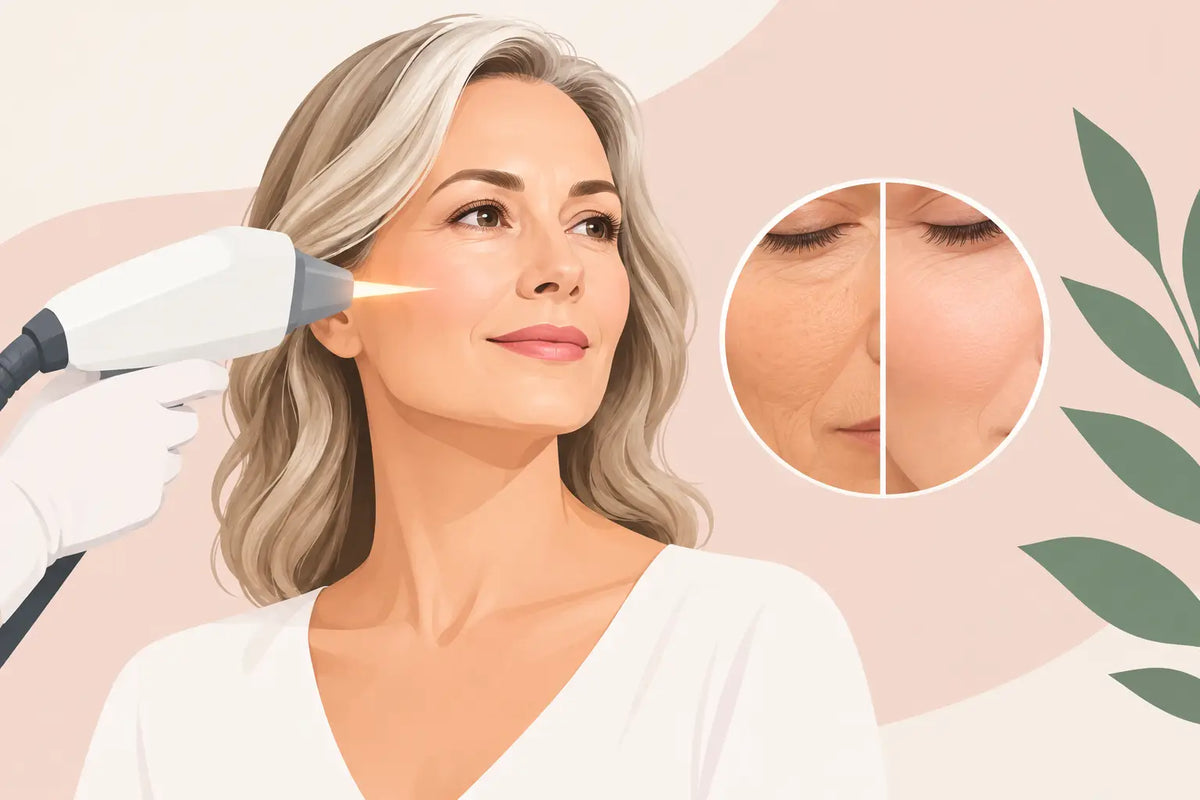
Menopause laser results are not one simple promise. The phrase can refer to energy-based treatments for intimate symptoms, or to facial laser treatments aimed at the visible skin changes that often accelerate during midlife. Those are entirely different uses, devices, and expectations. For facial skin, the meaningful question is this: can laser-based collagen stimulation help skin look smoother, firmer, and more resilient as estrogen declines?
For many women, the answer can be yes, with the right technology, realistic expectations, and consistent use. But a laser is not a treatment for menopause itself. It is a targeted skin tool that may help address concerns that become more noticeable during this transition: fine lines that seem deeper, crepey texture, laxity, dullness, and a slower-looking recovery after sun exposure or stress.
Why Menopause Changes the Way Skin Looks
Estrogen plays a major role in skin thickness, hydration, elasticity, and collagen support. As estrogen levels shift through perimenopause and menopause, collagen production can decline more quickly. Skin may retain less moisture, feel less bouncy, and show expression lines more readily, especially around the eyes, mouth, and forehead.
This is why a skincare routine that once delivered dependable results can suddenly feel less effective. A moisturizer can temporarily improve surface hydration. Retinoids and peptides can support a thoughtful anti-aging routine. Yet no topical product can fully replace the structural support created by healthy collagen in the dermis.
That distinction matters when evaluating facial lasers. The goal is not to erase every line or make skin look unlike itself. It is to support the skin's natural renewal processes so it can appear smoother, denser, and more refreshed over time.
What Facial Menopause Laser Results Can Realistically Look Like
Collagen remodeling is gradual. Visible improvement tends to show up first as a more hydrated-looking, refined surface, followed by softer-looking fine lines and improved firmness with continued treatment. Results vary by age, skin quality, sun exposure history, genetics, treatment consistency, and the type of device used.
For a non-ablative, non-fractional at-home laser, the appeal is a consistent collagen-focused approach without the downtime associated with more aggressive resurfacing. Rather than creating visible injury to the skin's surface, this category is designed to deliver controlled heat below the surface to support collagen production while keeping treatment comfortable and practical for regular use.
That makes it particularly relevant for women who want a high-performance strategy but do not want repeated appointments, peeling, or a recovery period that interrupts work and life. The trade-off is patience. In-office ablative procedures can produce dramatic resurfacing changes, but they also involve more discomfort, cost, downtime, and risk. At-home devices are built around cumulative improvement, which depends on following the recommended schedule.
The best menopause laser results are usually described in specifics: makeup settling more smoothly around the eyes, crow's feet appearing less etched, cheeks looking subtly more lifted, or skin looking less tired in unfiltered daylight. These changes can be meaningful without looking overdone.
Fine lines and wrinkles
Fine lines around the eyes are often among the first concerns women notice as collagen and moisture levels change. Laser-based collagen stimulation may help soften the appearance of these lines over time. Deep, static wrinkles will not disappear completely, and results should never be framed as a substitute for medical procedures such as injectables or surgery. Still, improving the skin's underlying support can make lines look less pronounced and improve overall texture.
Firmness and crepey texture
Menopausal skin can develop a thinner, less resilient appearance, particularly on the cheeks, jawline, and under-eye area. A collagen-focused laser routine can help skin look firmer and smoother, although it cannot create the lift of a surgical procedure. Think refinement and resilience, not a new face.
Tone and radiance
Dullness is not always a pigment issue. It can also reflect dehydration, slower cell turnover, and a rougher surface texture. When laser treatment is paired with daily sunscreen and barrier-supporting skincare, many people notice a more even, luminous-looking complexion. If dark spots or melasma are a primary concern, however, consult a dermatologist before selecting any energy-based treatment. Heat can worsen certain pigment conditions in some skin tones.
The Technology Matters More Than the Word “Laser”
Not all laser devices work the same way. Some are designed to remove layers of skin. Some create microscopic treatment zones to trigger repair. Others use non-fractional energy to stimulate collagen beneath the skin's surface without ablating it.
The right option depends on how much downtime you can accept, the concerns you want to address, your skin tone and sensitivity, and whether you want clinic-based intensity or an at-home routine. A device marketed simply as a “laser” is not enough information to make a confident decision.
Look for a technology with a clear intended use, a defined treatment protocol, and evidence that matches the claims being made. FDA clearance, when applicable, helps establish that a device has met standards for its cleared indication, but it does not mean every possible cosmetic claim has been proven. Clinical data should be specific about what was measured, how long participants used the device, and what type of improvement was observed.
NIRA's non-fractional laser technology is designed for women who want clinically aligned wrinkle-focused care that fits into a consistent at-home ritual. This is a different proposition from an intensive in-office resurfacing laser, and that clarity is a strength. Matching the treatment to your goals is how you avoid spending money on a category that was never designed to deliver the result you want.
How to Improve Your Odds of Seeing Results
Consistency is the part of laser skincare that is easy to underestimate. Collagen remodeling is a biological process, not an overnight cosmetic effect. Follow the device instructions exactly, use it on clean, dry skin unless the directions say otherwise, and take clear photos in the same lighting before you begin. Monthly comparisons are more useful than checking the mirror every morning.
Your supporting routine matters, too. Daily broad-spectrum sunscreen protects the collagen you are working to support. A gentle cleanser and well-formulated hydrating products can help menopausal skin feel more comfortable, while a peptide cream may complement a collagen-focused routine. If you use prescription retinoids, exfoliating acids, or other active treatments, introduce them carefully and ask your dermatologist how to combine them with laser use.
Lifestyle still shows up on skin. Sleep disruption, smoking, high UV exposure, and chronic stress can all affect the look of skin and its capacity to recover. A laser does not need a perfect lifestyle to be worthwhile, but it performs best as part of a wider commitment to skin health.
When to Talk With a Dermatologist First
Professional guidance is especially valuable if you have melasma, active inflammatory skin conditions, a history of abnormal scarring, unexplained facial discoloration, or use medications that increase photosensitivity. The same applies if the phrase “menopause laser” refers to vaginal symptoms such as dryness, discomfort, or urinary concerns. Those symptoms deserve an individualized conversation with a qualified gynecologist or menopause specialist, not assumptions based on facial-device information.
A clinician can help separate cosmetic priorities from symptoms that may benefit from medical evaluation or evidence-based hormonal and nonhormonal therapies. That is not a barrier to better results. It is how you choose a plan that is both effective and appropriate.
The most satisfying changes at this stage are rarely about chasing the face you had at 30. They come from choosing technology with a credible mechanism, giving it time to work, and building a routine that helps your skin look as strong, smooth, and confident as you feel.


