

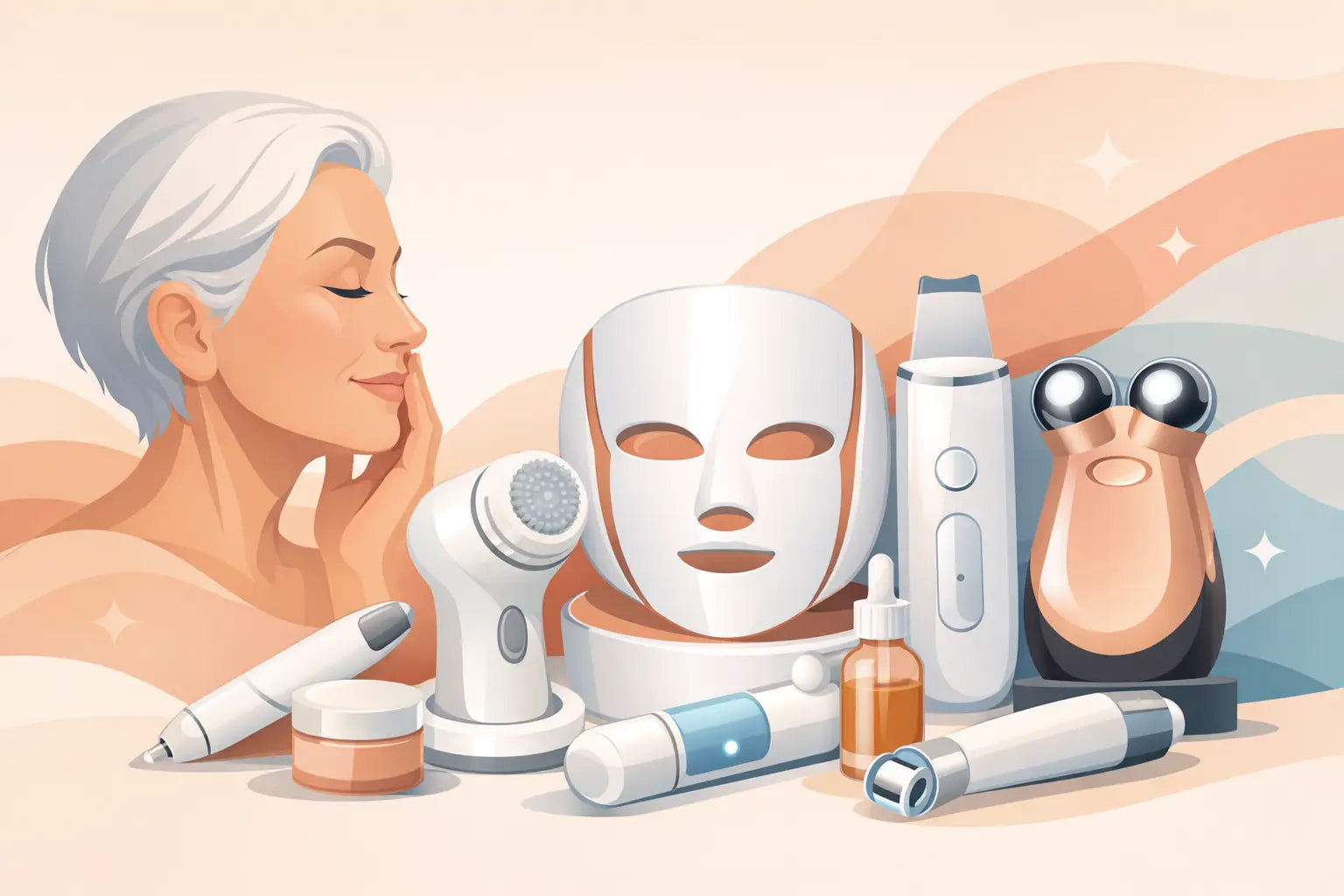
When your skin starts showing collagen loss more clearly - deeper lines, a little less bounce, more visible texture - the right device can do what creams alone often cannot. The best skincare devices for mature skin are the ones that match the biology of aging skin, not just the latest trend on social media.
That distinction matters. Mature skin usually needs more than surface-level brightening. It often benefits most from technology that supports collagen, improves firmness, softens wrinkles, and fits into real life consistently enough to produce visible change. Not every device category does all of that equally well.
What mature skin actually needs from a device
As skin ages, collagen production slows, elastin weakens, and cell turnover becomes less efficient. You may also see more dryness, thinning, crepiness, and uneven tone. So when evaluating a device, the first question is not whether it feels high-tech. It is whether it targets the structural changes behind visible aging.
For that reason, the strongest options tend to fall into a few categories. Laser devices can support collagen remodeling and wrinkle reduction. Microcurrent can temporarily improve the look of facial contour and tone. LED light therapy may help with inflammation and mild rejuvenation. Radio frequency aims to heat the skin to promote tightening. Microneedling devices work by creating controlled micro-injury, which can help trigger repair.
Each category has a different strength. Some are better for immediate visible lift. Some are better for longer-term wrinkle reduction. Some are gentler but less transformative. The best choice depends on whether your top concern is fine lines, skin laxity, texture, or overall firmness.
Best skincare devices for mature skin by technology
1. At-home laser devices
If your main goal is reducing wrinkles and addressing visible collagen loss, laser technology stands out. This is especially true for mature skin that needs more than a temporary cosmetic effect. A well-designed at-home laser can target the skin in a way that supports real rejuvenation over time.
The reason lasers matter is simple: they can stimulate a repair response beneath the surface, which is where many signs of aging begin. That makes them especially compelling for crow's feet, smile lines, forehead lines, and overall skin texture. Compared with trend-driven gadgets that mostly enhance product absorption or de-puff the face, laser devices are built for structural improvement.
Not all lasers are created equal, though. Some technologies are more aggressive and come with downtime, while others are designed for consistent home use with a gentler profile. For mature skin, convenience matters almost as much as efficacy. A device only works if you use it regularly.
2. Microcurrent devices
Microcurrent devices use low-level electrical currents to stimulate facial muscles. They are popular because they can create a more sculpted, lifted look fairly quickly, which is appealing if sagging or loss of contour is your main concern.
For mature skin, microcurrent can be a useful complement, but usually not the whole answer. It tends to deliver more of a short-term visible effect than a deep wrinkle-correcting result. Many users love the immediate refreshed look, especially around the cheeks, jawline, and brows, but consistency is critical and results may fade if treatments stop.
If you are choosing between a wrinkle-focused technology and a contour-focused one, this is where priorities matter. Microcurrent is often strongest for facial toning, while laser technology tends to be more compelling for collagen-related concerns.
3. LED light therapy masks
LED masks are widely used because they are easy, noninvasive, and comfortable. Red light is generally the most relevant setting for mature skin because it is associated with collagen support and inflammation reduction.
That said, LED is usually a lower-intensity approach. It may help improve overall skin quality and complement a broader anti-aging routine, but on its own, it may not be enough for deeper wrinkles or more advanced laxity. Think of it as steady support rather than a dramatic intervention.
For someone with early signs of aging or sensitive skin, LED can be a smart entry point. For someone with more established lines and loss of firmness, it may work best alongside a stronger primary device.
4. Radio frequency devices
Radio frequency devices heat the deeper layers of skin to support tightening and collagen production. In-office RF treatments can be effective, which is why the at-home category gets so much attention.
The trade-off is that at-home devices typically operate at lower energy levels than professional systems. That can make them more convenient and accessible, but it may also mean subtler results. Some users see improvements in skin firmness over time, especially with disciplined use.
For mature skin, RF can be attractive if loose skin is the main concern. Still, comfort, device quality, and patience matter. This is not usually the category for instant change.
5. Microneedling devices
Microneedling is known for improving texture, fine lines, and the appearance of pores by creating controlled microchannels in the skin. It can be effective, but it requires more caution than many beauty devices.
Mature skin can benefit from microneedling, particularly if texture and surface irregularities are major concerns. But this category has more room for user error. Needle depth, sanitation, skin sensitivity, and recovery all matter. If your skin barrier is already fragile or you are prone to irritation, it may not be the easiest place to start.
For some, microneedling is worth it. For others, a lower-maintenance device with a stronger safety profile at home is the smarter long-term fit.
6. Facial cleansing devices
Cleansing brushes and sonic cleansing tools can make skin feel smoother and help remove makeup and debris more thoroughly. But for mature skin, they are often overvalued as anti-aging tools.
They do not meaningfully address collagen loss, wrinkles, or laxity. In some cases, overuse can even aggravate dryness or sensitivity, which mature skin is already more prone to. If you like the feel of a cleansing device, choose one with a gentle setting and keep expectations realistic.
7. Ultrasound skin devices
Ultrasound technology is designed to deliver energy beneath the skin and is often associated with firming benefits. In professional settings, ultrasound can play a role in lifting treatments.
At home, the experience varies widely by device. Some tools focus more on product infusion than meaningful anti-aging results. Others aim for firming, but the visible changes may be modest. This is a category where claims can outpace outcomes, so evidence matters more than marketing language.
8. Cryotherapy and cooling tools
Ice globes, cooling rollers, and cryo-inspired devices can reduce puffiness and make the skin look temporarily tighter. They feel great and can absolutely elevate a routine.
But they are not true wrinkle-reduction devices. For mature skin, they are best seen as supportive tools - helpful before an event, useful for soothing, but not a substitute for collagen-focused technology.
9. Infusion and electroporation devices
These devices are designed to help skincare ingredients penetrate more effectively. That can be useful, especially if your routine includes hydrating and barrier-supportive formulas that mature skin needs.
Still, they are enhancers, not primary anti-aging engines. Better absorption is helpful, but it will not replace a device built to address the underlying mechanics of skin aging.
How to choose the best skincare devices for mature skin
The right device depends on your primary goal. If wrinkles and collagen loss are at the top of your list, laser technology deserves serious attention because it goes beyond cosmetic surface effects. If your main complaint is slackness along the jawline or cheeks, microcurrent or radio frequency may be worth considering. If your skin is sensitive and you want a gentle entry point, LED may be a more comfortable place to begin.
You should also look closely at evidence. Clinical backing, FDA-cleared status where applicable, before-and-after documentation, and clear treatment protocols all matter. Mature skin usually does better with proven technology than with novelty.
Convenience is not a small detail either. The best device is one you will actually use consistently for months, not one that sounds impressive but ends up in a drawer. Short treatment times, easy maintenance, and a comfortable experience can make the difference between seeing results and giving up too early.
What stands out most for mature skin
For shoppers who want a device with a stronger wrinkle-focused profile, at-home laser technology is one of the most compelling categories available. It aligns well with what mature skin is actually asking for: collagen support, visible smoothing, and firmer-looking skin over time. That is why clinically validated non-fractional laser systems, including options like NIRA, have become increasingly relevant for consumers who want dermatologist-aligned results without repeated office visits.
That does not mean every mature skin routine needs a laser and nothing else. Many people do well with a combination approach - for example, a primary collagen-targeting device paired with hydrating topicals and perhaps LED or microcurrent depending on their goals. The point is to choose a lead technology that matches your biggest concern instead of expecting one trendy tool to solve everything.
Mature skin responds best to consistency, smart technology, and a little skepticism toward overhyped promises. Choose the device that treats the change you can see and the biology driving it, and your routine starts working a lot harder for you.


